What happens in your brain when you are stressed for weeks?
Updated
Chronic stress keeps the amygdala activated, signaling the hypothalamus to trigger the HPA axis and release cortisol. The locus coeruleus boosts noradrenaline, impairing prefrontal cortex function, while the hippocampus shrinks and weakens memory.
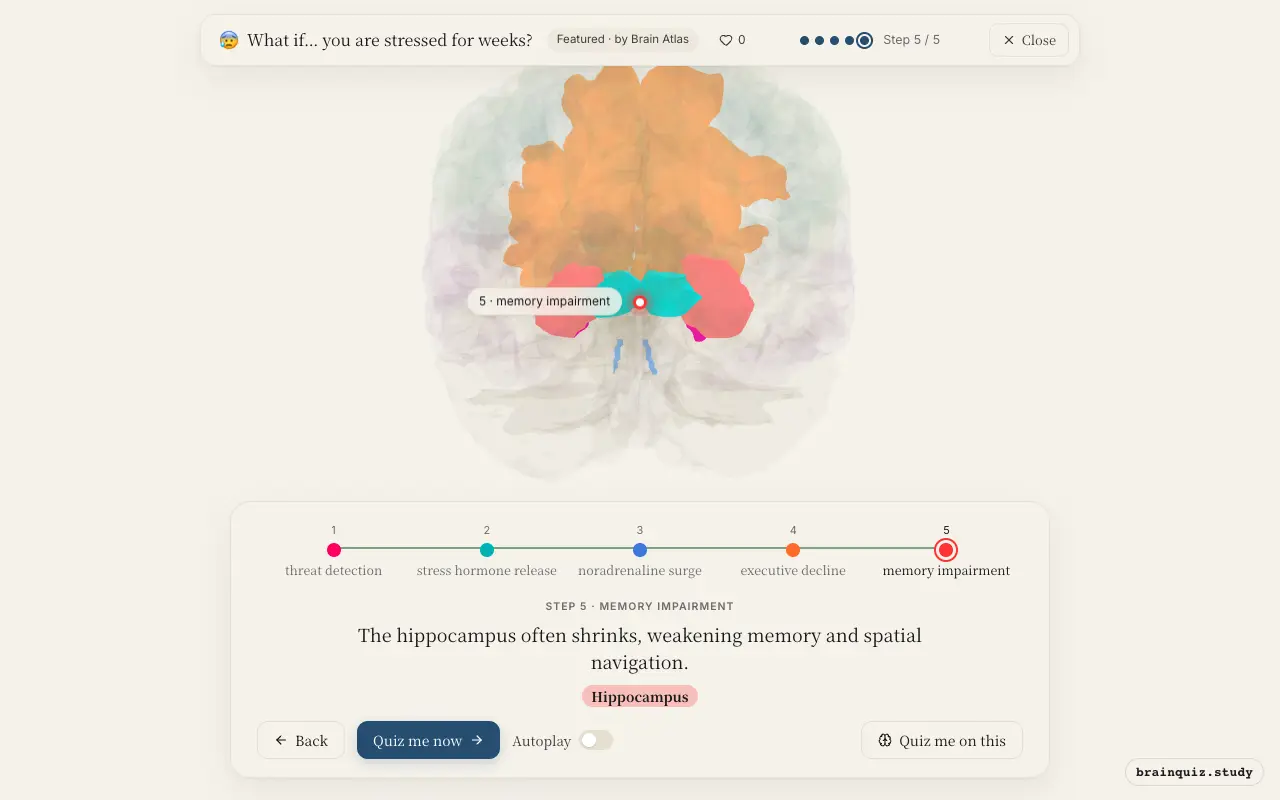
Watch it light up on the 3D brain
Brain regions that light up
| Order | Region | What it does here |
|---|---|---|
| 1 | Amygdala | The amygdala flags ongoing stressors as threats, staying hyperactive for weeks. |
| 2 | Hypothalamus | The hypothalamus triggers the HPA axis, releasing cortisol into the bloodstream. |
| 3 | Locus Coeruleus | The locus coeruleus floods the brain with noradrenaline, raising alertness. |
| 4 | Prefrontal Cortex | The prefrontal cortex struggles to regulate emotions and make decisions. |
| 5 | Hippocampus | The hippocampus often shrinks, weakening memory and spatial navigation. |
1. Amygdala: threat detection
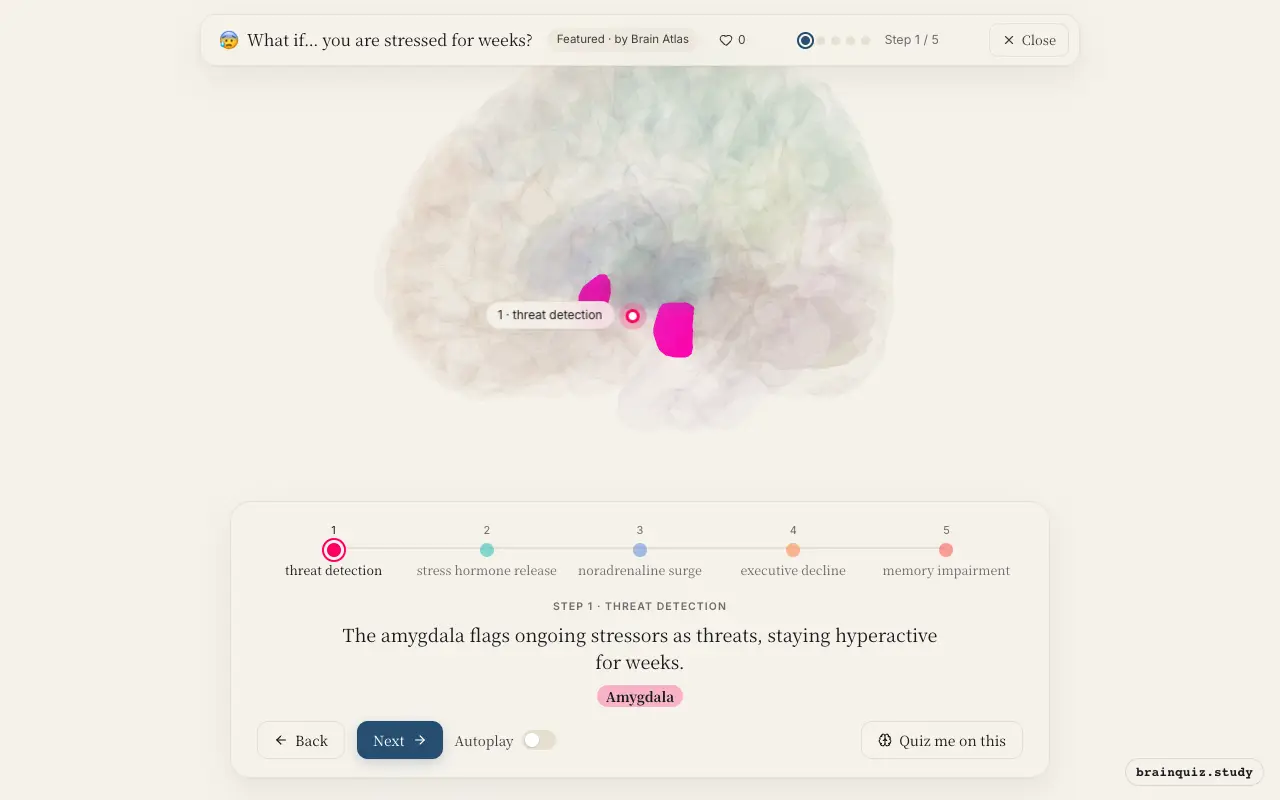
Chronic stress sensitizes the amygdala, so it fires more readily to both real and imagined dangers. This keeps the brain in a state of high alert. Over time, the amygdala may actually grow larger, strengthening fear and anxiety circuits.
2. Hypothalamus: stress hormone release
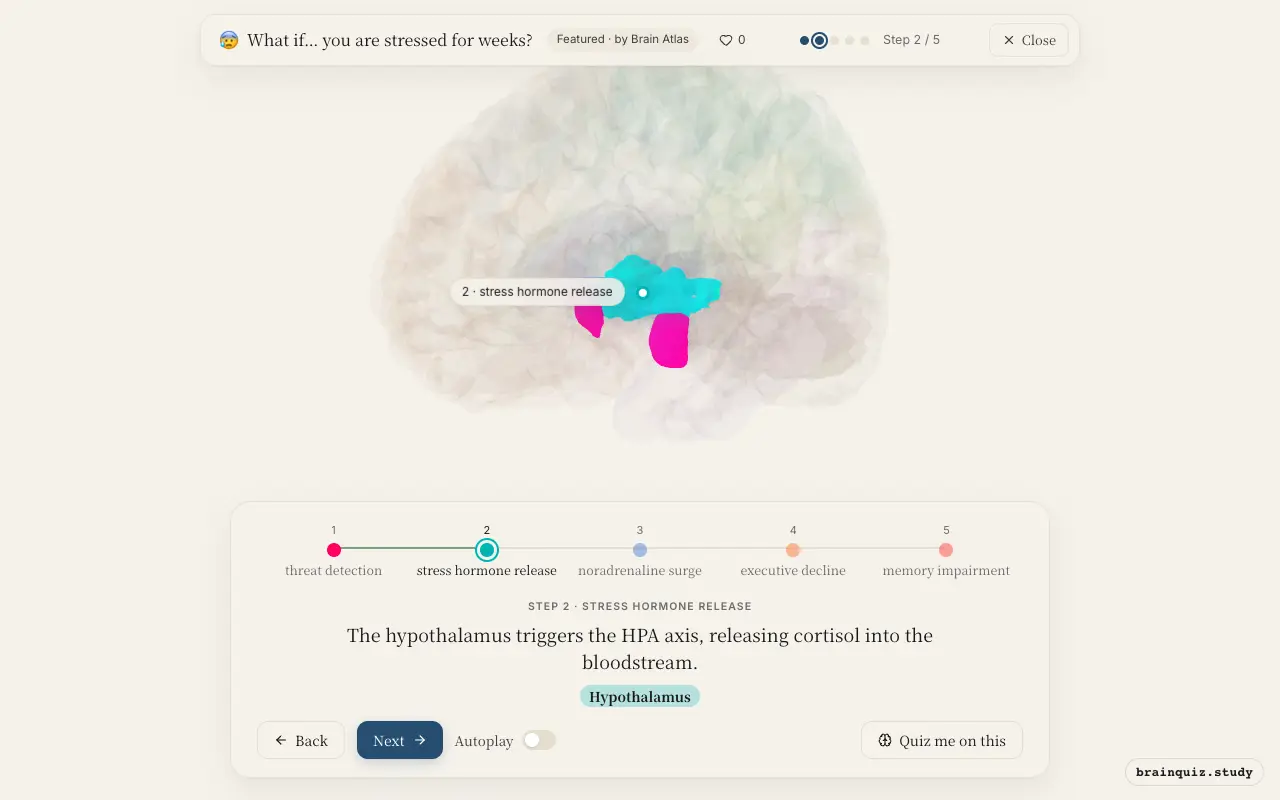
The hypothalamus secretes corticotropin-releasing hormone (CRH), which prompts the pituitary to release ACTH. ACTH tells the adrenal glands to produce cortisol. With weeks of stress, this system stays switched on, keeping cortisol levels chronically high.
3. Locus Coeruleus: noradrenaline surge
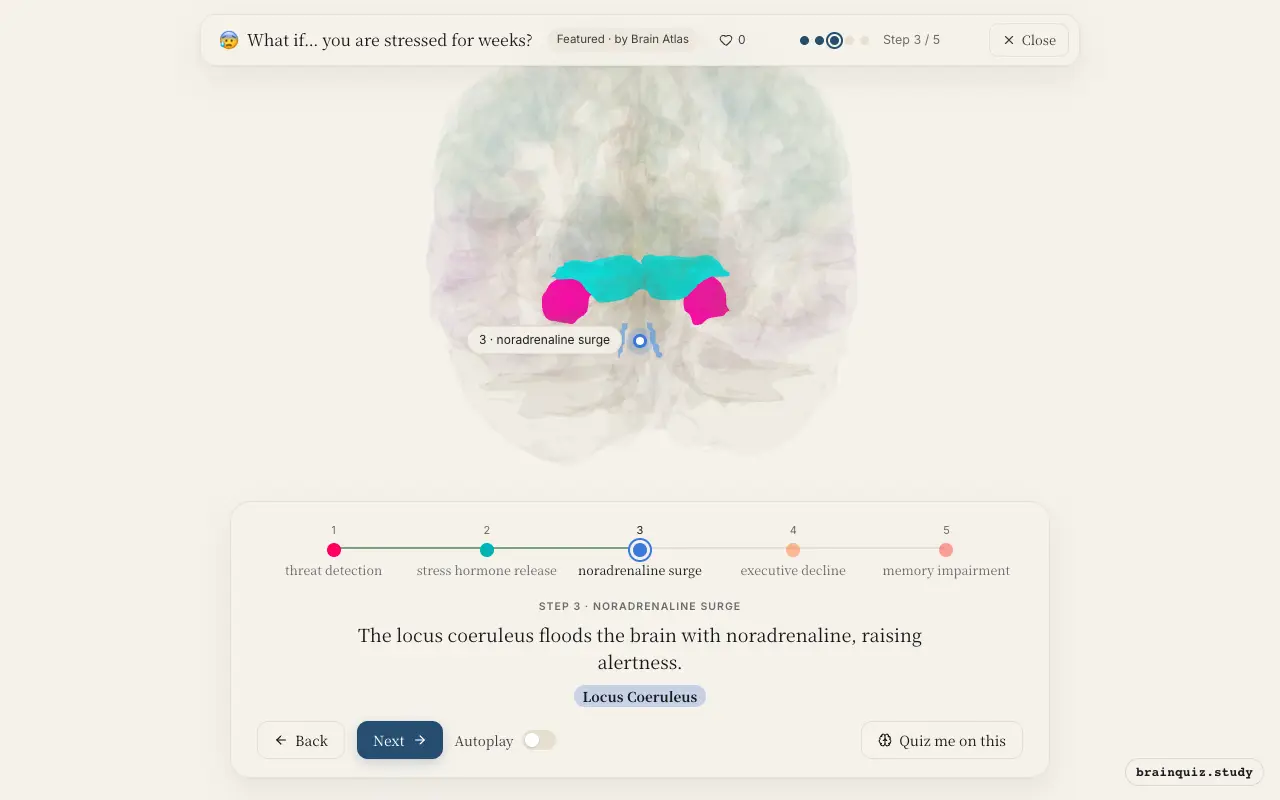
Noradrenaline speeds up heart rate and sharpens attention, preparing the body for action. But when stress lasts for weeks, this constant arousal exhausts the brain. It also impairs the prefrontal cortex's ability to stay calm and focused.
4. Prefrontal Cortex: executive decline
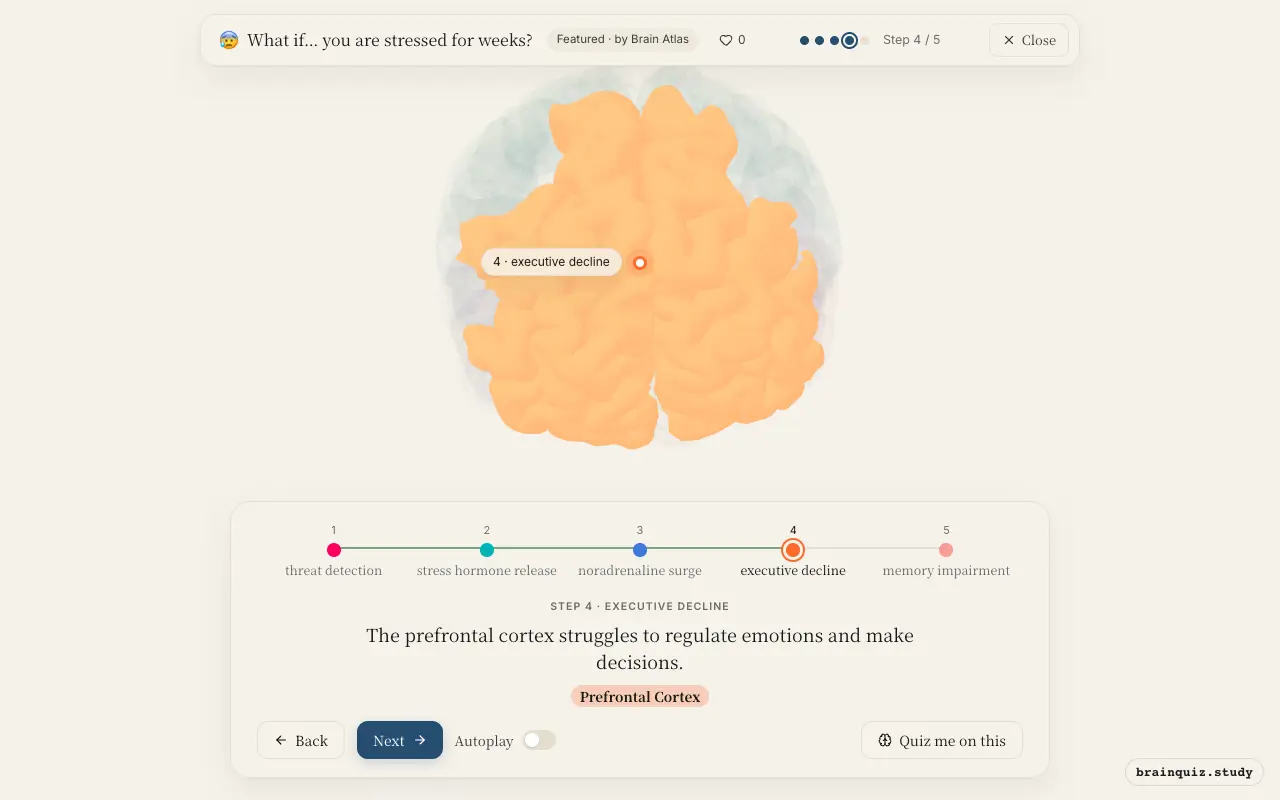
High cortisol and noradrenaline disrupt prefrontal cortex function. Working memory, attention, and impulse control weaken, making everyday tasks harder. This region normally calms the amygdala, but under chronic stress it loses that braking power.
5. Hippocampus: memory impairment
Prolonged cortisol exposure damages hippocampal neurons, reducing neurogenesis. This leads to problems forming new memories and recalling old ones. The hippocampus also normally inhibits the HPA axis, so its damage worsens the stress response in a vicious cycle.
Good to know
- Chronic stress is thought to reduce hippocampal volume, though the degree varies widely across individuals.
- In animal studies, the amygdala can grow more dendritic branches under chronic stress, while the prefrontal cortex loses them.
- Cortisol normally follows a daily rhythm, but chronic stress can flatten that curve, disrupting sleep and metabolism.
Acute vs Chronic Stress
Acute stress briefly raises cortisol and noradrenaline, then returns to baseline, aiding focus and memory. Chronic stress keeps these systems on for weeks, damaging the hippocampus and prefrontal cortex while strengthening fear circuits in the amygdala.
Test yourself
Which brain region is primarily responsible for triggering the stress hormone cascade in chronic stress?
How does chronic stress affect the prefrontal cortex?
What is a likely long-term effect on the hippocampus after weeks of stress?
0 of 3 answered · 0 correct
Simplified: many regions work together at once, and this shows the main players in the order they act. For learning only, not medical advice.