What happens in your brain when you have a seizure?
Updated
A focal seizure may start with hypersynchronous firing in the hippocampus, spreads to the amygdala and temporal cortex, then engages the thalamus to generalize, and can activate the motor cortex before inhibitory mechanisms, aided by the cerebellum, terminate it.
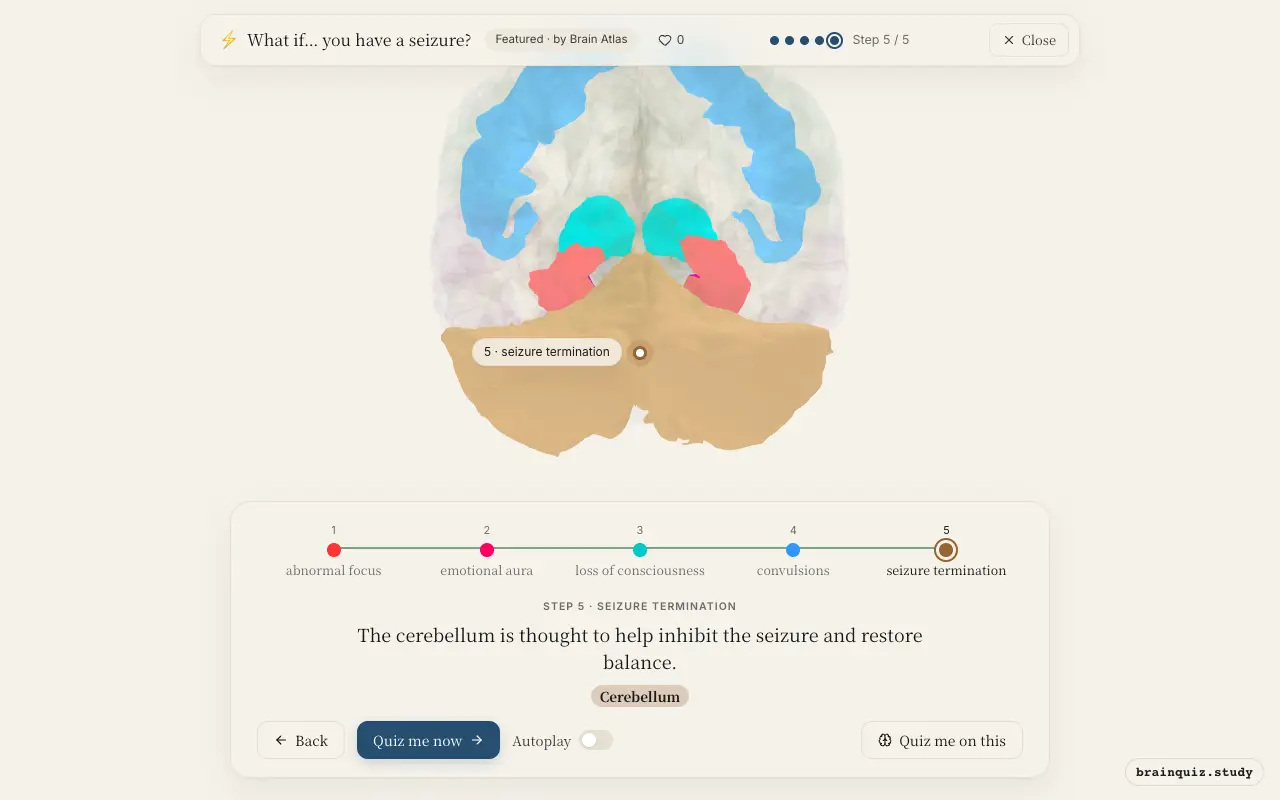
Watch it light up on the 3D brain
Brain regions that light up
| Order | Region | What it does here |
|---|---|---|
| 1 | Hippocampus | Hypersynchronous firing may begin in the hippocampus. |
| 2 | Amygdala | Activity spreads to the amygdala, causing fear or déjà vu. |
| 3 | Thalamus | The thalamus relays the seizure activity, causing widespread synchronization. |
| 4 | Motor Cortex | If the motor cortex is recruited, convulsive movements occur. |
| 5 | Cerebellum | The cerebellum is thought to help inhibit the seizure and restore balance. |
1. Hippocampus: abnormal focus
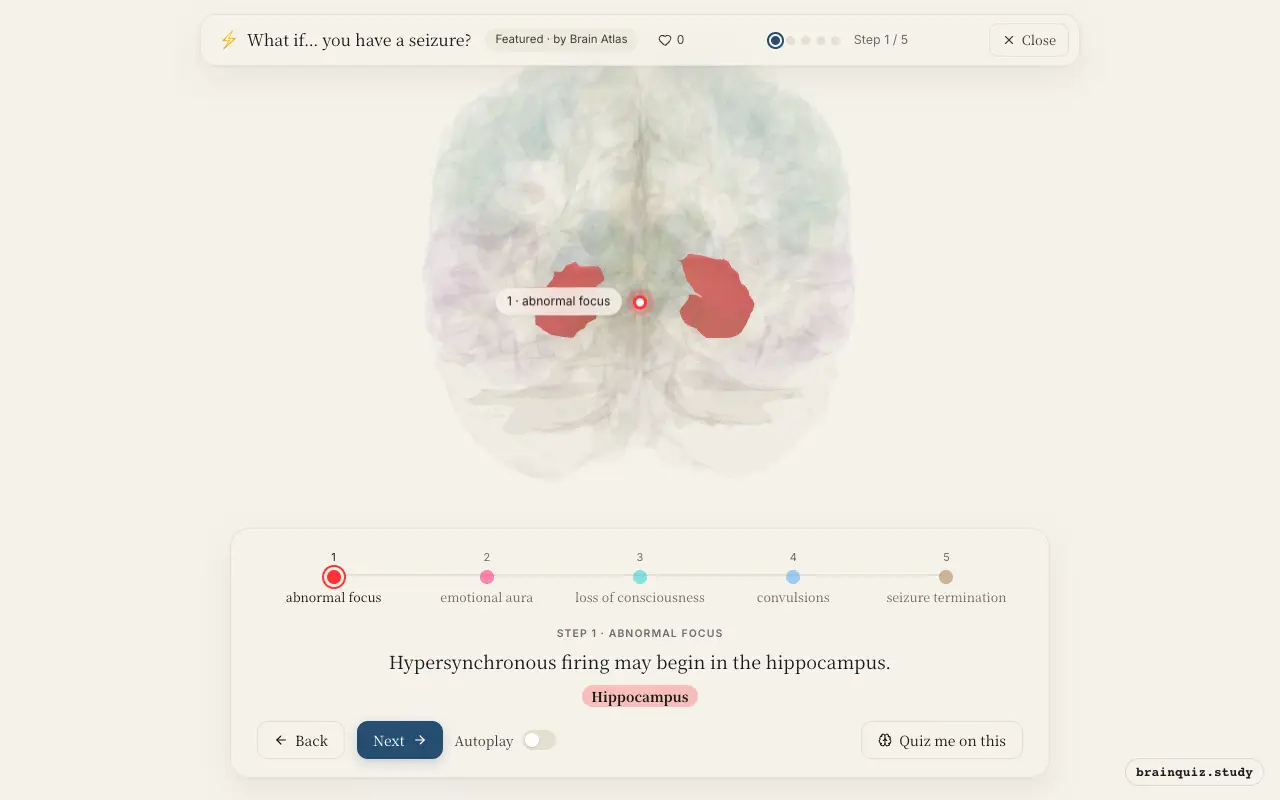
The hippocampus is a common seizure focus, especially in temporal lobe epilepsy. Excessive excitatory activity or reduced inhibition leads to a burst of synchronized neuronal firing that initiates the seizure.
2. Amygdala: emotional aura
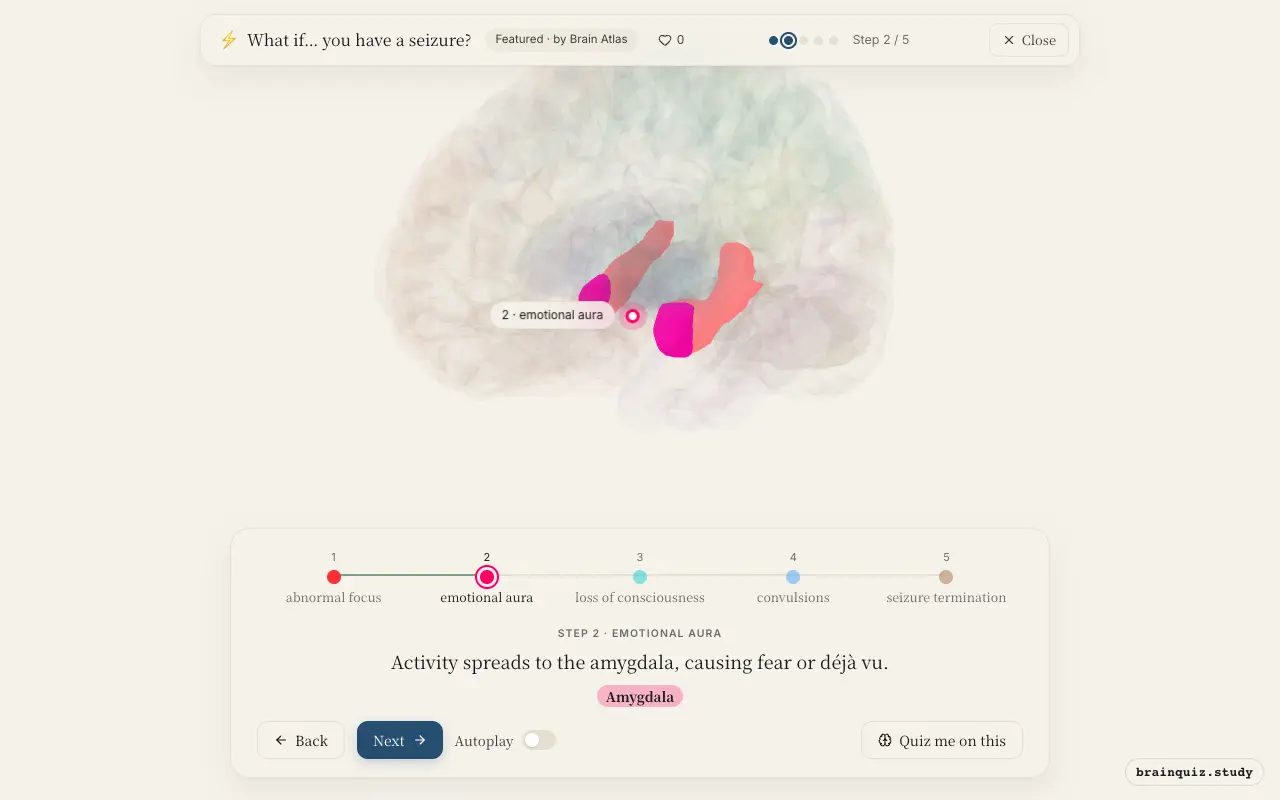
As the abnormal activity propagates, it often reaches the amygdala, which can produce emotional symptoms such as intense fear, anxiety, or a rising epigastric sensation typical of temporal lobe seizures.
3. Thalamus: loss of consciousness
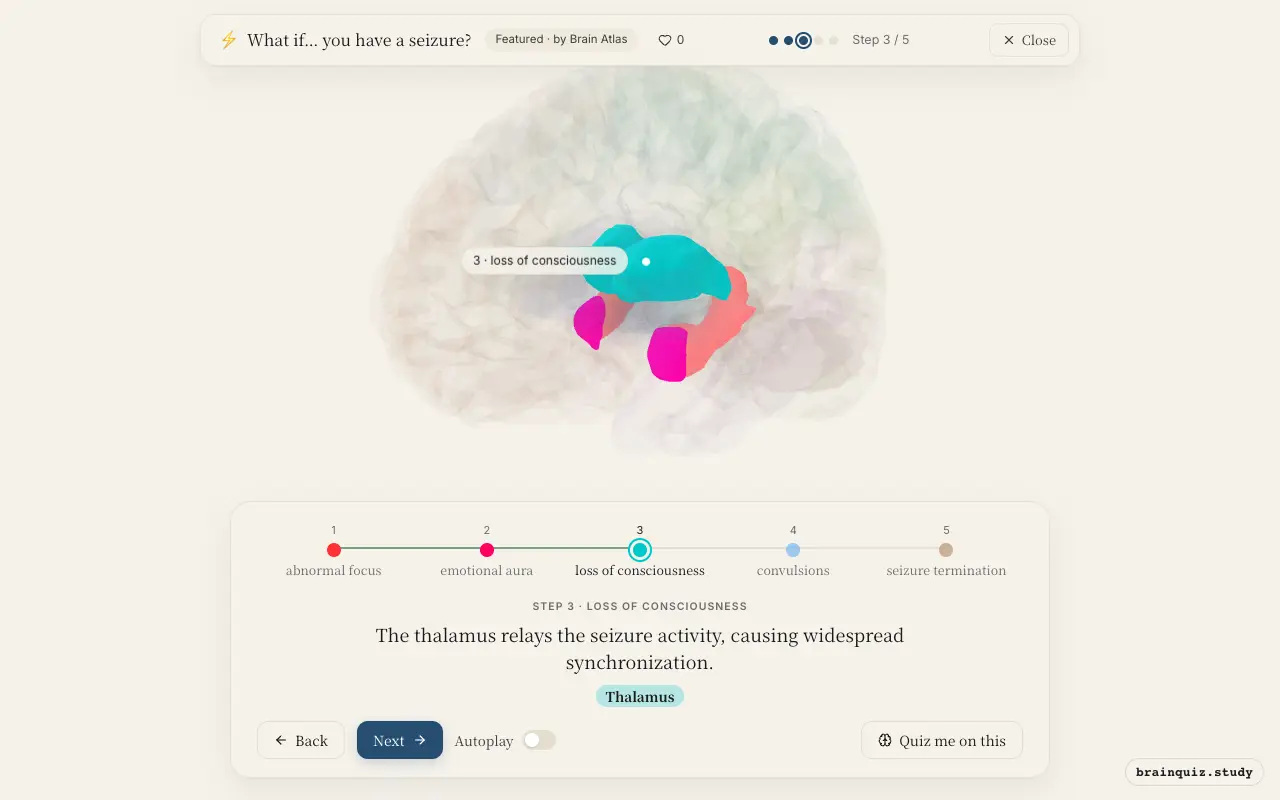
The thalamus acts as a relay station and can synchronize cortical activity. When seizure activity invades the thalamus, it can lead to generalized involvement and loss of consciousness.
4. Motor Cortex: convulsions
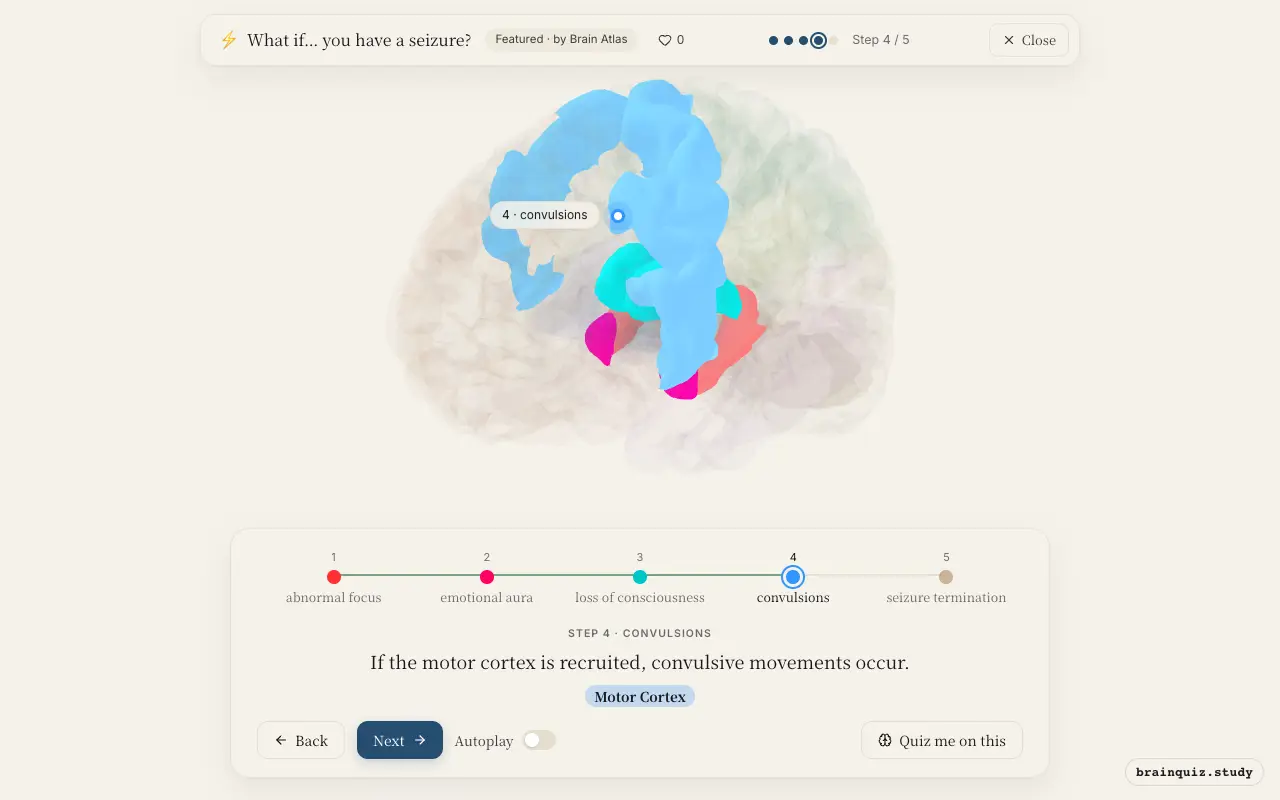
Spread to the motor cortex results in tonic (stiffening) and clonic (jerking) movements, as seen in generalized tonic-clonic seizures. This reflects abnormal motor command output.
5. Cerebellum: seizure termination
The cerebellum sends inhibitory output to the thalamus and is thought to play a role in terminating seizures. Its activity may help dampen the abnormal synchronization and restore normal brain function.
Good to know
- Seizures are caused by an imbalance between excitatory (glutamate) and inhibitory (GABA) neurotransmission in the brain.
- The thalamus is a key relay that can synchronize cortical activity during generalized seizures.
- The cerebellum is thought to modulate seizure activity via its inhibitory output to the thalamus.
Focal vs Generalized Seizures
In focal seizures, abnormal activity remains in one hemisphere, often starting in the hippocampus or amygdala and causing localized symptoms. In generalized seizures, thalamocortical circuits rapidly involve both hemispheres, leading to loss of consciousness and bilateral motor manifestations.
Test yourself
Which brain region is a common site of seizure initiation in temporal lobe epilepsy?
What role does the thalamus play during a generalized seizure?
Which region is thought to help terminate a seizure?
0 of 3 answered · 0 correct
Simplified: many regions work together at once, and this shows the main players in the order they act. For learning only, not medical advice.