What happens in your brain when you faint?
Updated
The insula detects a trigger and signals the hypothalamus, which activates the brainstem to slow the heart and dilate blood vessels, dropping blood pressure. The thalamus then loses function as cerebral blood flow falls, causing loss of consciousness.
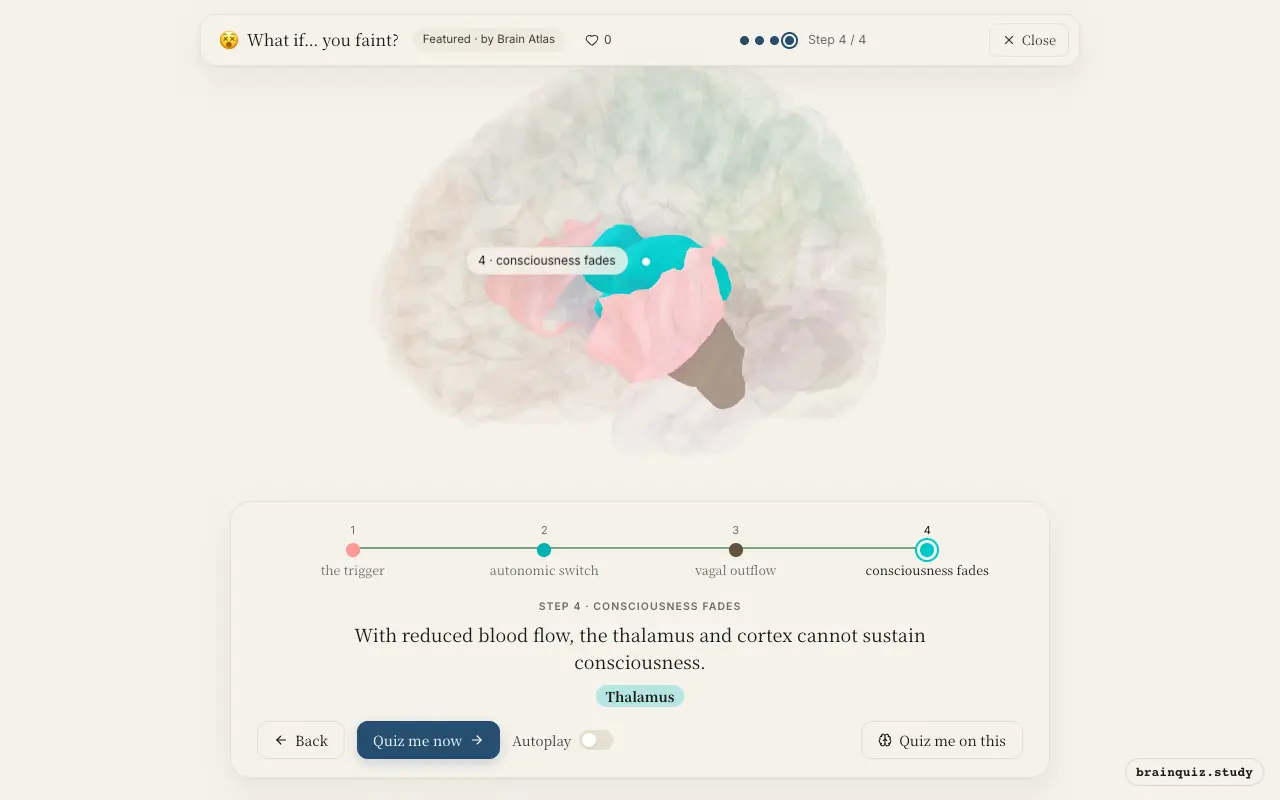
Watch it light up on the 3D brain
Brain regions that light up
| Order | Region | What it does here |
|---|---|---|
| 1 | Insula | The insula detects a sudden threat, like pain or emotional shock. |
| 2 | Hypothalamus | The hypothalamus shifts the body into a parasympathetic-dominant state. |
| 3 | Brainstem | The brainstem sends vagal signals to slow the heart and reduces sympathetic tone to dilate vessels. |
| 4 | Thalamus | With reduced blood flow, the thalamus and cortex cannot sustain consciousness. |
1. Insula: the trigger
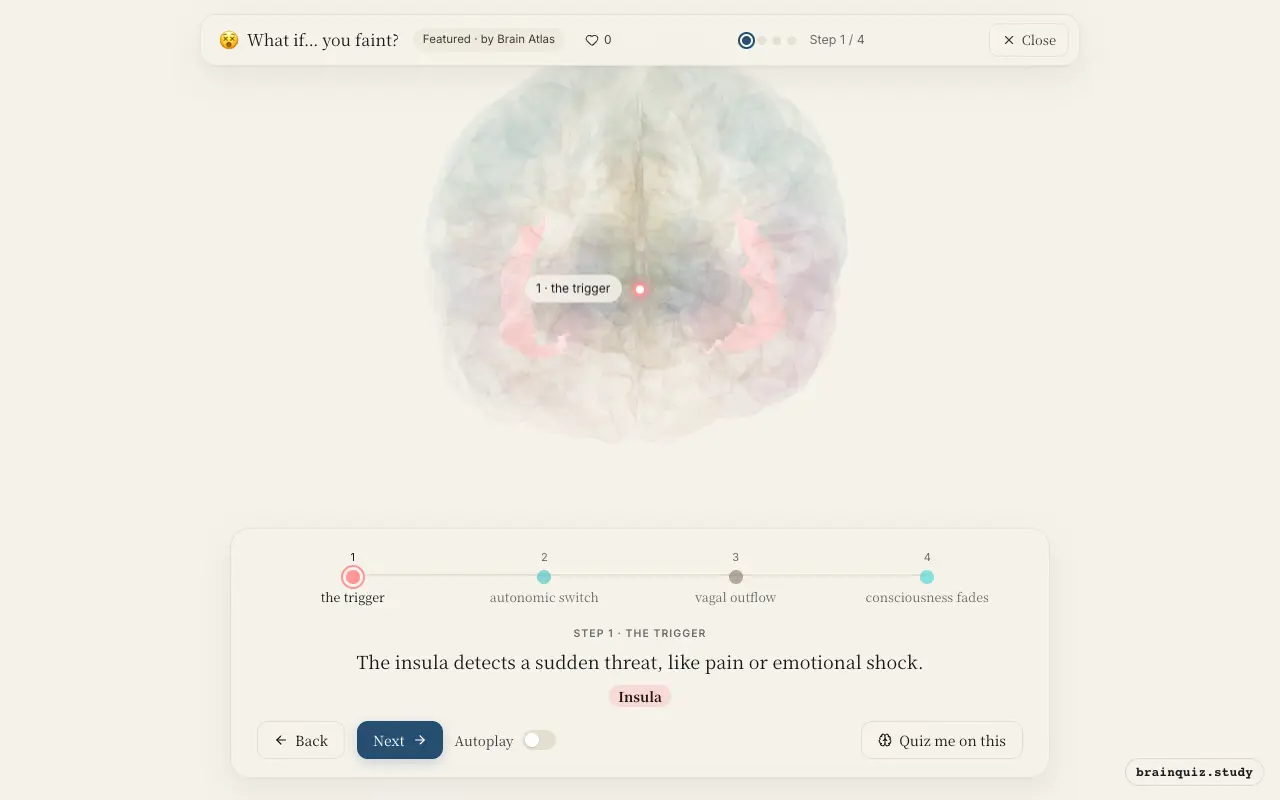
The insula monitors internal body signals and can sense distress. When it perceives a trigger such as the sight of blood or intense pain, it initiates a cascade that leads to fainting. This region is key for interoception, the sense of the body's internal state.
2. Hypothalamus: autonomic switch
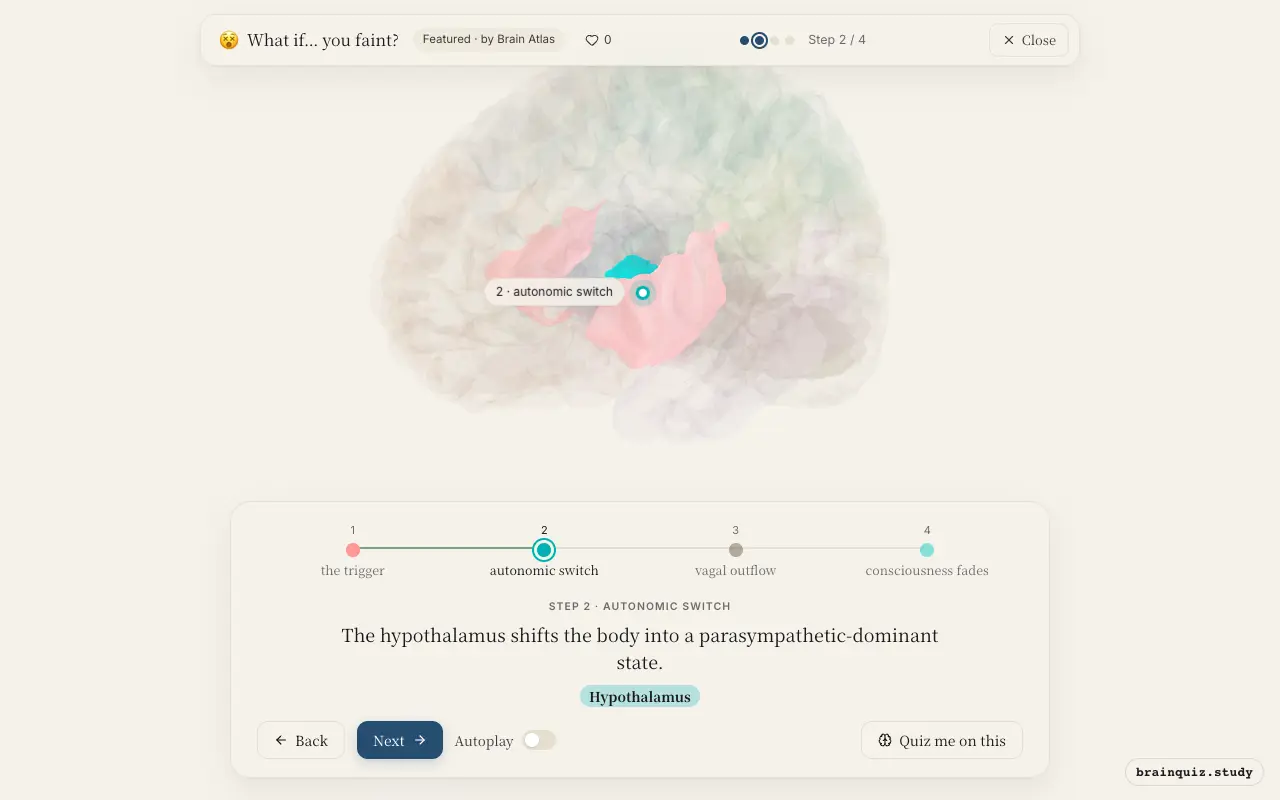
As a central autonomic control center, the hypothalamus integrates the insula's signal and coordinates a response that lowers blood pressure and heart rate. It communicates with the brainstem to trigger widespread vasodilation and bradycardia. This response is protective but can overshoot, causing fainting.
3. Brainstem: vagal outflow
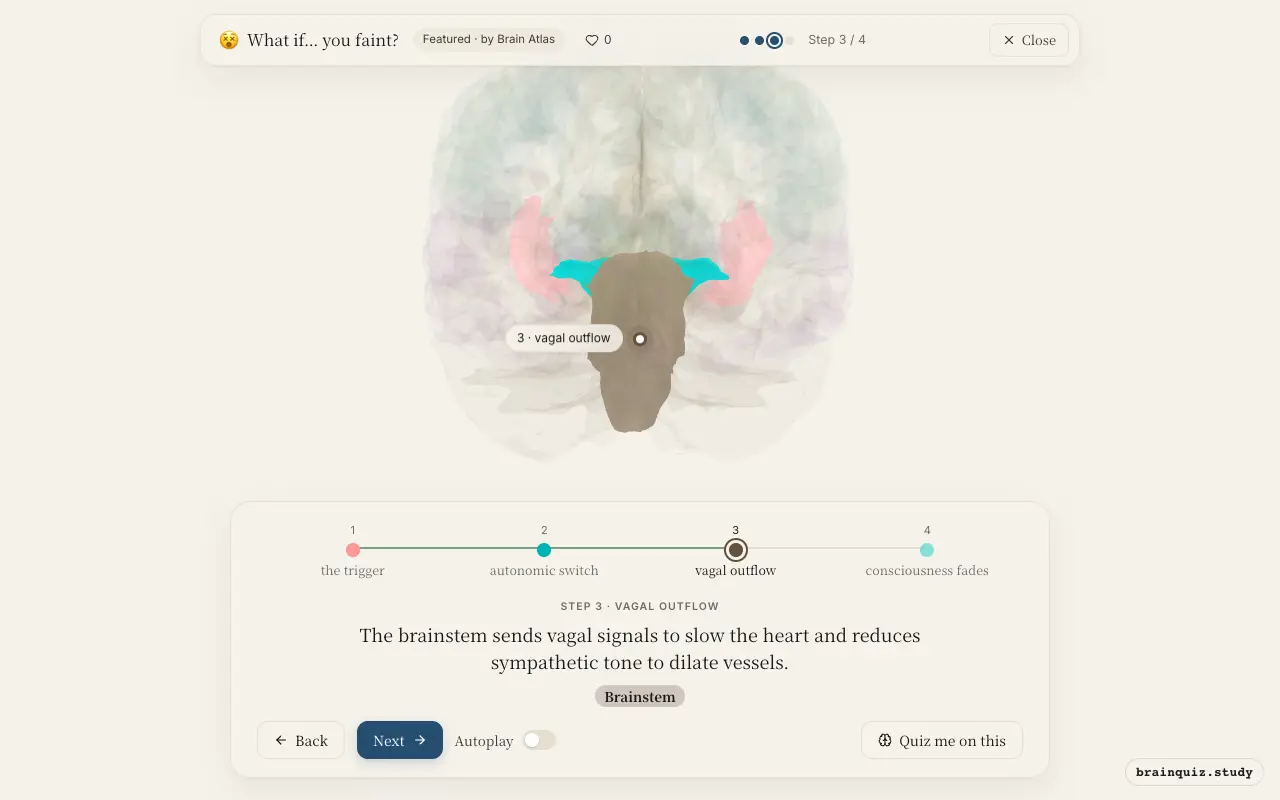
The brainstem, particularly the medulla, contains cardiovascular centers that regulate heart rate and vascular tone. Activation of the vagus nerve (cranial nerve X) slows the heart, while inhibition of sympathetic tone dilates blood vessels. This sudden drop in blood pressure reduces blood flow to the brain.
4. Thalamus: consciousness fades
The thalamus is a critical relay for sensory information and plays a role in maintaining cortical arousal and consciousness. When cerebral perfusion falls below a threshold, thalamic neurons become inactive, leading to loss of consciousness. This is why fainting feels like a sudden blackout.
Good to know
- Vasovagal syncope is the most common type of fainting and is usually triggered by emotional stress, pain, or prolonged standing.
- The vagus nerve is the main parasympathetic pathway that slows the heart and is central to the fainting reflex.
Fainting vs. Seizure
In fainting, brain regions like the thalamus and brainstem show reduced activity due to low blood flow, causing a brief loss of consciousness. In a seizure, abnormal electrical discharges often start in the cortex (e.g., temporal lobe) and spread, causing involuntary movements. Fainting is a vascular event; seizure is an electrical one.
Test yourself
Which brain region is most directly responsible for executing the drop in heart rate and blood pressure during fainting?
What role does the insula play in fainting?
Why does loss of consciousness occur in fainting?
0 of 3 answered · 0 correct
Simplified: many regions work together at once, and this shows the main players in the order they act. For learning only, not medical advice.