What happens in your brain when you cram the night before an exam?
Updated
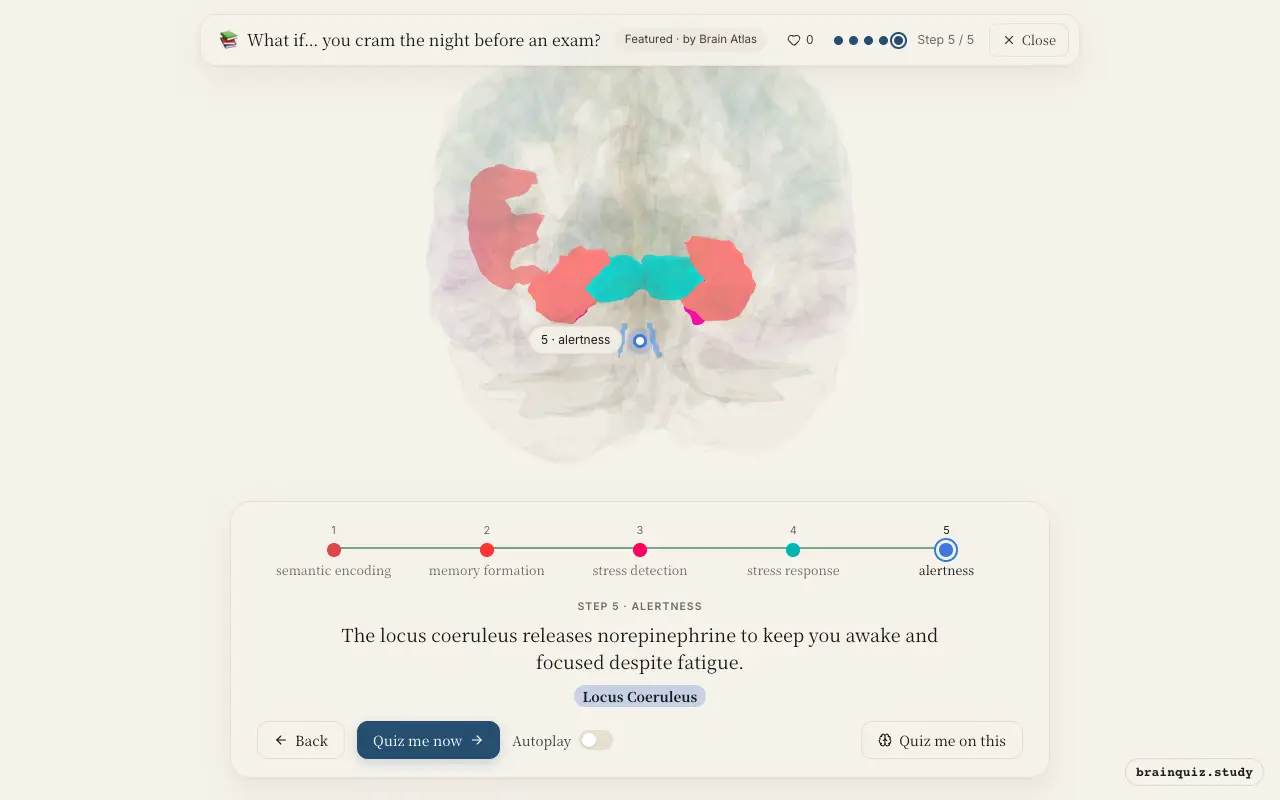
Your left inferior frontal gyrus elaborates the material, the hippocampus tries to encode it, the amygdala detects stress, the hypothalamus triggers cortisol, and the locus coeruleus keeps you alert.
Watch it light up on the 3D brain
Brain regions that light up
| Order | Region | What it does here |
|---|---|---|
| 1 | Left Inferior Frontal Gyrus | You actively relate new information to what you already know, engaging the left inferior frontal gyrus. |
| 2 | Hippocampus | The hippocampus attempts to encode the elaborated information into long-term memory. |
| 3 | Amygdala | The amygdala responds to the time pressure and fear of failure, tagging the experience as emotionally arousing. |
| 4 | Hypothalamus | The hypothalamus activates the HPA axis, releasing cortisol into the bloodstream. |
| 5 | Locus Coeruleus | The locus coeruleus releases norepinephrine to keep you awake and focused despite fatigue. |
1. Left Inferior Frontal Gyrus: semantic encoding
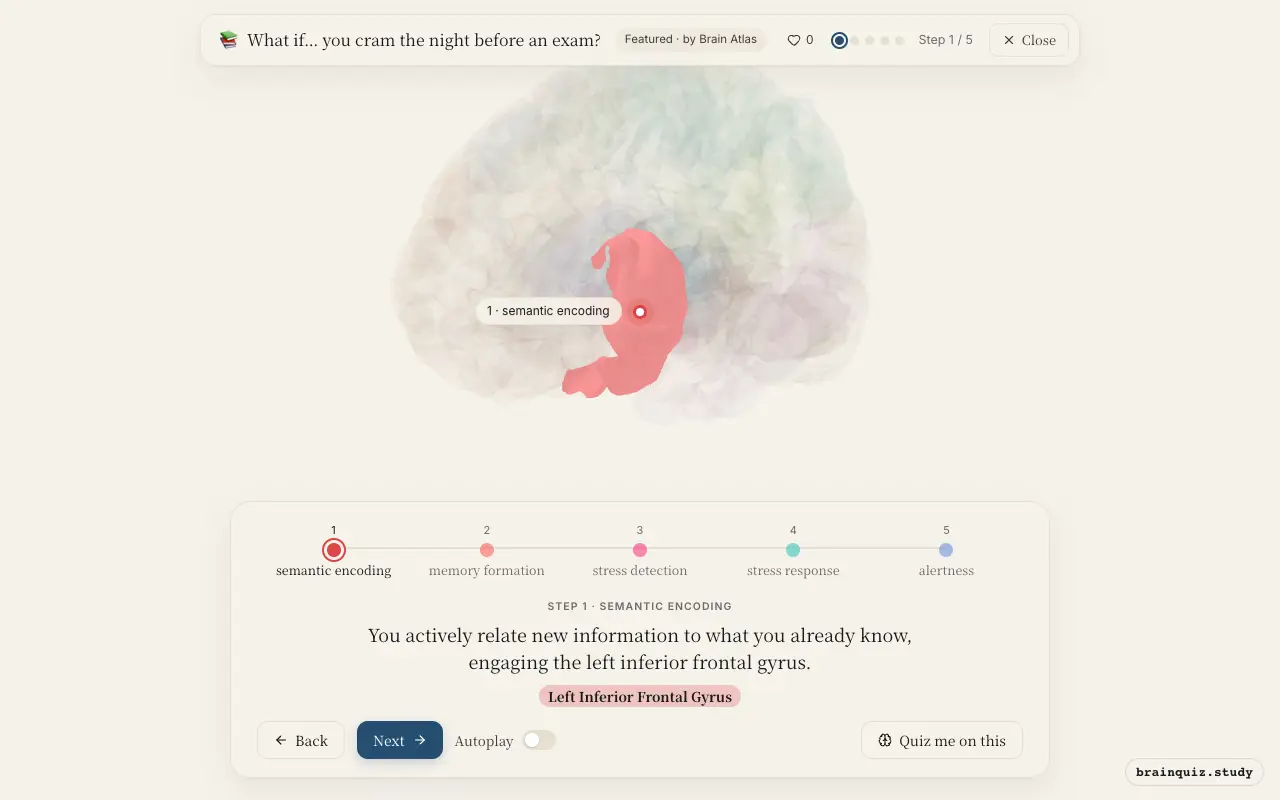
This region drives semantic and phonological elaboration, creating deeper processing of the material. It forms associations and meanings, which increases the chance that the hippocampus will store the information. Without this step, cramming is shallow and ineffective.
2. Hippocampus: memory formation
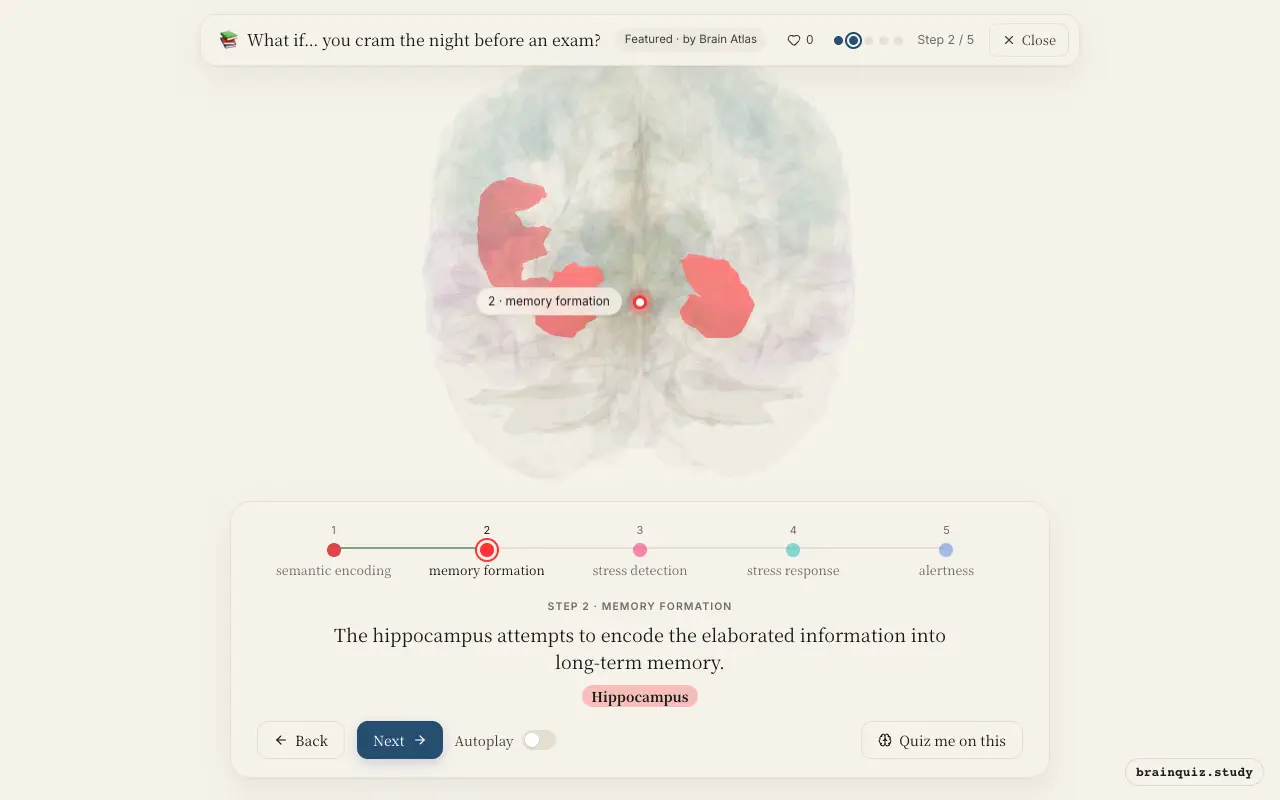
The hippocampus binds together different aspects of the experience into a memory trace. During cramming, it works overtime but often fails to consolidate because consolidation requires sleep and time. The rapid input can overload the system.
3. Amygdala: stress detection
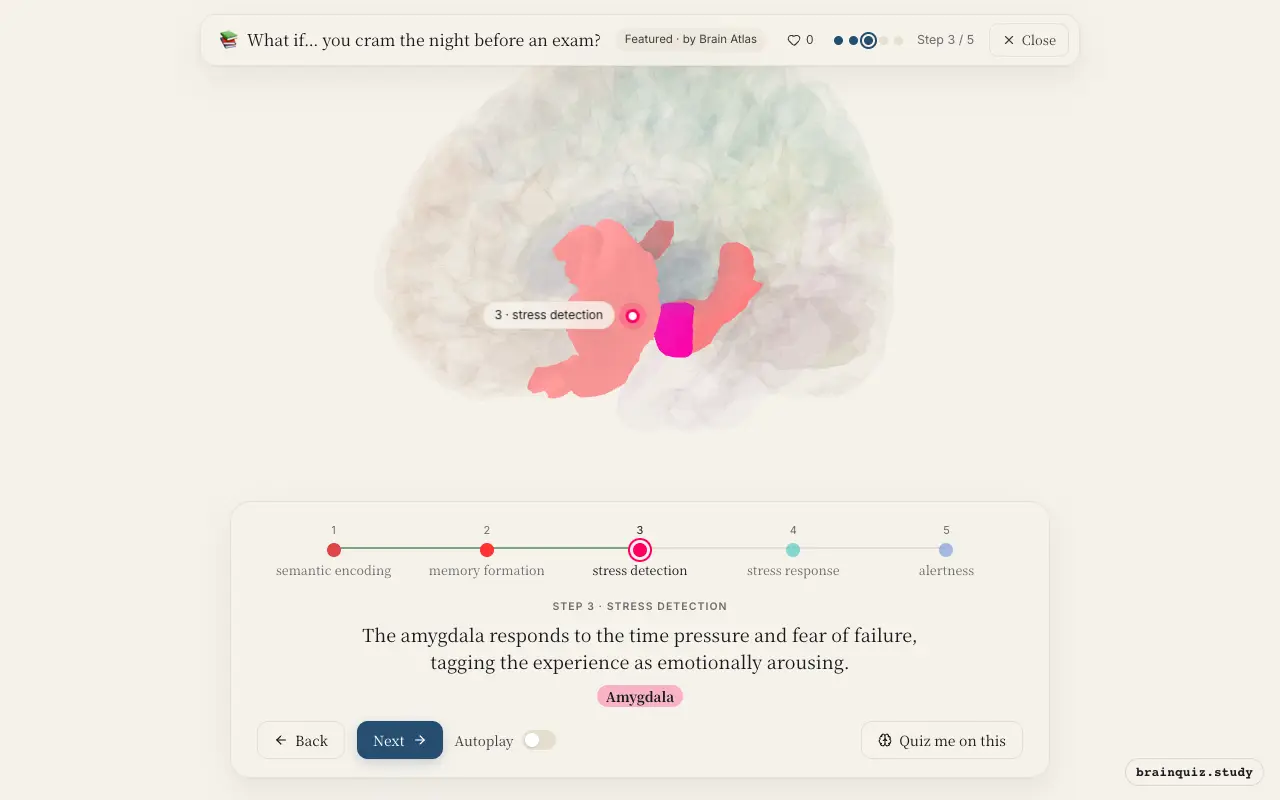
The amygdala detects threats and triggers an emotional response. This can enhance memory for the emotional context but may interfere with the precise encoding of study material. Moderate arousal can help, but high stress typically impairs cognitive flexibility.
4. Hypothalamus: stress response
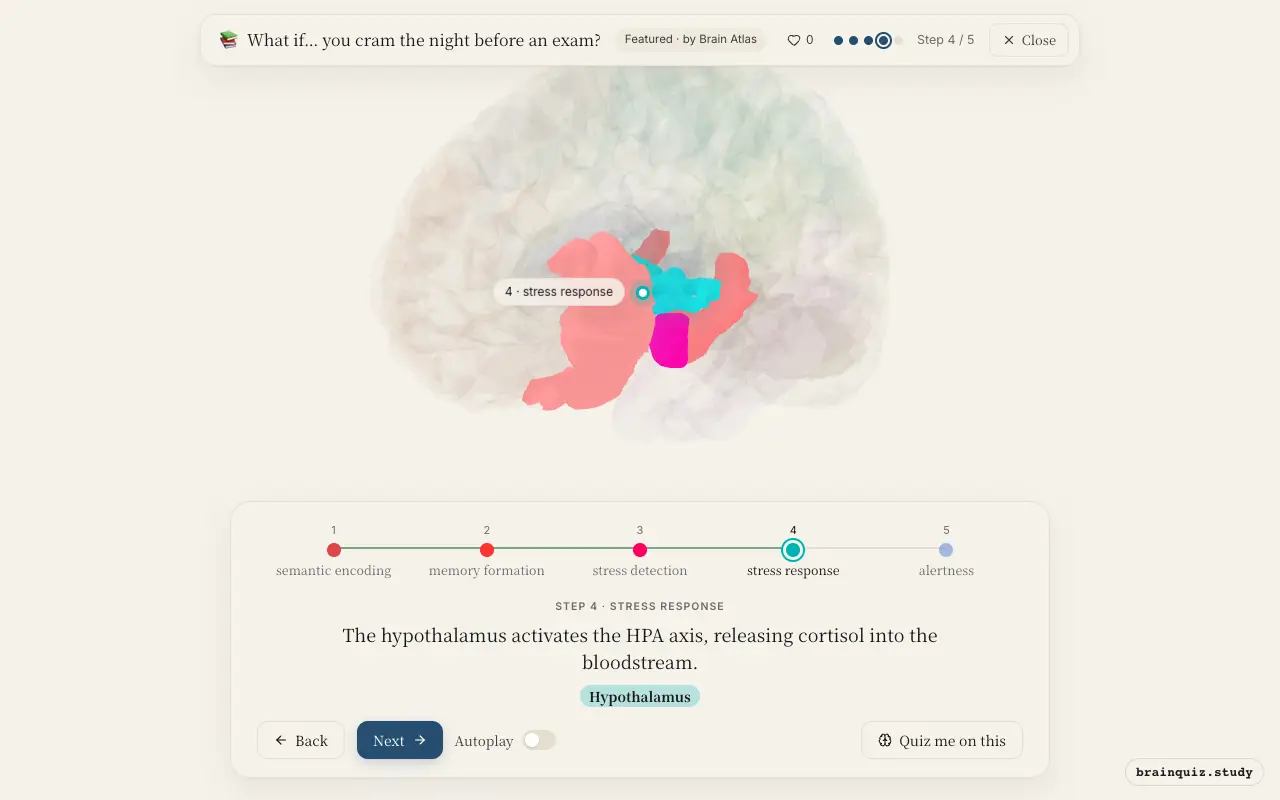
Cortisol travels to the brain and binds to receptors in the hippocampus, which can disrupt synaptic plasticity and memory formation. Prolonged high cortisol during cramming may actually reduce the hippocampus's ability to encode new information.
5. Locus Coeruleus: alertness
This brainstem nucleus projects widely to the cortex, increasing arousal and attention. It helps you push through the night, but chronic activation can lead to decreased cognitive performance and increased anxiety.
Good to know
- Sleep is essential for memory consolidation; cramming often leads to poor long-term retention because the hippocampus consolidates less effectively without it.
- Cortisol can enhance memory for emotionally salient events but impair the retrieval of neutral declarative information.
- The locus coeruleus–norepinephrine system boosts attention but overactivation can cause anxiety and racing thoughts.
Cramming vs spaced practice
Spaced practice allows the hippocampus to consolidate memories gradually, with sleep playing a key role. Cramming triggers acute stress and elevated cortisol, which can disrupt encoding and consolidation, leading to weaker long-term retention despite short-term familiarity.
Test yourself
Which brain region is most directly involved in semantic elaboration during cramming?
What is a likely effect of high cortisol during cramming?
Which region helps you stay awake during late-night studying?
0 of 3 answered · 0 correct
Simplified: many regions work together at once, and this shows the main players in the order they act.