What happens in your brain when you learn to play the piano?
Updated
When you learn piano, the auditory cortex processes the sounds, the prefrontal cortex plans and holds the sequence, the motor cortex produces the finger movements, and the cerebellum and basal ganglia refine and automate the skill.
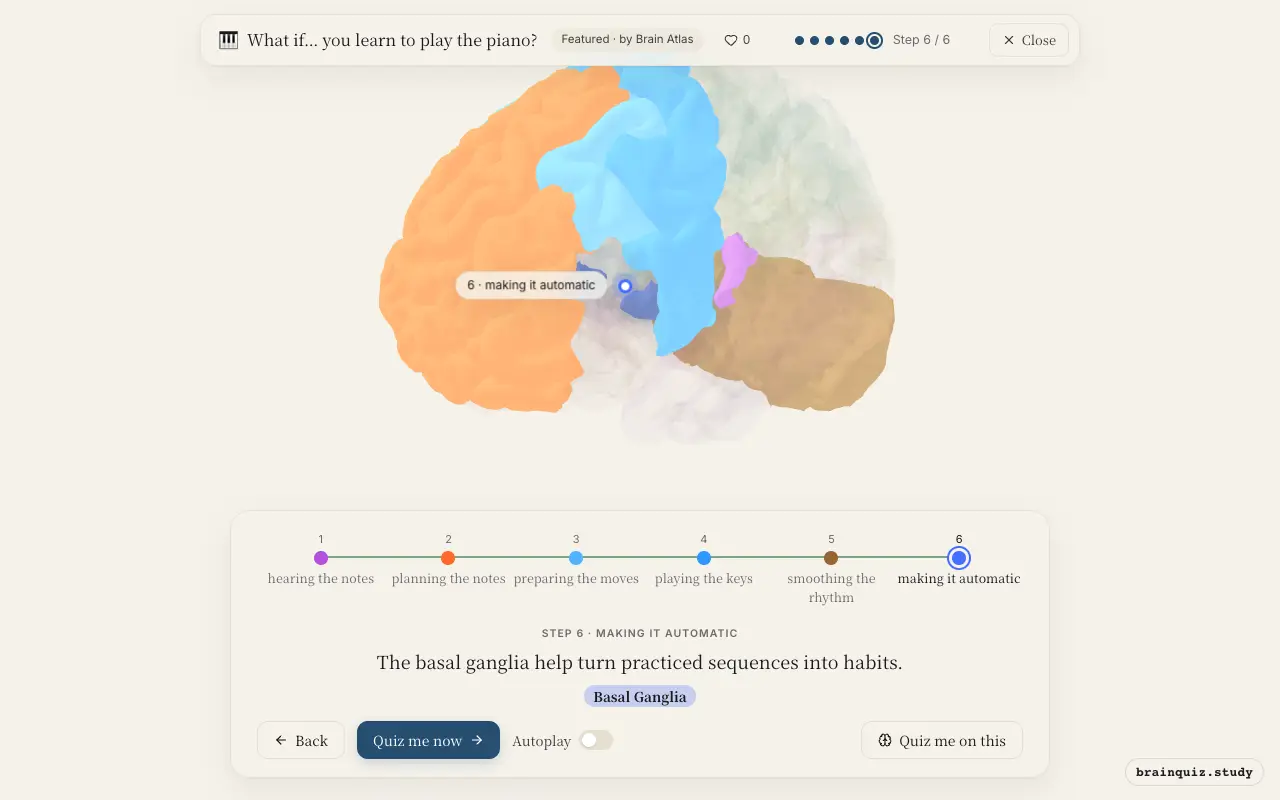
Watch it light up on the 3D brain
Brain regions that light up
| Order | Region | What it does here |
|---|---|---|
| 1 | Auditory Cortex | Your auditory cortex processes the piano sounds you produce and hear. |
| 2 | Prefrontal Cortex | The prefrontal cortex holds the sequence of notes in working memory. |
| 3 | Premotor Cortex | The premotor cortex maps the notes to specific finger movements. |
| 4 | Motor Cortex | The motor cortex sends commands to your finger muscles. |
| 5 | Cerebellum | The cerebellum monitors timing and coordination, correcting errors in real time. |
| 6 | Basal Ganglia | The basal ganglia help turn practiced sequences into habits. |
1. Auditory Cortex: hearing the notes
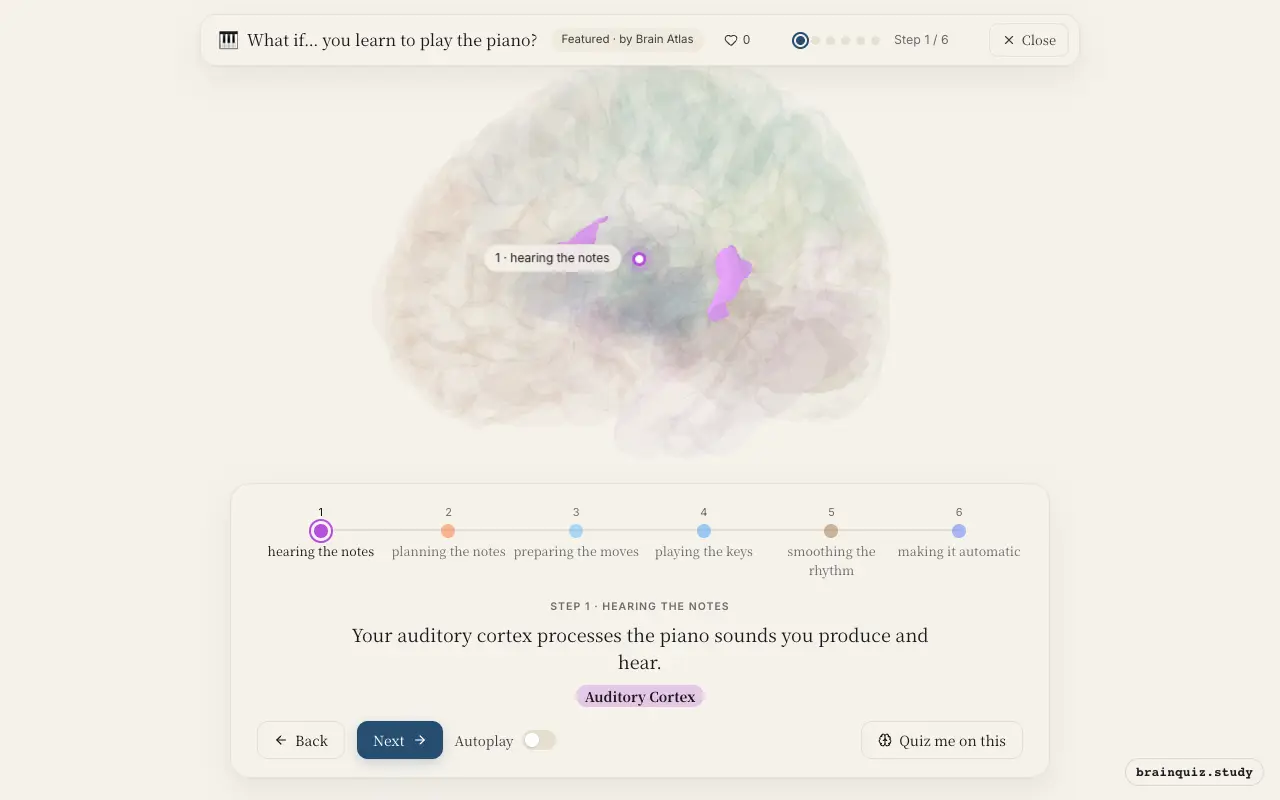
The auditory cortex receives input from the ears and analyzes pitch, timing, and timbre. When you play a note, it compares the heard sound to your expectation, providing feedback for adjustments. This region is active during both listening and playing.
2. Prefrontal Cortex: planning the notes
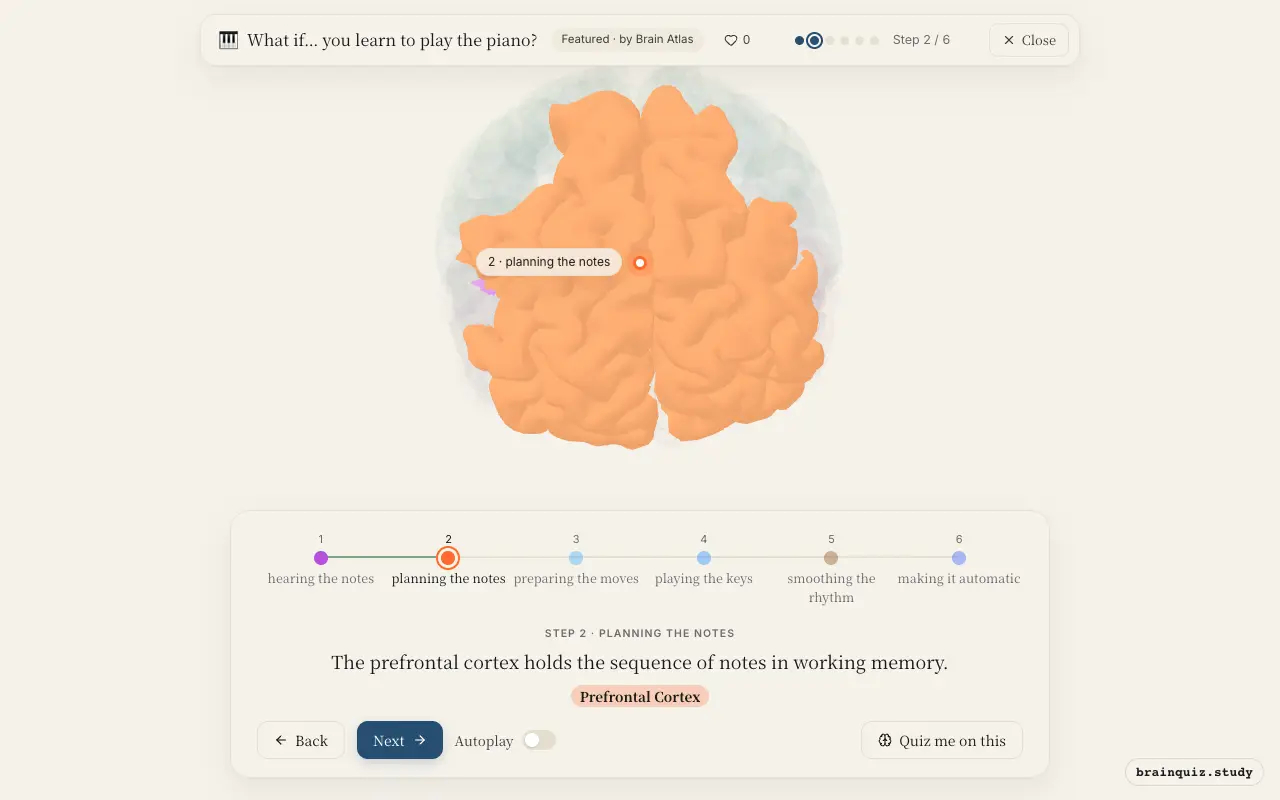
The prefrontal cortex is crucial for working memory and executive control. It keeps the upcoming notes in mind, allocates attention to the task, and suppresses distractions. Early in learning, this region is highly active as you consciously think through each step.
3. Premotor Cortex: preparing the moves
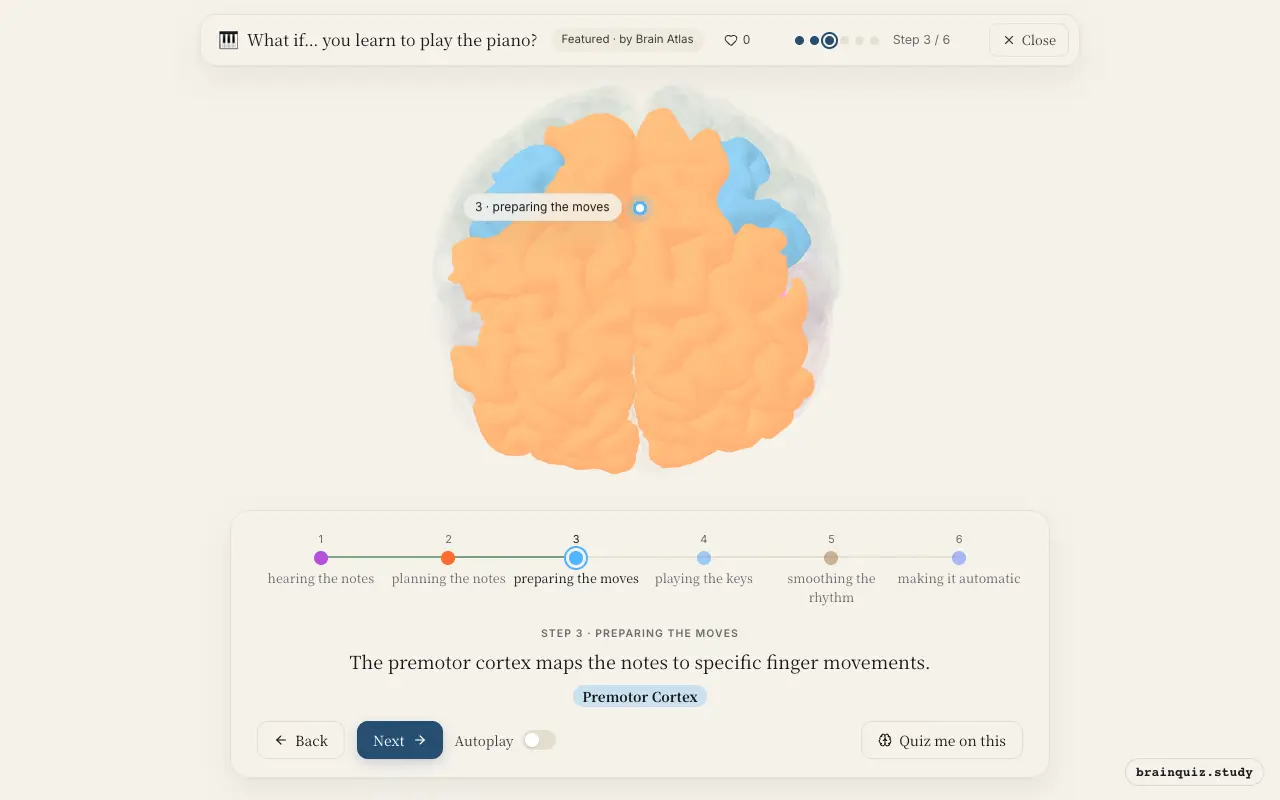
The premotor cortex sits just in front of the motor cortex and plans the sequence of movements. It integrates sensory information from the prefrontal cortex and auditory areas to determine which fingers to move and in what order. It helps create a motor program before execution.
4. Motor Cortex: playing the keys
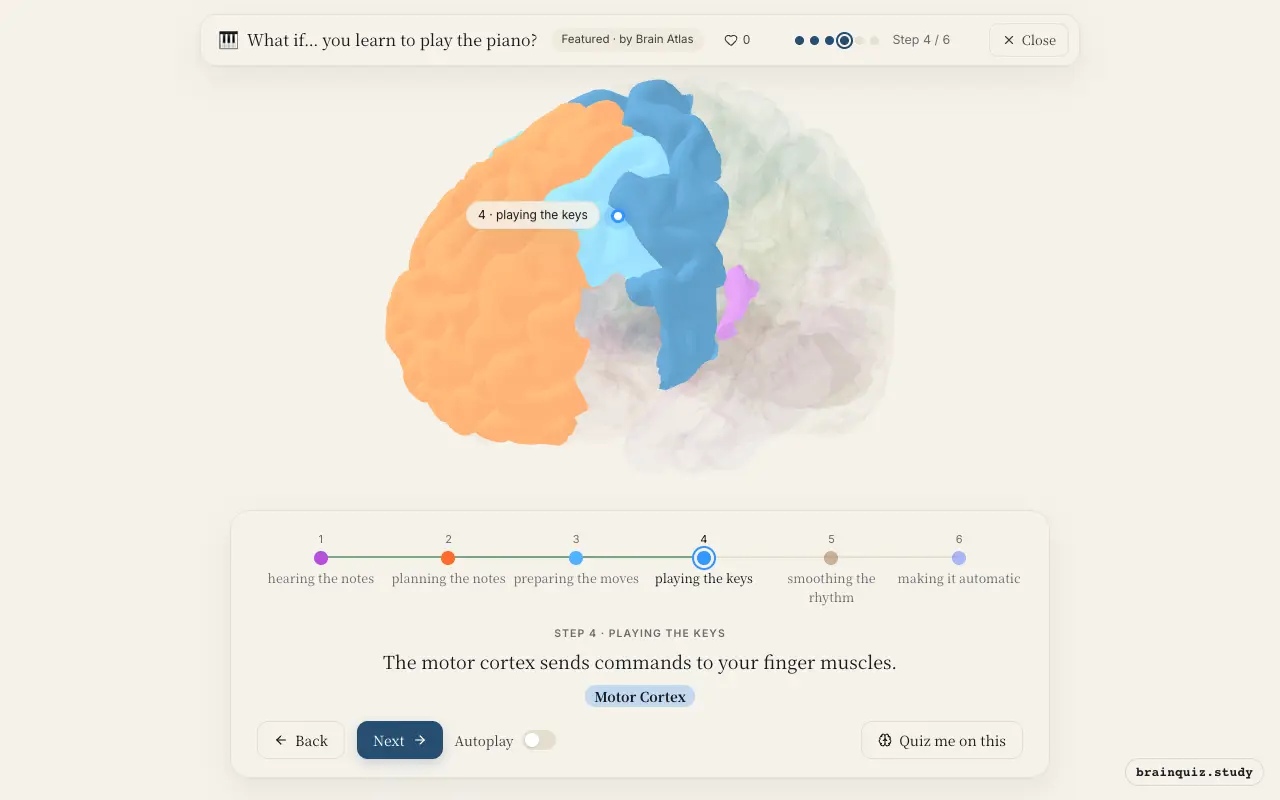
The primary motor cortex executes the planned movements by sending signals down the spinal cord to the muscles of the hands and fingers. It controls the precise timing and force of each key press. As practice continues, the motor cortex becomes more efficient.
5. Cerebellum: smoothing the rhythm
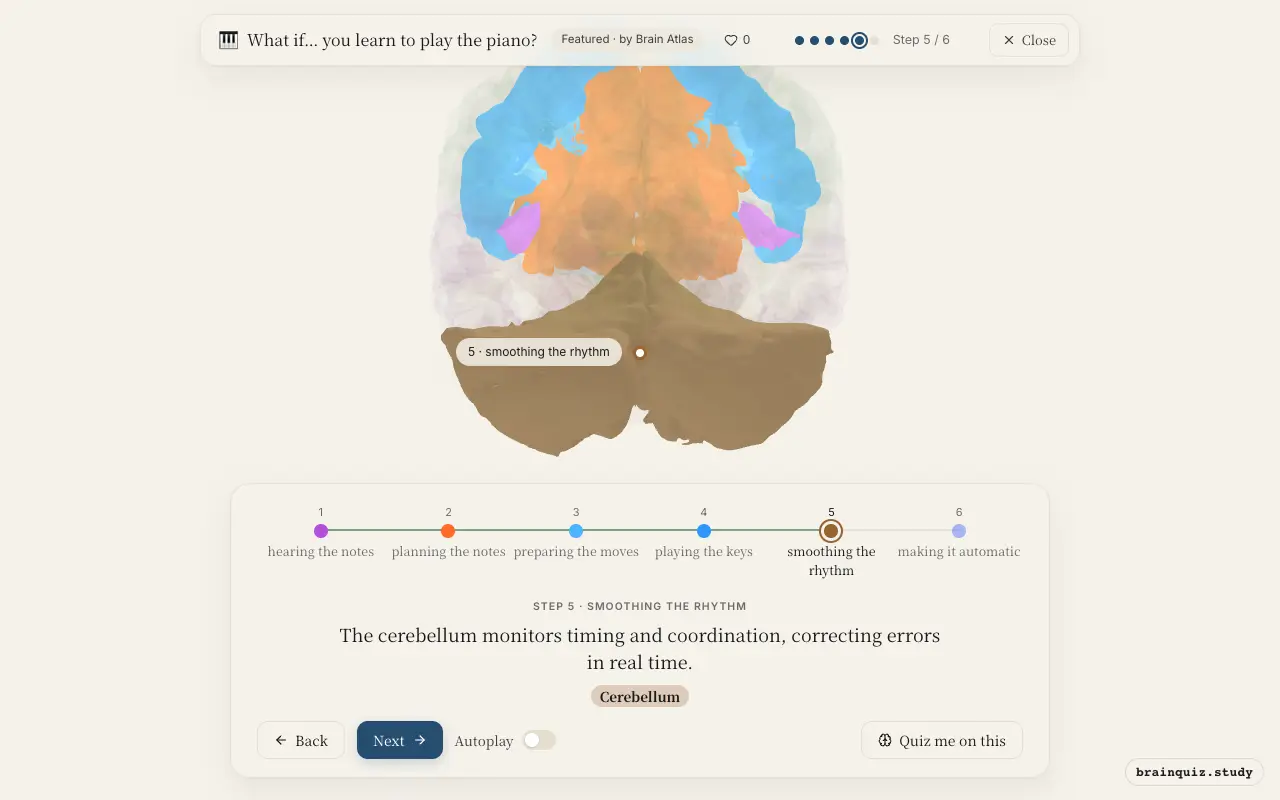
The cerebellum compares the intended movement with the actual sensory feedback from the fingers and ears. It detects timing errors and adjusts motor commands to improve accuracy and smoothness. Over time, the cerebellum stores motor memories for automatic playing.
6. Basal Ganglia: making it automatic
The basal ganglia are involved in procedural learning and habit formation. As you practice, the basal ganglia help chunk movements into automatic patterns, reducing the need for conscious control. This allows you to play smoothly without thinking about each finger.
Good to know
- The cerebellum contains more than half of the brain's neurons.
- Studies suggest that musicians have larger brain regions related to auditory and motor processing than non-musicians.
First attempts vs. fluent performance
During initial learning, the prefrontal cortex and basal ganglia are highly active as you consciously think through each note. After extensive practice, activity shifts to the cerebellum, basal ganglia, and motor cortex, allowing for automatic, effortless playing with minimal conscious thought.
Test yourself
Which brain region is most responsible for holding the sequence of notes in working memory during piano learning?
As you practice a piano piece, which two regions become more important for automatic playing?
What is the role of the auditory cortex during piano practice?
0 of 3 answered · 0 correct
Simplified: many regions work together at once, and this shows the main players in the order they act.