What happens in your brain when you smell something from your childhood?
Updated
A childhood smell first hits the amygdala, which tags it with emotion. The hippocampus then retrieves the associated memory, the orbitofrontal cortex evaluates its meaning, and the posterior cingulate cortex integrates it into your sense of self.
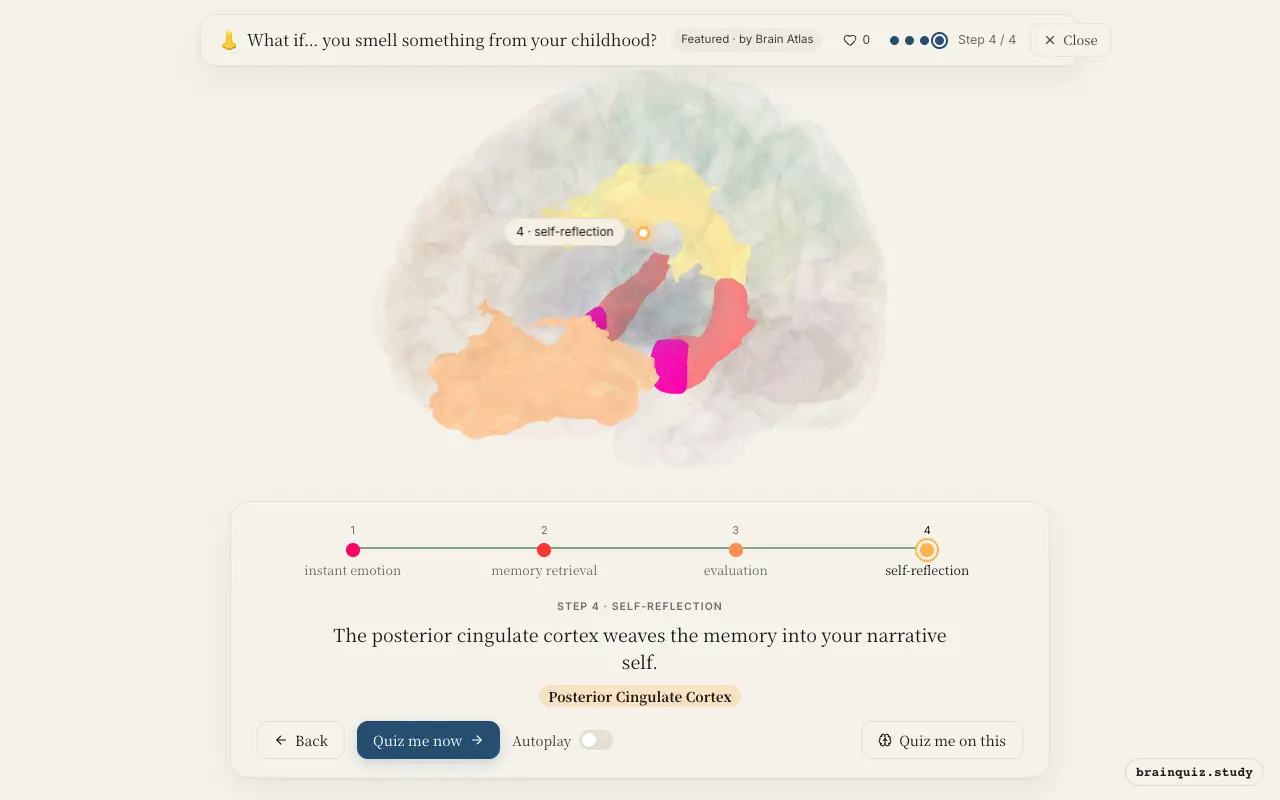
Watch it light up on the 3D brain
Brain regions that light up
| Order | Region | What it does here |
|---|---|---|
| 1 | Amygdala | Odor signals reach the amygdala directly, bypassing the thalamus. |
| 2 | Hippocampus | The hippocampus retrieves the autobiographical context linked to the smell. |
| 3 | Orbitofrontal Cortex | The orbitofrontal cortex assesses the smell's meaning and reward value. |
| 4 | Posterior Cingulate Cortex | The posterior cingulate cortex weaves the memory into your narrative self. |
1. Amygdala: instant emotion
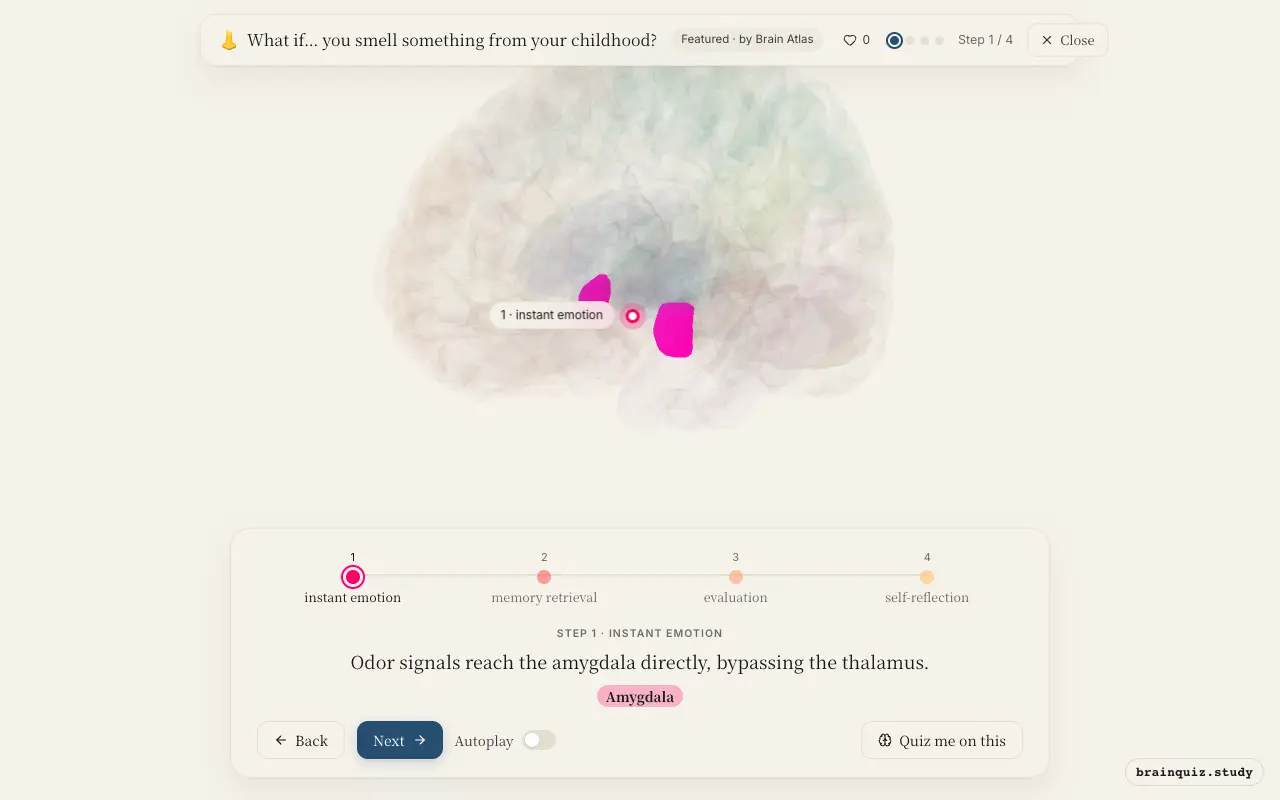
The amygdala receives direct input from the olfactory bulb, allowing it to tag the smell with emotional significance before conscious awareness. This fast pathway explains why a scent can evoke a strong feeling almost instantly. For a childhood smell, the amygdala may trigger feelings of warmth or nostalgia based on past associations.
2. Hippocampus: memory retrieval
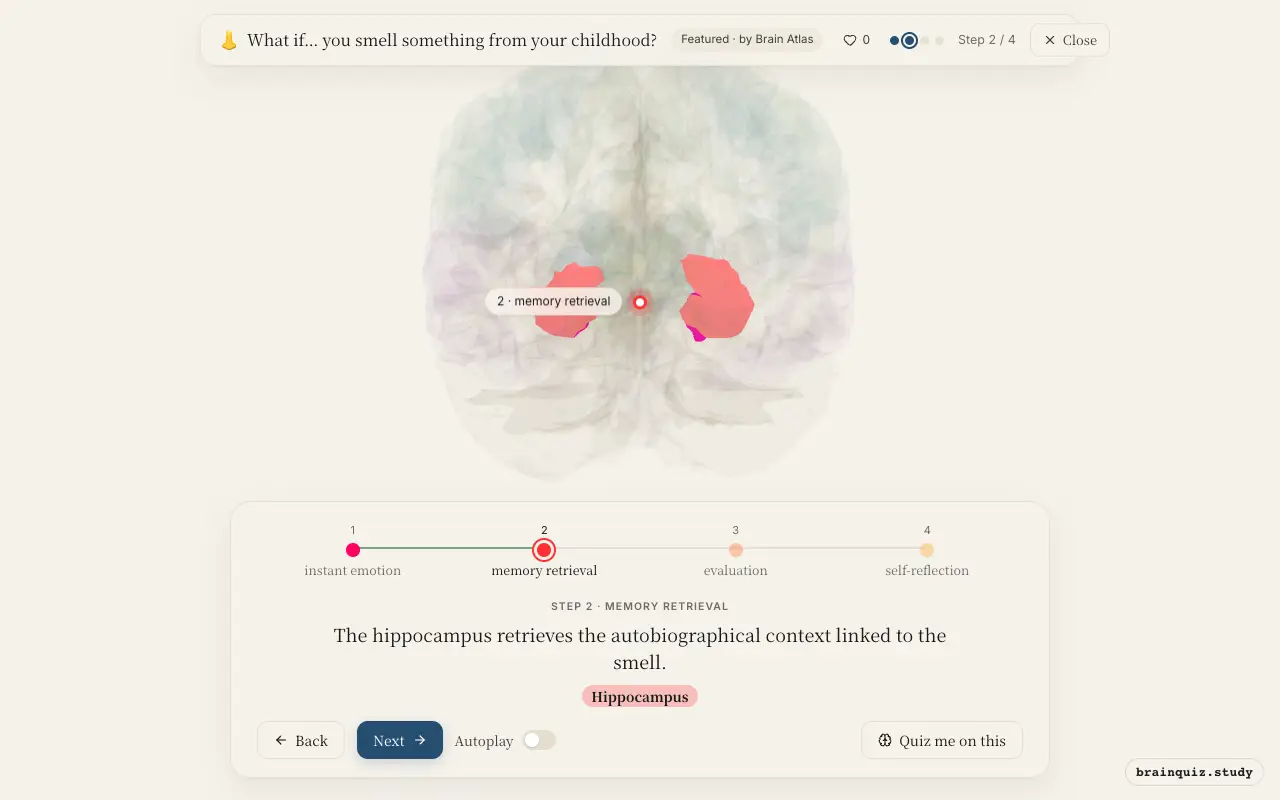
The hippocampus receives olfactory information via the entorhinal cortex and searches for related memories. It reconstructs the scene, people, and events from your childhood that are associated with that odor. This process is often vivid because smell is strongly linked to episodic memory.
3. Orbitofrontal Cortex: evaluation
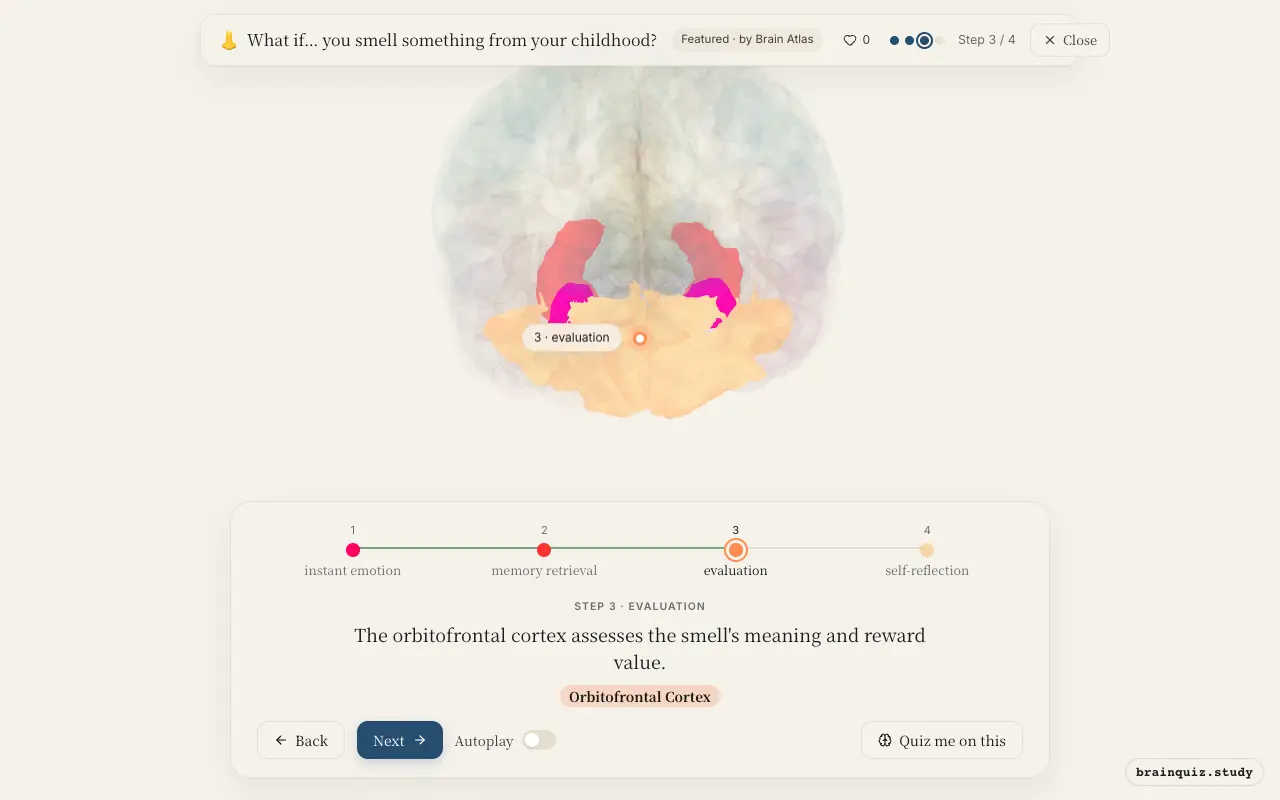
The orbitofrontal cortex integrates the sensory and emotional information to determine how pleasant or familiar the smell is. It links the odor to past rewards or positive experiences, contributing to the feeling of comfort. This region helps decide whether the memory is worth savoring.
4. Posterior Cingulate Cortex: self-reflection
As part of the default mode network, the posterior cingulate cortex activates during self-referential thought. It connects the retrieved memory to your identity and personal history, reinforcing the sense of who you are. This step makes the smell feel personally meaningful.
Good to know
- Unlike other senses, smell bypasses the thalamus and projects directly to the amygdala and hippocampus, which may explain its strong link to emotion and memory.
- The phenomenon of a smell evoking a vivid autobiographical memory is sometimes called the 'Proust effect' after Marcel Proust's description in 'In Search of Lost Time'.
- The orbitofrontal cortex receives olfactory information from the piriform cortex and thalamus, making it crucial for odor evaluation.
Childhood smell vs. childhood sight
While vision and hearing are processed through the thalamus before reaching memory and emotion centers, smell takes a direct route to the amygdala and hippocampus. This bypass may make odor-evoked memories more emotionally intense and vivid than those triggered by other sensory cues.
Test yourself
Which brain region receives direct olfactory input and tags smells with emotion?
Why do childhood smells often evoke vivid memories?
Which region helps integrate a smell-triggered memory into your sense of self?
0 of 3 answered · 0 correct
Simplified: many regions work together at once, and this shows the main players in the order they act.