What happens in your brain when you taste something sour?
Updated
Sour taste travels from your tongue to your brainstem, then to your thalamus and insula, where you perceive it. Your orbitofrontal cortex judges if it's pleasant, and your amygdala reacts if it's unpleasant.
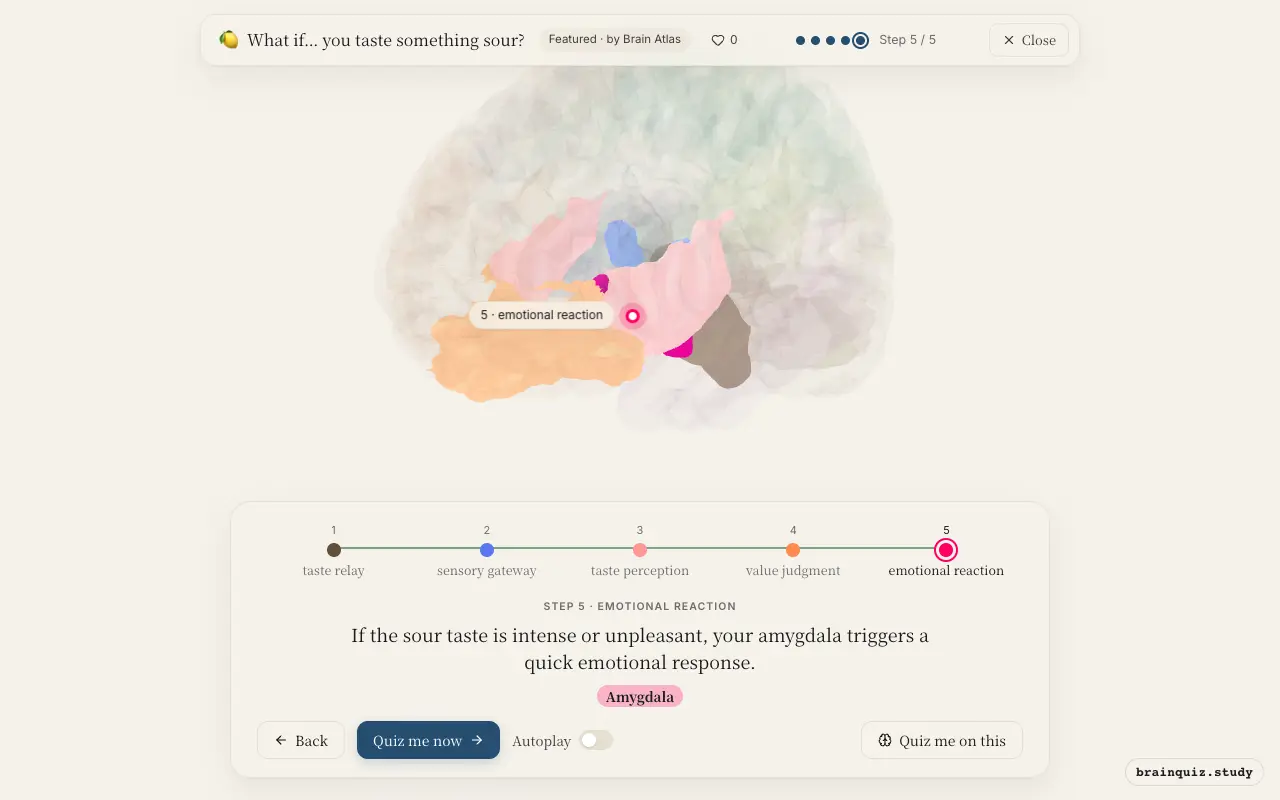
Watch it light up on the 3D brain
Brain regions that light up
| Order | Region | What it does here |
|---|---|---|
| 1 | Brainstem | Sour chemicals from your food activate taste receptors on your tongue, sending signals to your brainstem. |
| 2 | Ventral Posterior / Ventrolateral Group | From your brainstem, the signal goes to your thalamus, which relays it to the taste cortex. |
| 3 | Insula | Your insula processes the taste, letting you recognize it as sour. |
| 4 | Orbitofrontal Cortex | Your orbitofrontal cortex evaluates whether you like or dislike the sour taste. |
| 5 | Amygdala | If the sour taste is intense or unpleasant, your amygdala triggers a quick emotional response. |
1. Brainstem: taste relay
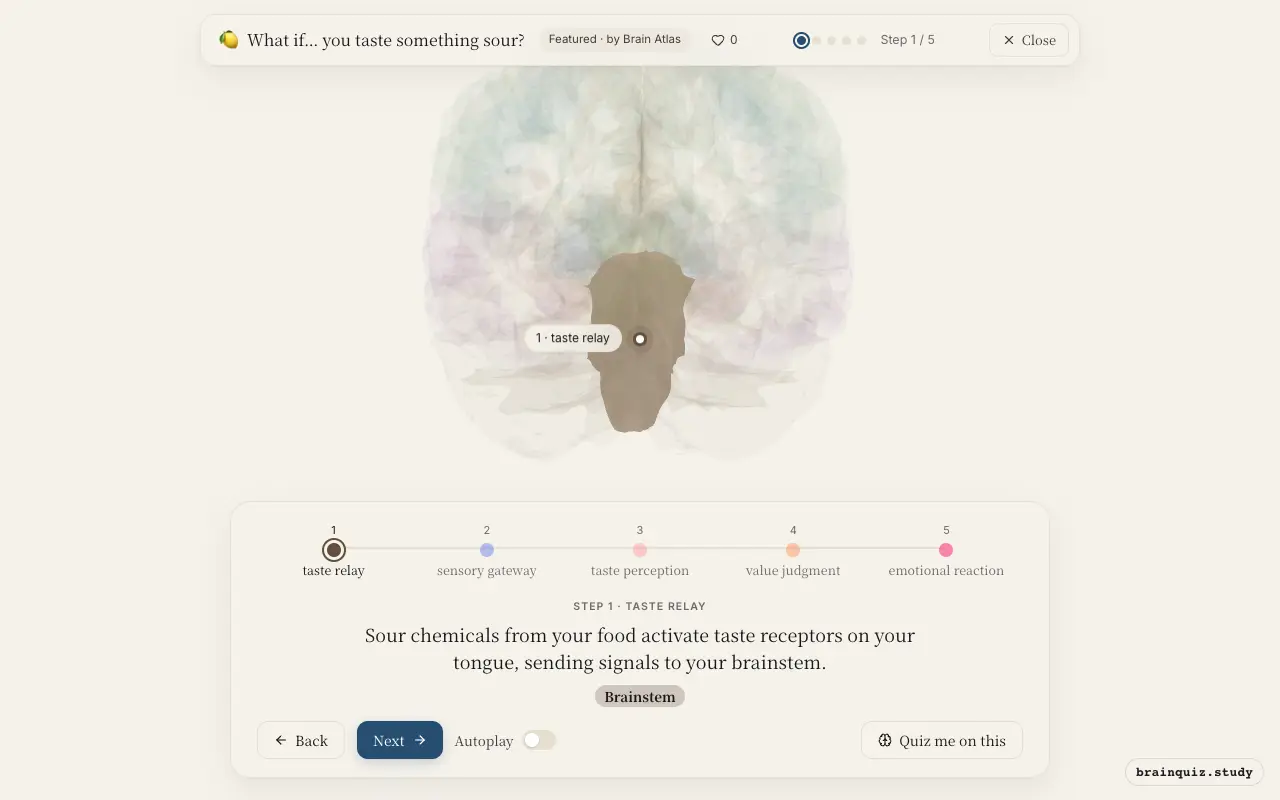
The brainstem's nucleus of the solitary tract receives taste information from cranial nerves. It also triggers automatic responses like salivation and swallowing, helping your body handle the sour stimulus.
2. Ventral Posterior / Ventrolateral Group: sensory gateway
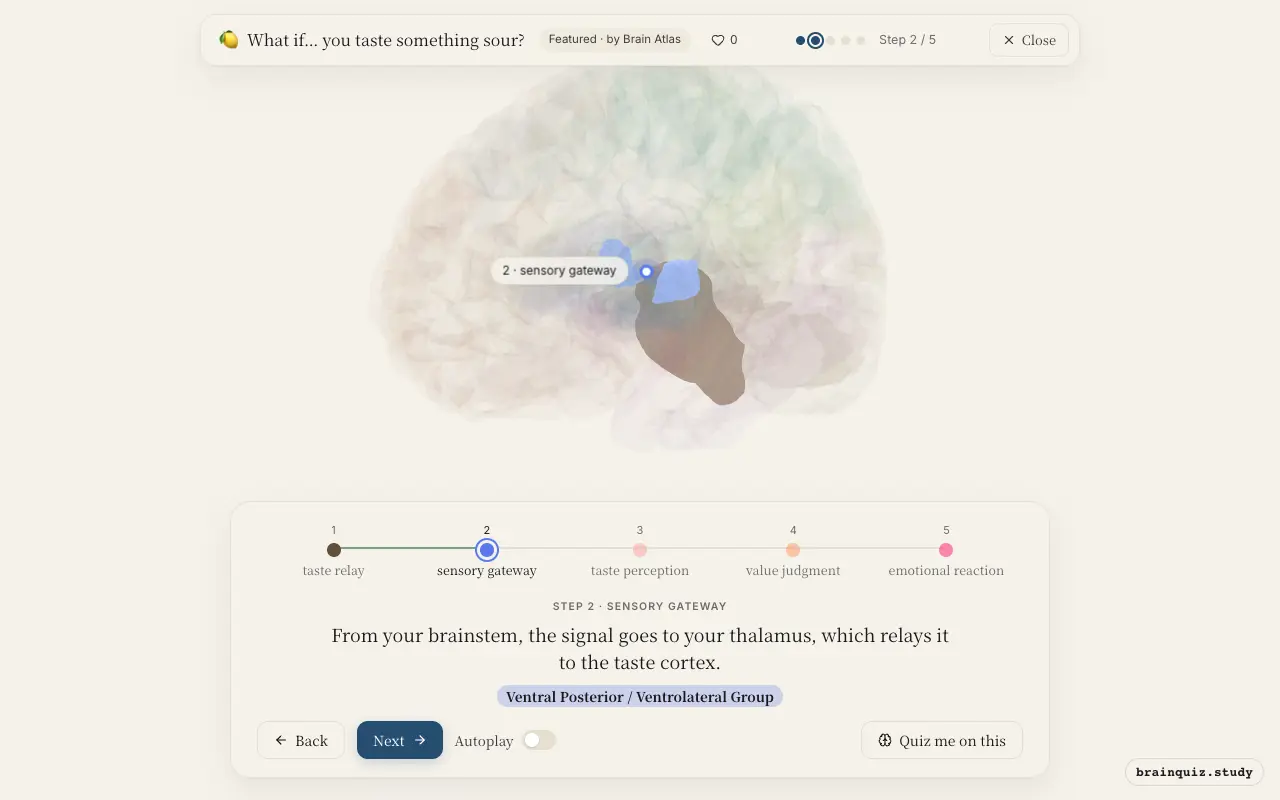
The ventral posterior medial nucleus of the thalamus acts as a relay station, forwarding taste information to the insula. This ensures the sour signal reaches conscious awareness.
3. Insula: taste perception
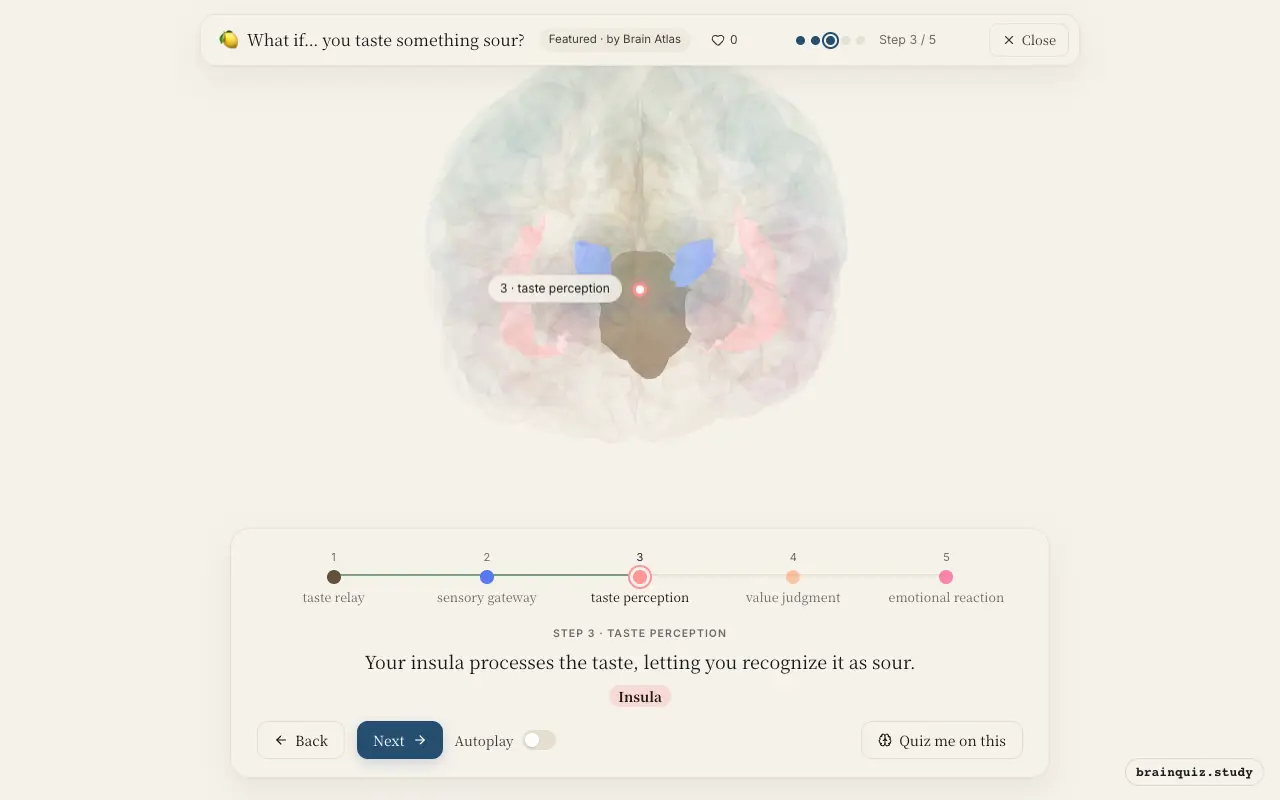
The insula is the primary gustatory cortex, where the basic taste quality is identified. It also connects taste to internal bodily states, contributing to the feeling of sourness.
4. Orbitofrontal Cortex: value judgment
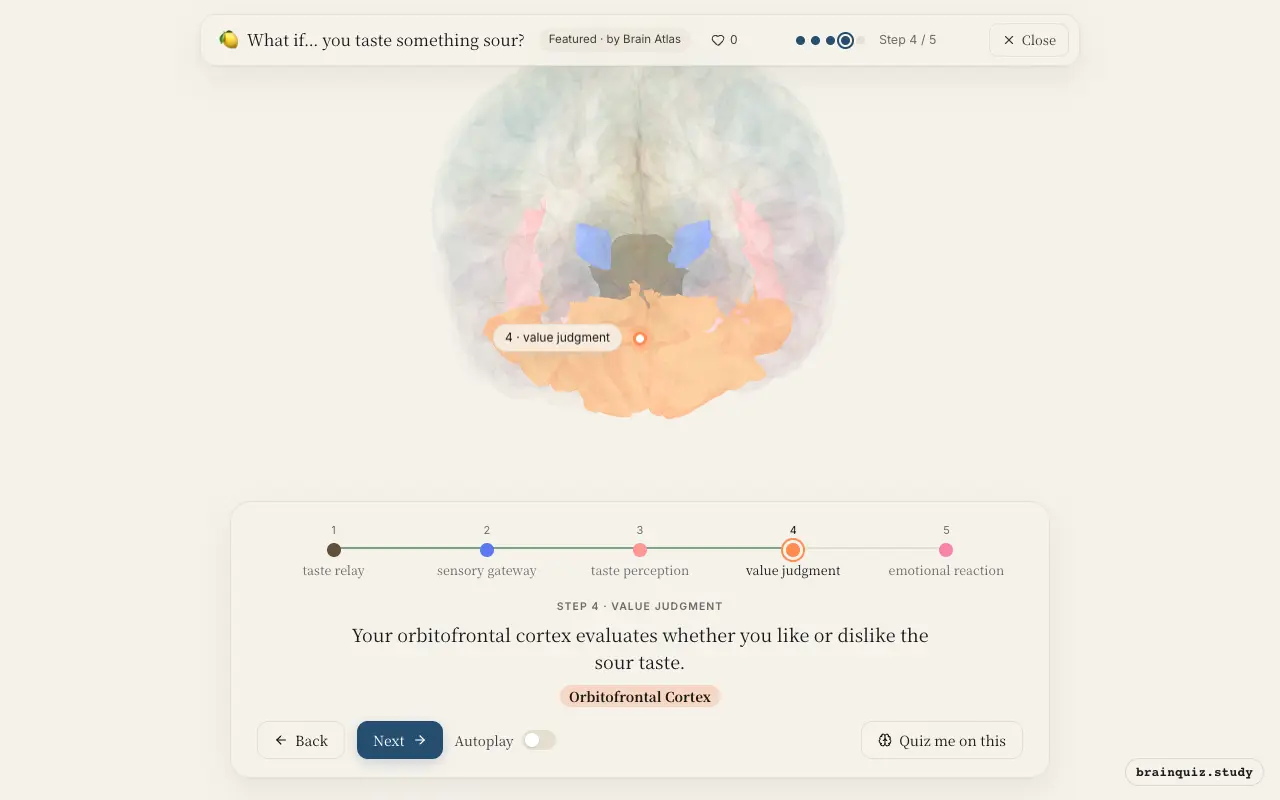
The orbitofrontal cortex combines taste with reward and emotional information to determine pleasantness or unpleasantness. It helps decide if the sour food is worth eating.
5. Amygdala: emotional reaction
The amygdala responds to aversive stimuli, including sour tastes that may signal spoiled food. It can create a feeling of disgust or a desire to avoid it.
Good to know
- Sour taste is detected by hydrogen ions (acids) entering taste cells through ion channels.
- The facial nerve (cranial nerve VII) carries sour taste from the front two-thirds of the tongue.
- Salivation increases in response to sour taste to dilute the acid.
Sour vs Sweet
While both activate the taste pathway, sweet taste typically produces more activity in reward areas like the nucleus accumbens, leading to pleasure. Sour taste, especially strong sour, tends to activate the amygdala and insula more, reflecting an aversive or warning response.
Test yourself
Which brain region is the primary gustatory cortex where sour taste is perceived?
What role does the orbitofrontal cortex play in tasting something sour?
Which structure first receives taste signals from the tongue?
0 of 3 answered · 0 correct
Simplified: many regions work together at once, and this shows the main players in the order they act.