What happens in your brain when you use cannabis?
Updated
Cannabis binds CB1 receptors, inhibiting neurotransmitter release. In the prefrontal cortex, it impairs working memory and decision-making; in the hippocampus, it disrupts memory formation; in the cerebellum, it affects motor coordination; in the basal ganglia, it alters movement and reward processing.
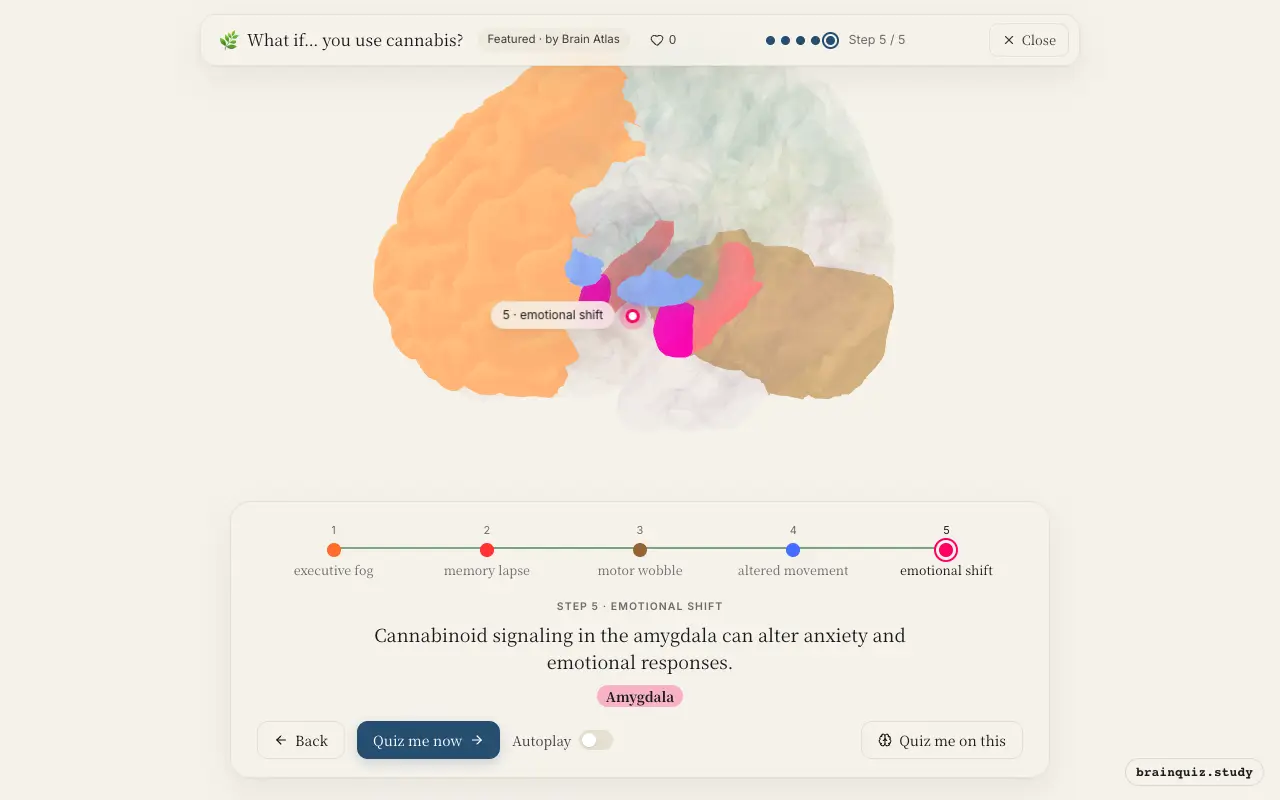
Watch it light up on the 3D brain
Brain regions that light up
| Order | Region | What it does here |
|---|---|---|
| 1 | Prefrontal Cortex | Cannabinoids reduce prefrontal activity, impairing working memory and decision-making. |
| 2 | Hippocampus | Cannabinoid activation disrupts hippocampal encoding, causing short-term memory problems. |
| 3 | Cerebellum | Cannabinoids alter cerebellar signaling, leading to impaired coordination and balance. |
| 4 | Basal Ganglia | Cannabinoid effects on basal ganglia circuits change movement initiation and reward-driven behavior. |
| 5 | Amygdala | Cannabinoid signaling in the amygdala can alter anxiety and emotional responses. |
1. Prefrontal Cortex: executive fog
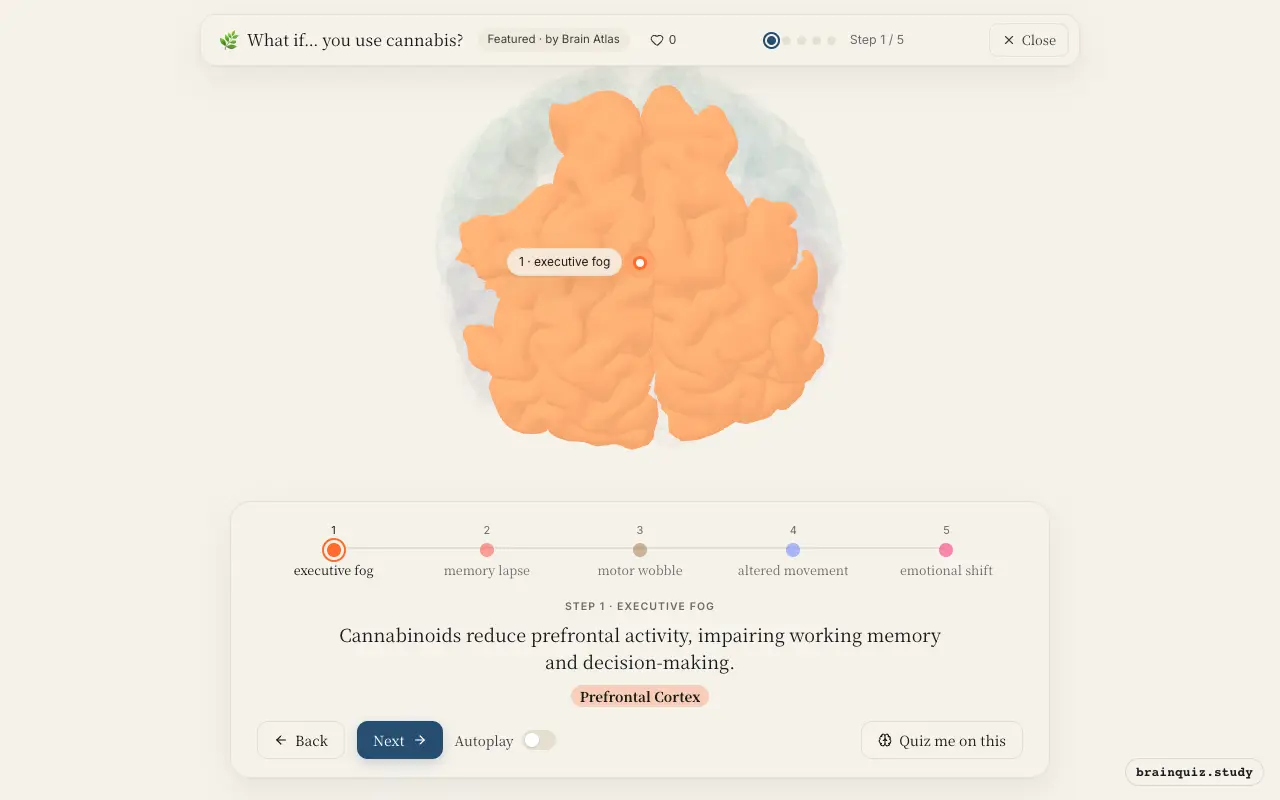
THC acts on CB1 receptors, which are abundant in the prefrontal cortex. This reduces glutamate release and alters prefrontal function. Studies suggest that acute cannabis use leads to deficits in tasks requiring executive control, such as planning and problem-solving. The impairment is thought to be dose-dependent and may vary between individuals.
2. Hippocampus: memory lapse
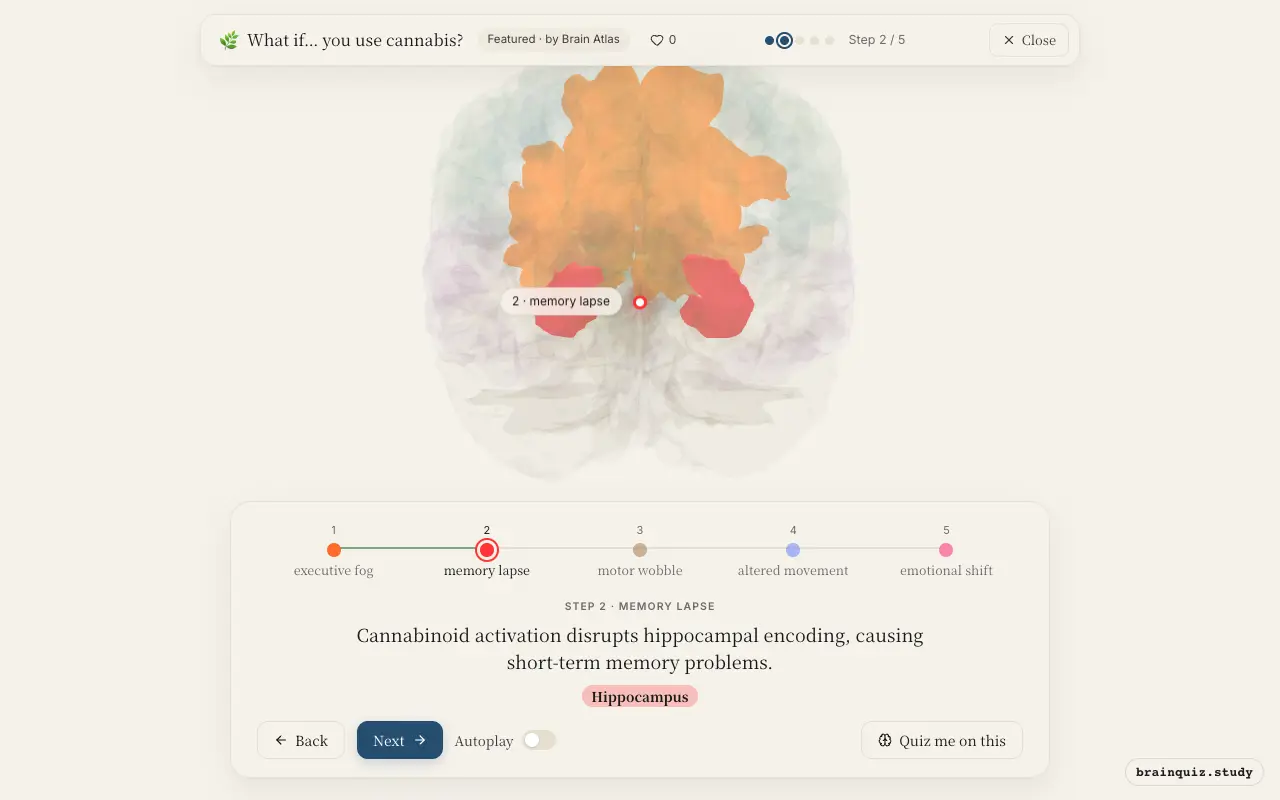
The hippocampus is rich in CB1 receptors, particularly in inhibitory interneurons. THC reduces inhibition of principal cells, impairing synaptic plasticity essential for memory formation. This leads to difficulty forming new memories while under the influence, a hallmark of cannabis intoxication. Long-term heavy use may produce persistent changes, though the evidence is mixed.
3. Cerebellum: motor wobble
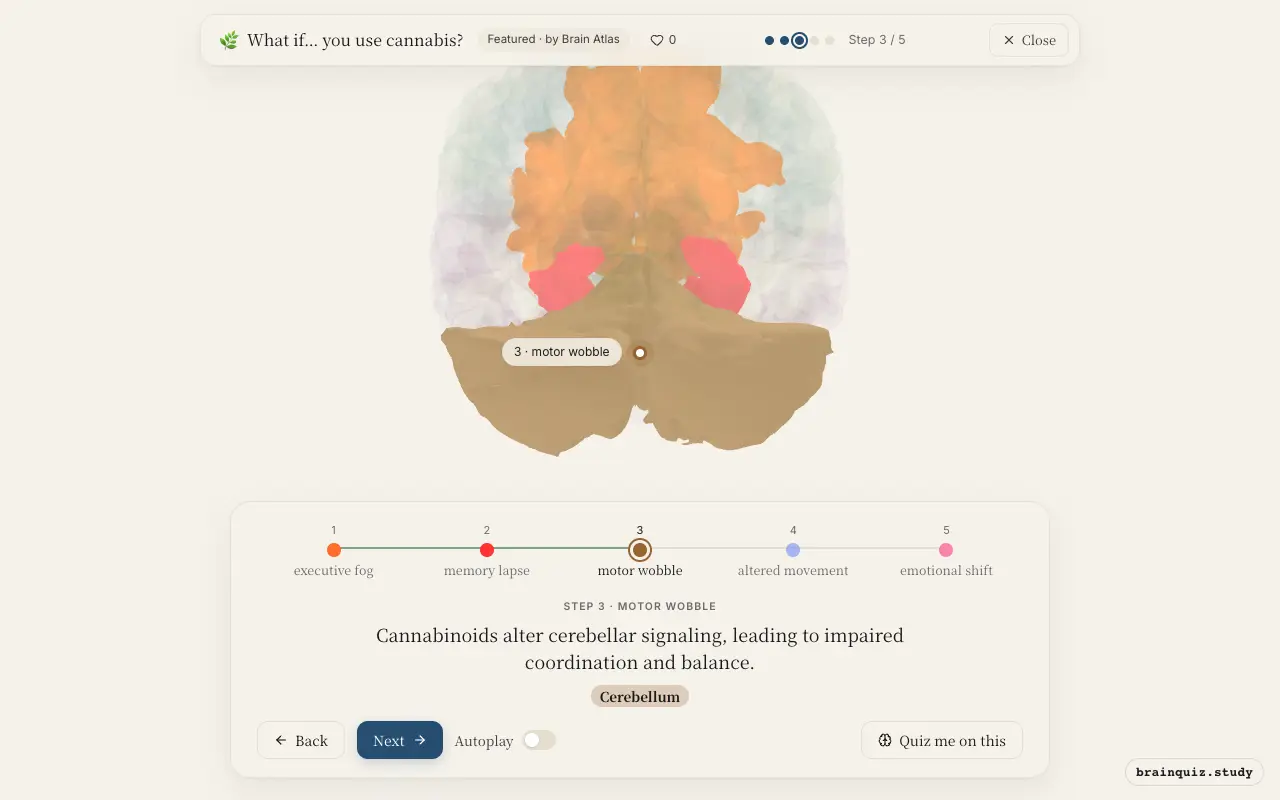
The cerebellum contains CB1 receptors, especially in Purkinje cells and granule cells. Cannabis use can disrupt cerebellar timing and motor learning, causing ataxia and reduced fine motor control. This is why field sobriety tests often reveal impairment. The effects are transient and typically resolve as the drug clears.
4. Basal Ganglia: altered movement
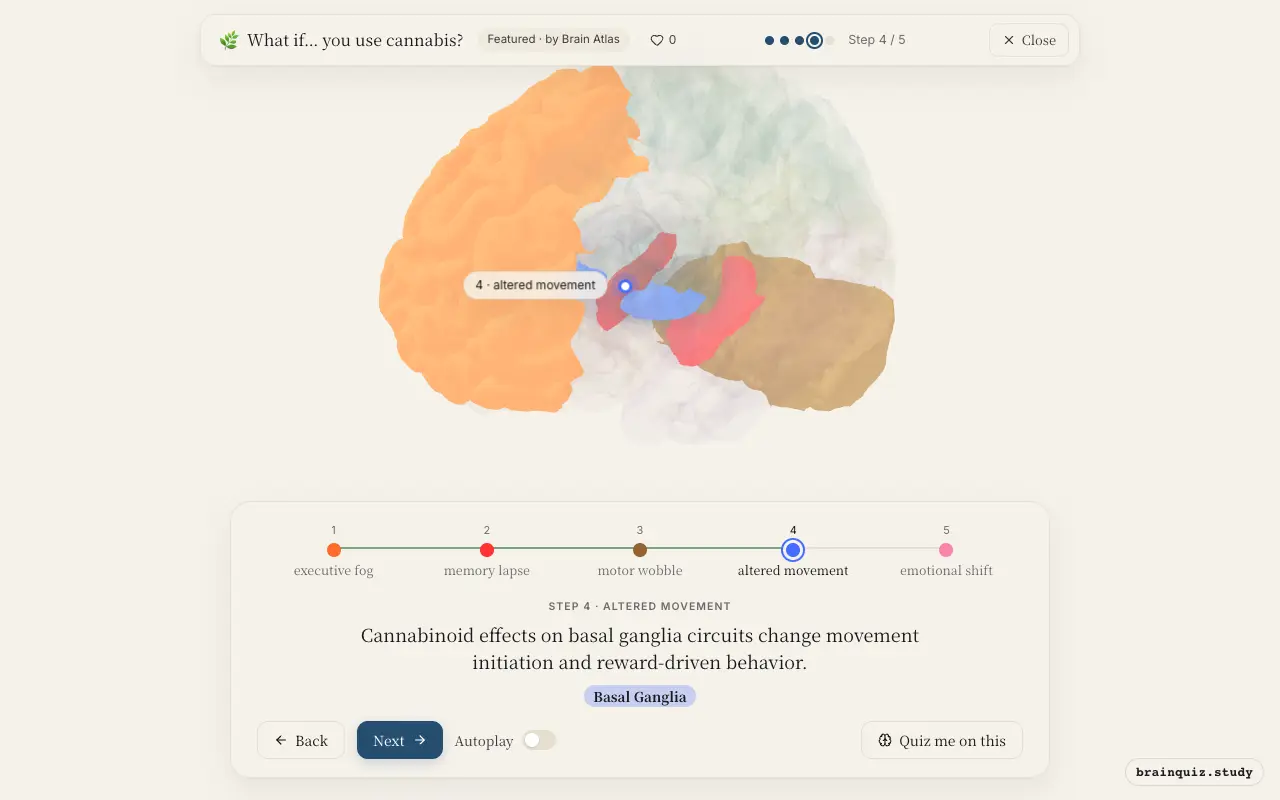
The basal ganglia, including the striatum and globus pallidus, express CB1 receptors. THC modulates dopamine and GABA signaling in these circuits, affecting motor control and habit formation. Users may experience slowed movements or altered motivation. These effects contribute to the acute motor and cognitive changes seen with cannabis.
5. Amygdala: emotional shift
The amygdala has high CB1 receptor density. THC can either increase or decrease anxiety depending on dose and context, reflecting biphasic effects on amygdala activity. Low doses may reduce stress responses, while high doses can trigger paranoia or panic. This variability is a key factor in individual reactions to cannabis.
Good to know
- THC, the main psychoactive compound in cannabis, binds to CB1 receptors, which are widely distributed throughout the brain.
- Cannabis use can cause short-term memory impairment by disrupting long-term potentiation in the hippocampus.
- Regular heavy cannabis use during adolescence is associated with long-term cognitive changes, but causality is still debated.
Cannabis vs Alcohol on the Brain
Both substances impair coordination and cognition, but via different systems. Alcohol enhances GABA and inhibits glutamate broadly, while cannabis acts on specific CB1 receptors. Cannabis primarily alters prefrontal, hippocampal, and cerebellar function; alcohol additionally depresses brainstem arousal centers, increasing risk of coma. Cannabis does not directly suppress breathing like alcohol.
Test yourself
Which brain region is most directly responsible for short-term memory impairment during cannabis use?
THC primarily binds to which receptor in the brain?
Which brain region is NOT typically impaired by acute cannabis use?
0 of 3 answered · 0 correct
Simplified: many regions work together at once, and this shows the main players in the order they act. For learning only, not medical advice.