What happens in your brain when you have a hangover?
Updated
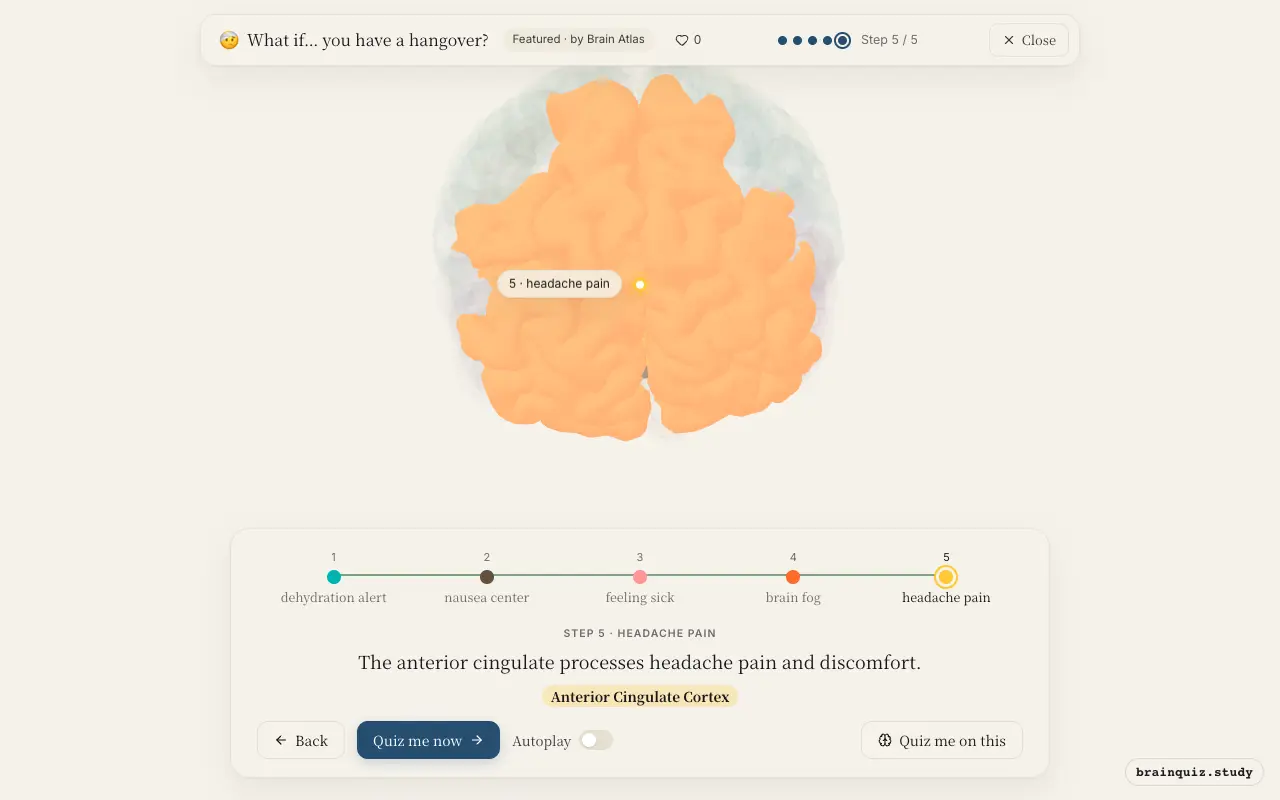
Hypothalamus senses dehydration and triggers thirst; brainstem drives nausea; insula creates the feeling of sickness; prefrontal cortex clouds thinking; anterior cingulate processes headache pain.
Watch it light up on the 3D brain
Brain regions that light up
| Order | Region | What it does here |
|---|---|---|
| 1 | Hypothalamus | The hypothalamus senses low water and triggers thirst. |
| 2 | Brainstem | The brainstem drives nausea and vomiting signals. |
| 3 | Insula | The insula processes internal discomfort and malaise. |
| 4 | Prefrontal Cortex | Prefrontal cortex function dips, causing poor concentration. |
| 5 | Anterior Cingulate Cortex | The anterior cingulate processes headache pain and discomfort. |
1. Hypothalamus: dehydration alert
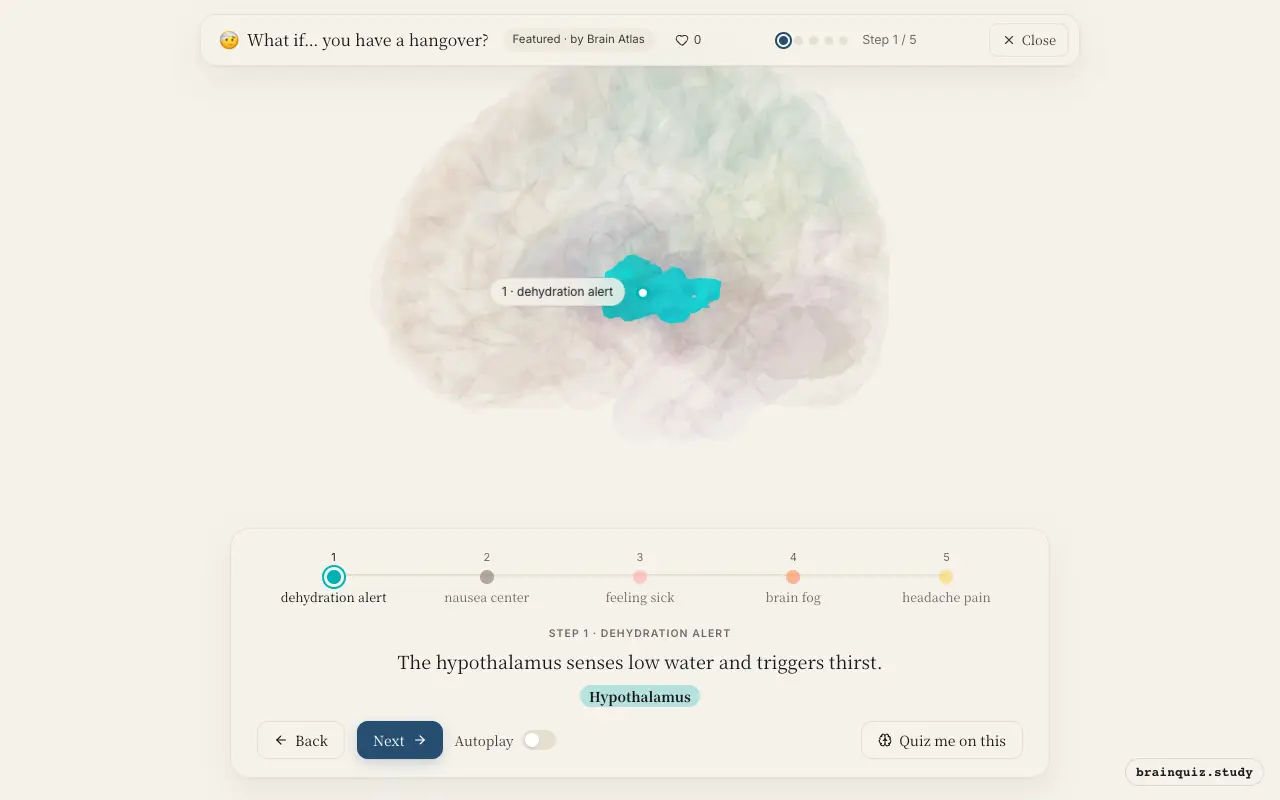
Alcohol suppresses vasopressin (antidiuretic hormone), so the body loses more water. As blood becomes more concentrated, osmoreceptors in the hypothalamus detect the change and drive thirst. This is why you feel parched.
2. Brainstem: nausea center
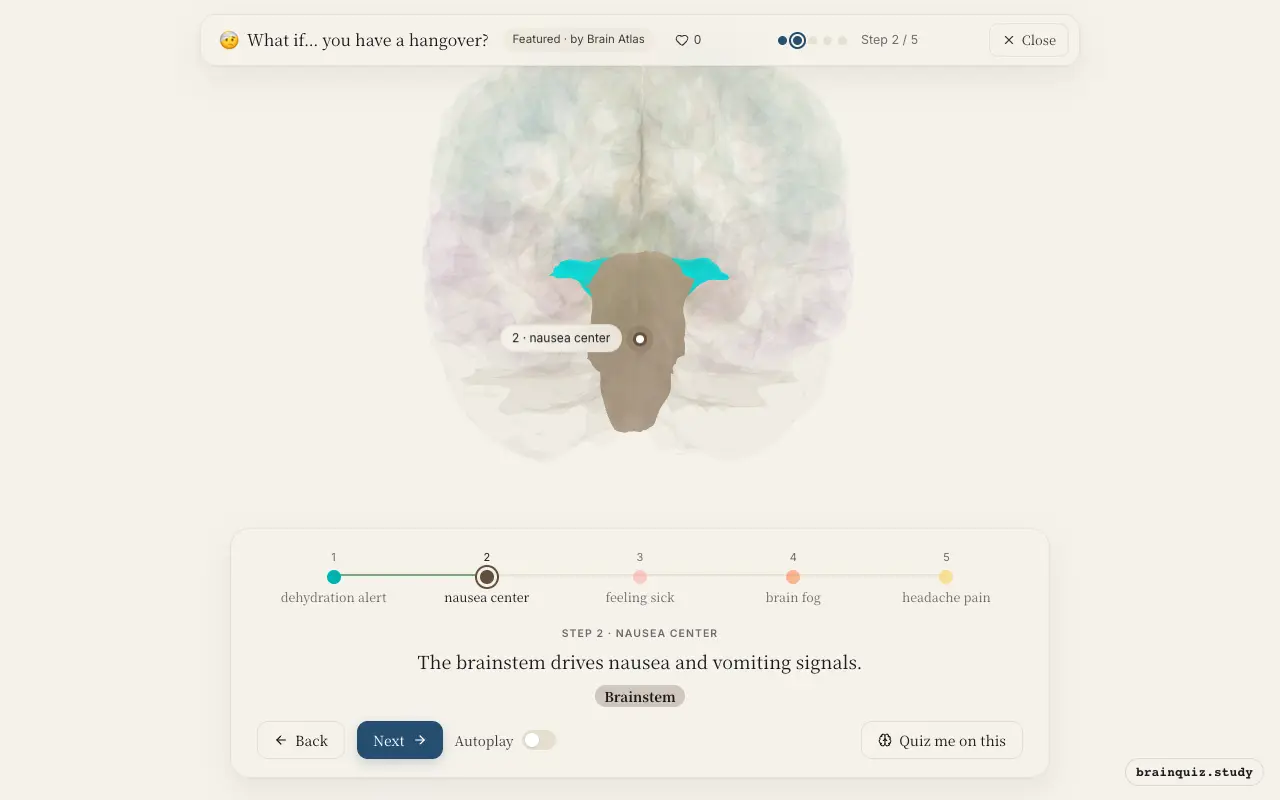
Alcohol irritates the stomach and triggers the chemoreceptor trigger zone in the medulla, part of the brainstem, which coordinates nausea and vomiting. The brainstem also manages autonomic changes such as rapid heart rate and sweating.
3. Insula: feeling sick
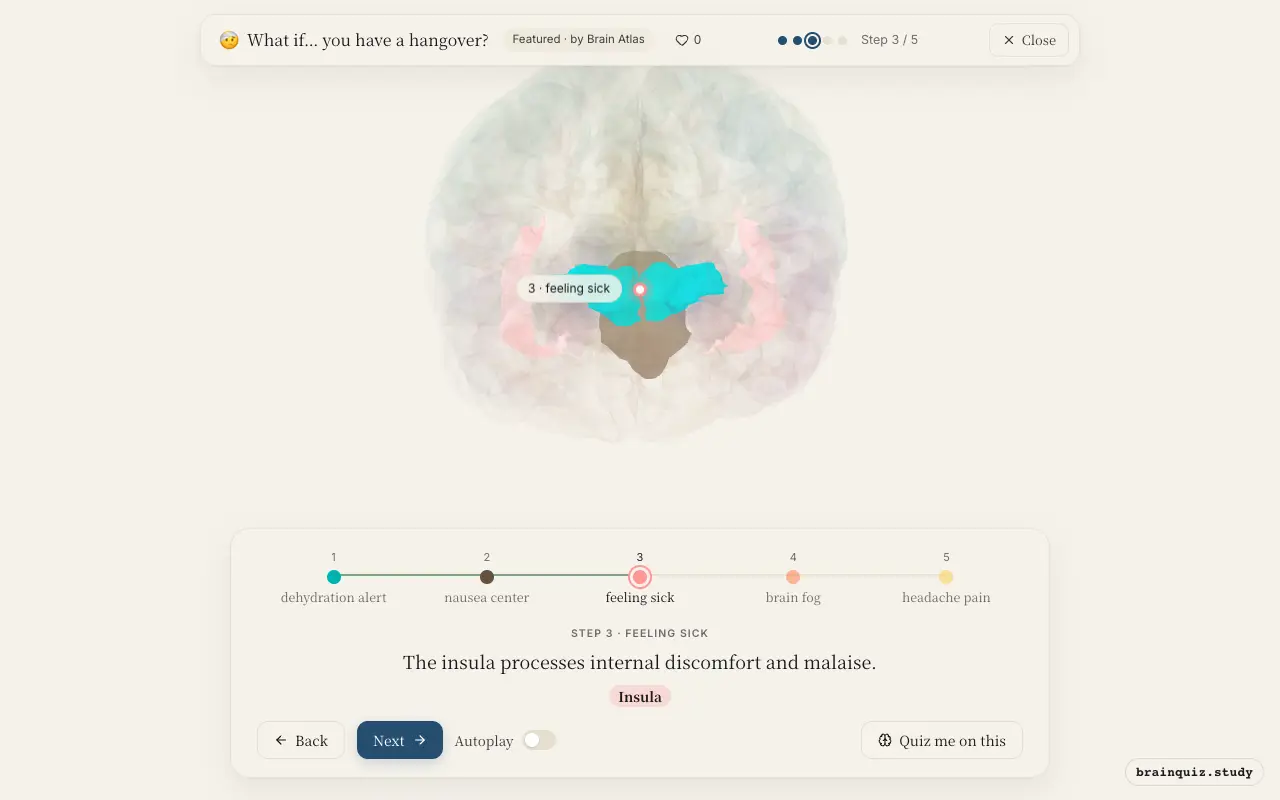
The insula integrates signals from the gut, heart, and other organs to create the subjective feeling of illness. During a hangover, it amplifies sensations of queasiness, fatigue, and headache, making you feel generally unwell. This interoceptive hub may be hyperactive after heavy drinking.
4. Prefrontal Cortex: brain fog
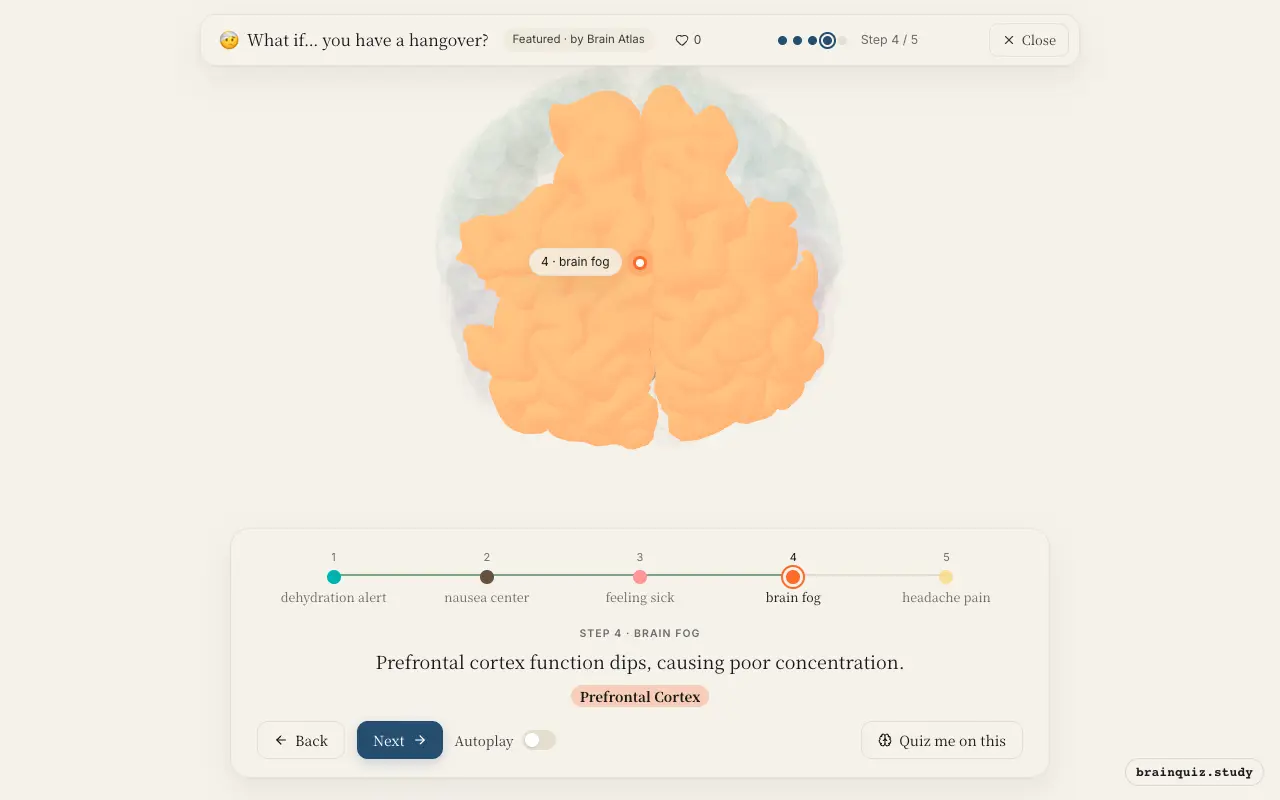
Hangover disrupts sleep and causes low-grade inflammation, which reduces prefrontal cortex activity. This leads to slow thinking, poor working memory, and difficulty making decisions. Simple tasks feel mentally exhausting. Alcohol's lingering effects on glutamate and dopamine also impair executive function.
5. Anterior Cingulate Cortex: headache pain
The anterior cingulate cortex is part of the pain matrix, evaluating the unpleasantness of pain. Alcohol-induced vasodilation and dehydration trigger headache signals that converge here, making the pain feel worse. It also contributes to irritability.
Good to know
- Alcohol inhibits vasopressin release, so you urinate more and become dehydrated.
- Acetaldehyde, a toxic byproduct of alcohol metabolism, contributes to nausea and flushing.
- Hangover symptoms peak when blood alcohol concentration returns to zero, about 12-24 hours after drinking.
Hangover vs. Alcohol Withdrawal
A hangover is the acute, mild rebound after a single drinking episode, mainly involving dehydration and sleep loss. Alcohol withdrawal after chronic heavy use involves a more dangerous brain hyperexcitability, with severe anxiety, tremors, and even seizures due to long-term neuroadaptation.
Test yourself
Which brain region is primarily responsible for triggering thirst during a hangover?
What is the main role of the brainstem in a hangover?
Difficulty concentrating during a hangover is most linked to reduced activity in which region?
0 of 3 answered · 0 correct
Simplified: many regions work together at once, and this shows the main players in the order they act. For learning only, not medical advice.