What happens in your brain when you smoke a cigarette?
Updated
Nicotine activates VTA dopamine neurons, releasing dopamine in the nucleus accumbens for reward. Prefrontal cortex boosts focus, insula registers craving, and amygdala links cues to smoking.
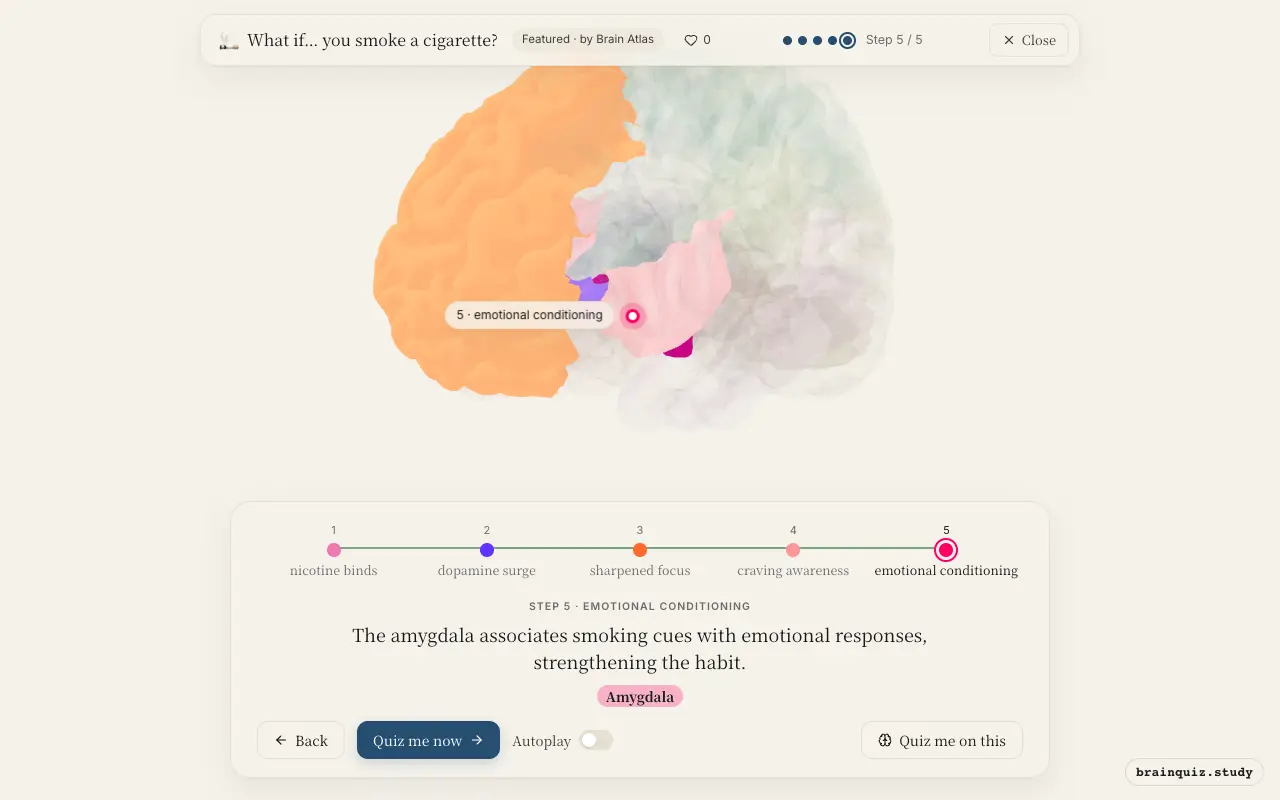
Watch it light up on the 3D brain
Brain regions that light up
| Order | Region | What it does here |
|---|---|---|
| 1 | Ventral Tegmental Area | Nicotine binds to nicotinic acetylcholine receptors on VTA dopamine neurons, triggering firing. |
| 2 | Nucleus Accumbens | Dopamine released in the nucleus accumbens signals reward and pleasure. |
| 3 | Prefrontal Cortex | Nicotine enhances prefrontal cortex activity, improving attention and working memory. |
| 4 | Insula | Insula activity reflects conscious craving and interoceptive awareness of smoking urges. |
| 5 | Amygdala | The amygdala associates smoking cues with emotional responses, strengthening the habit. |
1. Ventral Tegmental Area: nicotine binds
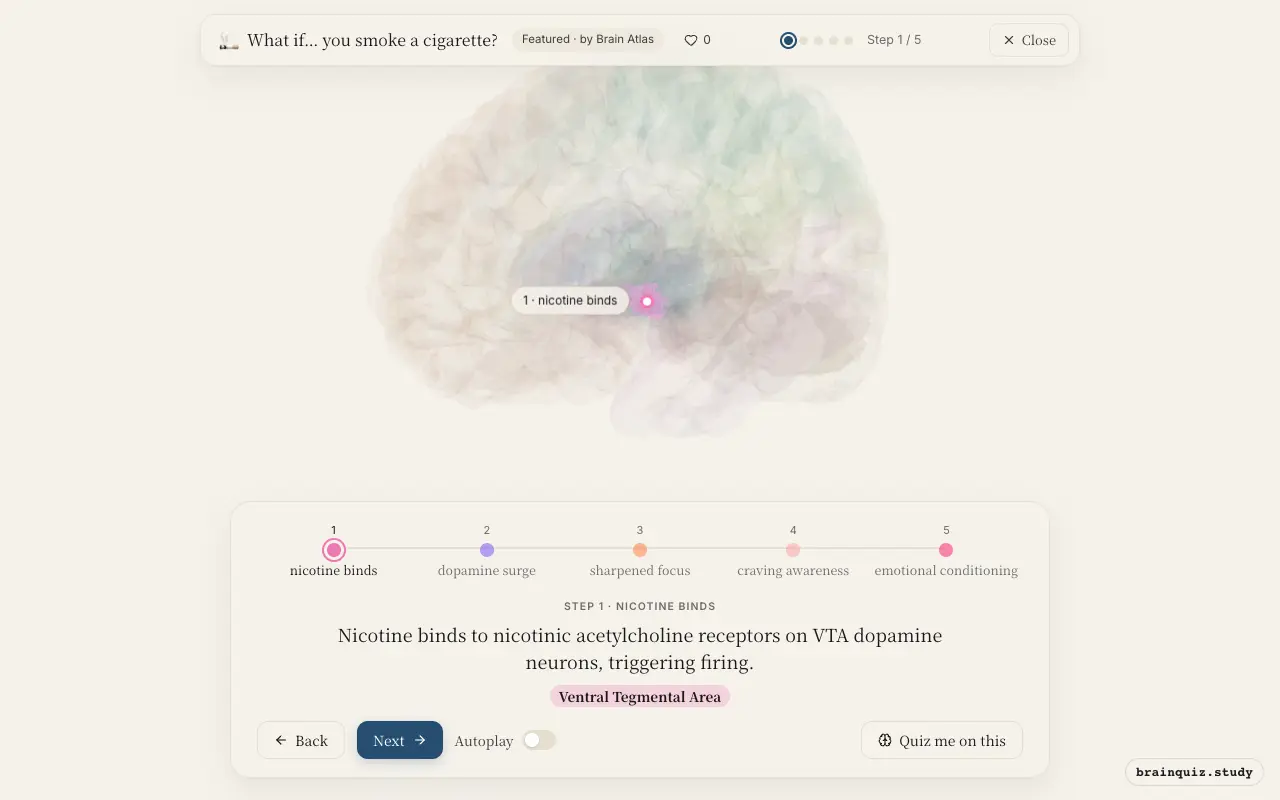
The VTA is the origin of the mesolimbic dopamine pathway. Nicotine directly excites these neurons, causing a burst of action potentials. This is the first step in the rewarding effect of smoking.
2. Nucleus Accumbens: dopamine surge
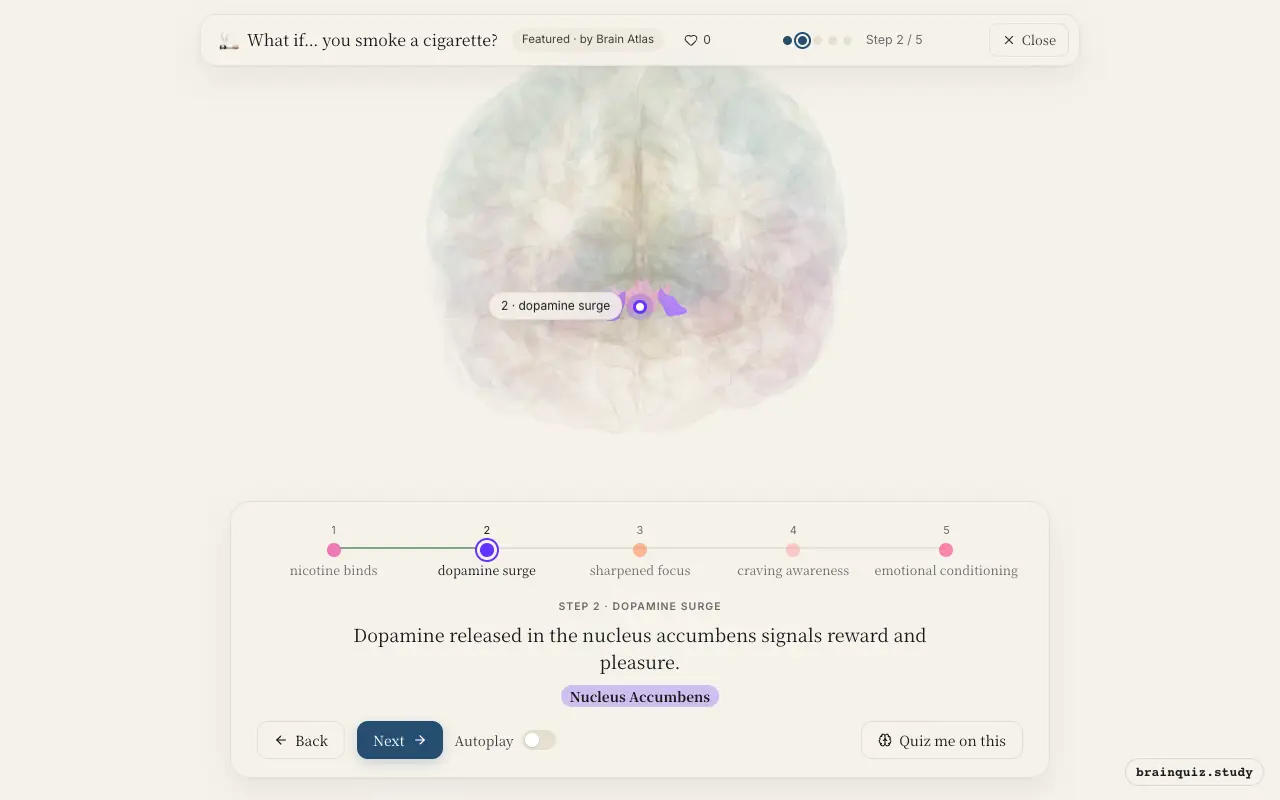
Dopamine release in the nucleus accumbens is the core of reward processing. This surge produces the reinforcing effect that makes smoking addictive. The rapid increase mimics natural rewards but is stronger and faster.
3. Prefrontal Cortex: sharpened focus
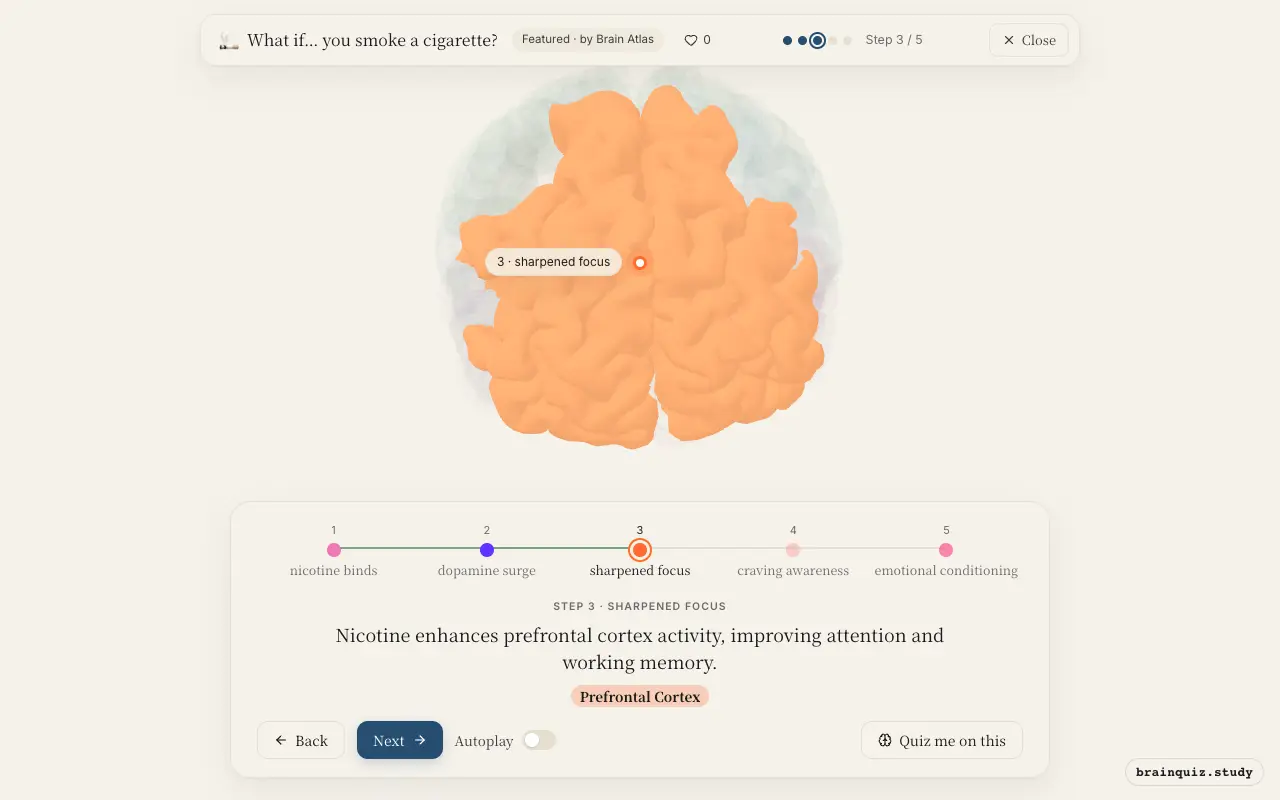
The prefrontal cortex is involved in executive functions. Nicotine's action here contributes to the perceived cognitive benefits of smoking, such as better concentration. However, these effects diminish with tolerance.
4. Insula: craving awareness
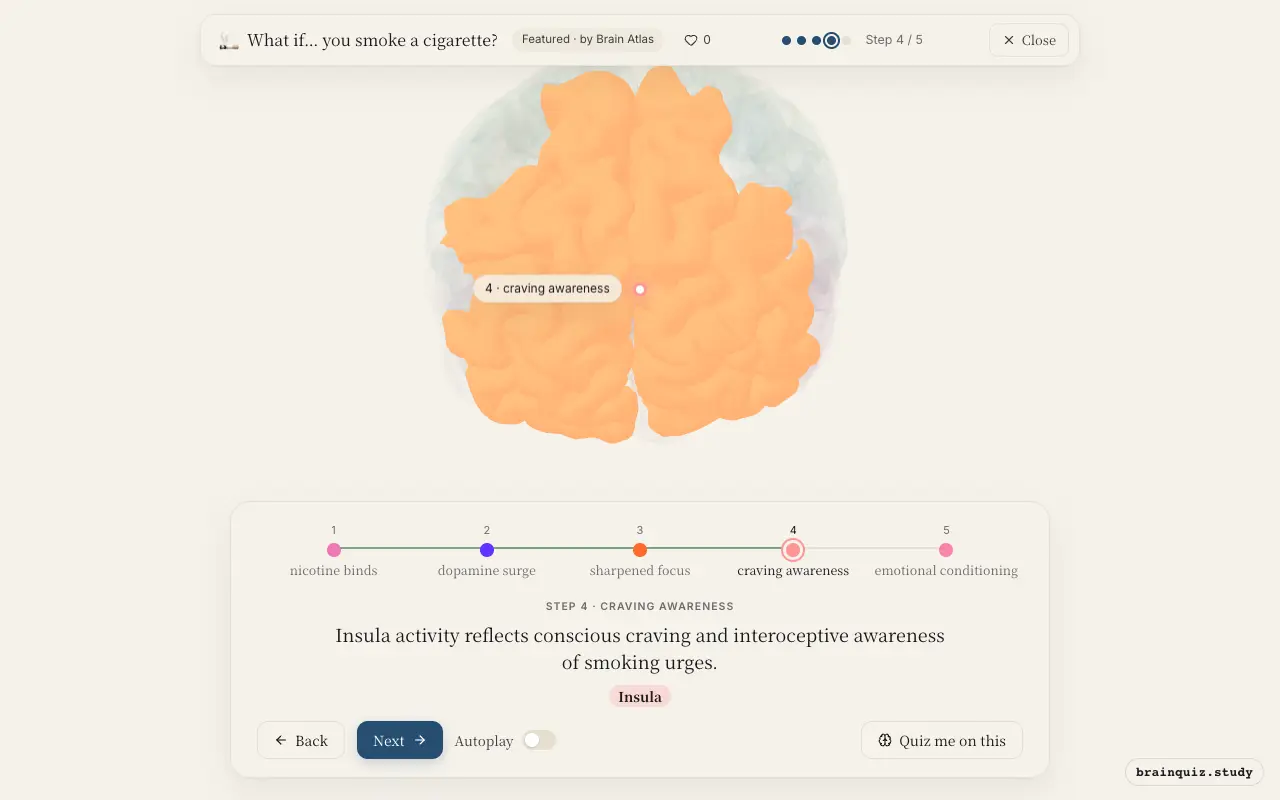
The insula integrates bodily states and is critical for conscious urges. In smokers, insula activation correlates with the intensity of craving. Damage to the insula can reduce the desire to smoke, highlighting its role in addiction.
5. Amygdala: emotional conditioning
The amygdala processes emotional significance and forms associations between environmental cues and nicotine reward. This conditioning makes certain situations or feelings trigger cravings. Over time, these learned responses perpetuate addiction.
Good to know
- Nicotine reaches the brain within 10-20 seconds of inhalation, faster than intravenous injection.
- Chronic nicotine exposure upregulates nicotinic acetylcholine receptors, leading to tolerance and withdrawal symptoms when quitting.
- Dopamine release in the nucleus accumbens is a common pathway for many addictive substances, including nicotine.
Smoking vs. Nicotine Patch
Smoking delivers a rapid nicotine spike to the brain within seconds, causing a sharp VTA-NAcc dopamine release and strong reinforcement. A nicotine patch produces a slow, steady rise, resulting in less euphoria and weaker cue associations, which helps reduce addiction potential.
Test yourself
Which brain region is the primary source of dopamine release triggered by nicotine?
What is the immediate effect of nicotine on the prefrontal cortex?
Which region's activity is most closely linked to the conscious feeling of craving a cigarette?
0 of 3 answered · 0 correct
Simplified: many regions work together at once, and this shows the main players in the order they act. For learning only, not medical advice.