What happens in your brain when you drink alcohol?
Updated
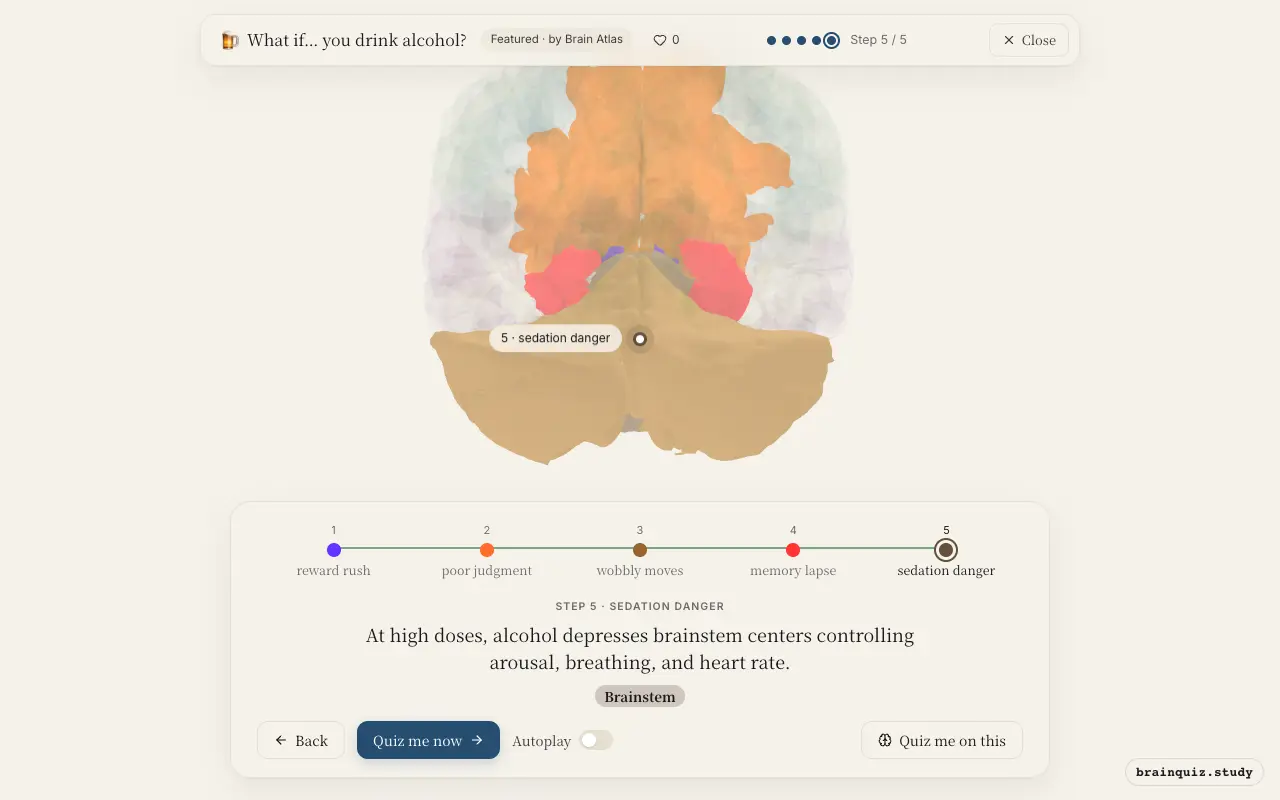
Alcohol first boosts dopamine in the nucleus accumbens, causing euphoria. It then suppresses the prefrontal cortex, impairing judgment. Next it disrupts the cerebellum, causing clumsiness and slurred speech. The hippocampus struggles to form memories, and high doses depress the brainstem, risking breathing.
Watch it light up on the 3D brain
Brain regions that light up
| Order | Region | What it does here |
|---|---|---|
| 1 | Nucleus Accumbens | Alcohol increases dopamine release here, producing feelings of pleasure and relaxation. |
| 2 | Prefrontal Cortex | Alcohol suppresses activity in the prefrontal cortex, reducing inhibition and rational decision-making. |
| 3 | Cerebellum | The cerebellum's coordination of movement is disrupted, causing unsteady gait and slurred speech. |
| 4 | Hippocampus | Alcohol interferes with the hippocampus, preventing the formation of new long-term memories. |
| 5 | Brainstem | At high doses, alcohol depresses brainstem centers controlling arousal, breathing, and heart rate. |
1. Nucleus Accumbens: reward rush
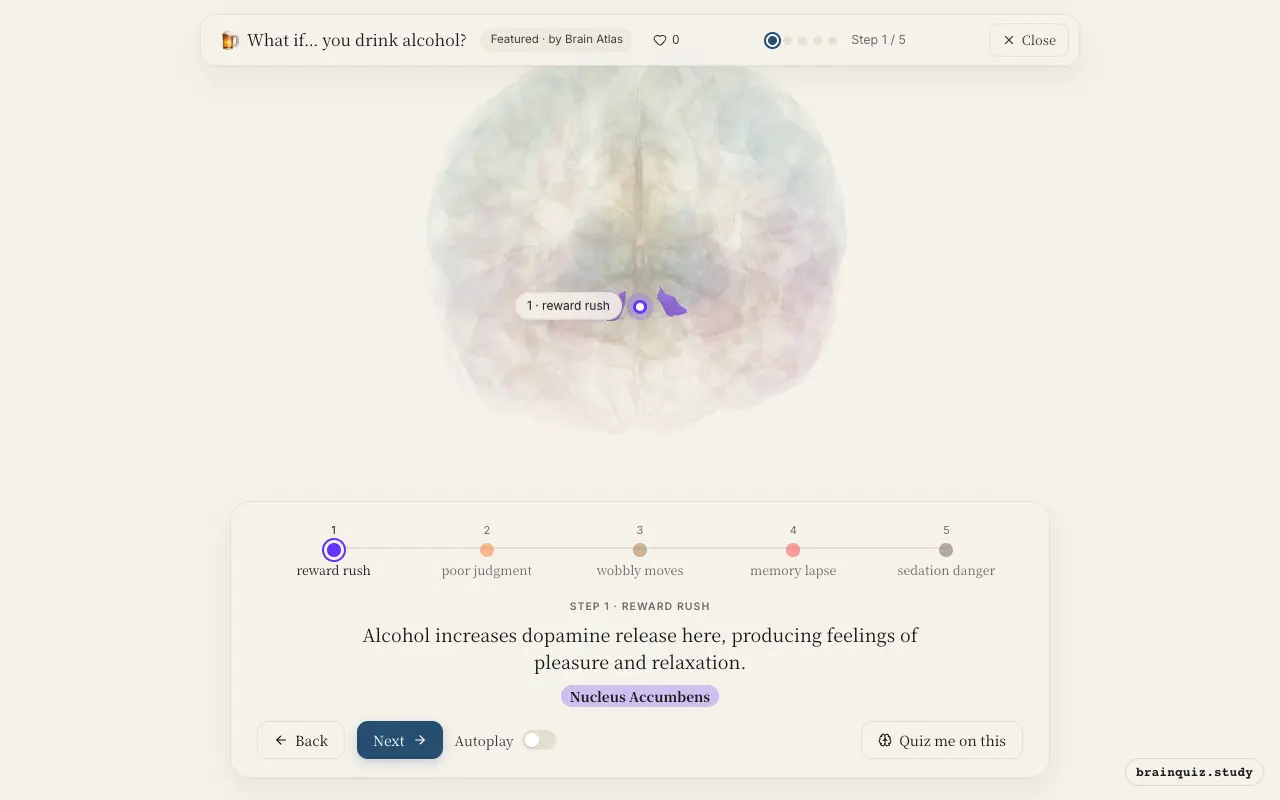
The nucleus accumbens is a core part of the brain's reward circuit. Alcohol, like other addictive substances, raises dopamine levels in this region, which reinforces drinking behavior and contributes to the initial euphoria and reduced social anxiety. This effect is rapid and central to alcohol's addictive potential.
2. Prefrontal Cortex: poor judgment
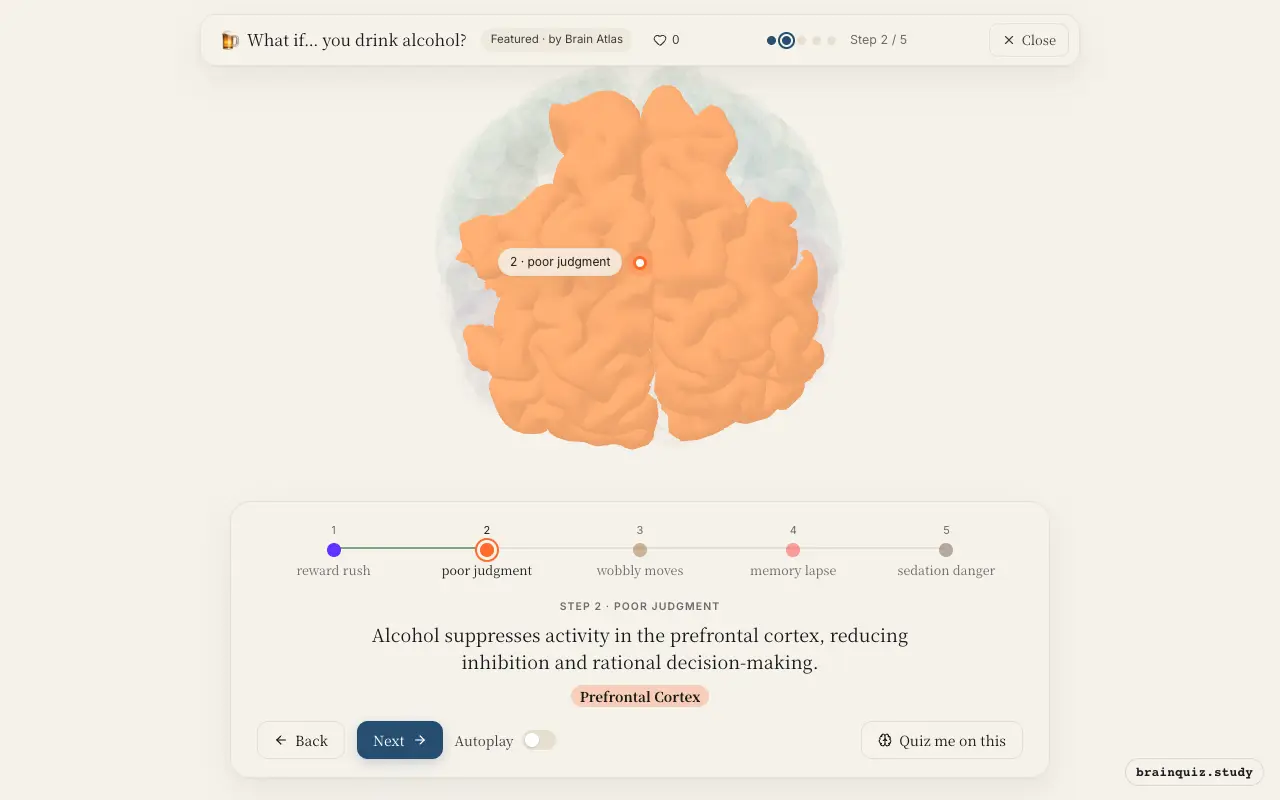
The prefrontal cortex governs executive functions like judgment, planning, and impulse control. Alcohol enhances inhibitory GABA and dampens excitatory glutamate, leading to disinhibited behavior, talkativeness, risky choices, and impaired working memory. This is why people under the influence often act out of character.
3. Cerebellum: wobbly moves
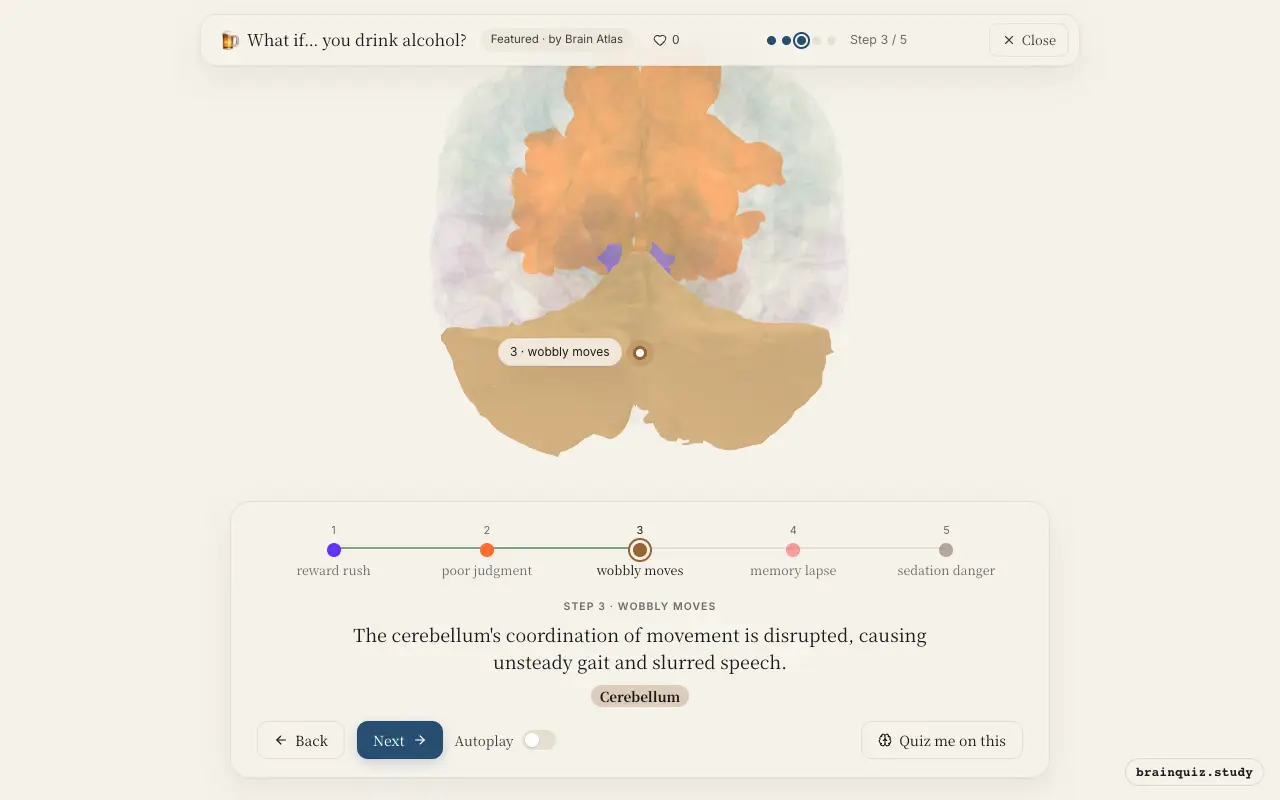
The cerebellum fine-tunes motor commands and maintains balance. Alcohol directly depresses cerebellar neurons, reducing Purkinje cell output and disrupting timing signals, leading to ataxia, loss of fine motor skills, and dysarthria. These symptoms are classic signs of intoxication and are used in field sobriety tests.
4. Hippocampus: memory lapse
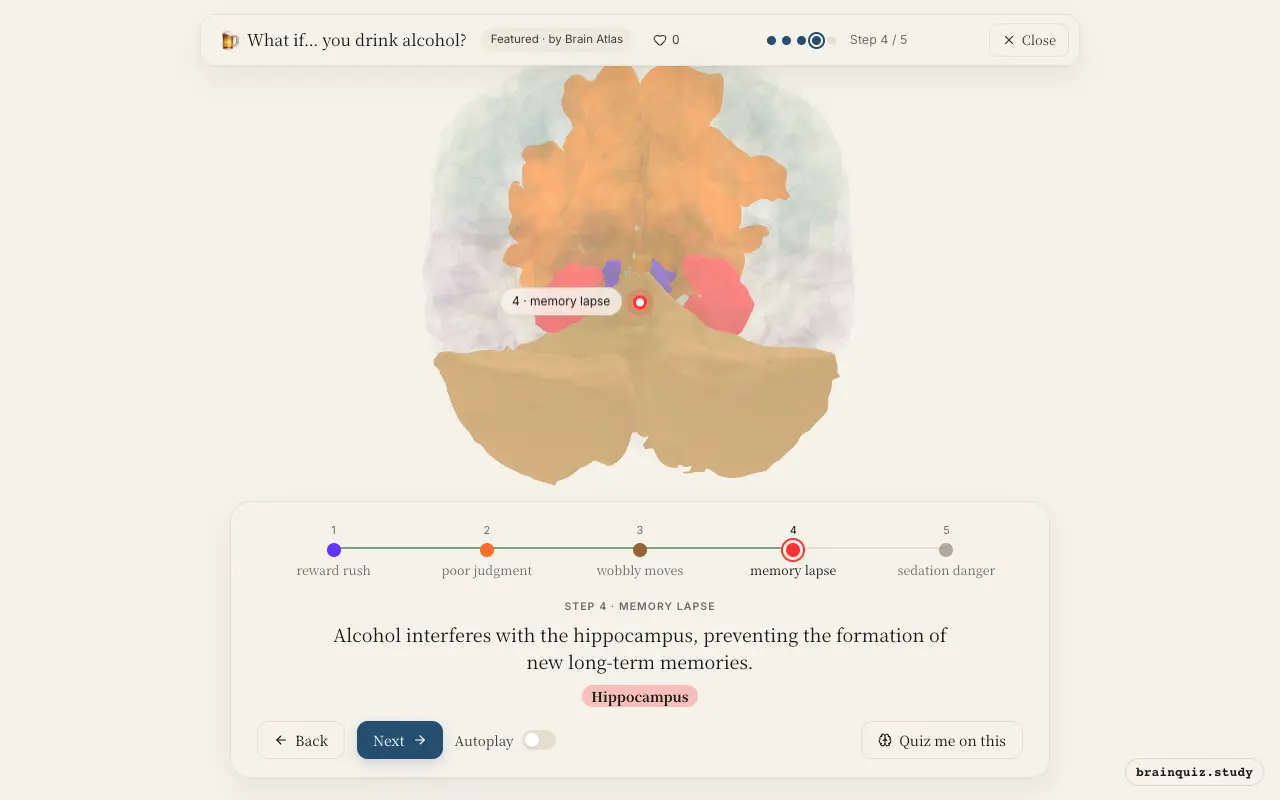
The hippocampus is essential for encoding new memories. Alcohol disrupts synaptic plasticity and neuronal signaling in this region, often causing fragmentary or complete blackouts—periods of amnesia for events that occurred while intoxicated. This typically happens at high blood alcohol concentrations.
5. Brainstem: sedation danger
The brainstem houses vital nuclei that regulate consciousness, breathing, and heart rate. Alcohol, as a depressant, suppresses these centers, causing drowsiness, slowed respiration, lowered blood pressure, and hypothermia, which can progress to coma and death. This suppression is the primary cause of fatal alcohol overdose.
Good to know
- Alcohol mainly enhances the inhibitory neurotransmitter GABA and reduces excitatory glutamate, causing overall brain slowing.
- Heavy alcohol intake can lower hippocampal activity, which is why some people experience 'blackouts' without losing consciousness.
- Repeated heavy drinking can lead to long-term changes in the reward system, increasing the risk of alcohol use disorder.
Alcohol vs. Caffeine
Alcohol is a central nervous system depressant that boosts GABA and dopamine, while caffeine is a stimulant that blocks adenosine receptors. Alcohol impairs prefrontal and cerebellar function, whereas caffeine increases alertness and arousal, largely by blocking adenosine receptors in the brain.
Test yourself
Which brain region is primarily responsible for the initial euphoria after drinking alcohol?
What causes the unsteady gait and slurred speech associated with intoxication?
At high doses, alcohol can be fatal because it suppresses which region?
0 of 3 answered · 0 correct
Simplified: many regions work together at once, and this shows the main players in the order they act. For learning only, not medical advice.