What happens in your brain when you drink coffee?
Updated
Caffeine blocks adenosine receptors in the brainstem, reducing drowsiness. This activates the locus coeruleus and prefrontal cortex, sharpening attention. It also boosts dopamine in the putamen and nucleus accumbens, improving motor readiness and mood.
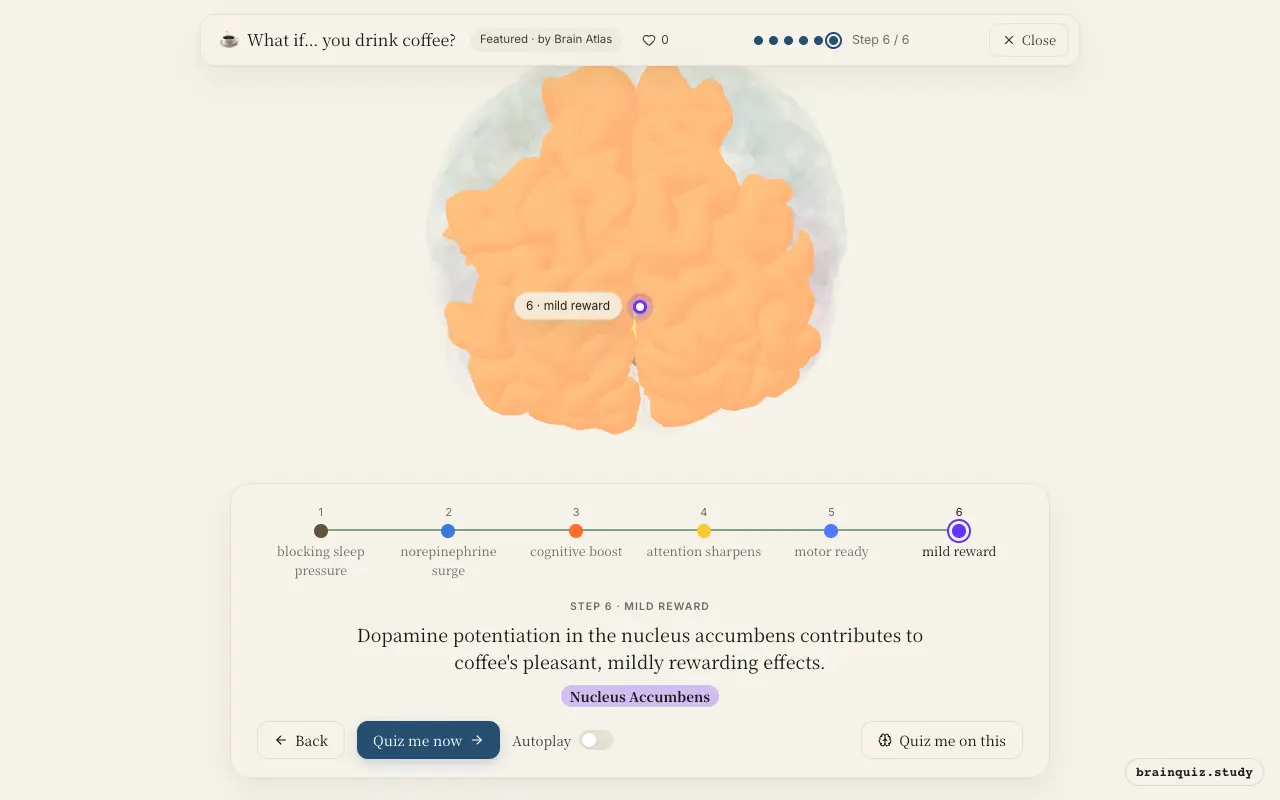
Watch it light up on the 3D brain
Brain regions that light up
| Order | Region | What it does here |
|---|---|---|
| 1 | Brainstem | Caffeine blocks adenosine receptors in the reticular activating system, reducing the brain's sleep drive. |
| 2 | Locus Coeruleus | The locus coeruleus releases norepinephrine, heightening alertness and focus. |
| 3 | Prefrontal Cortex | Enhanced arousal improves prefrontal cortex function, aiding working memory and decision-making. |
| 4 | Anterior Cingulate Cortex | Caffeine may enhance anterior cingulate activity, aiding sustained attention and error detection. |
| 5 | Putamen | Dopamine signaling increases in the putamen, enhancing motor readiness and reaction time. |
| 6 | Nucleus Accumbens | Dopamine potentiation in the nucleus accumbens contributes to coffee's pleasant, mildly rewarding effects. |
1. Brainstem: blocking sleep pressure
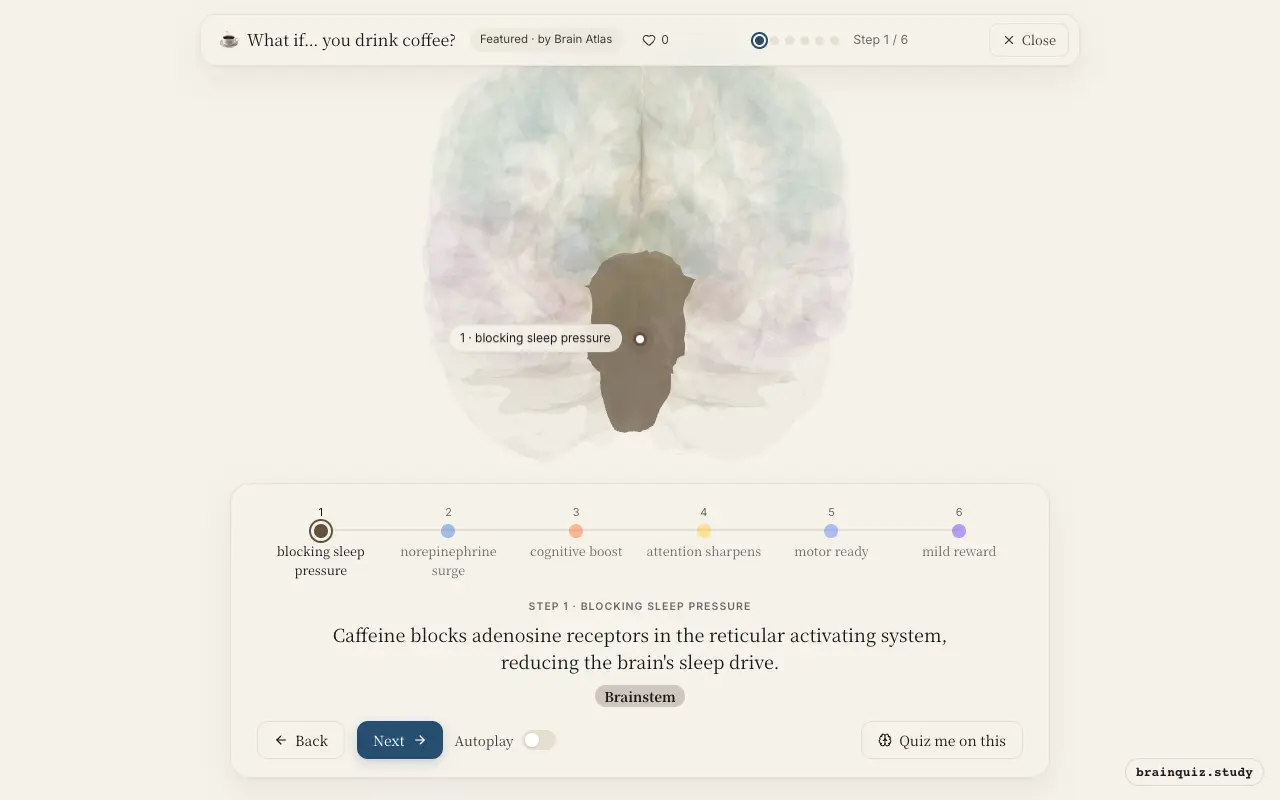
Adenosine accumulates during wakefulness and normally inhibits arousal neurons. By blocking its receptors, caffeine disinhibits the ascending reticular activating system, promoting wakefulness. This is the primary mechanism behind coffee's ability to keep you alert.
2. Locus Coeruleus: norepinephrine surge
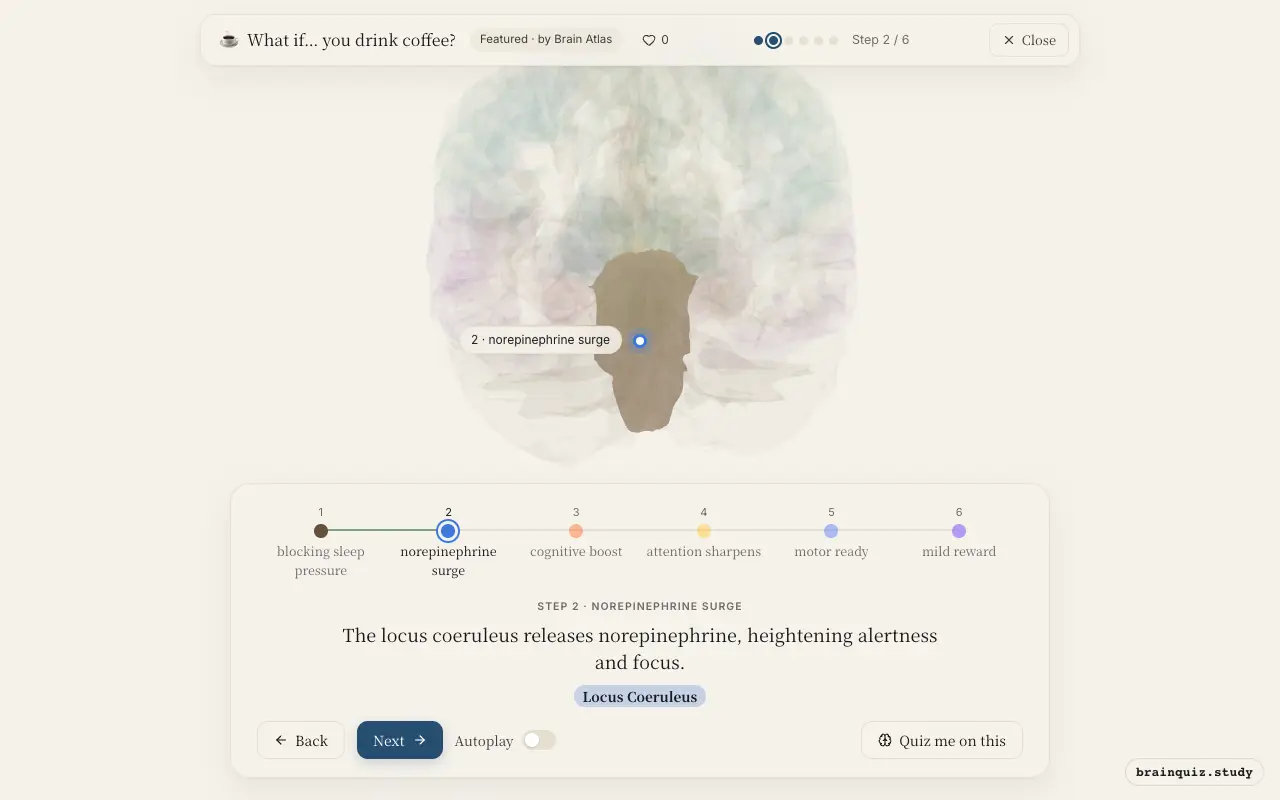
Disinhibited by caffeine, the locus coeruleus fires more, broadcasting norepinephrine throughout the cortex. This sharpens sensory processing and prepares the brain for action, contributing to the feeling of being 'wired' after coffee.
3. Prefrontal Cortex: cognitive boost
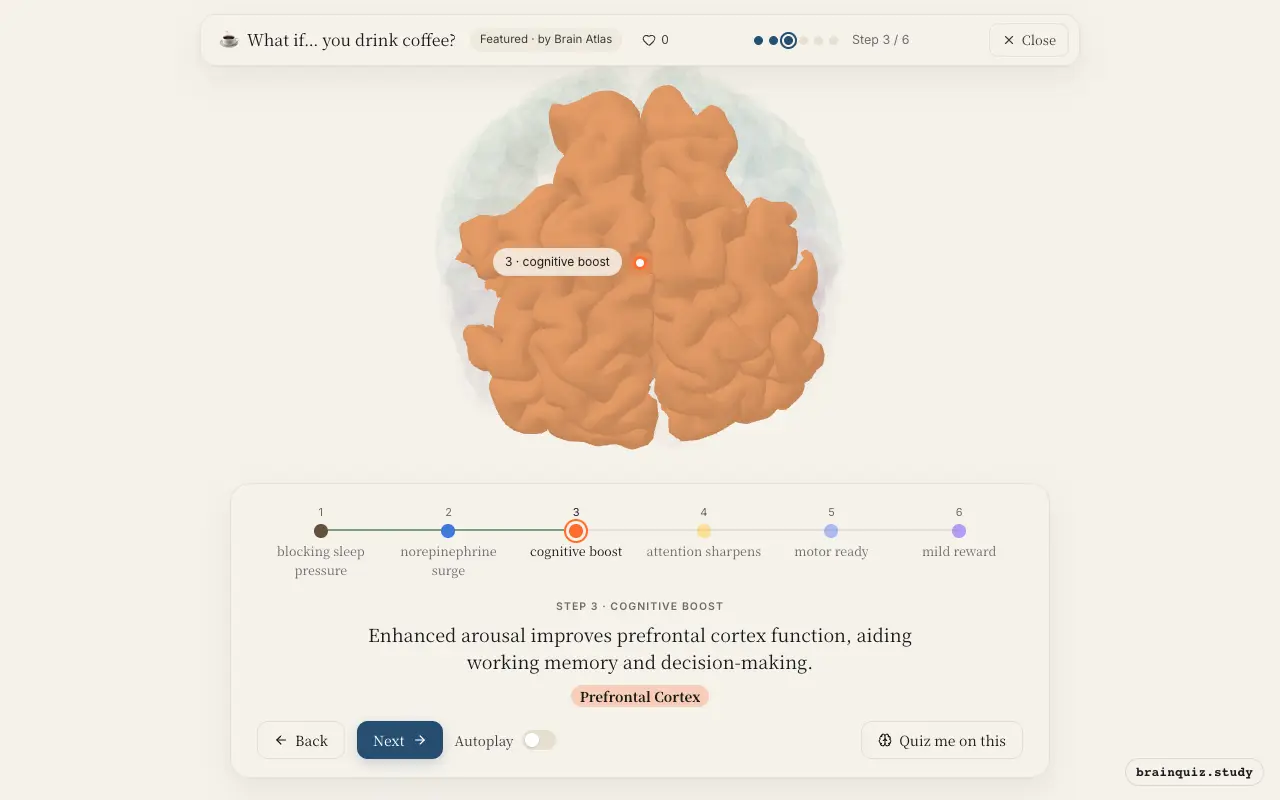
Prefrontal cortex relies on optimal levels of norepinephrine and dopamine. Caffeine's indirect effects improve signal-to-noise ratio in this region, which can enhance executive functions like planning and attention, especially when tired.
4. Anterior Cingulate Cortex: attention sharpens
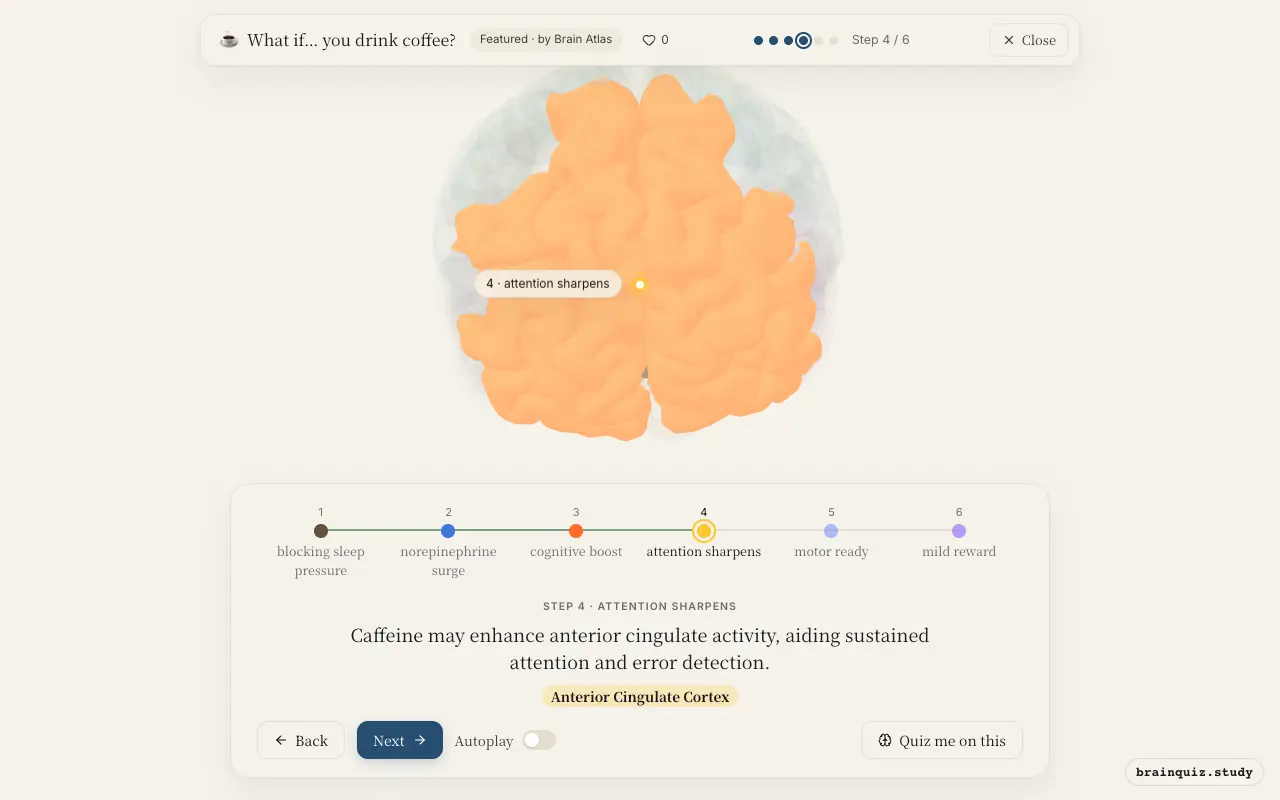
The anterior cingulate monitors conflict and errors. Caffeine may heighten its responsiveness, potentially improving vigilance and error detection on tedious tasks.
5. Putamen: motor ready
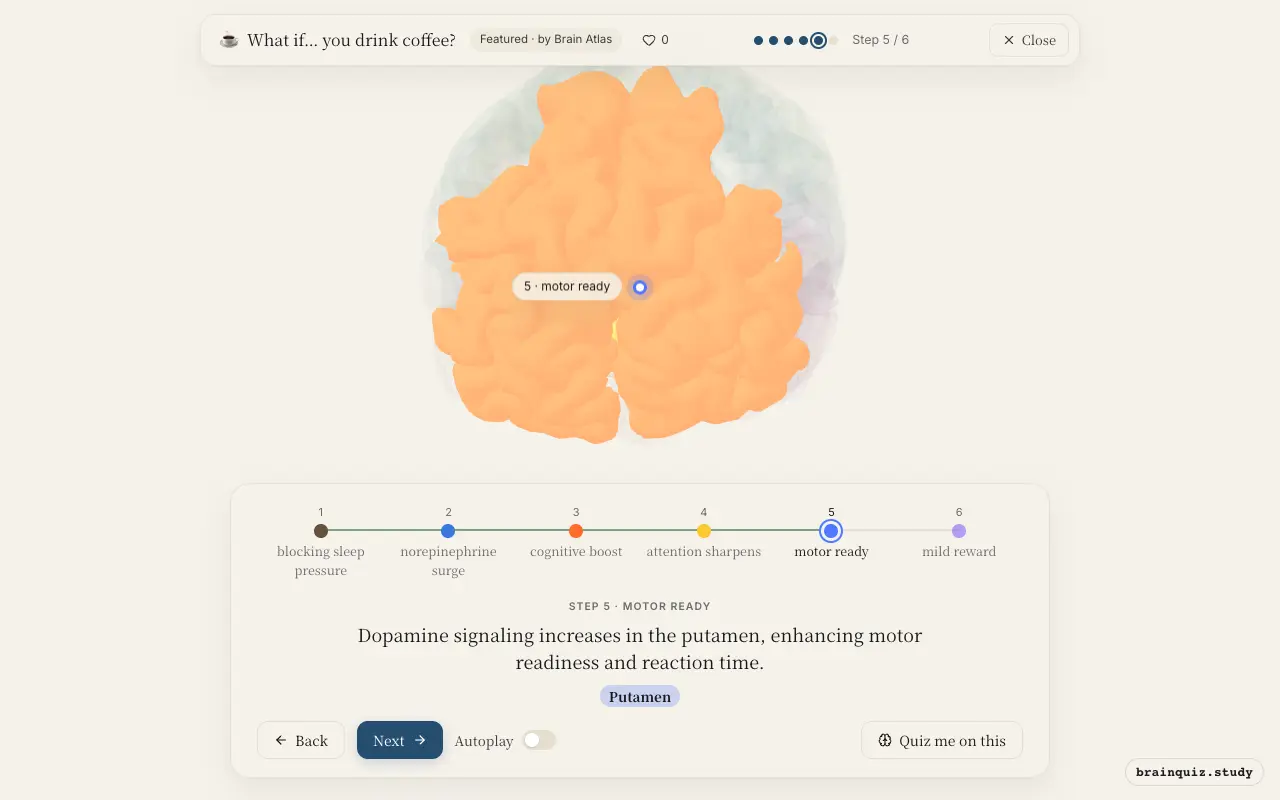
Caffeine blocks adenosine A2A receptors in the striatum, which are co-localized with dopamine D2 receptors. This enhances dopamine's effect in the putamen, improving movement initiation and coordination, which is why coffee can make you feel physically quicker.
6. Nucleus Accumbens: mild reward
The nucleus accumbens is central to reward and motivation. Caffeine's indirect enhancement of dopamine here produces a mild mood lift and reinforces coffee-drinking behavior, though its effects are weaker than those of drugs like amphetamine.
Good to know
- Caffeine is the world's most widely consumed psychoactive substance, found in coffee, tea, and many soft drinks.
- Its primary action is antagonism of adenosine A1 and A2A receptors in the brain.
- The half-life of caffeine in adults is typically 3–5 hours, but it can be longer in pregnancy or with liver disease.
Caffeine vs. Amphetamine: Indirect vs. Direct Dopamine Boost
Both stimulants increase alertness and dopamine signaling in the striatum, but caffeine does so indirectly by blocking adenosine receptors, while amphetamines directly release dopamine and norepinephrine. This is why caffeine's effects are milder and less addictive than amphetamine's.
Test yourself
Which brain region does caffeine primarily act on to reduce sleepiness?
How does caffeine enhance dopamine signaling in the striatum?
Compared with amphetamine, caffeine's effects on dopamine are:
0 of 3 answered · 0 correct
Simplified: many regions work together at once, and this shows the main players in the order they act. For learning only, not medical advice.