What happens in your brain when you eat sugar?
Updated
Insula detects sweet taste; orbitofrontal cortex assigns reward value; ventral tegmental area releases dopamine; nucleus accumbens signals pleasure; hypothalamus adjusts hunger.
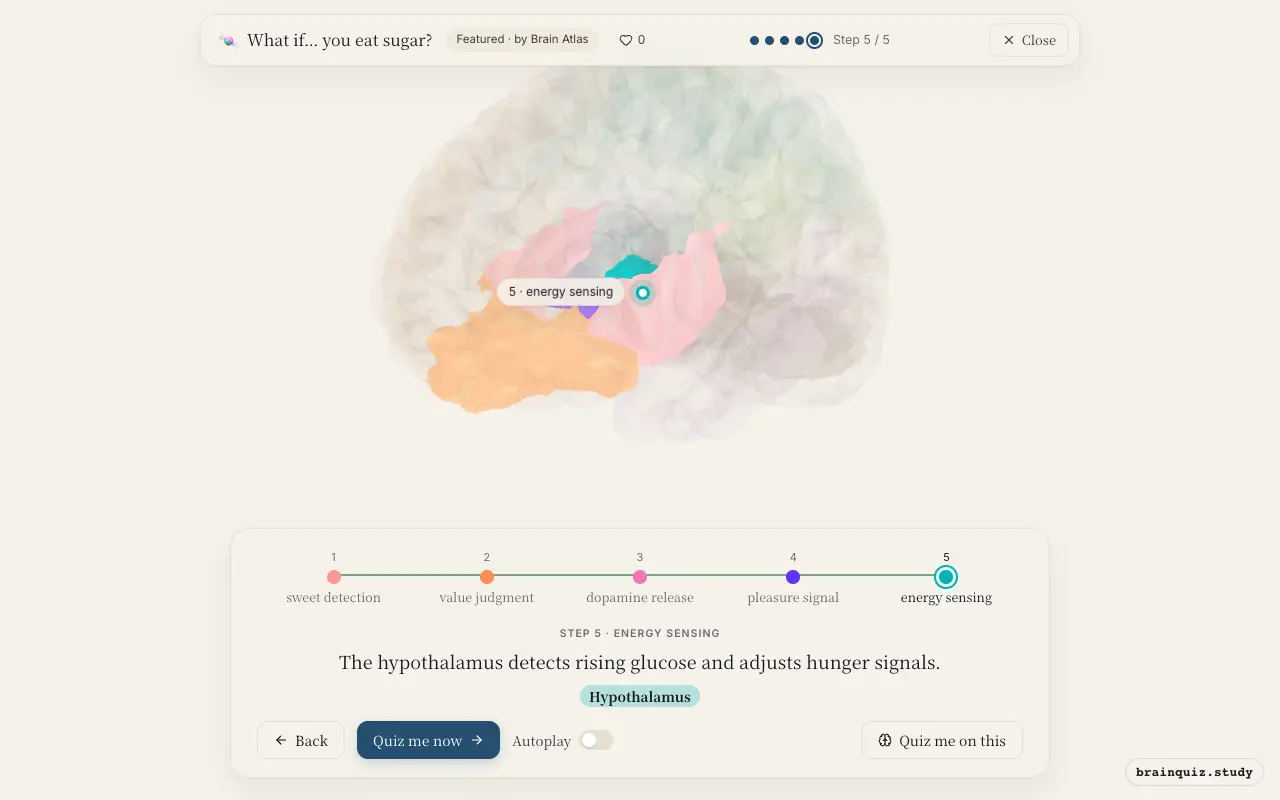
Watch it light up on the 3D brain
Brain regions that light up
| Order | Region | What it does here |
|---|---|---|
| 1 | Insula | The insula registers the sweet taste on your tongue. |
| 2 | Orbitofrontal Cortex | The orbitofrontal cortex evaluates how rewarding the sugar is. |
| 3 | Ventral Tegmental Area | The ventral tegmental area releases dopamine in response to the sugar. |
| 4 | Nucleus Accumbens | The nucleus accumbens receives dopamine and drives wanting of the sugar. |
| 5 | Hypothalamus | The hypothalamus detects rising glucose and adjusts hunger signals. |
1. Insula: sweet detection
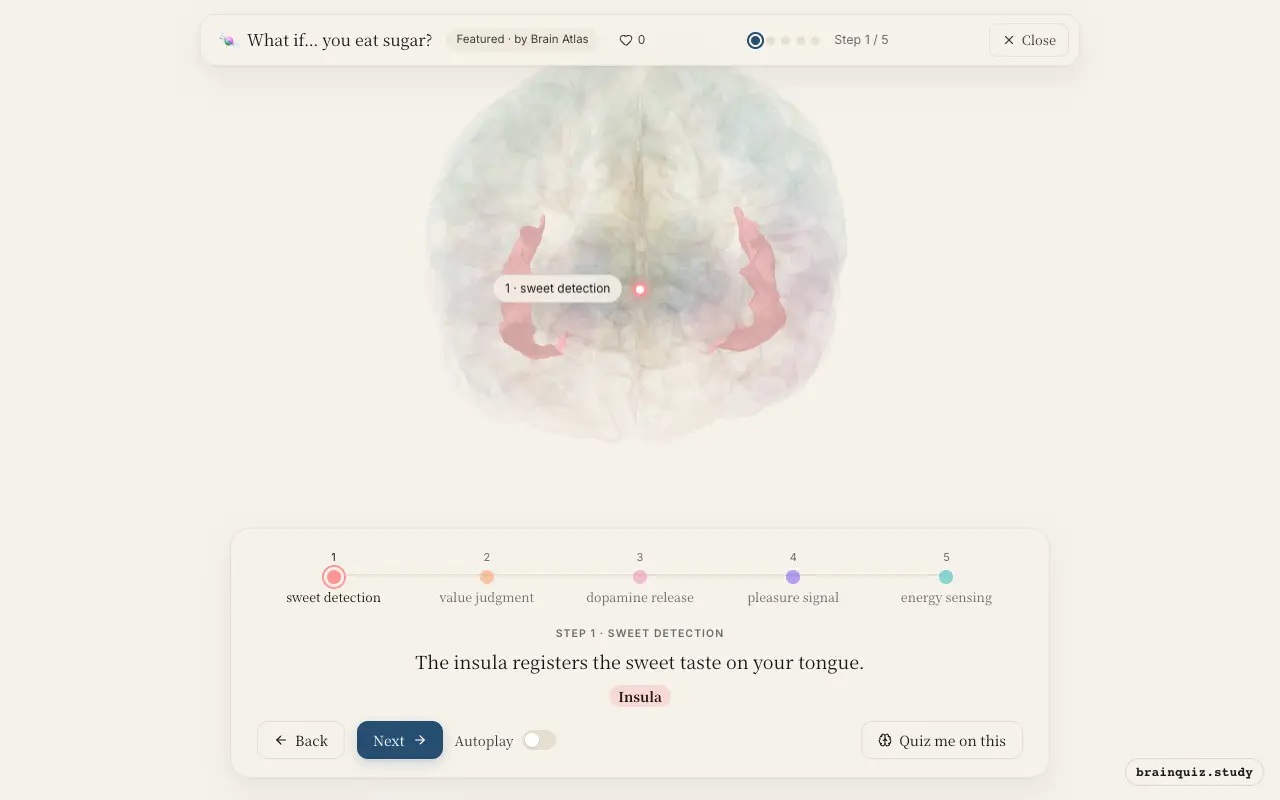
The insula is the primary gustatory cortex. It receives taste information relayed from the thalamus and processes the quality and intensity of sweetness. This initial sensory encoding sets the stage for reward evaluation.
2. Orbitofrontal Cortex: value judgment
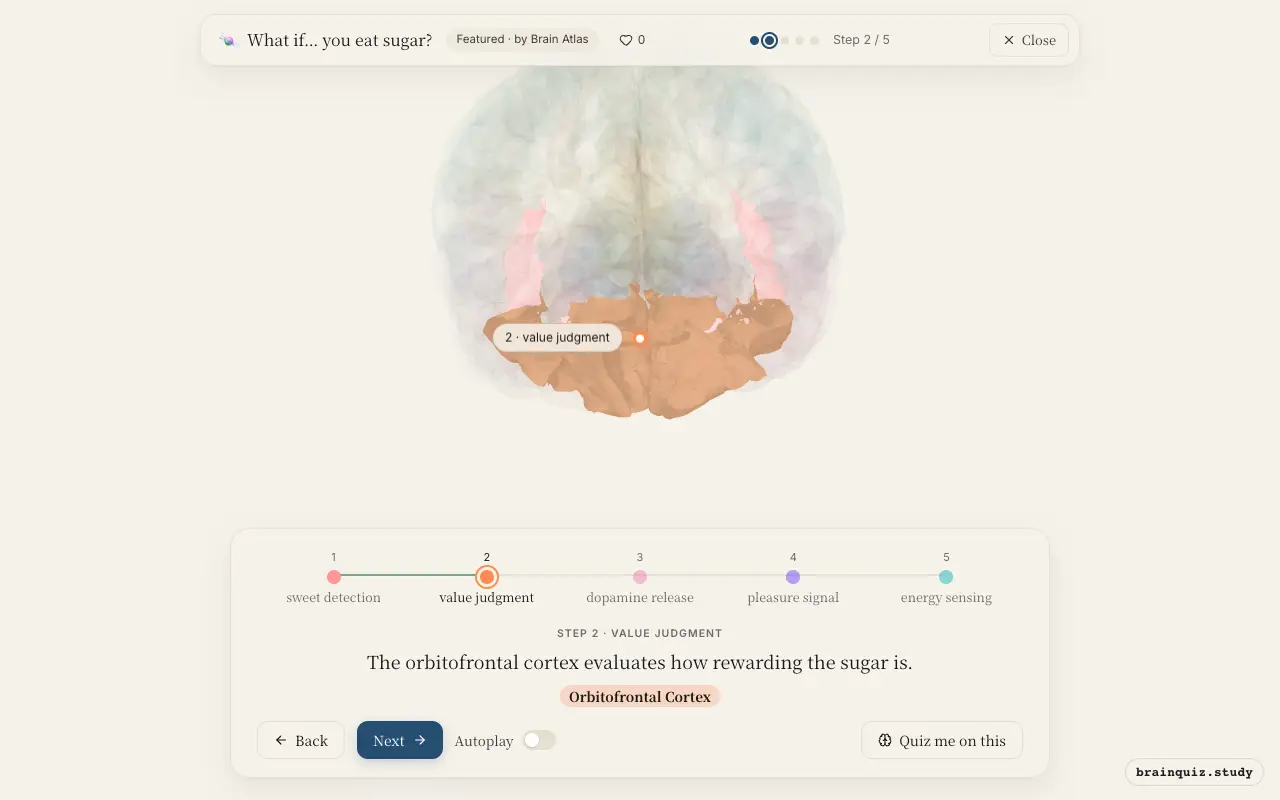
The orbitofrontal cortex integrates taste with internal state and past experience to compute the subjective value of the sugar. It signals whether the food is pleasant and worth consuming, driving motivation to continue eating.
3. Ventral Tegmental Area: dopamine release
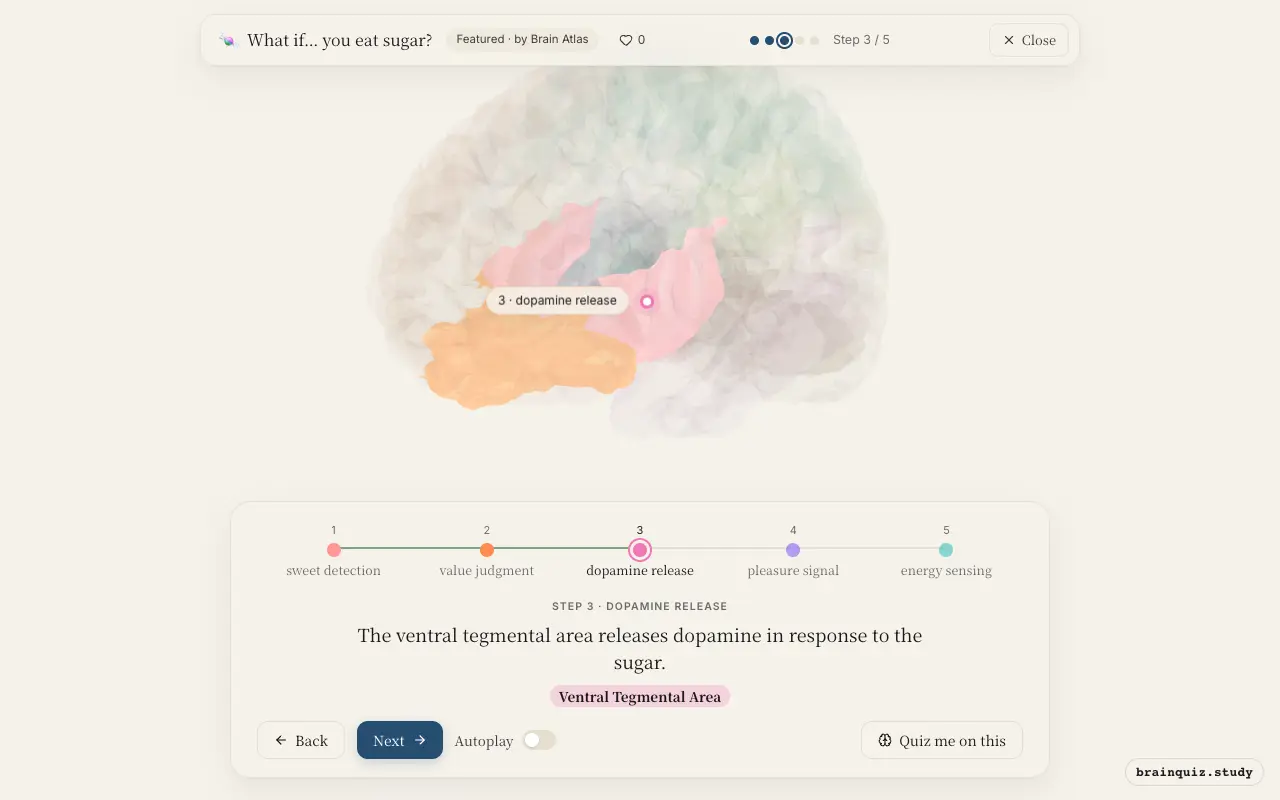
Dopamine neurons in the ventral tegmental area fire more when a reward is better than expected. Sugar triggers this response, sending dopamine to the nucleus accumbens and prefrontal cortex, reinforcing the behavior.
4. Nucleus Accumbens: pleasure signal
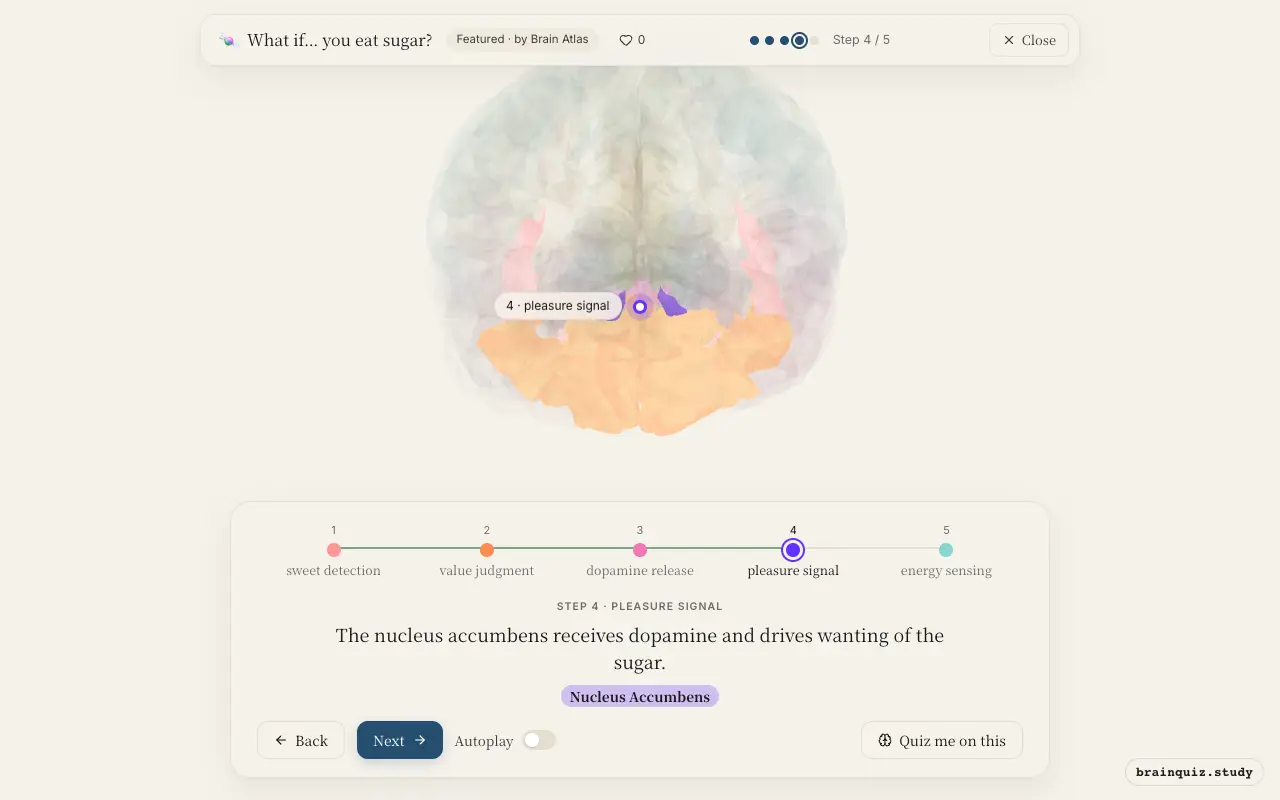
The nucleus accumbens is a key hub in the brain's reward circuit. Dopamine release here is thought to mediate the 'wanting' of sugar, not the 'liking'. This reinforces the desire to seek sugary foods again.
5. Hypothalamus: energy sensing
The hypothalamus monitors blood nutrient levels. After sugar is absorbed, it integrates signals like insulin and leptin to reduce hunger and promote satiety. This helps regulate overall energy balance.
Good to know
- Sugar intake can cause dopamine release in the nucleus accumbens, similar to but less intense than drugs of abuse.
- The brain can distinguish between sweet taste and caloric content; artificial sweeteners may not fully activate reward pathways.
- Repeated high sugar consumption may downregulate dopamine receptors, leading to tolerance and increased cravings.
Sugar vs artificial sweetener
Both activate sweet taste receptors and the insula, but artificial sweeteners lack calories, so they produce weaker activation in reward areas like the nucleus accumbens and orbitofrontal cortex. Studies suggest the brain detects the missing energy and may not feel as satisfied.
Test yourself
Which brain region first processes the sweet taste of sugar?
Which neurotransmitter is most directly involved in sugar's rewarding effect?
Which region is considered a key hub for pleasure and reinforcement in sugar consumption?
0 of 3 answered · 0 correct
Simplified: many regions work together at once, and this shows the main players in the order they act. For learning only, not medical advice.