What happens in your brain when you eat chocolate?
Updated
Eating chocolate first activates the insula for taste, then the orbitofrontal cortex evaluates its reward value. This signals the ventral tegmental area to release dopamine in the nucleus accumbens, reinforcing the behavior, while the hippocampus records the experience.
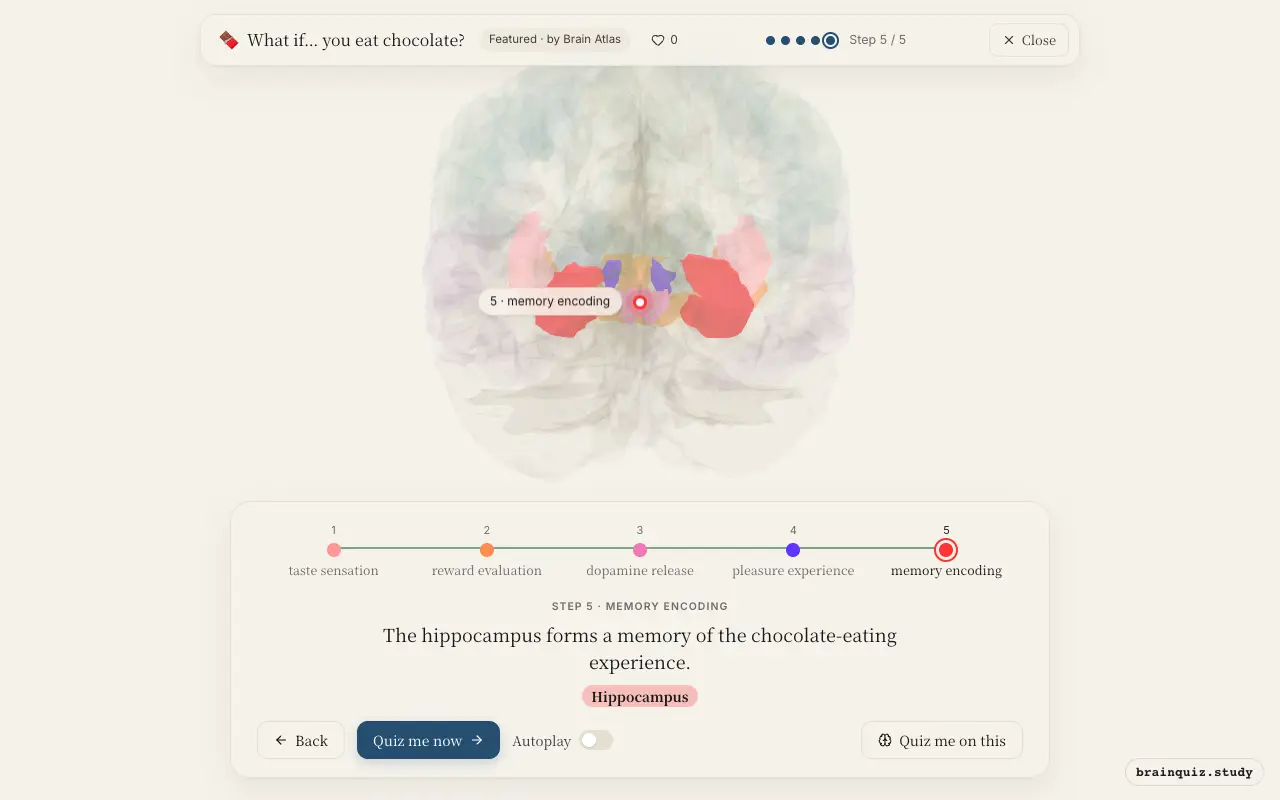
Watch it light up on the 3D brain
Brain regions that light up
| Order | Region | What it does here |
|---|---|---|
| 1 | Insula | The insula registers the sweet and fatty taste of chocolate. |
| 2 | Orbitofrontal Cortex | The orbitofrontal cortex assigns a high reward value to the chocolate. |
| 3 | Ventral Tegmental Area | The ventral tegmental area releases dopamine in response to the reward signal. |
| 4 | Nucleus Accumbens | The nucleus accumbens generates the feeling of motivation and craving. |
| 5 | Hippocampus | The hippocampus forms a memory of the chocolate-eating experience. |
1. Insula: taste sensation
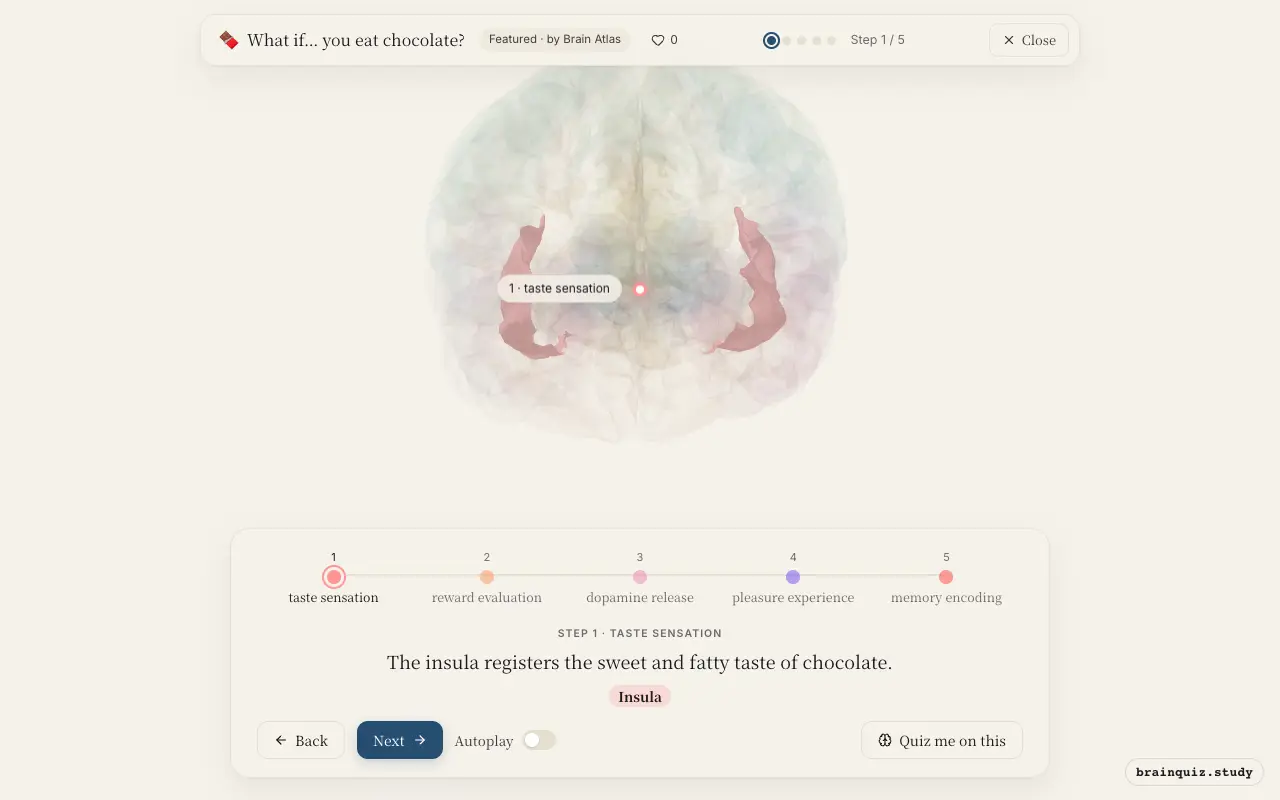
The insula is the primary cortical area for interoception, including taste. When chocolate melts in the mouth, taste receptors send signals via the brainstem and thalamus to the insula, creating the conscious sensation of sweetness and creaminess. This region also integrates the pleasurable texture and temperature, forming the basis of the eating experience.
2. Orbitofrontal Cortex: reward evaluation
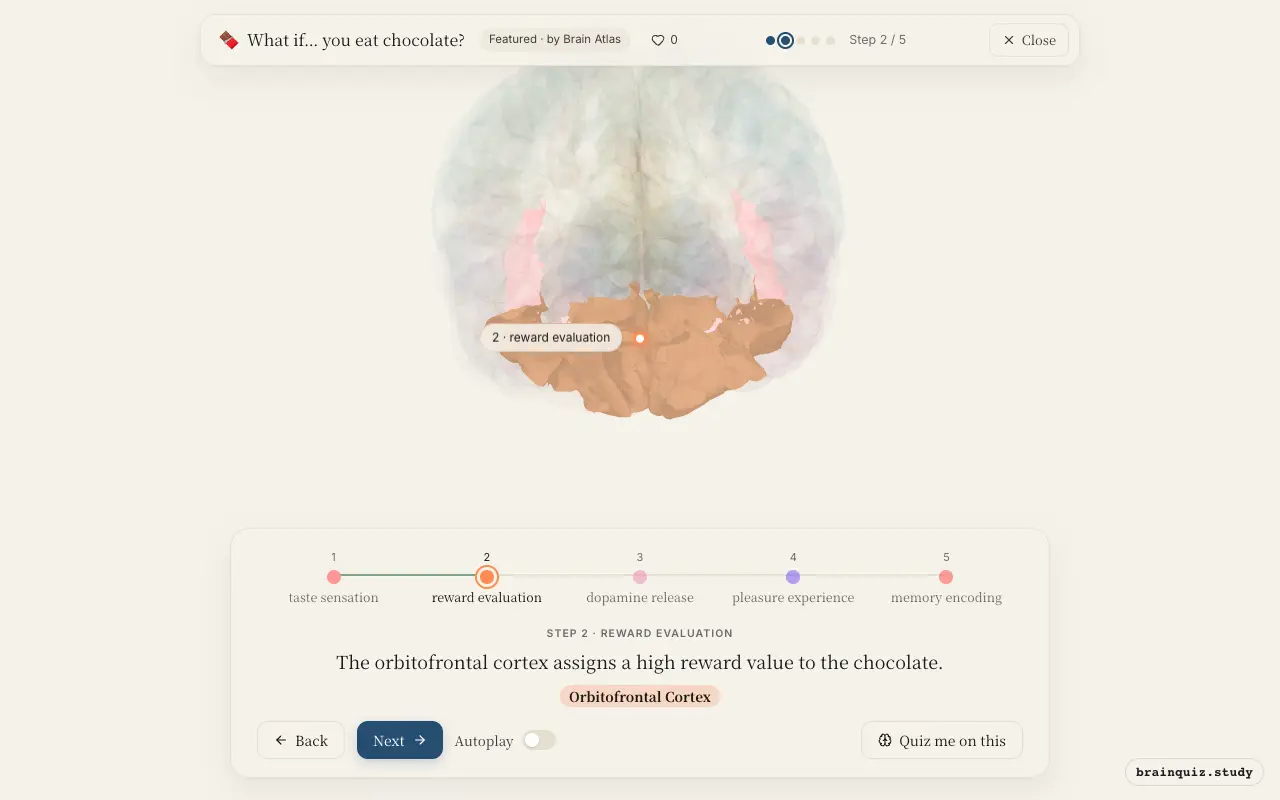
The orbitofrontal cortex receives input from the insula and other sensory areas, then evaluates the chocolate's rewarding properties. It combines taste, smell, and texture with past experiences and current hunger state to decide how pleasurable the chocolate is. This valuation drives the motivation to continue eating.
3. Ventral Tegmental Area: dopamine release
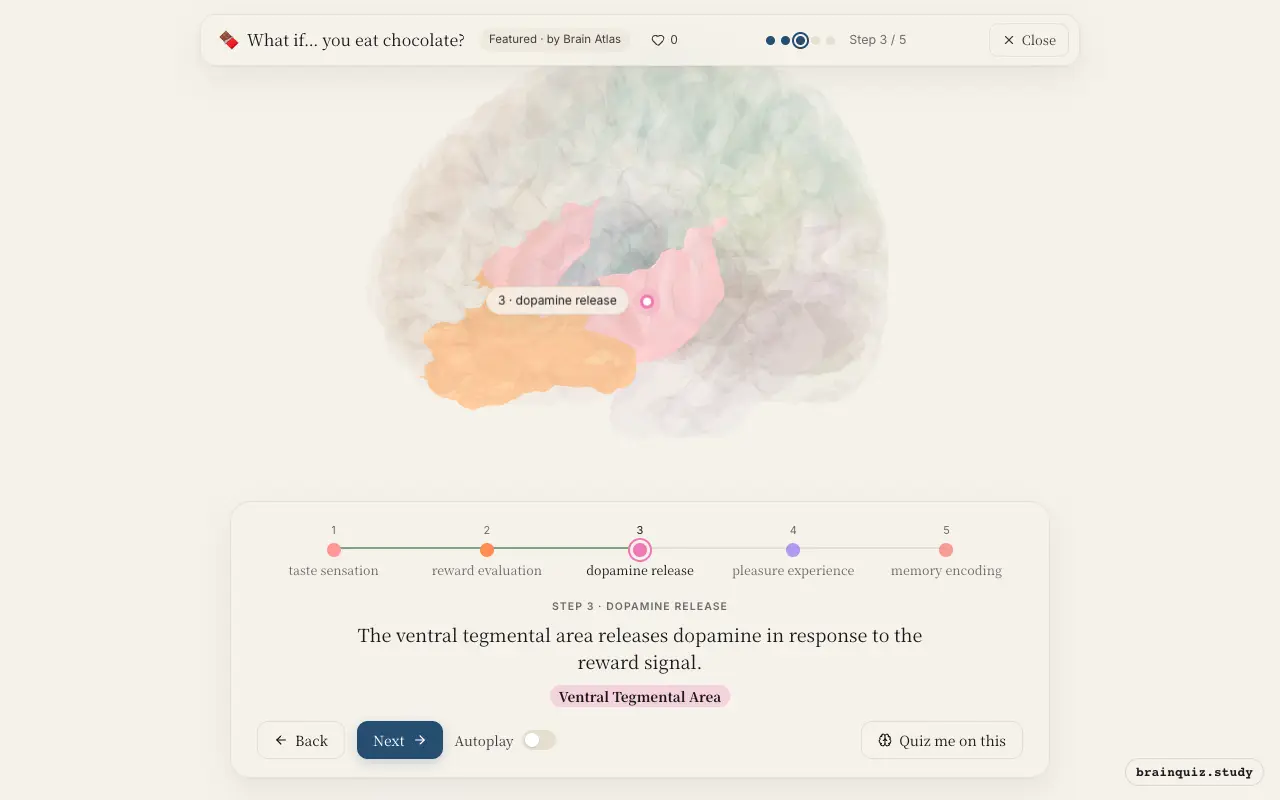
When the orbitofrontal cortex signals that chocolate is highly rewarding, it activates dopamine neurons in the ventral tegmental area. These neurons project to the nucleus accumbens and release dopamine, a neurotransmitter central to reward and motivation. This dopamine surge reinforces the behavior, making you want more chocolate.
4. Nucleus Accumbens: pleasure experience
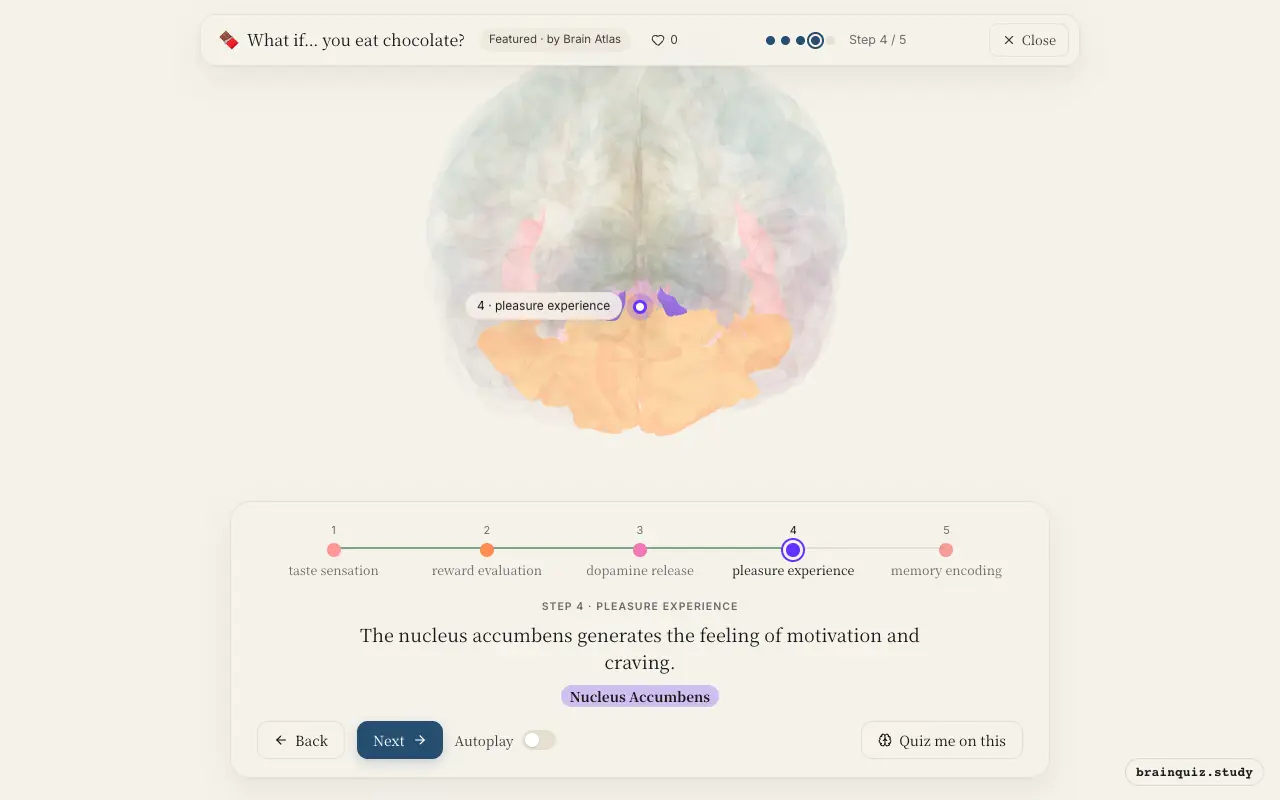
The nucleus accumbens is a key hub of the brain's reward circuit. Dopamine release here contributes to motivation and reinforces the association between chocolate and reward. It also contributes to craving, driving the desire to eat more even when not hungry.
5. Hippocampus: memory encoding
The hippocampus encodes the context, emotions, and sensory details of eating chocolate into a long-term memory. This memory can later trigger cravings when encountering similar cues, such as seeing chocolate or smelling cocoa. The hippocampus also links the context with the specific brand or situation.
Good to know
- Chocolate contains compounds like phenylethylamine and anandamide that may influence mood, but their effects are mild compared to dopamine-driven reward.
- The combination of sugar and fat in milk chocolate is thought to activate reward circuits more strongly than either alone.
- Repeated chocolate consumption can lead to downregulation of dopamine receptors, similar to other rewarding substances, potentially contributing to overeating.
Chocolate vs. bitter medicine
With chocolate, the insula and orbitofrontal cortex signal high reward, prompting dopamine release in the nucleus accumbens and pleasurable feelings. Bitter medicine activates the insula's disgust and aversive pathways, the orbitofrontal cortex assigns a negative value, and the nucleus accumbens shows less dopamine release, leading to avoidance.
Test yourself
Which brain region is primarily responsible for the conscious sensation of chocolate's taste?
What role does the orbitofrontal cortex play when eating chocolate?
Which neurotransmitter is most strongly associated with the pleasure and craving induced by chocolate?
0 of 3 answered · 0 correct
Simplified: many regions work together at once, and this shows the main players in the order they act. For learning only, not medical advice.