What happens in your brain when you feel nauseous?
Updated
Nausea starts in the brainstem's vomiting center, then the insula registers visceral discomfort and disgust, the amygdala adds emotional salience, and the hypothalamus triggers autonomic responses like sweating and pallor.
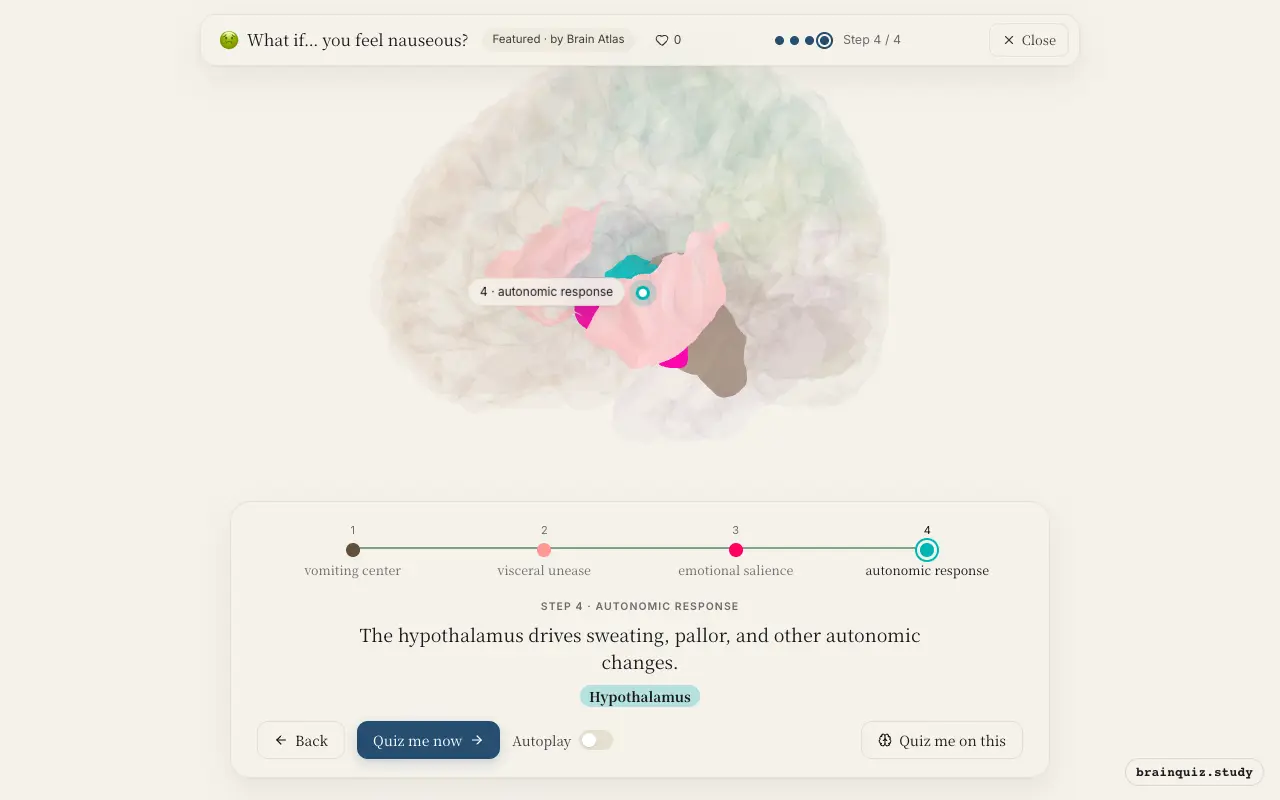
Watch it light up on the 3D brain
Brain regions that light up
| Order | Region | What it does here |
|---|---|---|
| 1 | Brainstem | The brainstem's vomiting center and area postrema detect toxins or motion signals. |
| 2 | Insula | The insula processes interoceptive signals, creating the conscious feeling of queasiness. |
| 3 | Amygdala | The amygdala tags the nausea as unpleasant and emotionally significant. |
| 4 | Hypothalamus | The hypothalamus drives sweating, pallor, and other autonomic changes. |
1. Brainstem: vomiting center
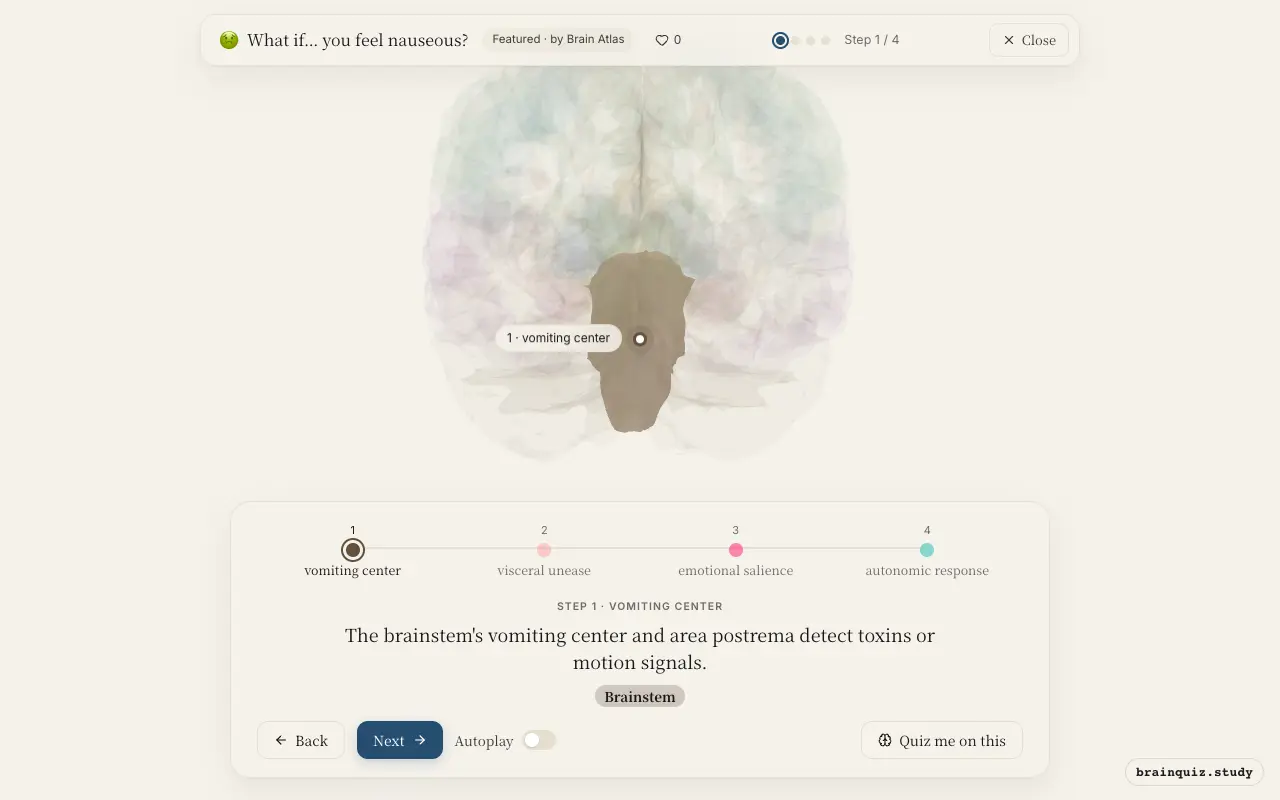
The brainstem houses the area postrema, a circumventricular organ that detects blood-borne toxins, and the vomiting center, which coordinates the motor sequence of retching. Motion signals from the vestibular system also converge here. This region initiates the physiological cascade underlying nausea.
2. Insula: visceral unease
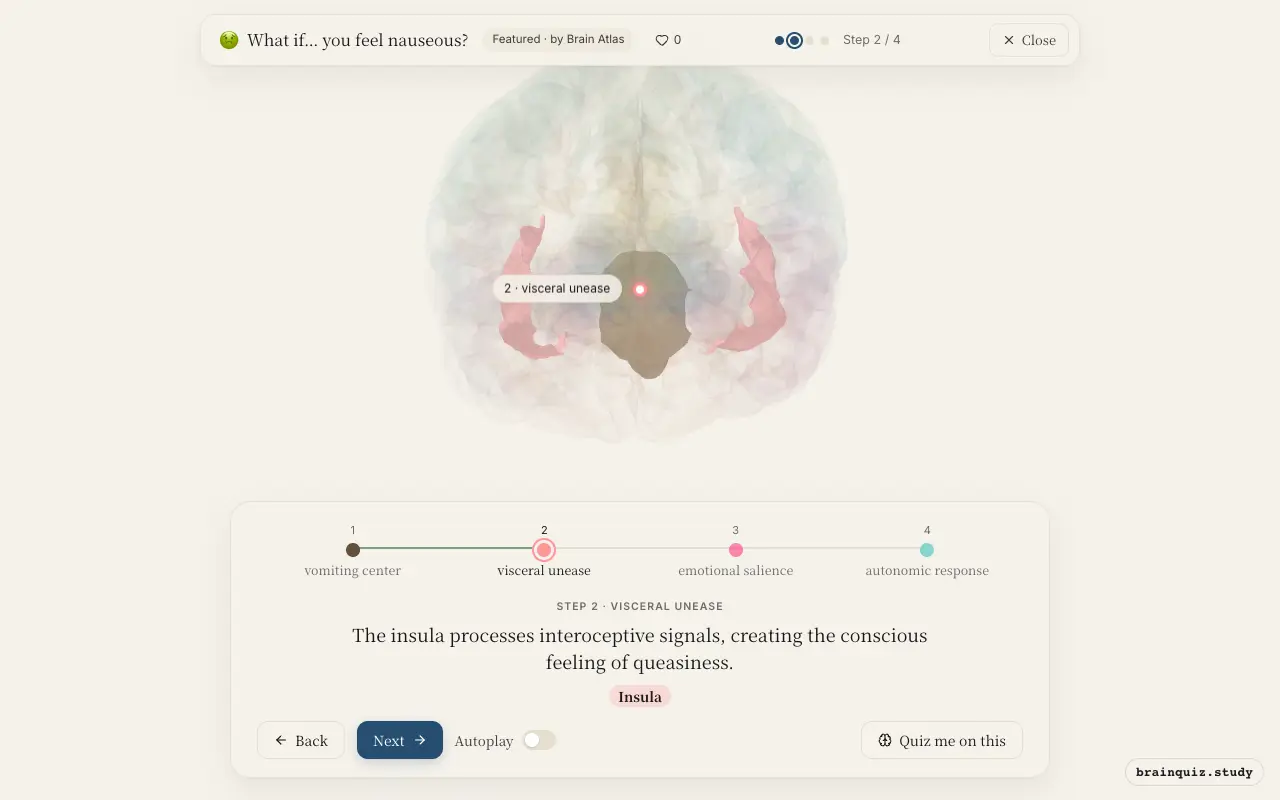
The insula integrates visceral sensations from the gut and autonomic responses, generating the subjective experience of nausea. It also contributes to the feeling of disgust that often accompanies nausea. Studies suggest that insular activity correlates with the intensity of the queasy feeling.
3. Amygdala: emotional salience
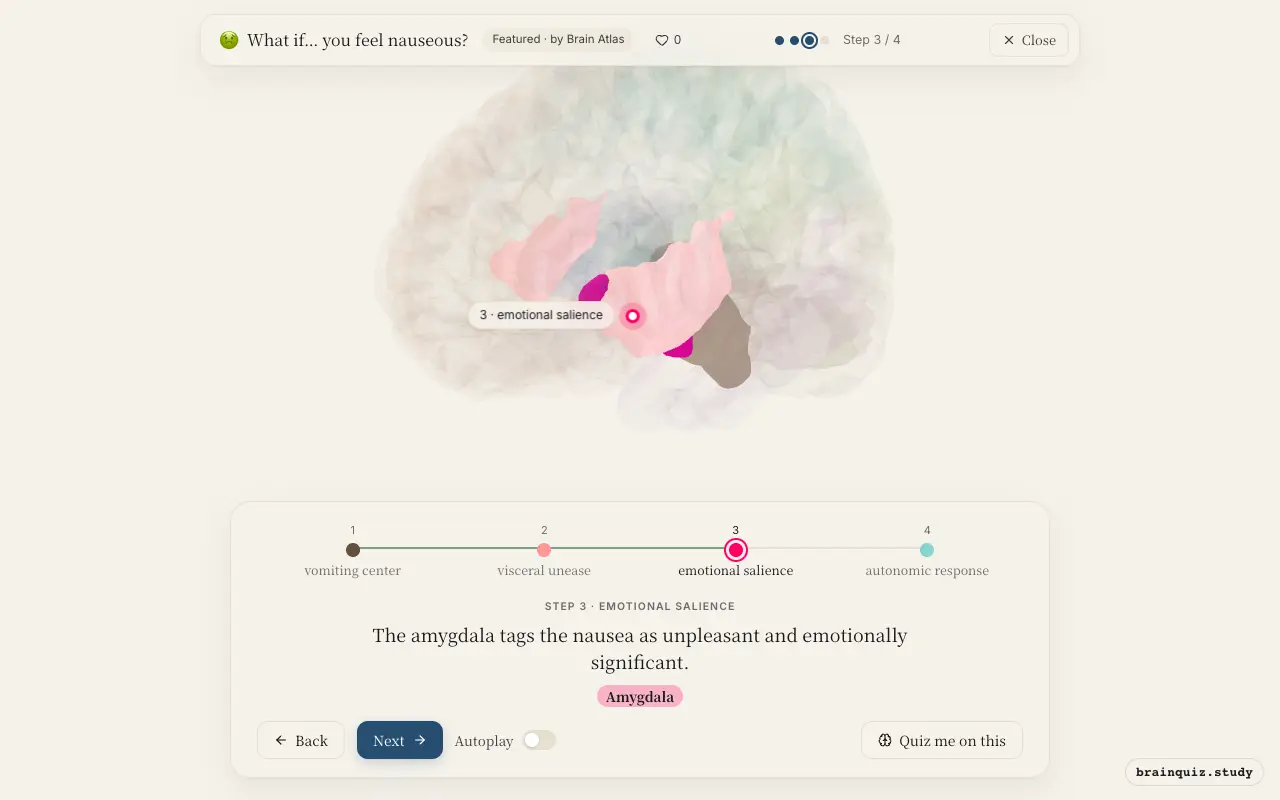
The amygdala evaluates the emotional valence of visceral signals, assigning a negative value to the nauseous experience. This helps motivate avoidance of the triggering stimulus. For conditioned taste aversions, the amygdala helps link the taste with the sick feeling.
4. Hypothalamus: autonomic response
The hypothalamus orchestrates the autonomic nervous system outflow that produces physical signs of nausea, such as increased salivation, sweating, and changes in heart rate. It also coordinates with endocrine responses. These peripheral changes feed back to the brain, potentially amplifying the feeling of sickness.
Good to know
- The area postrema in the brainstem is one of the few regions outside the blood-brain barrier, allowing it to directly detect blood-borne toxins.
- Antiemetic drugs often target serotonin or dopamine receptors in the brainstem to suppress nausea.
Nausea vs Vomiting
Nausea is primarily a sensory and affective state, with strong insula and amygdala activation. Vomiting involves a coordinated motor pattern driven by brainstem nuclei and spinal motoneurons, often with reduced cortical engagement. Thus, you can feel nauseous without vomiting, but vomiting sometimes occurs without preceding nausea.
Test yourself
Which brain region is the primary detector of blood-borne toxins that trigger nausea?
What role does the insula play in nausea?
Which region is most associated with the unpleasant emotional quality of nausea?
0 of 3 answered · 0 correct
Simplified: many regions work together at once, and this shows the main players in the order they act.