What happens in your brain when you feel hungry?
Updated
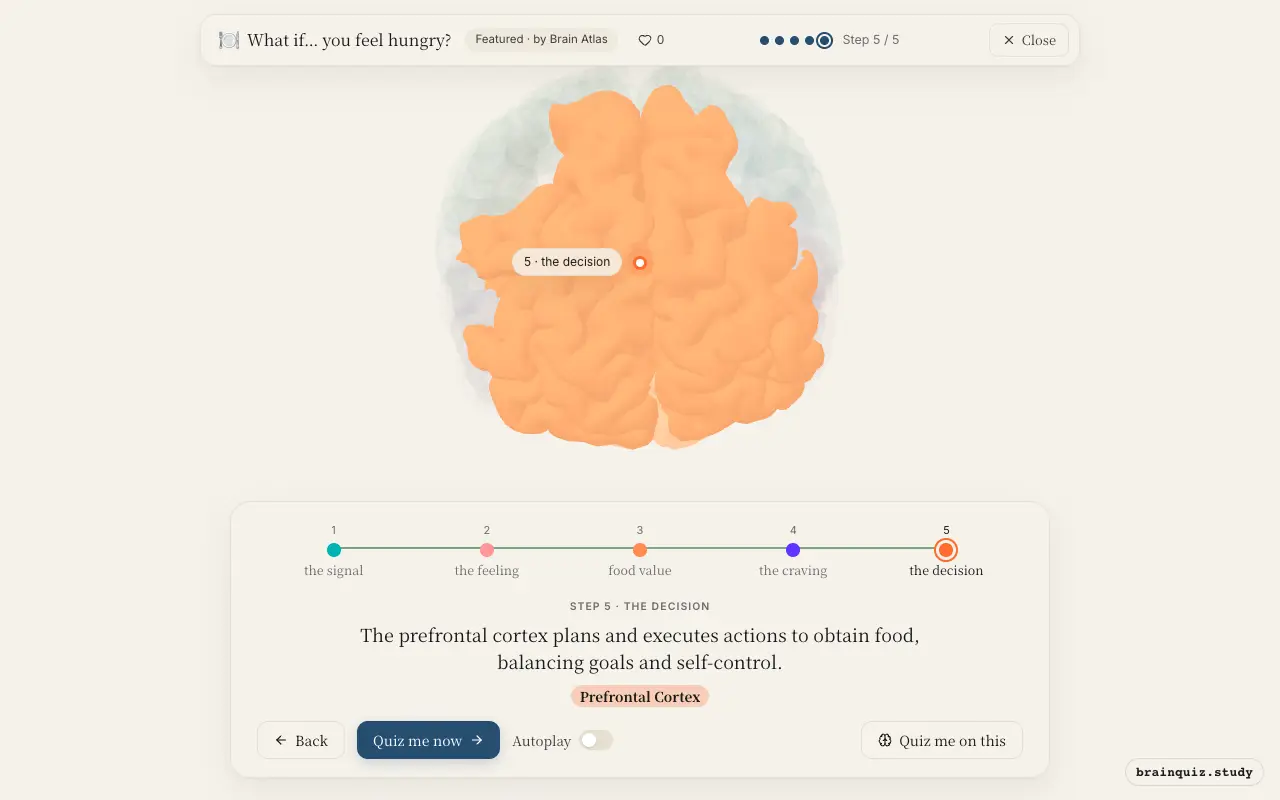
The hypothalamus detects low energy and triggers hunger; the insula makes it conscious; the orbitofrontal cortex evaluates food reward; the nucleus accumbens motivates seeking; the prefrontal cortex plans actions.
Watch it light up on the 3D brain
Brain regions that light up
| Order | Region | What it does here |
|---|---|---|
| 1 | Hypothalamus | Hunger signals from the gut and fat stores converge on the hypothalamus. |
| 2 | Insula | The insula reads these homeostatic signals as an interoceptive sensation of hunger. |
| 3 | Orbitofrontal Cortex | The orbitofrontal cortex evaluates the expected reward of available or imagined food. |
| 4 | Nucleus Accumbens | Dopamine release in the nucleus accumbens motivates food-seeking behavior. |
| 5 | Prefrontal Cortex | The prefrontal cortex plans and executes actions to obtain food, balancing goals and self-control. |
1. Hypothalamus: the signal
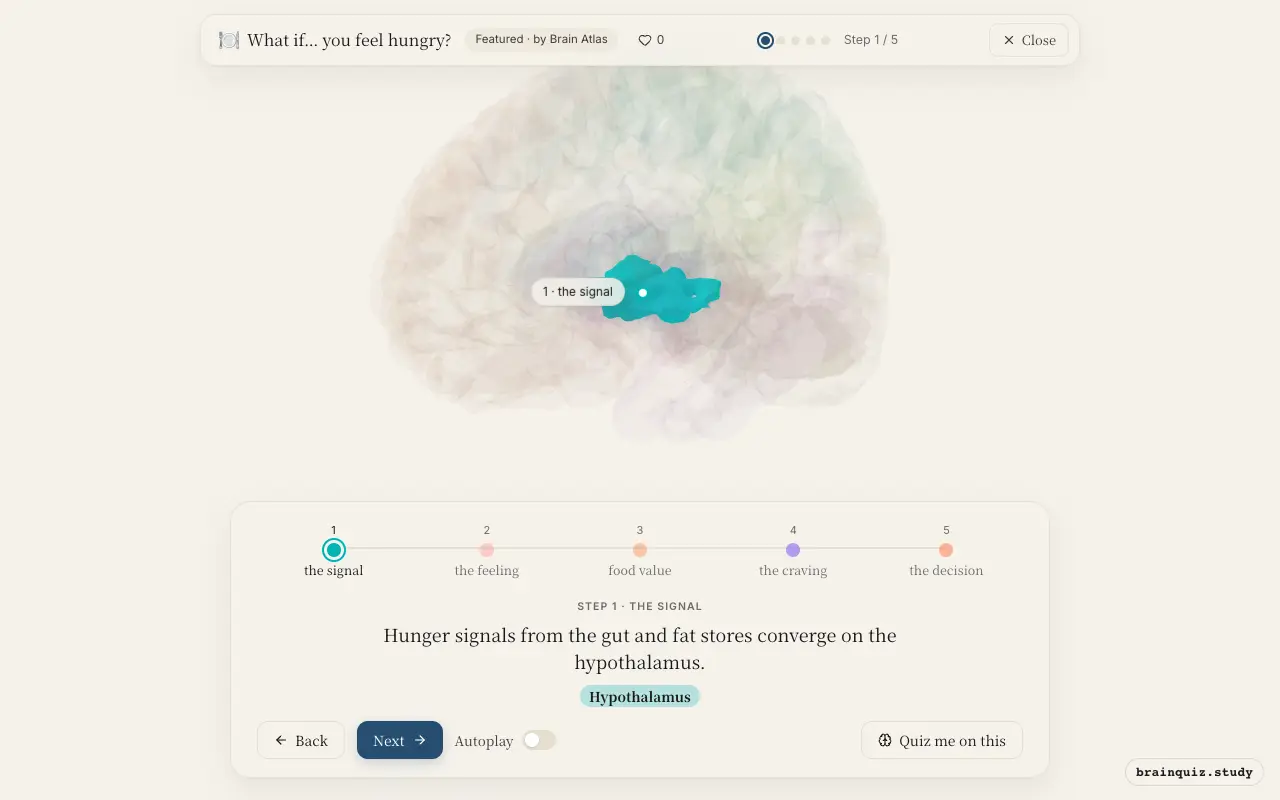
The hypothalamus monitors blood glucose, hormones like ghrelin and leptin, and other metabolic cues. When energy is low, its arcuate nucleus activates orexigenic neurons, triggering the drive to eat. This is the neural origin of hunger.
2. Insula: the feeling
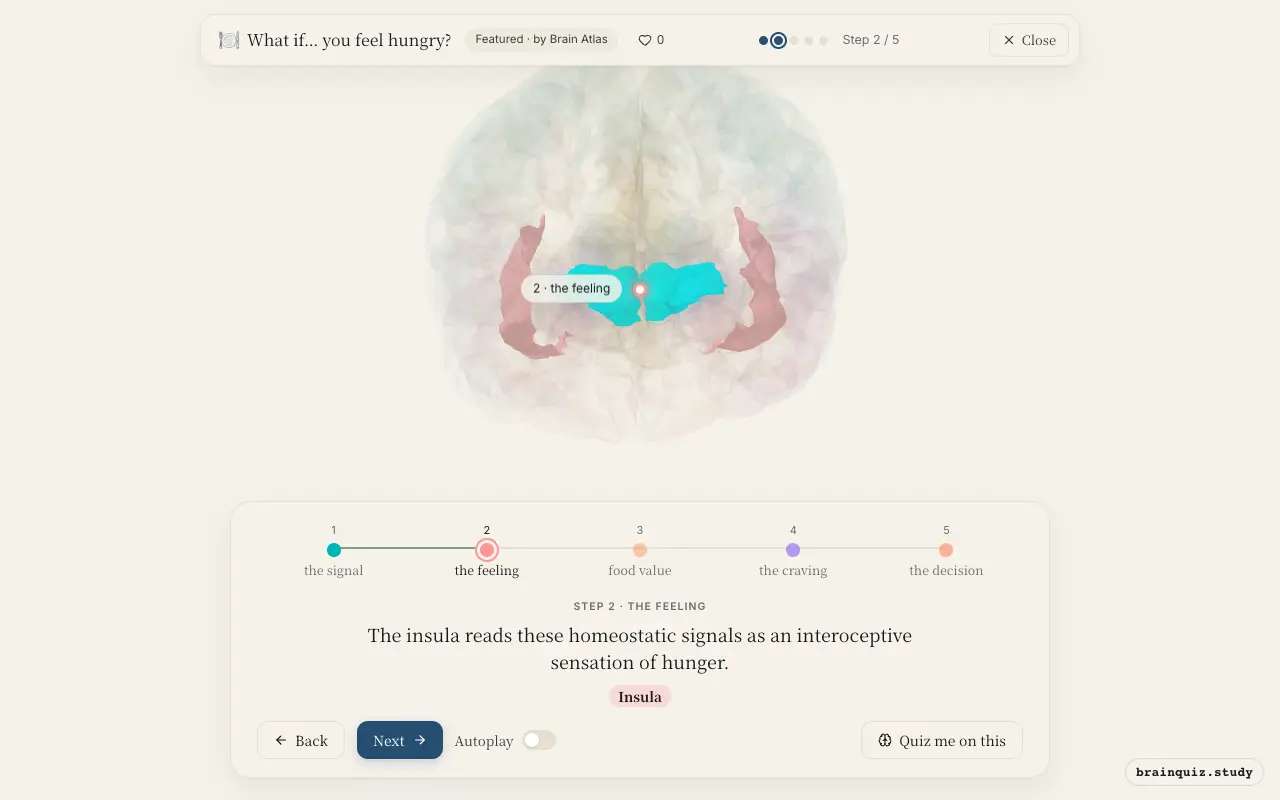
The insula integrates visceral and bodily signals, making you consciously aware of an empty stomach or low energy. It maps internal states to subjective feelings, so hunger becomes an urge you can report.
3. Orbitofrontal Cortex: food value
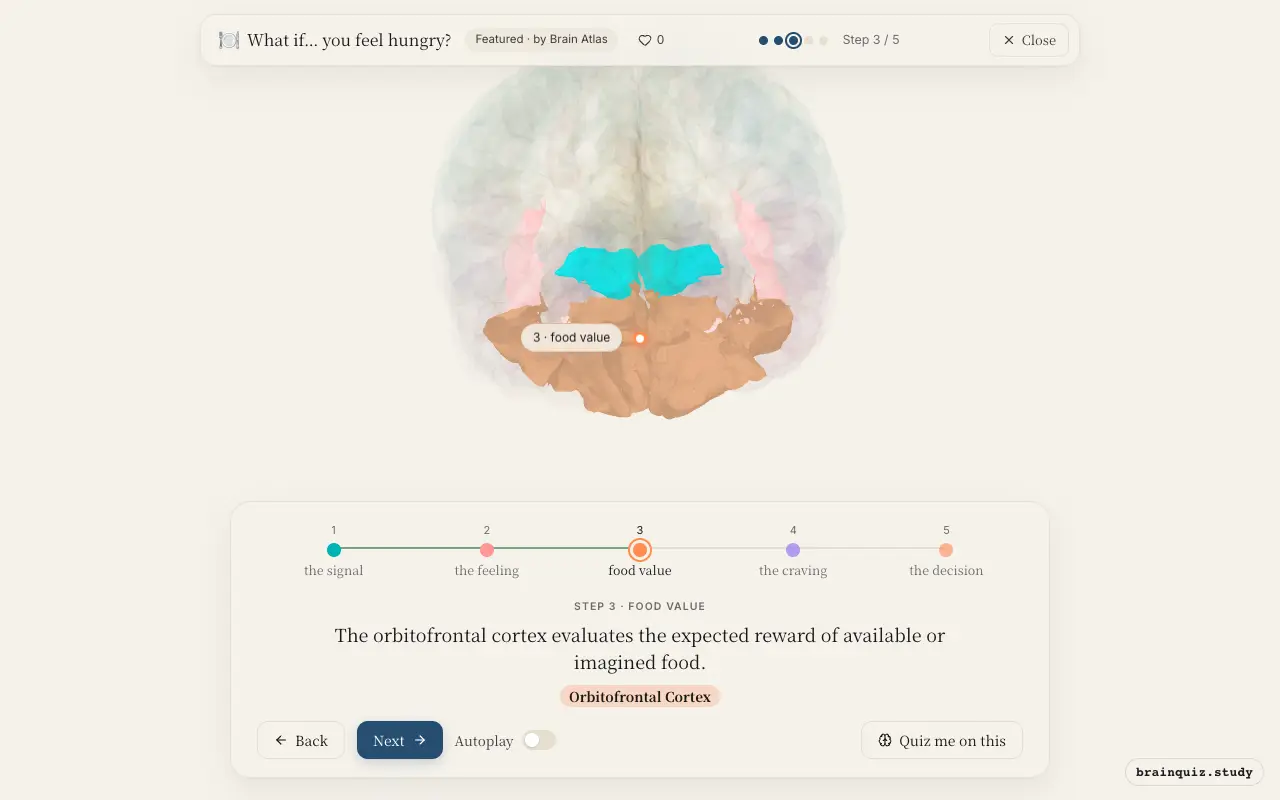
Processing taste, smell, and visual cues, the OFC assigns value to food stimuli based on past experience and current need. It ranks options, making high-calorie foods more appealing when hungry.
4. Nucleus Accumbens: the craving
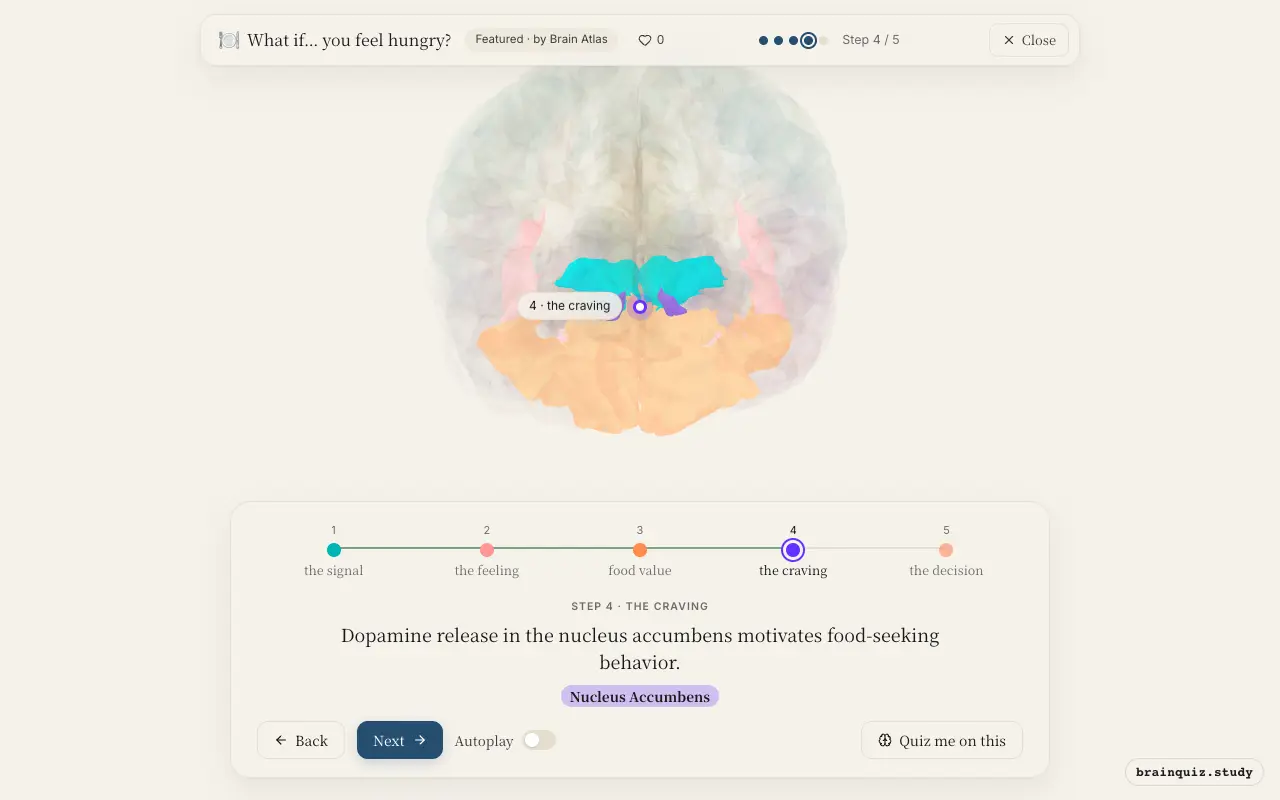
The nucleus accumbens integrates reward prediction from the OFC and motivational drive. Dopamine signals the anticipation of food, energizing you to pursue it and making the craving compelling.
5. Prefrontal Cortex: the decision
The prefrontal cortex weighs delayed rewards, social context, and long-term health, modulating the impulse to eat. It coordinates motor plans to seek, prepare, or purchase food, suppressing eating if inappropriate.
Good to know
- Ghrelin, secreted by an empty stomach, rises before meals and falls after eating.
- Leptin from fat cells signals long-term energy stores to the hypothalamus.
- Hunger increases activity in reward regions like the orbitofrontal cortex and nucleus accumbens when viewing food images.
Hunger vs. Craving
Hunger is a homeostatic need driven by energy deficit, primarily in the hypothalamus. Craving, by contrast, is a desire for specific rewarding foods, engaging more strongly the orbitofrontal cortex and nucleus accumbens even when not hungry, and often linked to dopamine.
Test yourself
Which brain region is the primary homeostatic center for hunger?
Which region makes you consciously aware of hunger as a feeling?
Dopamine release in which region motivates food-seeking?
0 of 3 answered · 0 correct
Simplified: many regions work together at once, and this shows the main players in the order they act.