What happens in your brain when you get thirsty?
Updated
Osmoreceptors in the hypothalamus detect rising blood osmolality. The insula generates the conscious feeling of dryness. The anterior cingulate cortex creates a motivational urge. The prefrontal cortex plans to seek water. The motor cortex executes drinking.
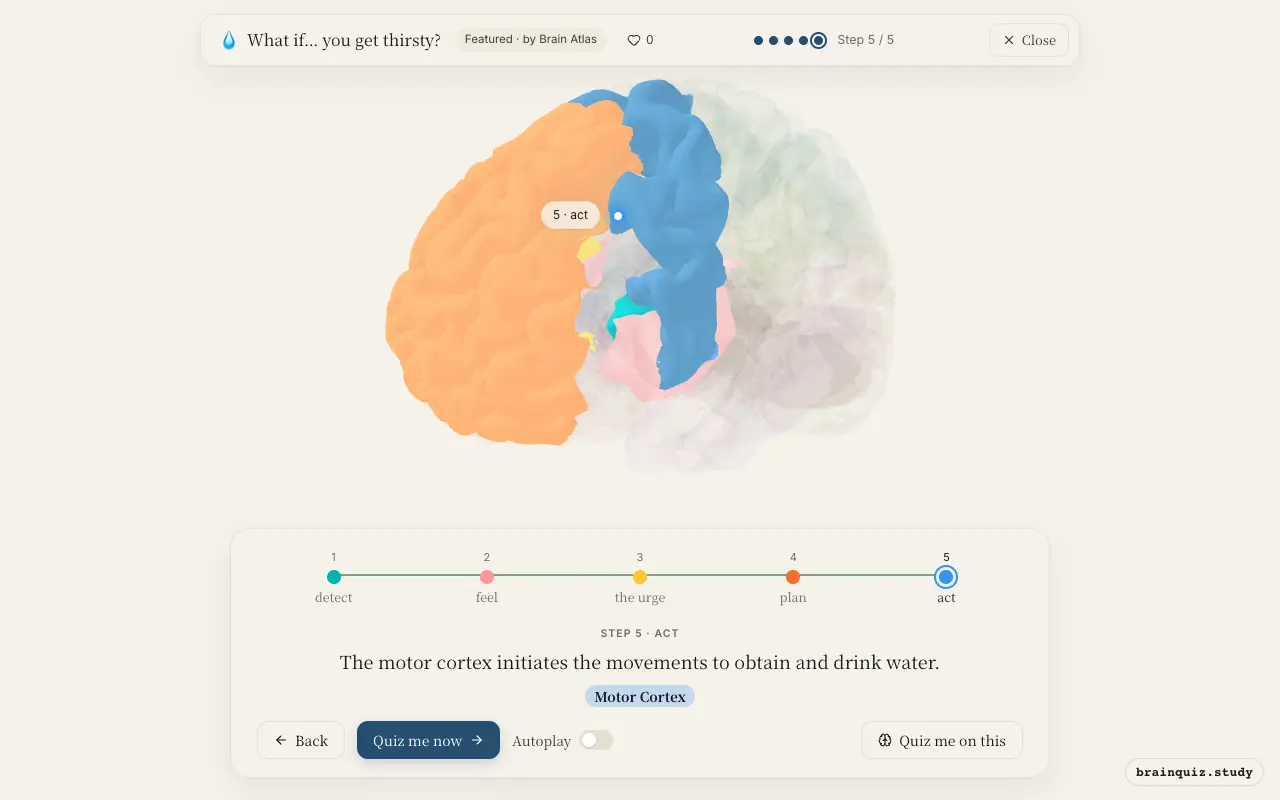
Watch it light up on the 3D brain
Brain regions that light up
| Order | Region | What it does here |
|---|---|---|
| 1 | Hypothalamus | Osmoreceptors in the hypothalamus sense rising blood osmolality. |
| 2 | Insula | The insula generates the conscious sensation of thirst and dry mouth. |
| 3 | Anterior Cingulate Cortex | The anterior cingulate cortex adds motivational urgency to seek water. |
| 4 | Prefrontal Cortex | The prefrontal cortex weighs options and plans how to get a drink. |
| 5 | Motor Cortex | The motor cortex initiates the movements to obtain and drink water. |
1. Hypothalamus: detect
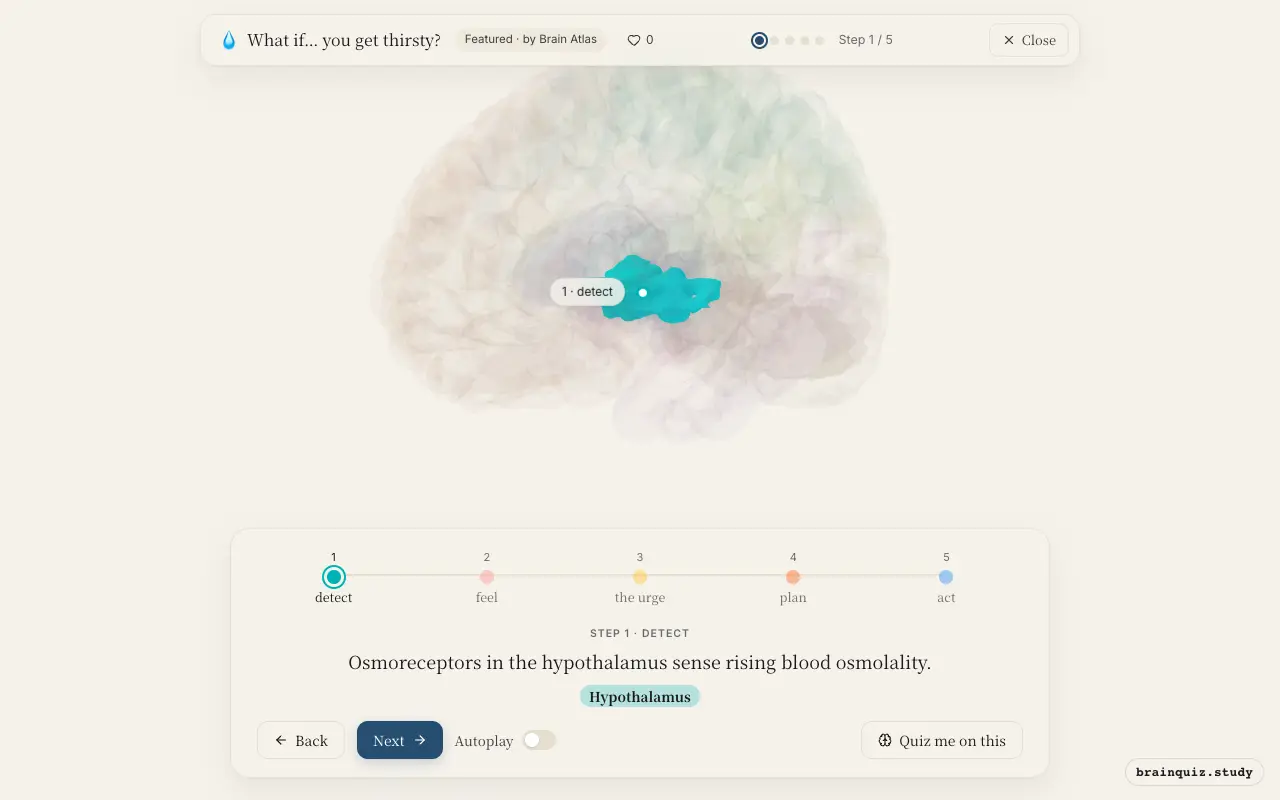
Specialized neurons in the hypothalamus monitor the concentration of solutes in the blood. When osmolality increases, they signal thirst to restore fluid balance. This is the body's primary homeostatic trigger for drinking.
2. Insula: feel
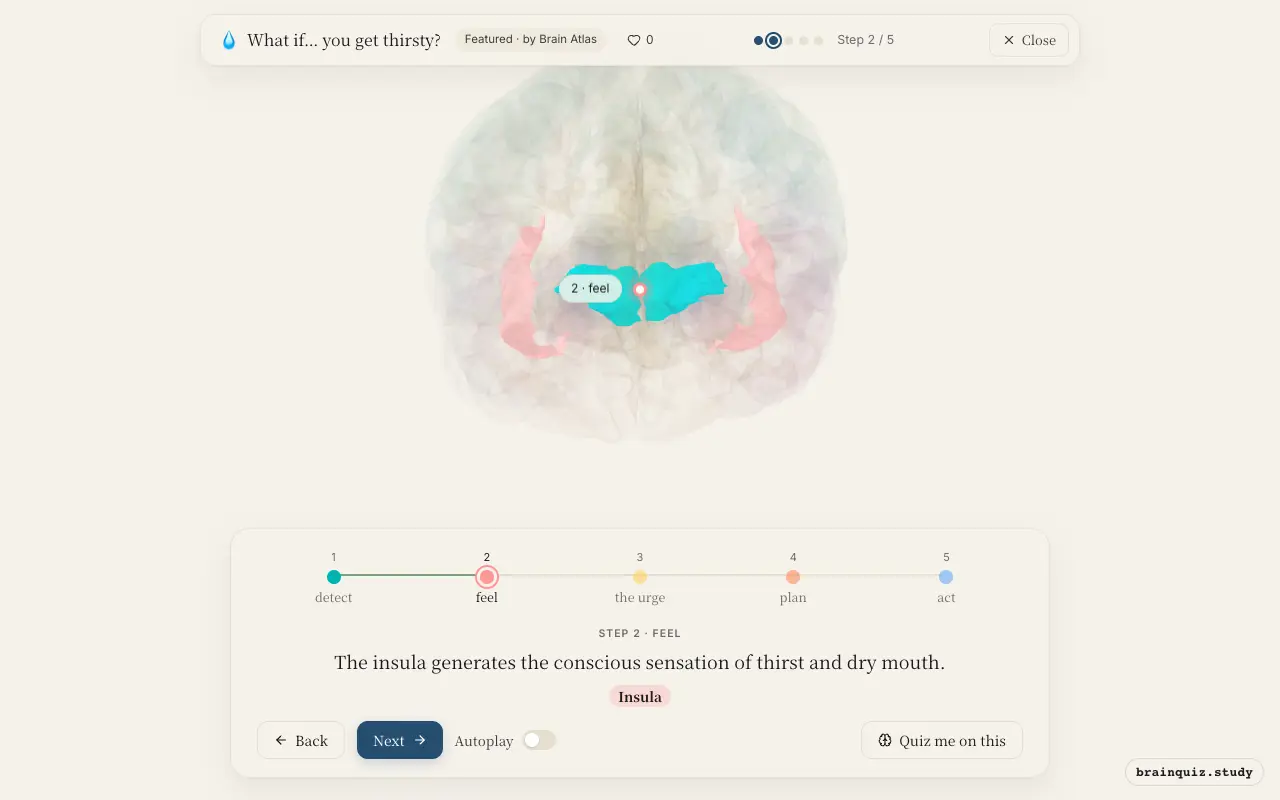
The insula integrates interoceptive signals from the body, including dry mouth and blood volume. This creates the subjective feeling of thirst that we become aware of. Studies suggest insular activity correlates with thirst intensity.
3. Anterior Cingulate Cortex: the urge
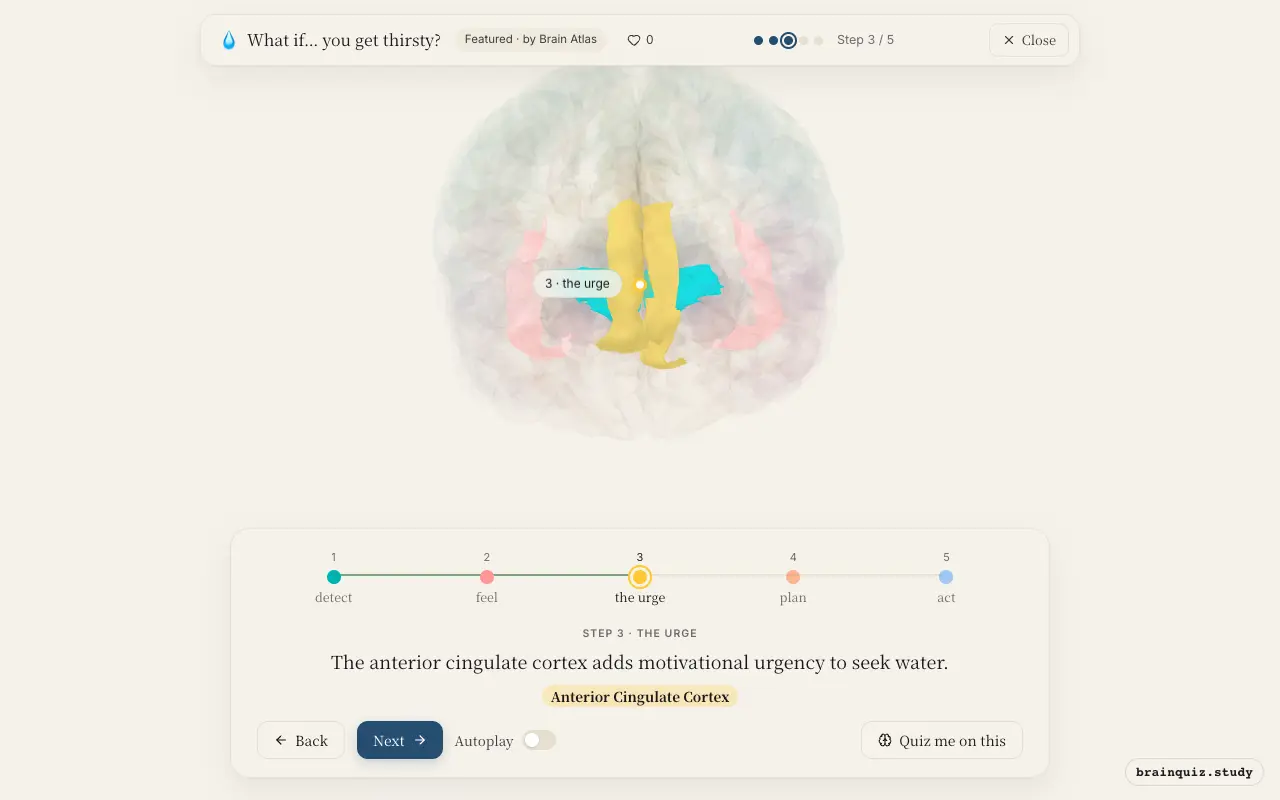
The anterior cingulate cortex receives input from the insula and hypothalamus, linking physiological need to emotional drive. It is thought to create the unpleasant urge that compels action. This region is also involved in conflict monitoring, ensuring thirst becomes a priority.
4. Prefrontal Cortex: plan
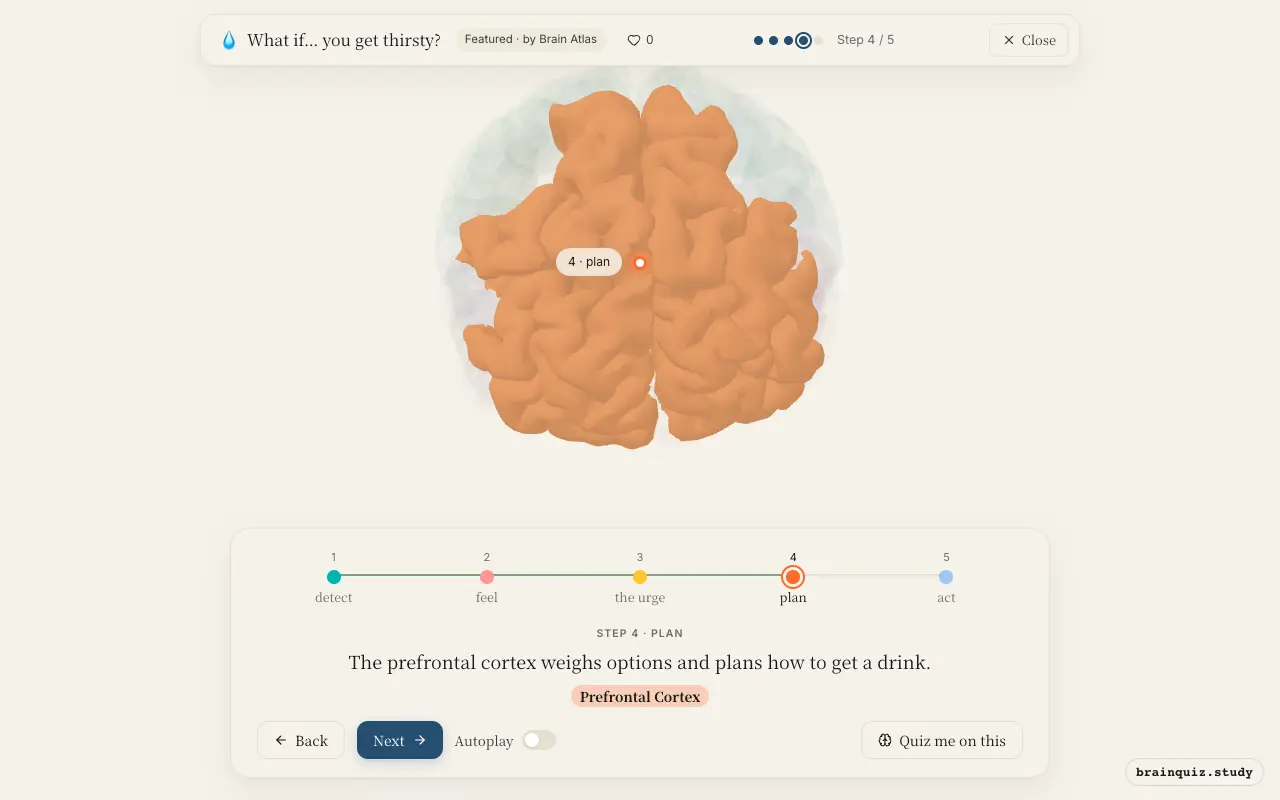
The prefrontal cortex integrates the thirst signal with context, memory, and available resources. It decides whether to get water now or later and how. Executive functions here guide the selection of drinking behavior.
5. Motor Cortex: act
The motor cortex sends commands to muscles for reaching and grasping, while brainstem circuits control swallowing. It executes the planned action once the prefrontal cortex has decided. This step results in actual fluid intake.
Good to know
- Osmoreceptors in the hypothalamus respond to increases in blood osmolality as small as 1–2%.
- The organum vasculosum of the lamina terminalis (OVLT), a circumventricular organ within the hypothalamus, lacks a blood-brain barrier and directly senses blood composition.
- Insular cortex activity has been shown to correlate with subjective thirst ratings in neuroimaging studies.
Thirst vs Hunger
Both thirst and hunger activate the hypothalamus for homeostasis and the insula for interoception. However, thirst relies more on osmoreceptor signaling and anterior cingulate-driven urgency, while hunger involves different hypothalamic nuclei and engages the amygdala and nucleus accumbens for food reward and salience.
Test yourself
Which brain region directly detects increased blood osmolality during thirst?
What is the primary role of the insula in thirst?
Which region adds motivational urgency to the thirst signal?
0 of 3 answered · 0 correct
Simplified: many regions work together at once, and this shows the main players in the order they act.