What happens in your brain when you sneeze?
Updated
A sneeze is a brainstem reflex. The brainstem coordinates the rapid expulsion of air, while the thalamus relays nasal irritation signals to the somatosensory cortex for conscious perception, and the insula is thought to generate the urge to sneeze.
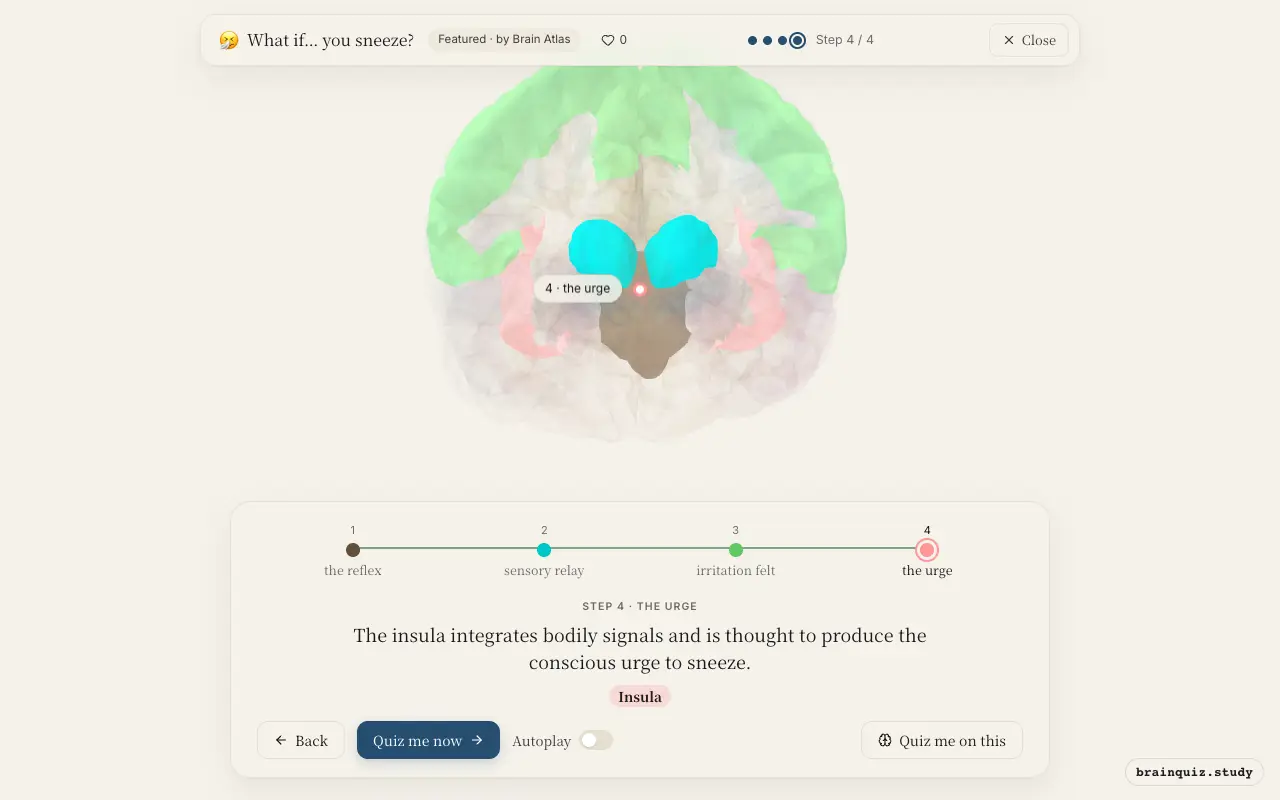
Watch it light up on the 3D brain
Brain regions that light up
| Order | Region | What it does here |
|---|---|---|
| 1 | Brainstem | The brainstem receives trigeminal nerve signals and triggers the sneeze reflex. |
| 2 | Thalamus | The thalamus relays nasal irritation signals to the cerebral cortex. |
| 3 | Somatosensory Cortex | The somatosensory cortex processes the tactile sensation of nasal irritation. |
| 4 | Insula | The insula integrates bodily signals and is thought to produce the conscious urge to sneeze. |
1. Brainstem: the reflex
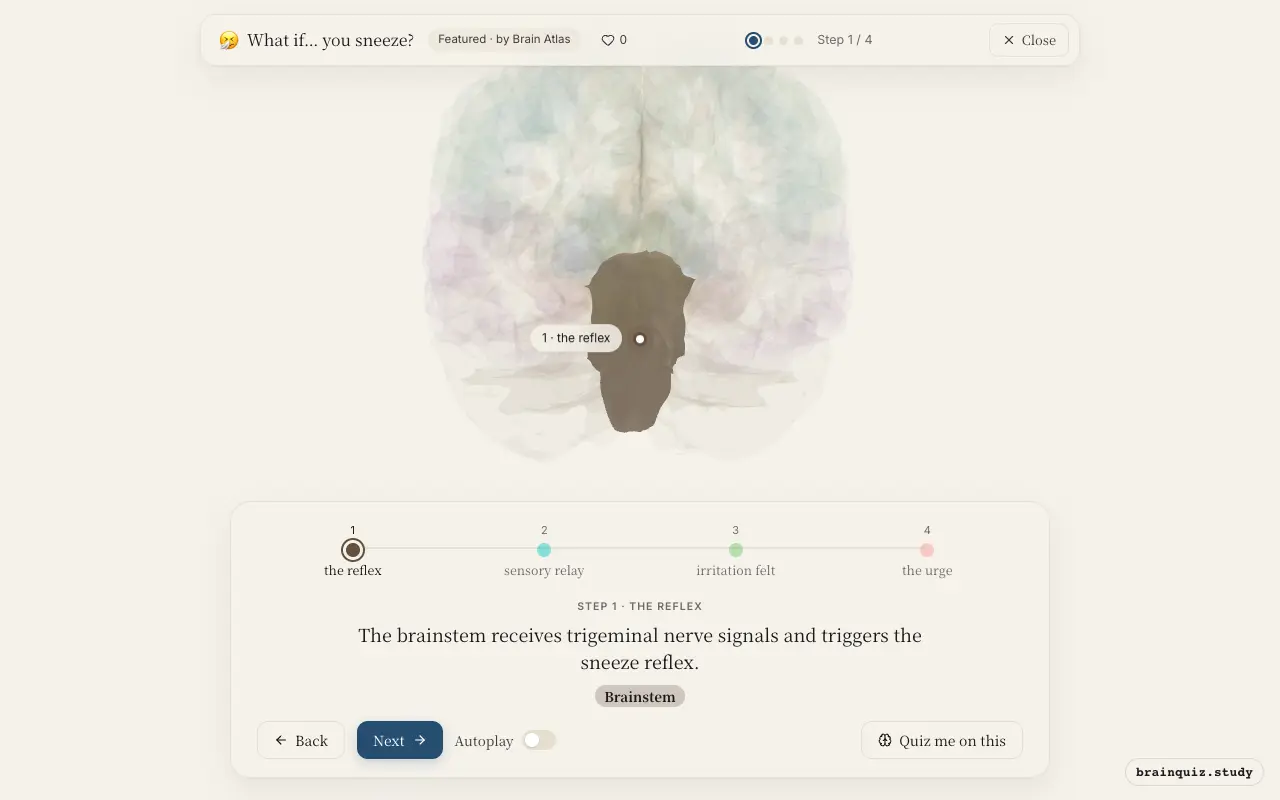
The medulla oblongata contains the sneeze center, which coordinates the forceful expulsion of air by activating respiratory muscles through motor neurons. This reflex is involuntary and occurs within milliseconds of irritation.
2. Thalamus: sensory relay
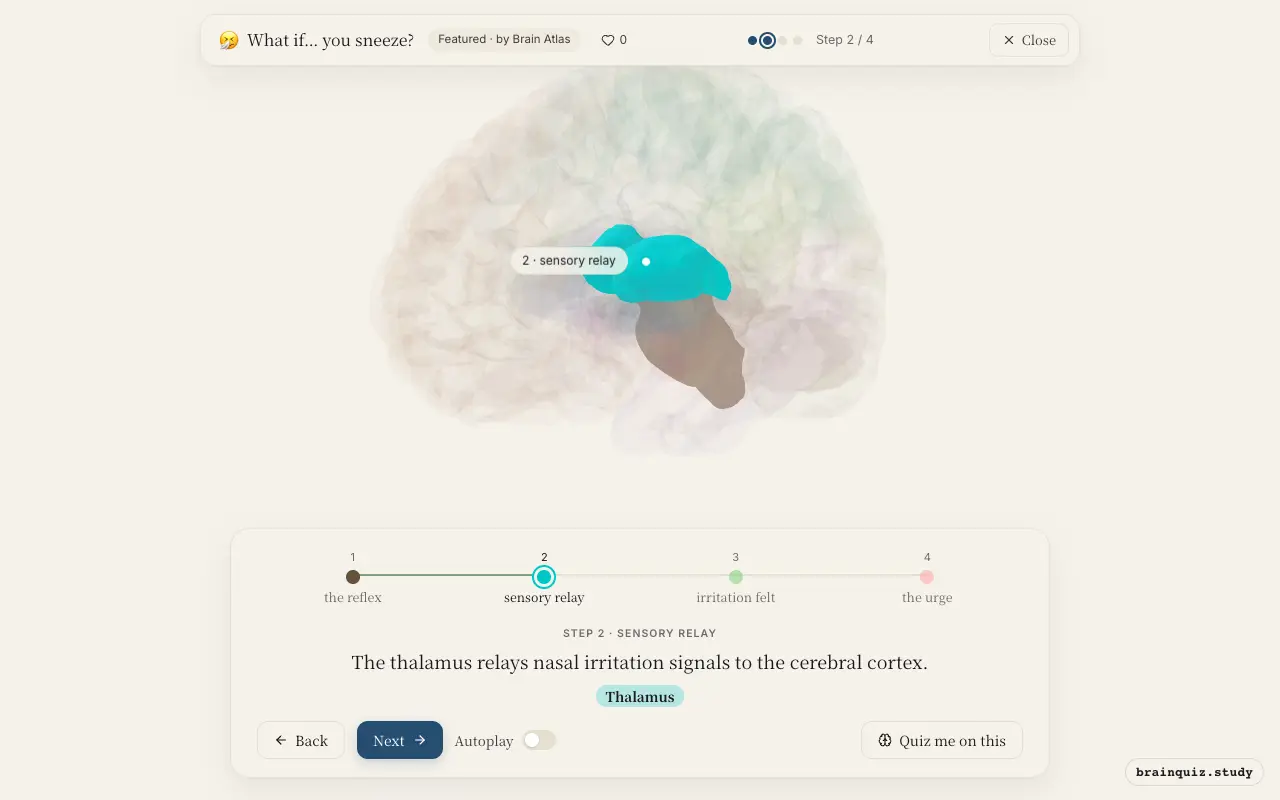
Sensory information from the trigeminal nerve travels via the ventral posterior medial nucleus of the thalamus to the somatosensory cortex, allowing conscious perception of the irritant.
3. Somatosensory Cortex: irritation felt
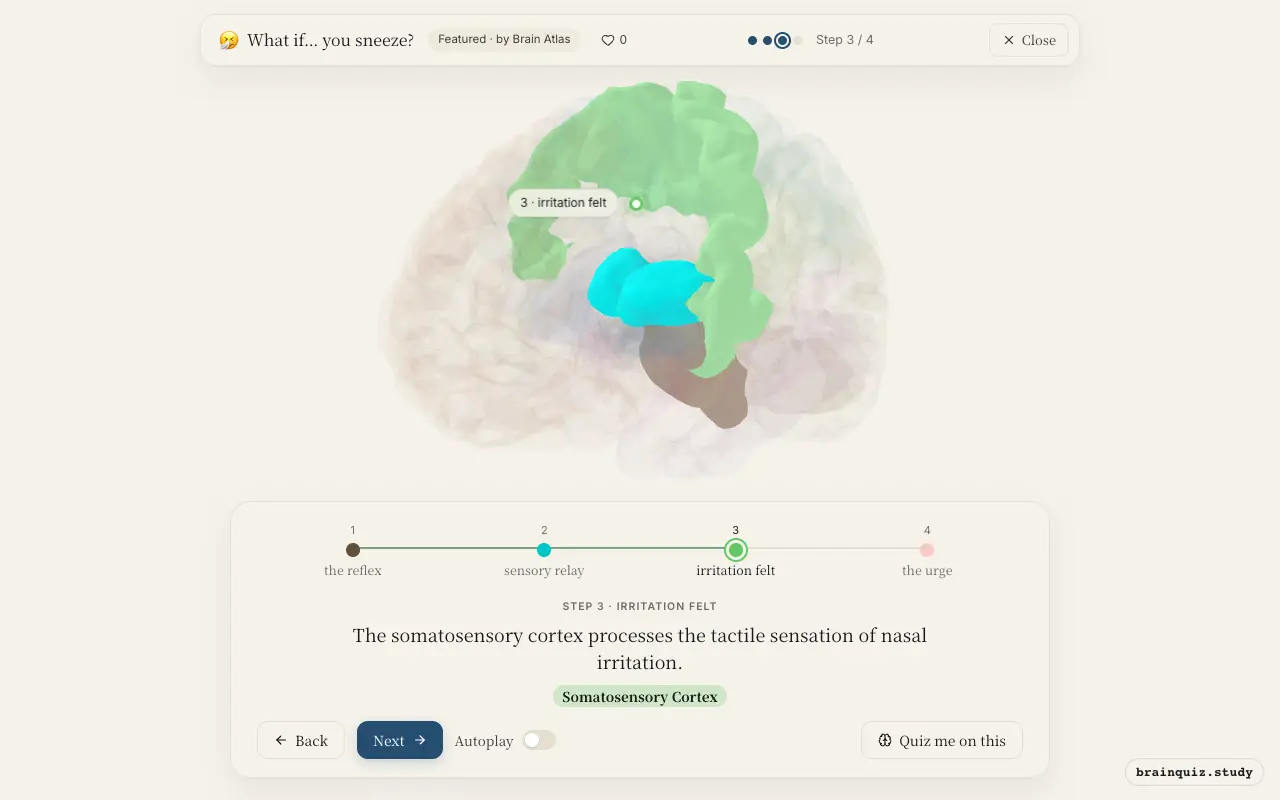
The face area of the somatosensory cortex receives input from the thalamus, enabling you to feel the tickle or itch in your nose that signals an impending sneeze.
4. Insula: the urge
The insula is involved in interoception and is thought to generate the feeling of needing to sneeze, contributing to the subjective experience of the reflex.
Good to know
- Sneezing is a protective reflex that expels irritants from the nasal cavity at speeds often reported up to 100 mph.
- The sneeze center is located in the medulla oblongata, and damage to this area can abolish the reflex.
- The photic sneeze reflex, affecting about one in four people, triggers sneezing in response to bright light, likely due to cross-talk between the optic and trigeminal nerves.
Sneeze vs Cough: brainstem reflexes compared
Both sneezing and coughing are protective reflexes coordinated by the brainstem, but they involve different sensory inputs and motor outputs. Sneezing is triggered by nasal irritation and primarily involves the trigeminal nerve, while coughing is triggered by airway irritation and involves the vagus nerve. Additionally, coughing has a larger cortical component, allowing more voluntary control.
Test yourself
Which brain region contains the sneeze center?
What is the role of the insula in sneezing?
Which nerve carries the sensory signal that triggers a sneeze?
0 of 3 answered · 0 correct
Simplified: many regions work together at once, and this shows the main players in the order they act.