What happens in your brain when you get jump-scared?
Updated
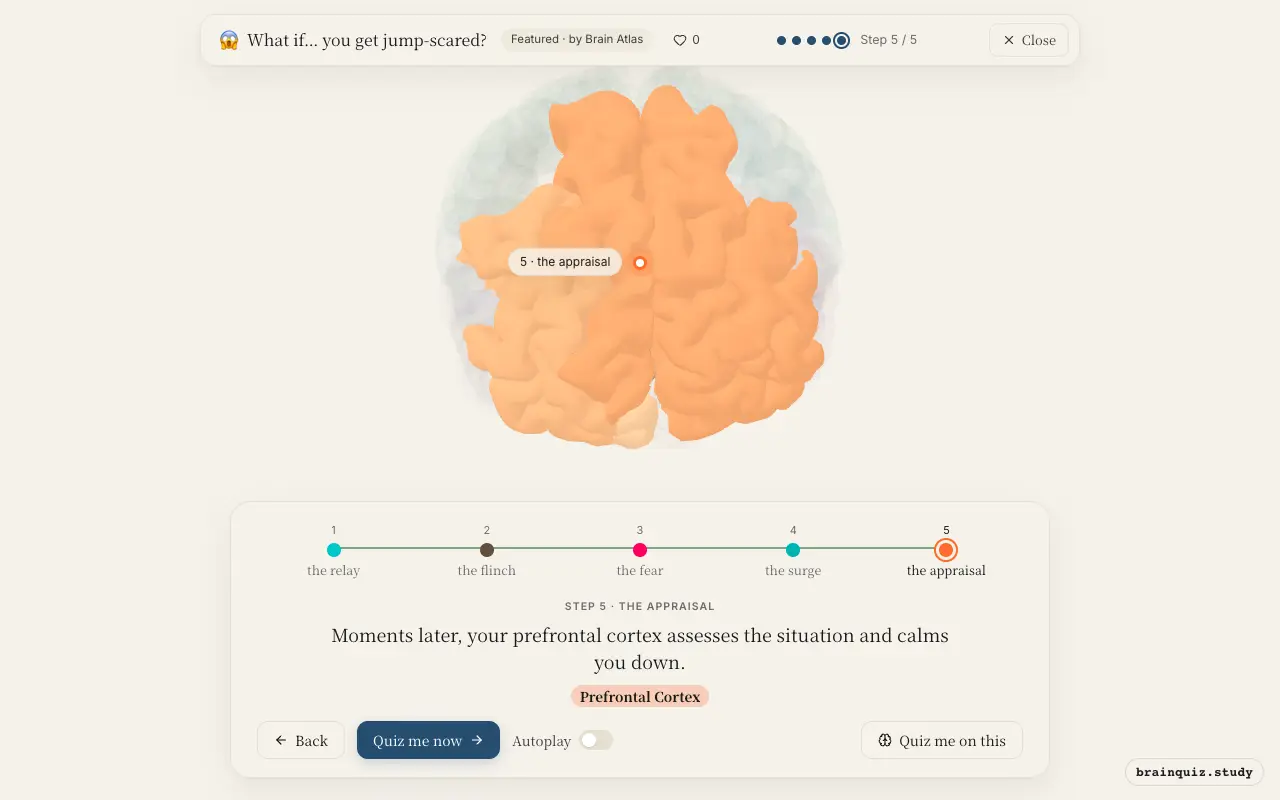
A jump scare fires a rapid chain: the thalamus relays the sudden stimulus to the brainstem, triggering an instant flinch, and to the amygdala, which ignites fear. The hypothalamus then releases adrenaline, and the prefrontal cortex later appraises the scare as harmless.
Watch it light up on the 3D brain
Brain regions that light up
| Order | Region | What it does here |
|---|---|---|
| 1 | Thalamus | The sudden sight or sound races through the thalamus, your brain's sensory switchboard. |
| 2 | Brainstem | Your brainstem triggers a startle reflex, making you jump and blink before you know why. |
| 3 | Amygdala | The amygdala flags the stimulus as a threat and fires the alarm. |
| 4 | Hypothalamus | Your hypothalamus activates the sympathetic nervous system, flooding you with adrenaline. |
| 5 | Prefrontal Cortex | Moments later, your prefrontal cortex assesses the situation and calms you down. |
1. Thalamus: the relay
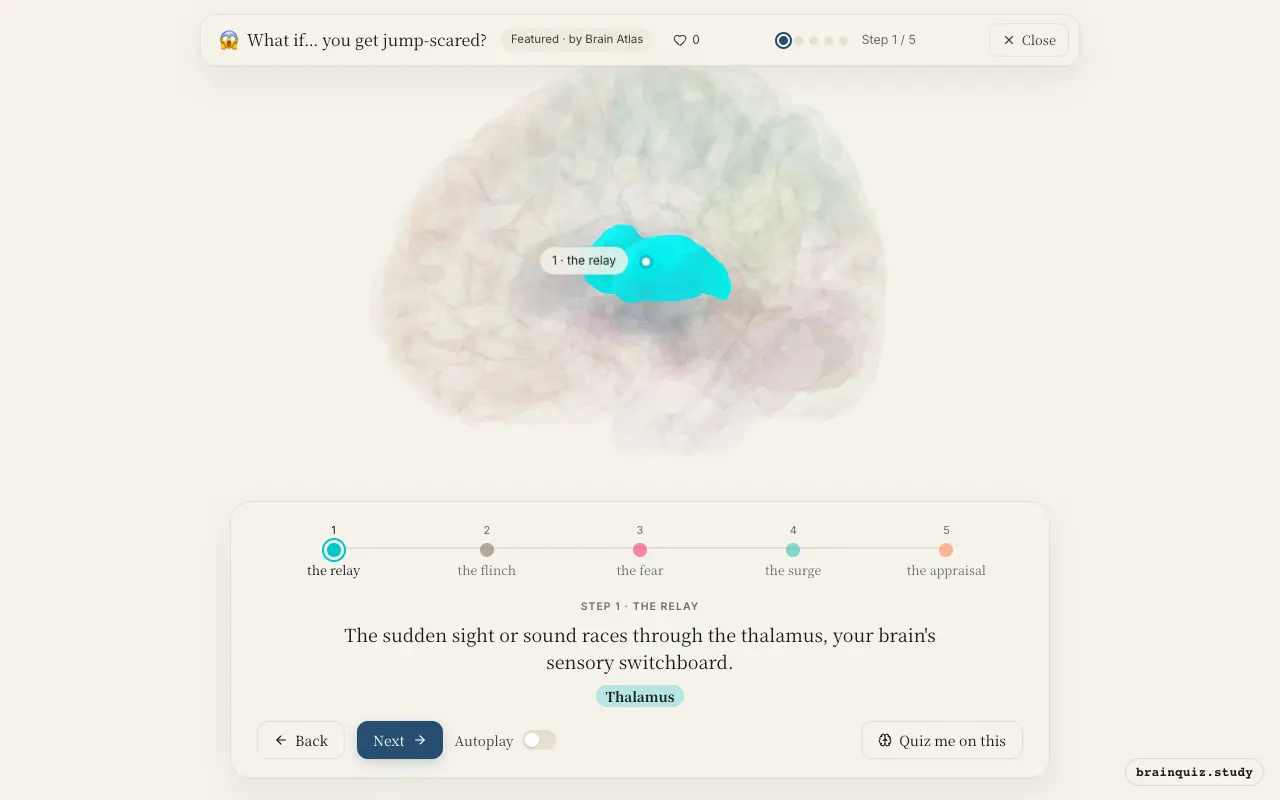
The thalamus receives the raw sensory input from your eyes or ears and immediately routes it to both the brainstem for reflexive action and the amygdala for emotional processing. This happens before conscious awareness, allowing a rapid response.
2. Brainstem: the flinch
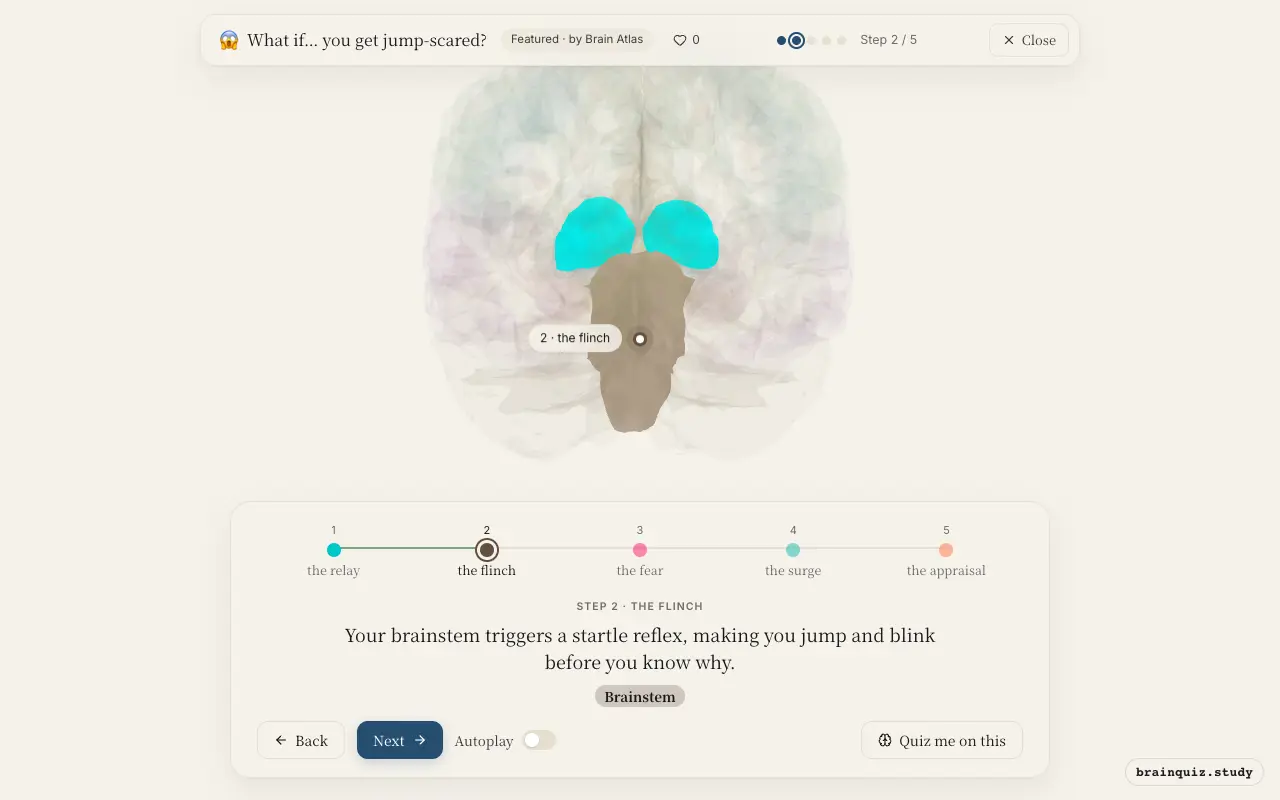
The brainstem, particularly the reticular formation, connects the sudden input to motor neurons controlling your muscles. This produces an automatic, lightning-fast flinch, blink, or gasp. It is a hardwired protective reflex that buys time for further processing.
3. Amygdala: the fear
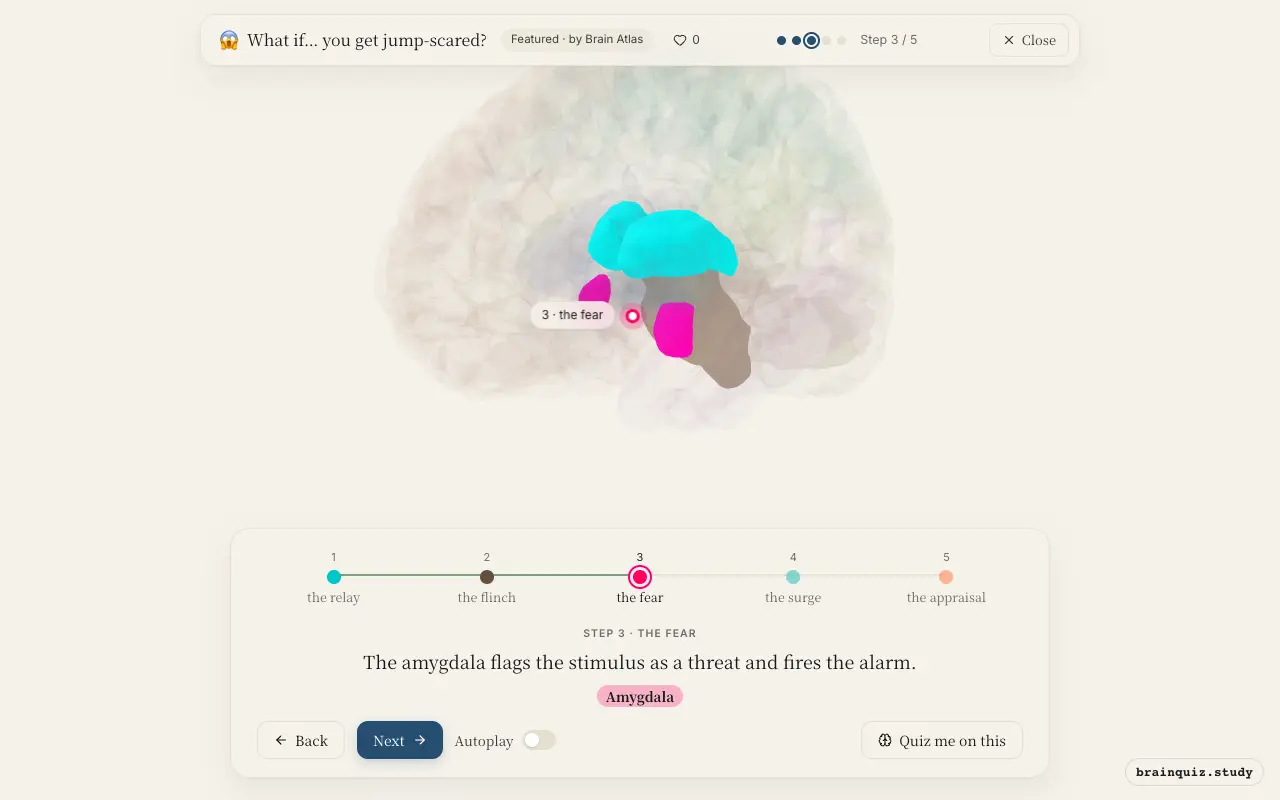
The amygdala receives the same information from the thalamus and rapidly evaluates its emotional significance. If it detects danger, it initiates a fear response, sending signals to the hypothalamus and brainstem. This is the classic low road, bypassing the cortex for speed.
4. Hypothalamus: the surge
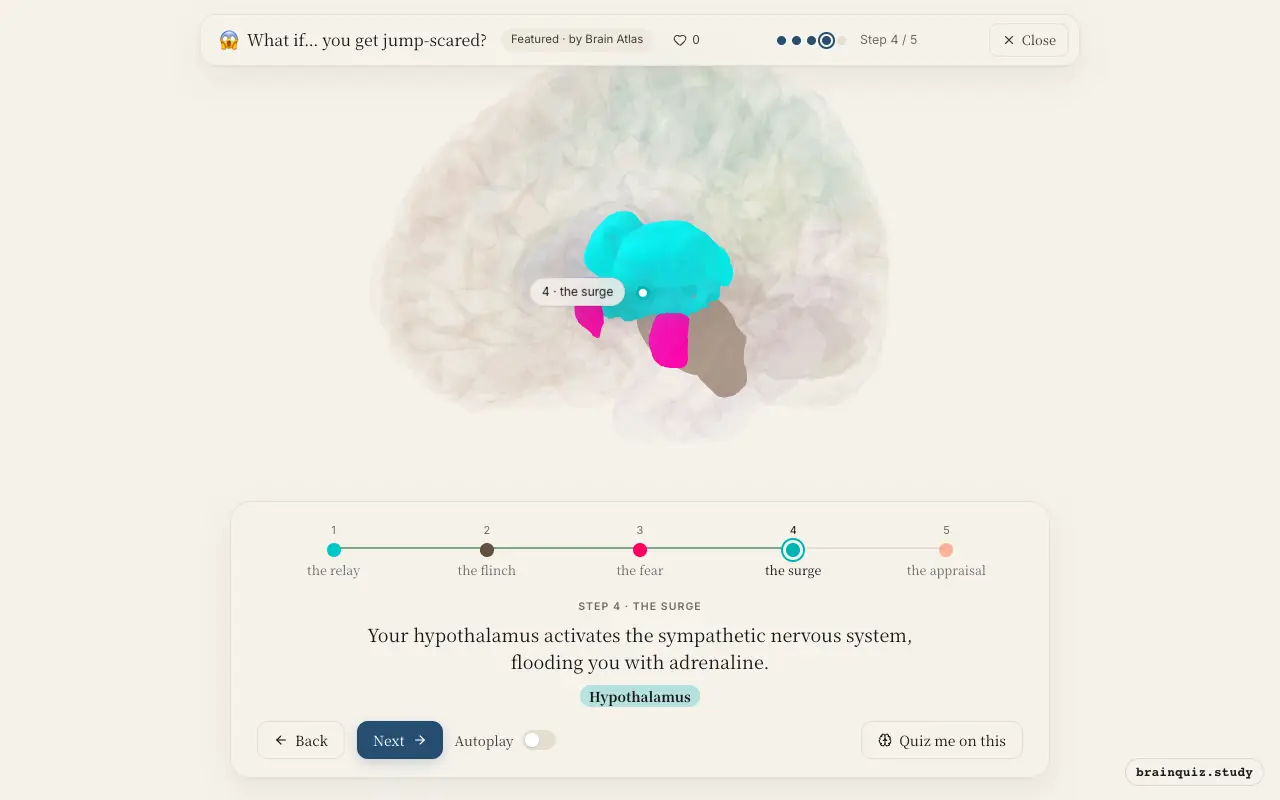
The hypothalamus acts as the command center for the body's fight-or-flight response. It triggers the release of stress hormones like adrenaline and cortisol, increasing heart rate, blood pressure, and breathing. This prepares your body to react to the perceived threat.
5. Prefrontal Cortex: the appraisal
The prefrontal cortex, especially the medial and orbitofrontal areas, receives slower, more detailed information from the sensory cortex. It evaluates the context—realizing it was just a movie or a friend—and sends inhibitory signals to the amygdala to dampen the fear response. This is why the feeling fades quickly once you understand the joke.
Good to know
- The startle reflex is one of the fastest human responses, occurring within 20 to 50 milliseconds.
- The amygdala may be activated even by subliminal threat stimuli, without conscious awareness.
Jump Scare vs. Chronic Anxiety
In a jump scare, the brainstem and amygdala fire briefly and then the prefrontal cortex calms the response. In chronic anxiety, the amygdala remains overactive and the prefrontal cortex's regulation is weakened, so the fear response persists without an immediate threat.
Test yourself
Which brain region directly triggers the startle reflex (flinch) in a jump scare?
What role does the thalamus play in a jump scare?
Which region is responsible for the conscious realization that the scare was harmless?
0 of 3 answered · 0 correct
Simplified: many regions work together at once, and this shows the main players in the order they act.