What happens in your brain when you fall in love?
Updated
Falling in love triggers the ventral tegmental area to release dopamine, exciting the nucleus accumbens and caudate for pleasure and pursuit. The insula creates bodily flutter, while the prefrontal cortex quiets, reducing judgment and deepening attachment.
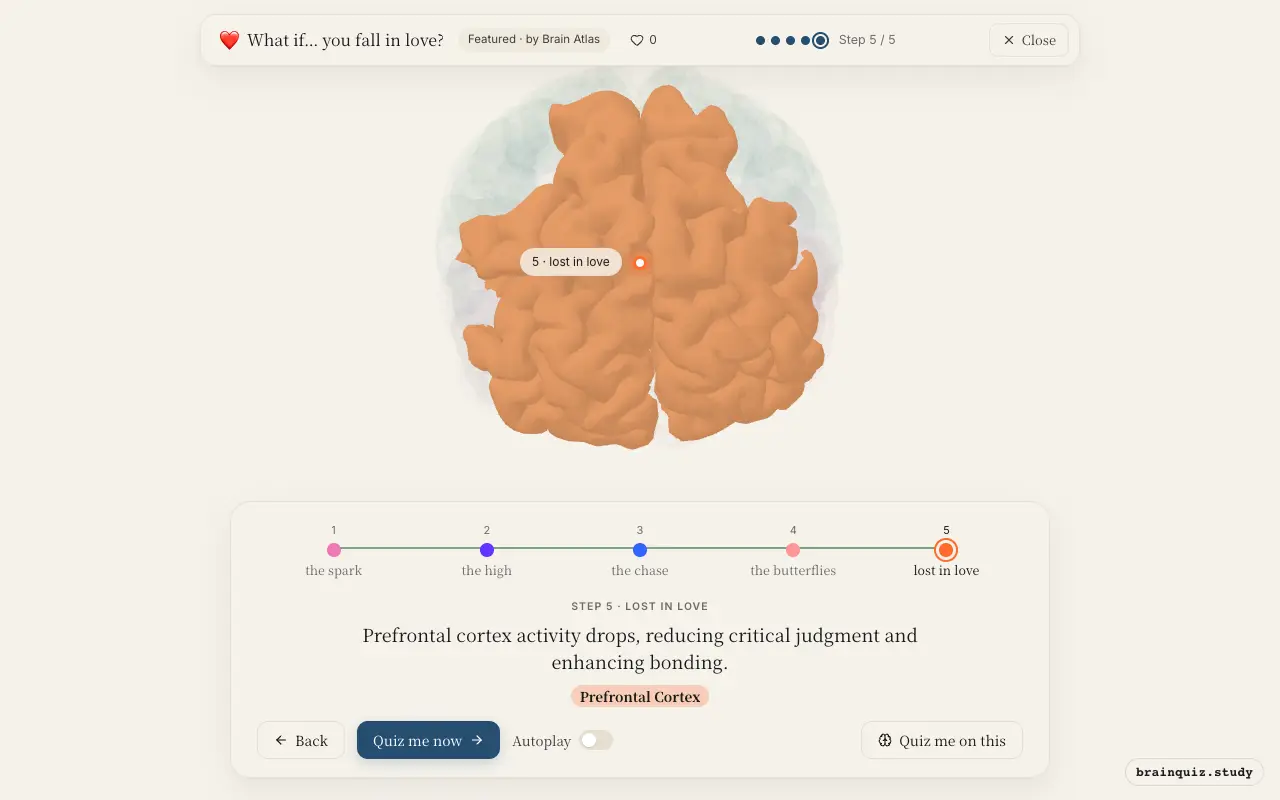
Watch it light up on the 3D brain
Brain regions that light up
| Order | Region | What it does here |
|---|---|---|
| 1 | Ventral Tegmental Area | Dopamine surges from the VTA, signaling reward value. |
| 2 | Nucleus Accumbens | Nucleus accumbens floods with dopamine, producing intense pleasure. |
| 3 | Caudate Nucleus | The caudate drives craving and goal-directed pursuit of the beloved. |
| 4 | Insula | The insula maps bodily arousal, creating fluttery, excited feelings. |
| 5 | Prefrontal Cortex | Prefrontal cortex activity drops, reducing critical judgment and enhancing bonding. |
1. Ventral Tegmental Area: the spark
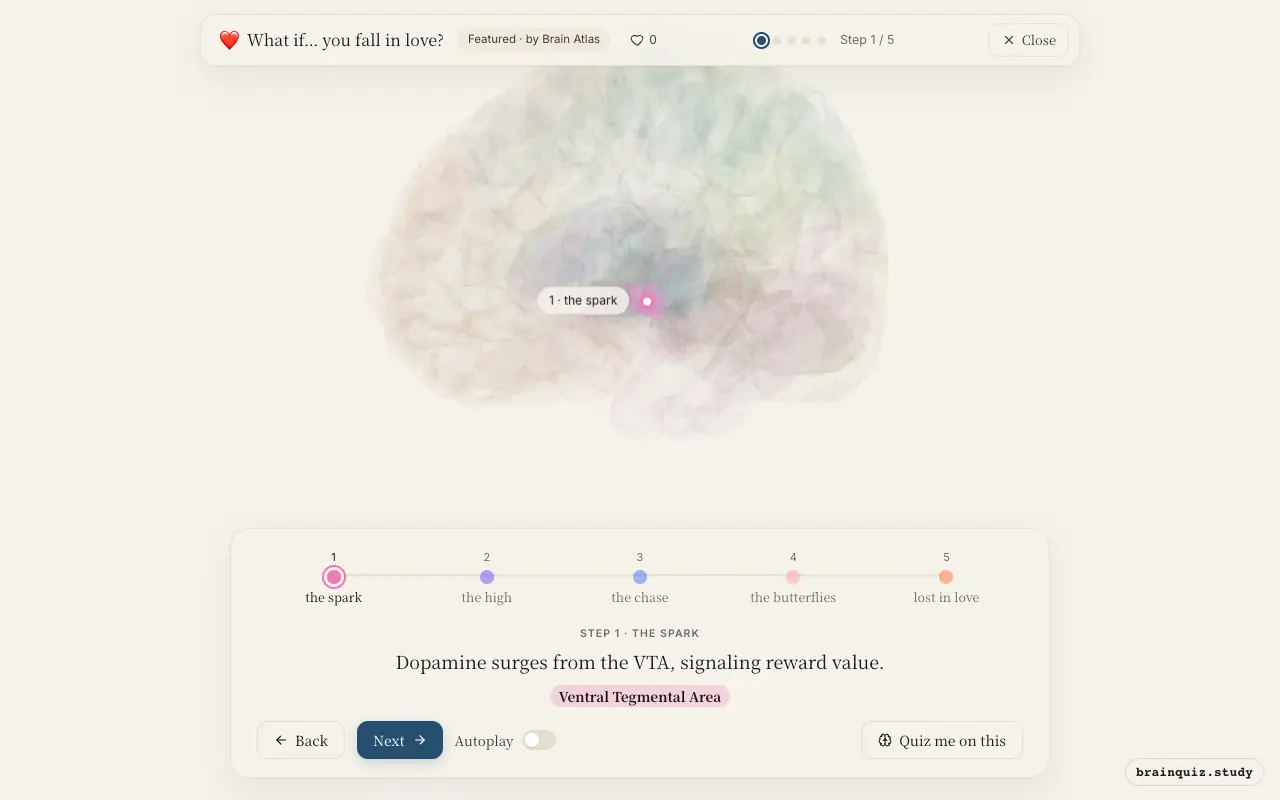
When you see or think of your beloved, the ventral tegmental area fires. This midbrain nucleus releases dopamine into the reward pathway. Dopamine creates a sense of euphoria and focuses attention on the loved one. Studies suggest this surge is akin to a natural high, motivating pursuit.
2. Nucleus Accumbens: the high
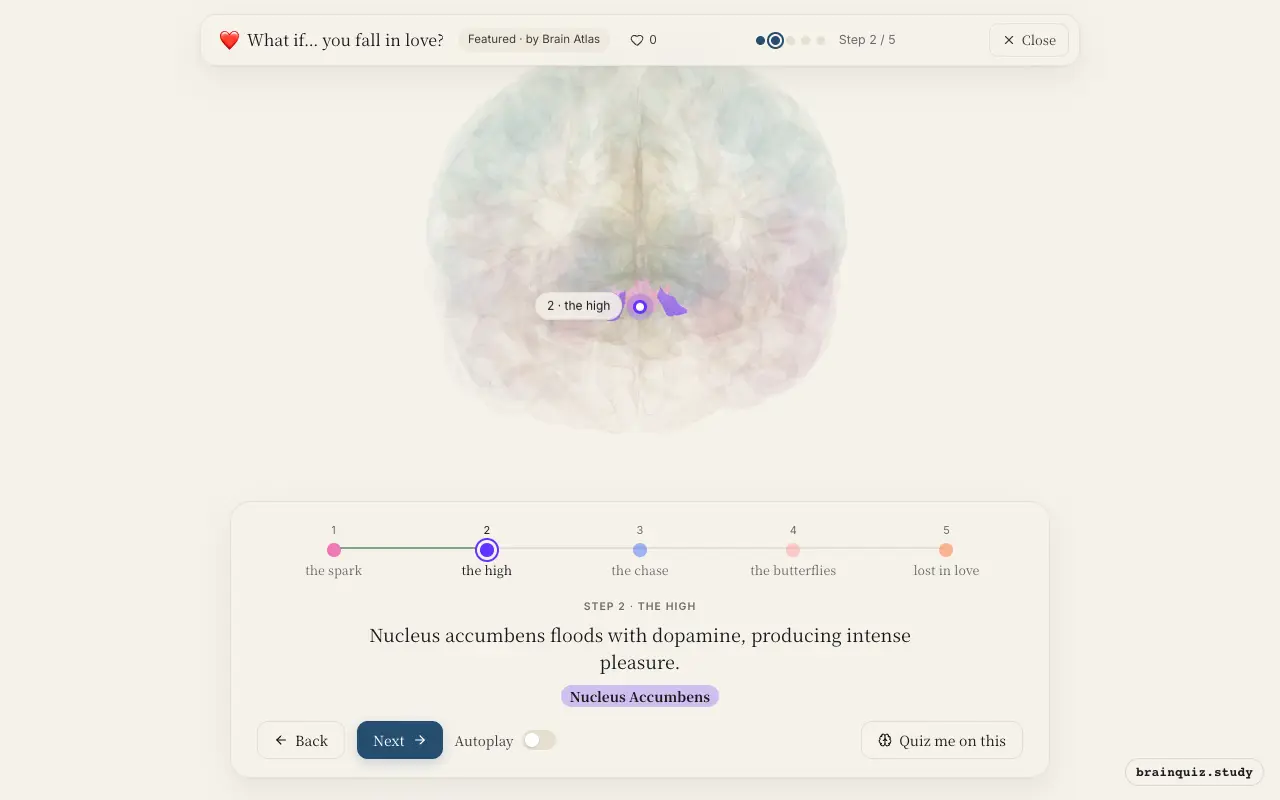
The nucleus accumbens receives dopamine and generates feelings of pleasure and reward. This region is central to the brain's reward system, activated by food, sex, and addictive drugs. In romantic love, its activation is thought to underlie the exhilarating joy and obsession. Over time, this response may strengthen attachment.
3. Caudate Nucleus: the chase
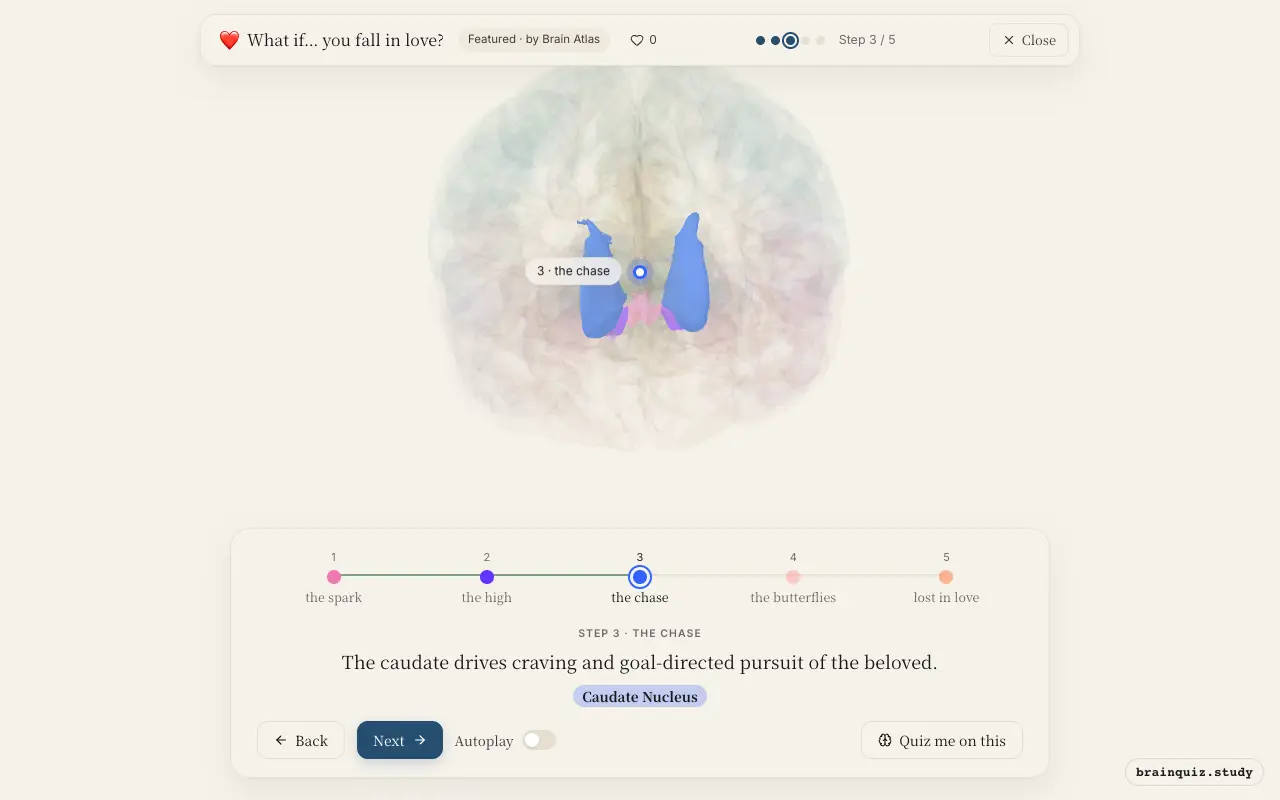
The caudate nucleus, part of the basal ganglia, is involved in reward-based learning and motivation. In love, it becomes highly active, linking the beloved to the anticipation of reward. This drives persistent seeking and attention, similar to addictive cravings. Imaging studies show caudate activation correlates with intensity of romantic passion.
4. Insula: the butterflies
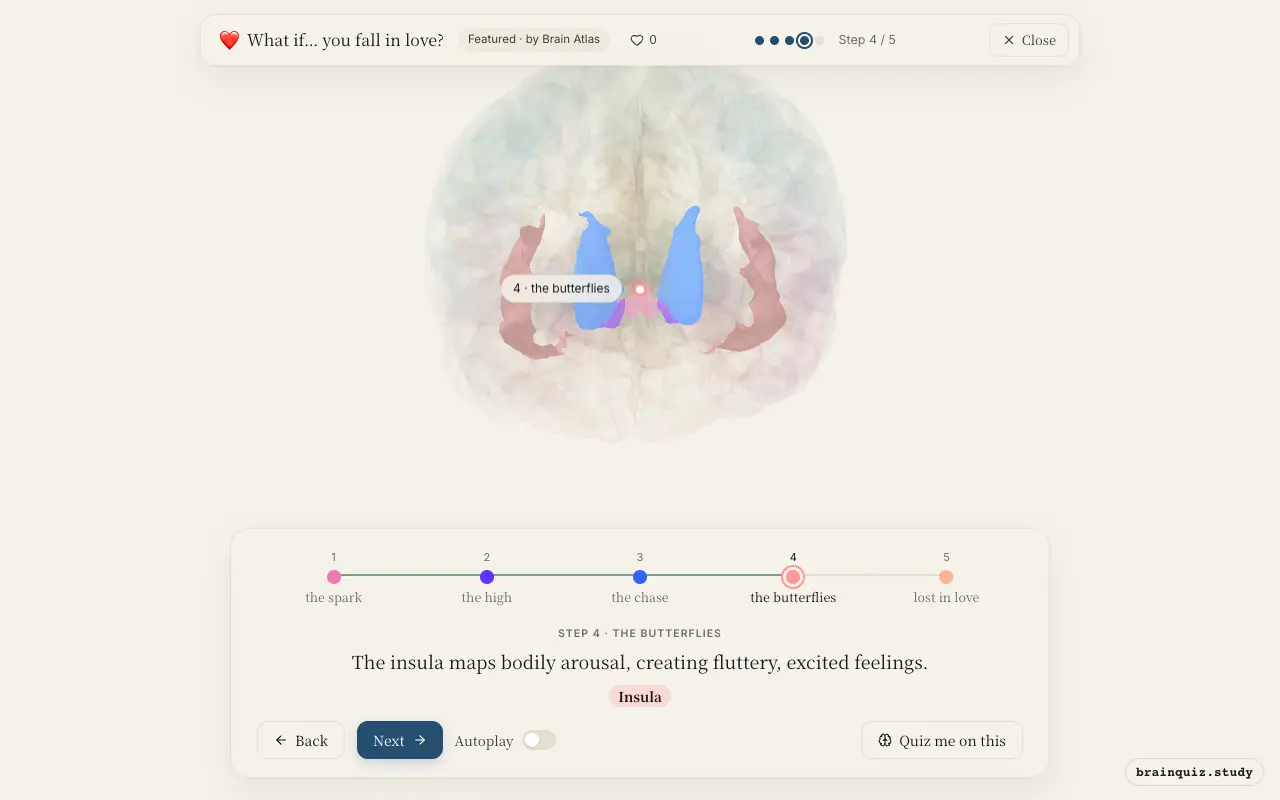
The insula integrates interoceptive signals from the body, such as heart rate and stomach flutters. When in love, seeing the person triggers physiological arousal; the insula interprets these signals as emotional feelings. This gives love its visceral, bodily quality. The insula also contributes to empathy, deepening emotional connection.
5. Prefrontal Cortex: lost in love
The prefrontal cortex, responsible for rational thought and decision-making, shows decreased activity in romantic love. This reduction lowers barriers to forming attachment, allowing idealization of the partner. It may explain why love can feel irrational. The orbitofrontal cortex, a subregion, also shows changes, but overall cognitive control lessens.
Good to know
- Romantic love activates the same reward circuitry as cocaine, including the nucleus accumbens and VTA.
- The stress hormone cortisol can rise early in love, while oxytocin and vasopressin promote long-term bonding.
- Falling in love may decrease amygdala activity, reducing fear and social judgment.
Love vs. Lust
Lust is driven primarily by the hypothalamus and amygdala, focusing on sexual gratification. Romantic love involves more of the VTA and caudate, emphasizing reward and attachment. While both activate the nucleus accumbens, love also engages the insula and reduces prefrontal control.
Test yourself
Which brain region is primarily responsible for the dopamine surge in early romantic love?
What happens to prefrontal cortex activity when someone is intensely in love?
Which region interprets bodily sensations like a racing heart or butterflies?
0 of 3 answered · 0 correct
Simplified: many regions work together at once, and this shows the main players in the order they act.