What happens in your brain when you get angry?
Updated
When anger strikes, the amygdala detects the threat, the hypothalamus triggers a fight-or-flight response, the insula represents the bodily feeling, the anterior cingulate flags the conflict, and the prefrontal cortex attempts to rein it in.
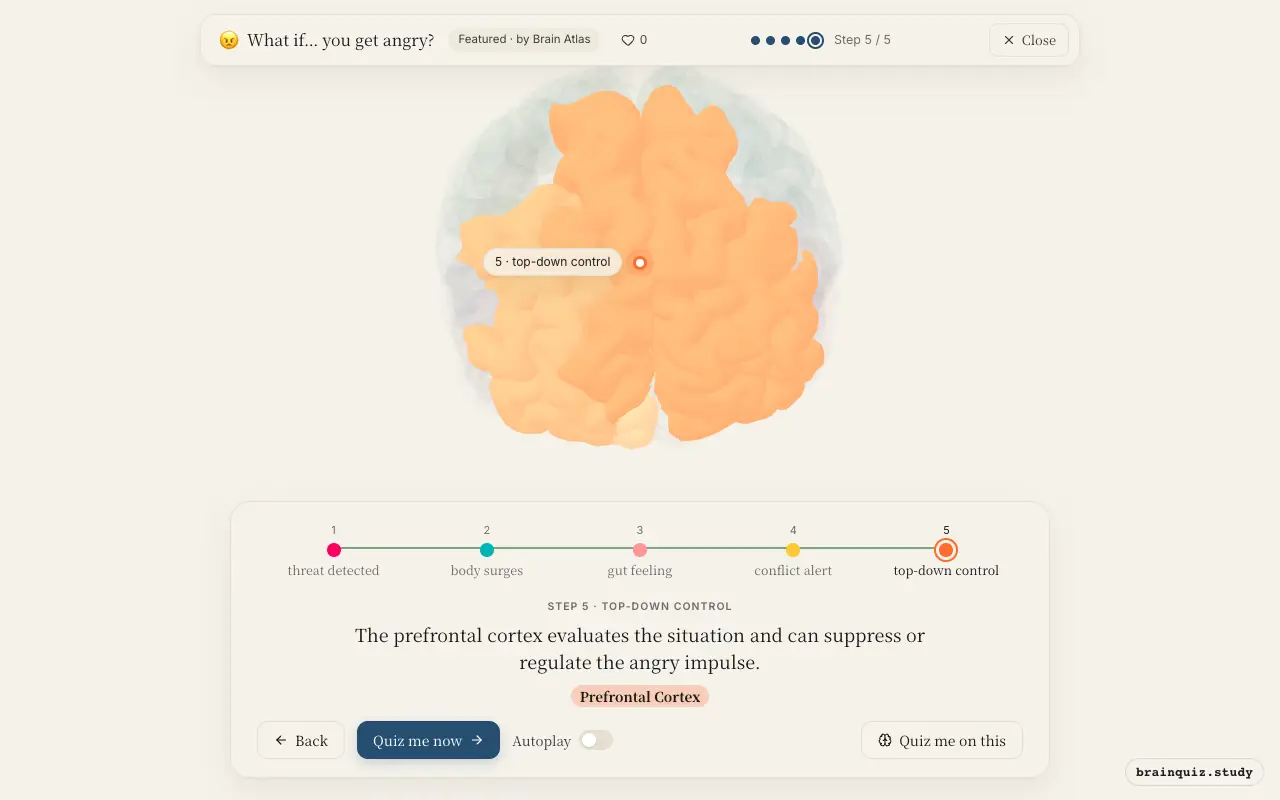
Watch it light up on the 3D brain
Brain regions that light up
| Order | Region | What it does here |
|---|---|---|
| 1 | Amygdala | The amygdala rapidly evaluates the situation for potential danger. |
| 2 | Hypothalamus | The hypothalamus activates the sympathetic nervous system for a fight-or-flight response. |
| 3 | Insula | The insula processes the visceral sensations that accompany anger, like a churning stomach. |
| 4 | Anterior Cingulate Cortex | The anterior cingulate cortex detects the mismatch between expectations and the provoking event. |
| 5 | Prefrontal Cortex | The prefrontal cortex evaluates the situation and can suppress or regulate the angry impulse. |
1. Amygdala: threat detected
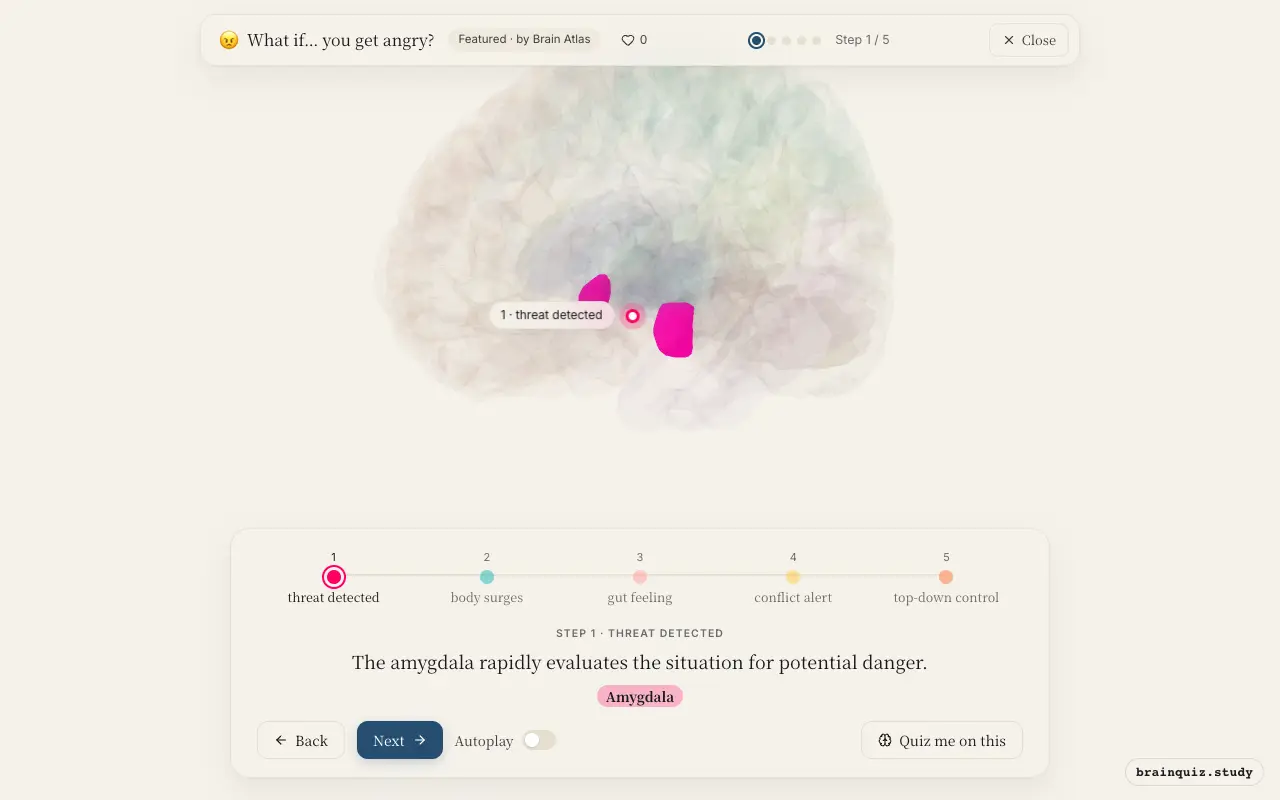
The amygdala receives sensory information and quickly flags the stimulus as threatening or unfair, triggering the emotional response. This fast, subcortical pathway bypasses conscious thought, allowing for an immediate, often reflexive, reaction. It is essential for survival, as it prepares the body before the cortex fully processes the event.
2. Hypothalamus: body surges
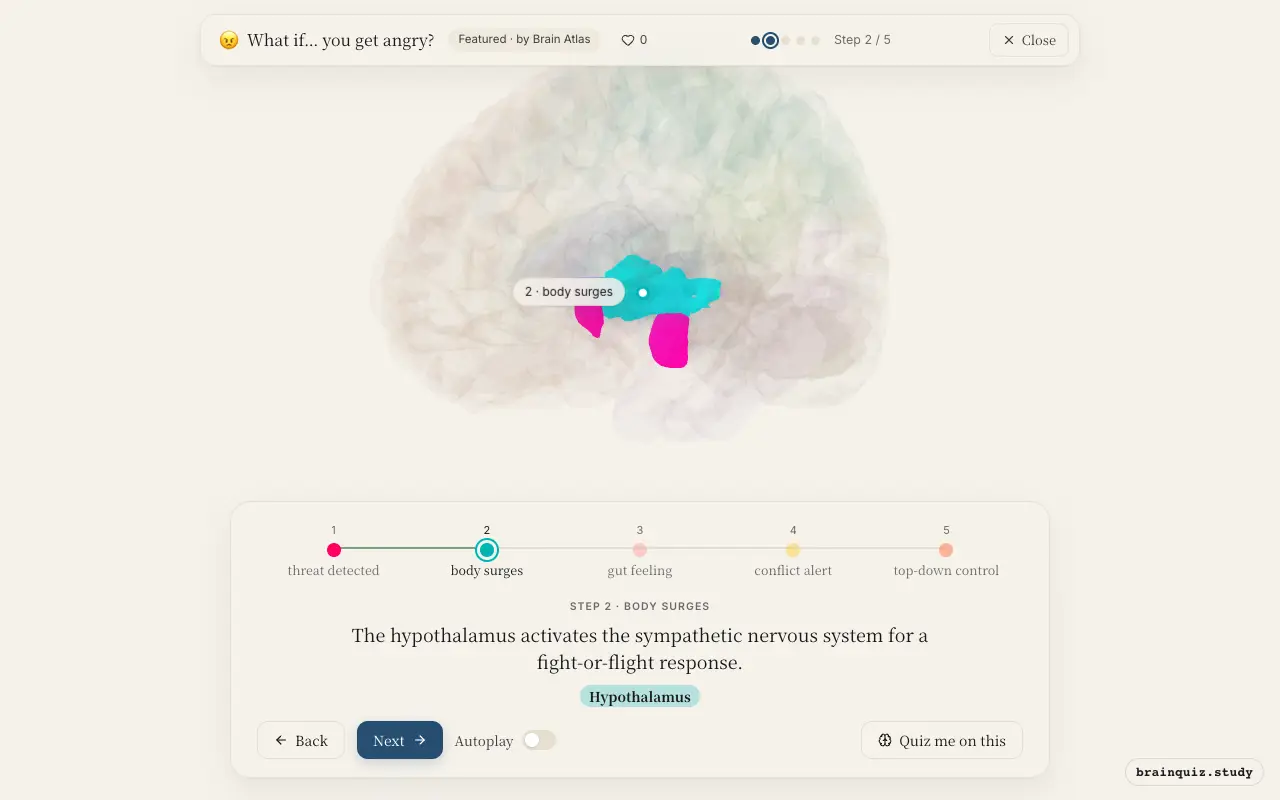
The hypothalamus coordinates the physiological arousal of anger: increased heart rate, elevated blood pressure, and release of stress hormones. This prepares the body for action and is a key part of the anger response. The sympathetic nervous system activation also diverts blood flow to muscles, readying the individual to confront or flee.
3. Insula: gut feeling
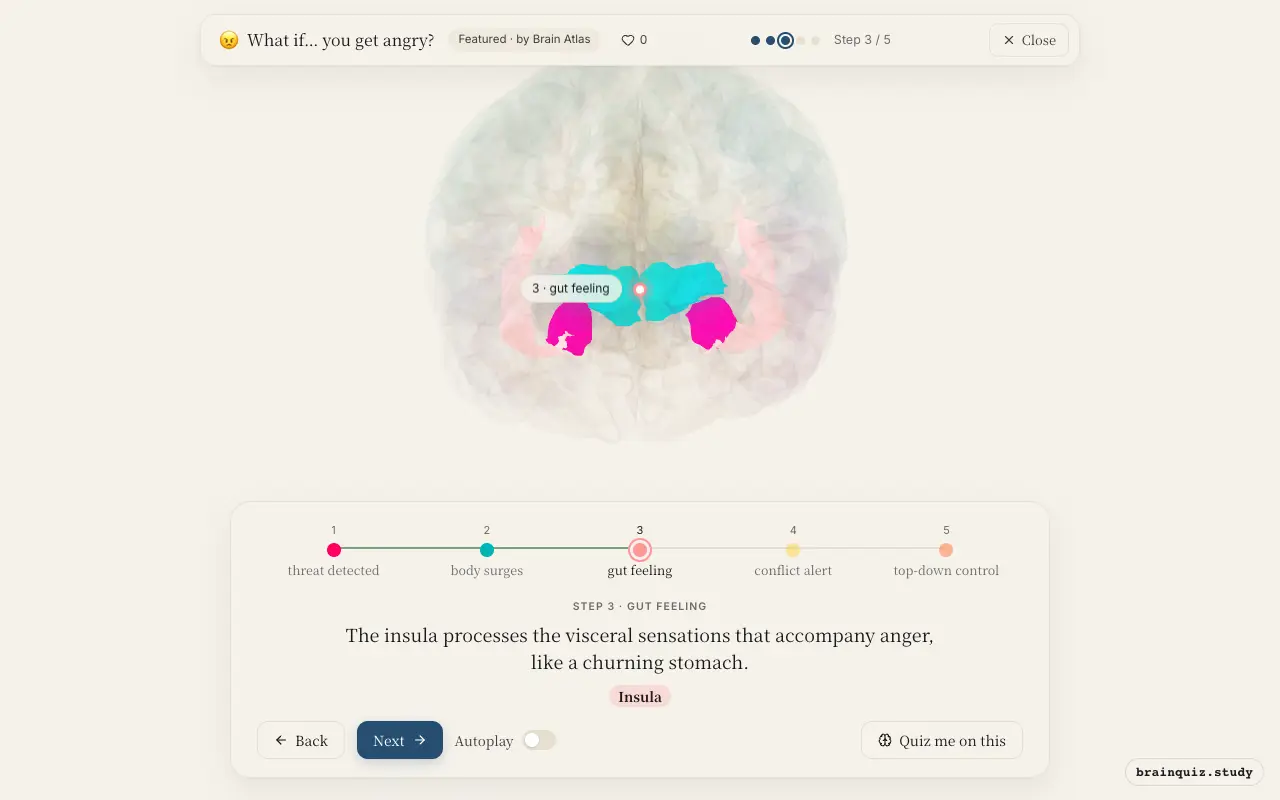
The insula integrates bodily signals, contributing to the conscious feeling of anger. It contributes to the subjective experience of the emotion by mapping internal states, making anger feel urgent and embodied. This interoceptive awareness is what allows anger to feel like a physical pressure or heat.
4. Anterior Cingulate Cortex: conflict alert
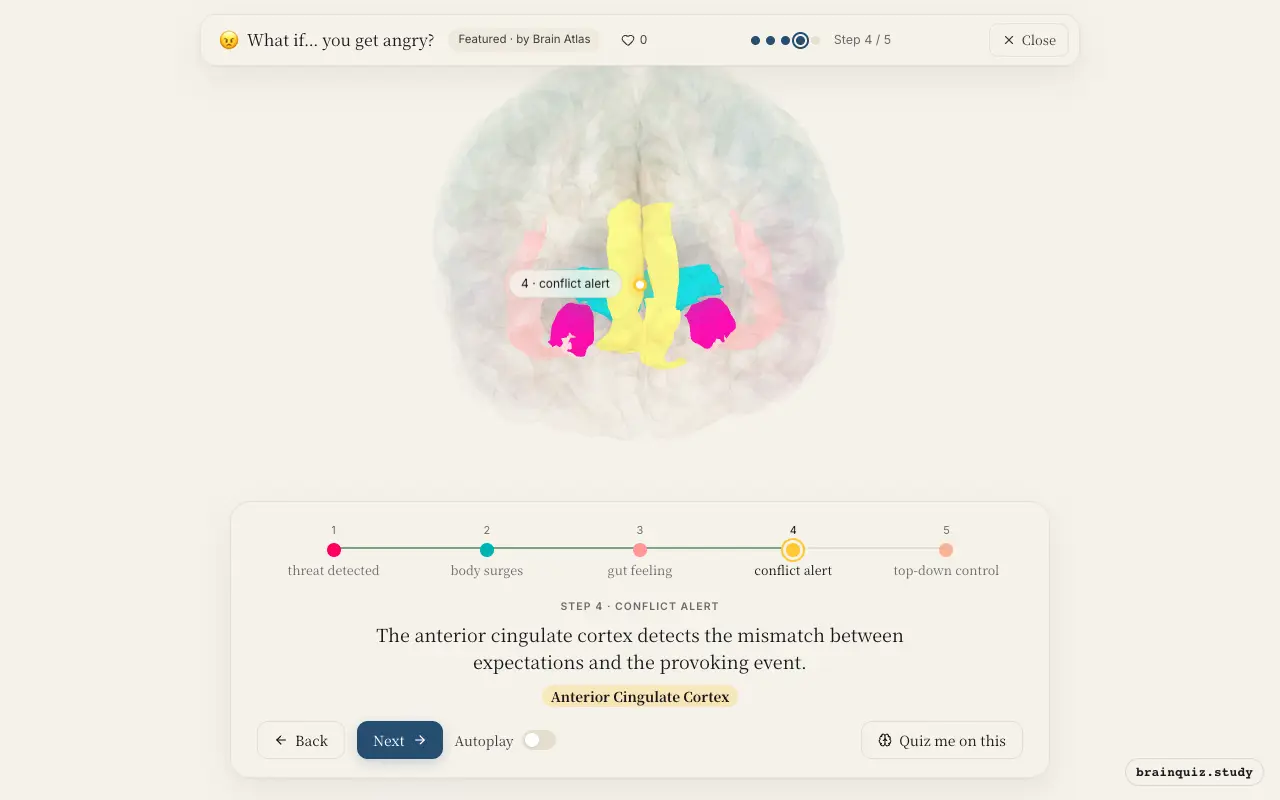
The anterior cingulate monitors for errors and conflicts, activating when a goal is blocked or unfairness is perceived. It helps to focus attention on the source of anger and motivates a response. It is also involved in the subjective distress that accompanies the perception of being wronged.
5. Prefrontal Cortex: top-down control
The prefrontal cortex, especially dorsolateral and ventromedial areas, applies reasoning and social norms. It can inhibit the amygdala and hypothalamus, allowing for a more measured response, but under intense anger its influence is reduced. This reduction is thought to contribute to impulsive aggression.
Good to know
- Anger can reduce some prefrontal cortex activity, weakening top-down control over emotional responses.
- The hypothalamus triggers the release of adrenaline and cortisol, preparing the body for action.
- Individual differences in anger proneness may be linked to variations in amygdala reactivity.
Anger vs Fear
Both emotions involve the amygdala and autonomic arousal, but anger is an approach emotion often linked to left prefrontal activity and the anterior cingulate, while fear is an avoidance emotion typically associated with right prefrontal activity and the periaqueductal grey. Anger motivates confrontation, whereas fear motivates escape.
Test yourself
Which brain region is most responsible for the initial detection of a threat that leads to anger?
What role does the hypothalamus play in the anger response?
Which region is known for exerting top-down control to regulate or inhibit anger?
0 of 3 answered · 0 correct
Simplified: many regions work together at once, and this shows the main players in the order they act.