What happens in your brain when you feel jealous?
Updated
Jealousy unfolds as the amygdala flags a social threat, the insula generates a visceral pang, the anterior cingulate detects conflict, and the prefrontal cortex tries to regulate the response.
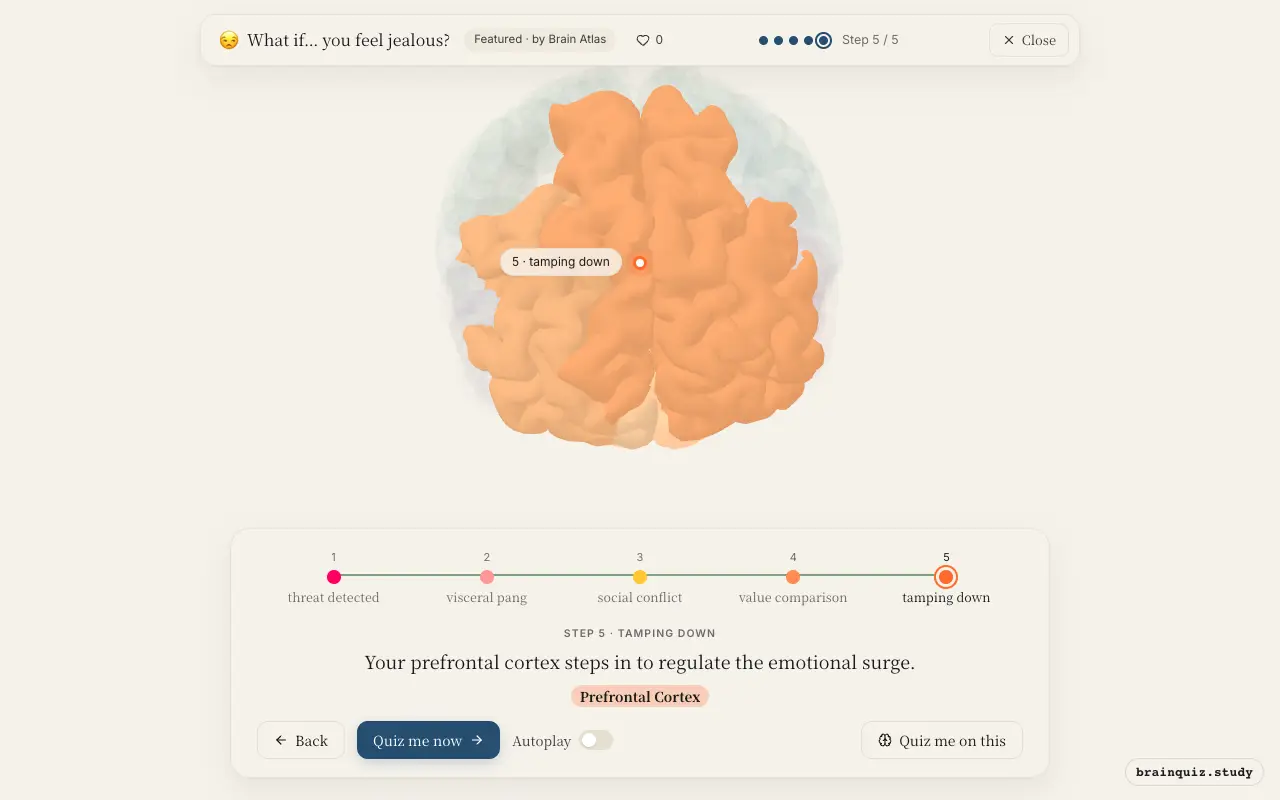
Watch it light up on the 3D brain
Brain regions that light up
| Order | Region | What it does here |
|---|---|---|
| 1 | Amygdala | Your amygdala reacts to a potential rival or partner's wandering attention. |
| 2 | Insula | Your insula turns the emotional threat into a bodily sensation—tight chest, flushed face. |
| 3 | Anterior Cingulate Cortex | Your anterior cingulate cortex detects the mismatch between what you want and what's happening. |
| 4 | Orbitofrontal Cortex | Your orbitofrontal cortex weighs the potential loss of a valued relationship. |
| 5 | Prefrontal Cortex | Your prefrontal cortex steps in to regulate the emotional surge. |
1. Amygdala: threat detected
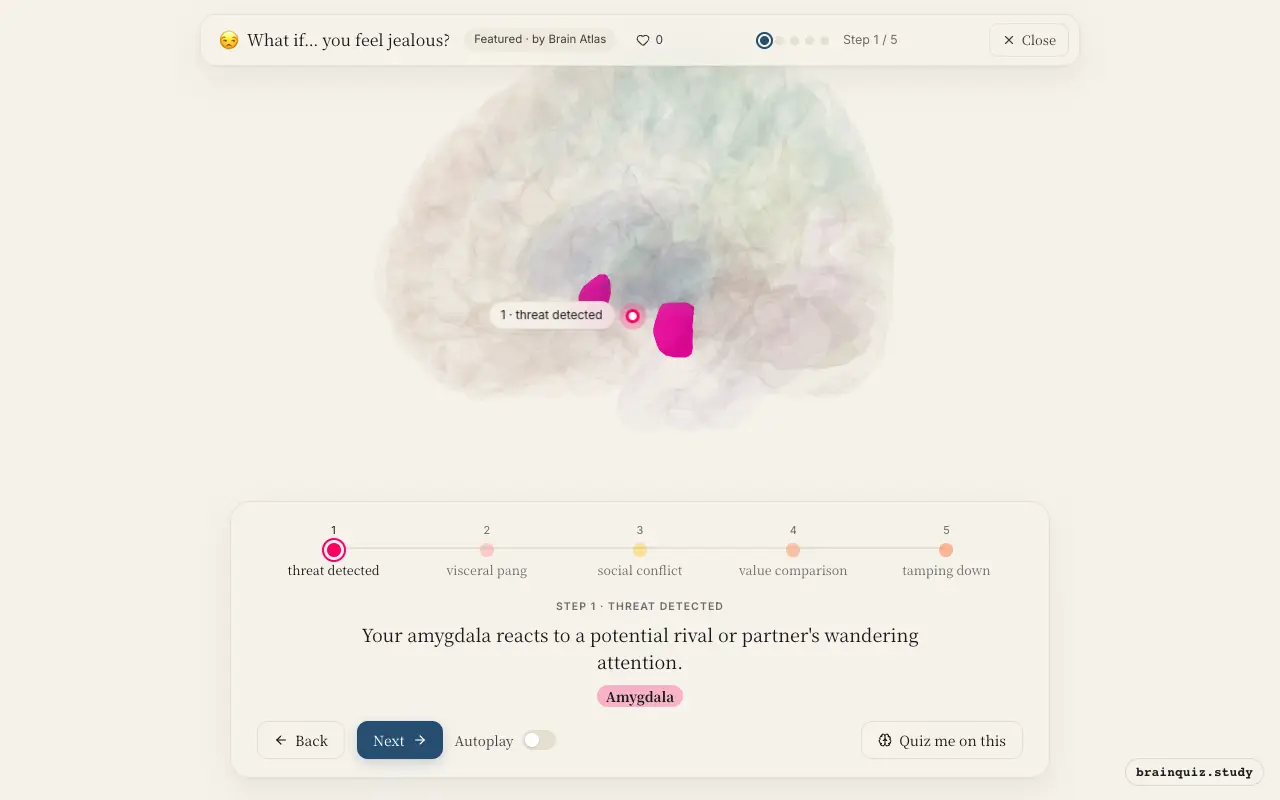
The amygdala is central to social threat detection. It flags the situation as emotionally significant and triggers a fast, automatic arousal response. This explains the immediate spike of alertness or unease when jealousy hits. This rapid appraisal happens before conscious thought, preparing the body for possible action.
2. Insula: visceral pang
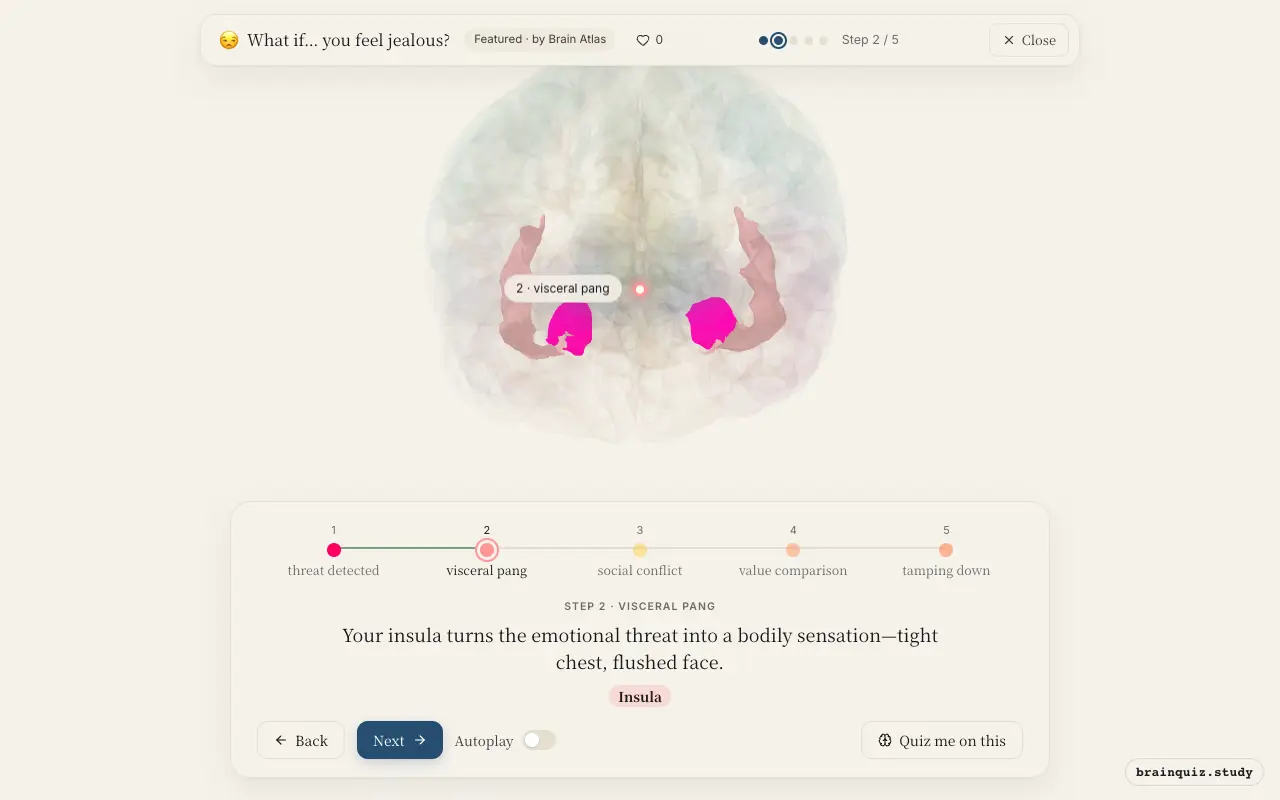
The insula integrates interoceptive signals, making you aware of your internal state. In jealousy, it represents the unpleasant physical feelings that accompany the emotion, such as a knot in the stomach or increased heart rate. This bodily feedback reinforces the emotional intensity and urgency.
3. Anterior Cingulate Cortex: social conflict
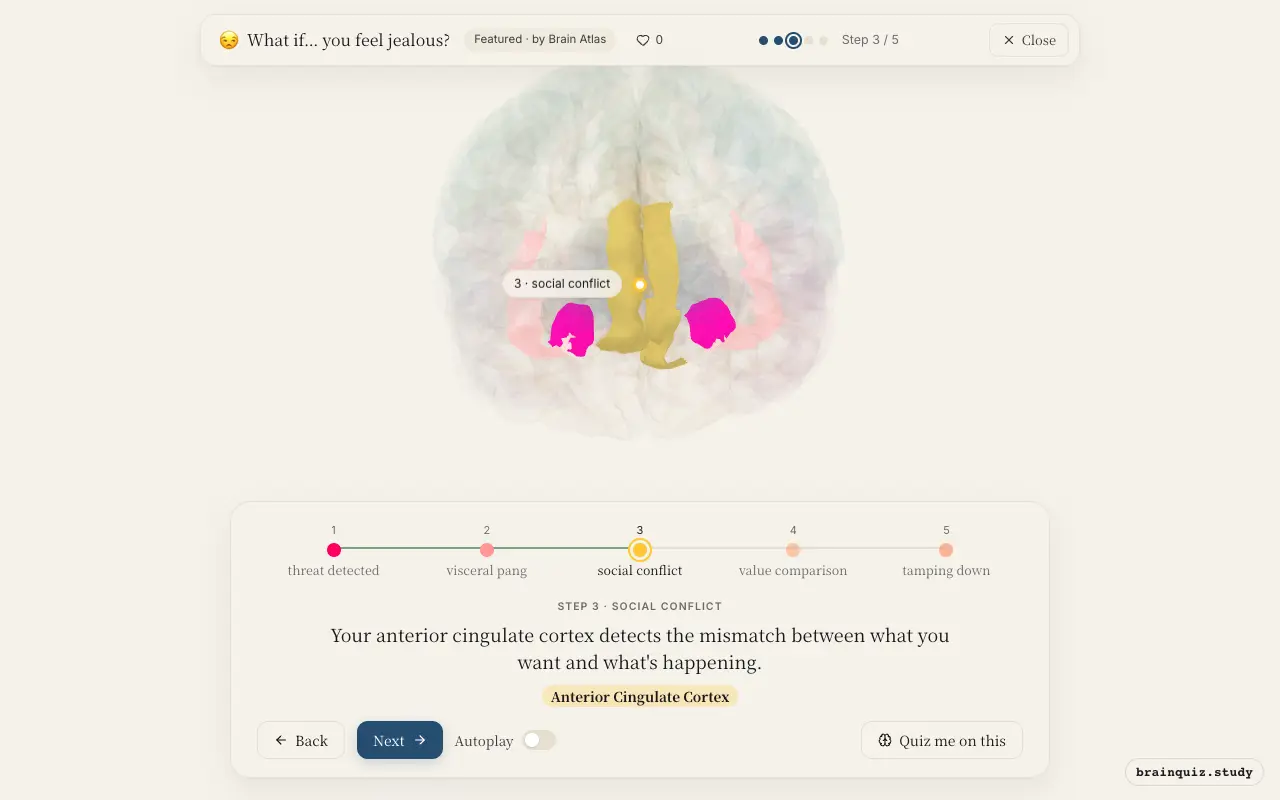
The anterior cingulate cortex monitors conflict and pain, both physical and social. It fires when your relationship expectations are violated, signalling that something important is wrong. This contributes to the painful, alarming quality of jealousy and motivates you to resolve the discrepancy. This region is also active during physical pain, underscoring why social rejection hurts.
4. Orbitofrontal Cortex: value comparison
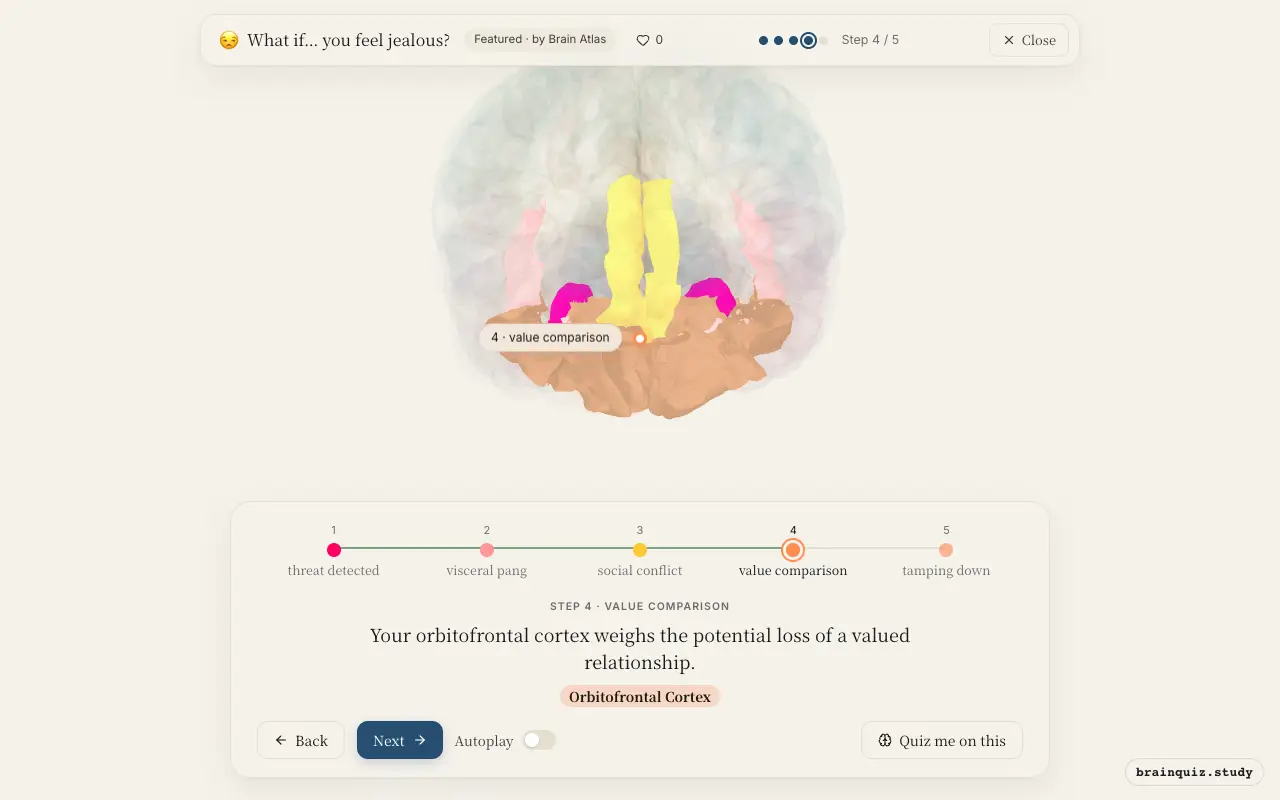
The orbitofrontal cortex evaluates rewards and punishments in social contexts. In jealousy, it may assess how much the threatened relationship is worth and the cost of the rival's advantage. This calculation shapes how strongly you react and whether you see the situation as a loss. Its output guides subsequent emotional and behavioral choices.
5. Prefrontal Cortex: tamping down
The prefrontal cortex supports executive control and emotion regulation. It can dampen amygdala and insula activity, helping you think through the situation rather than act impulsively. Individual differences in prefrontal engagement may explain why some people handle jealousy better than others. This region allows reappraisal of the threat and planning a measured response.
Good to know
- Brain imaging studies show that romantic jealousy reliably activates the anterior cingulate cortex and insula, regions also involved in physical pain.
- The amygdala responds to social threats even when they are not consciously perceived.
Jealousy vs Envy
Jealousy and envy both activate the anterior cingulate and insula, but jealousy more strongly engages the amygdala because of the social threat from a rival and the orbitofrontal cortex may evaluate relationship loss. Envy focuses more on reward comparison, recruiting the nucleus accumbens and ventral striatum.
Test yourself
Which brain region is primarily responsible for detecting the social threat that triggers jealousy?
The unpleasant physical sensations of jealousy, like a churning stomach, are most directly linked to activity in the:
Which region helps you calm down and think rationally when you feel jealous?
0 of 3 answered · 0 correct
Simplified: many regions work together at once, and this shows the main players in the order they act.