What happens in your brain when you go under general anaesthesia?
Updated
General anaesthetics rapidly suppress brainstem arousal, block thalamic relay to cortex, and disintegrate cortical networks including prefrontal and posterior cingulate, causing unconsciousness. The hippocampus is also inhibited, preventing memory formation.
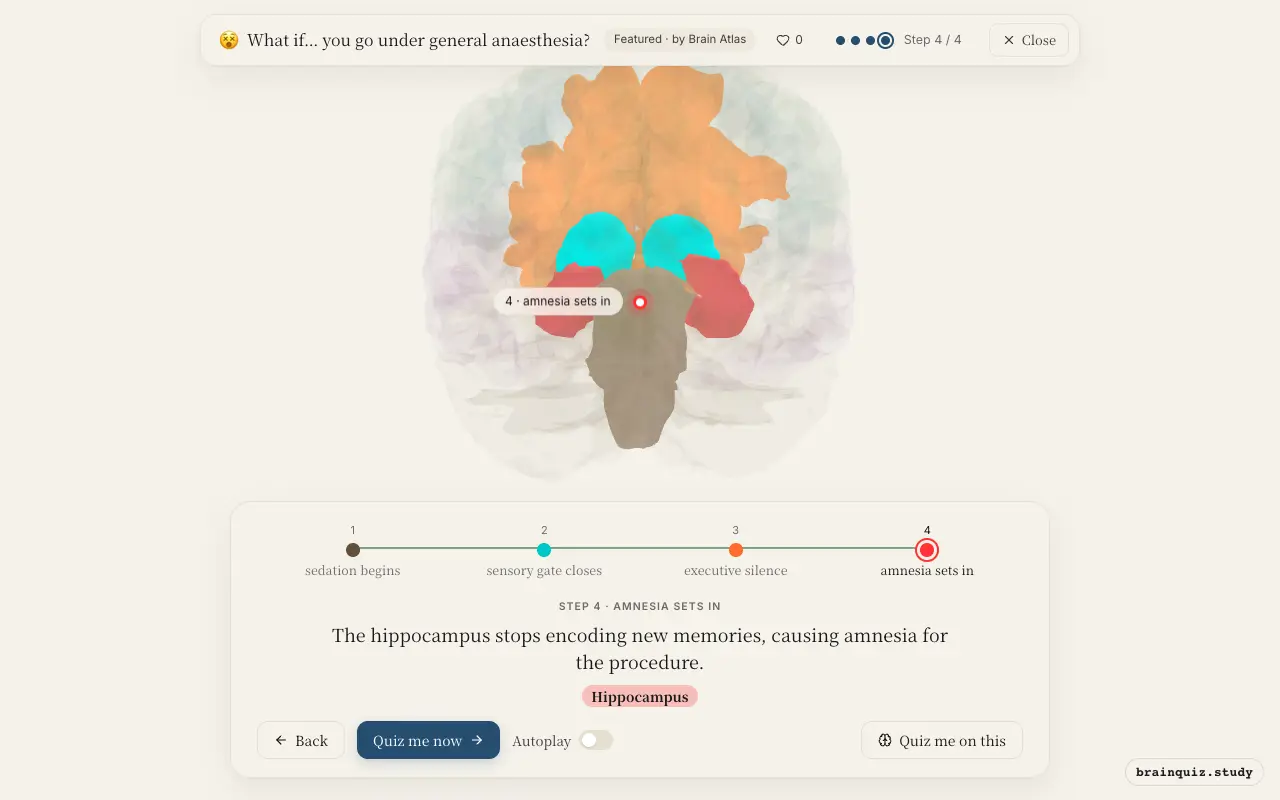
Watch it light up on the 3D brain
Brain regions that light up
| Order | Region | What it does here |
|---|---|---|
| 1 | Brainstem | Anaesthetic molecules reach the brainstem and depress arousal nuclei, reducing wakefulness. |
| 2 | Thalamus | Thalamic activity drops, cutting off sensory information from reaching the cortex. |
| 3 | Prefrontal Cortex | Prefrontal cortex activity plummets, impairing awareness and decision-making. |
| 4 | Hippocampus | The hippocampus stops encoding new memories, causing amnesia for the procedure. |
1. Brainstem: sedation begins
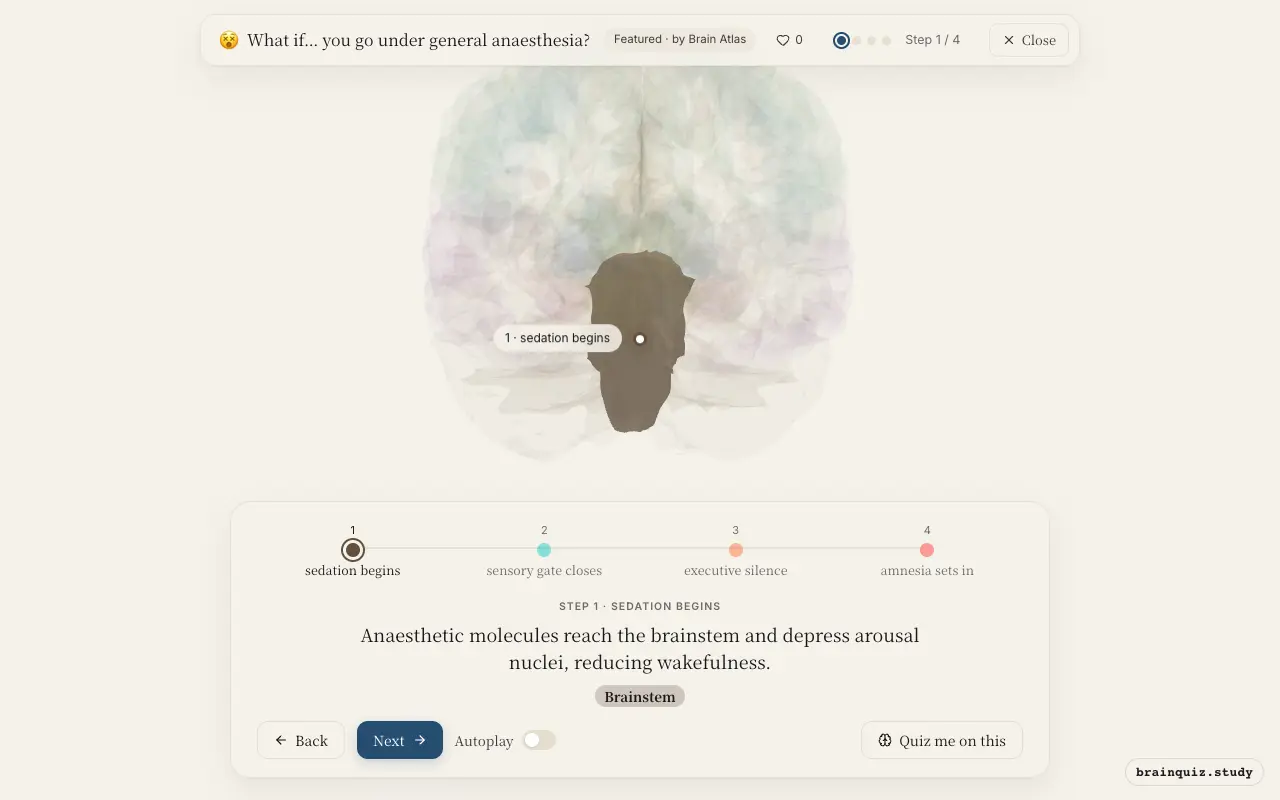
The brainstem's ascending reticular activating system, including noradrenergic and cholinergic nuclei, normally keeps the cortex awake. Anaesthetics enhance inhibitory GABA signalling and suppress these nuclei, causing sedation and decreased responsiveness.
2. Thalamus: sensory gate closes
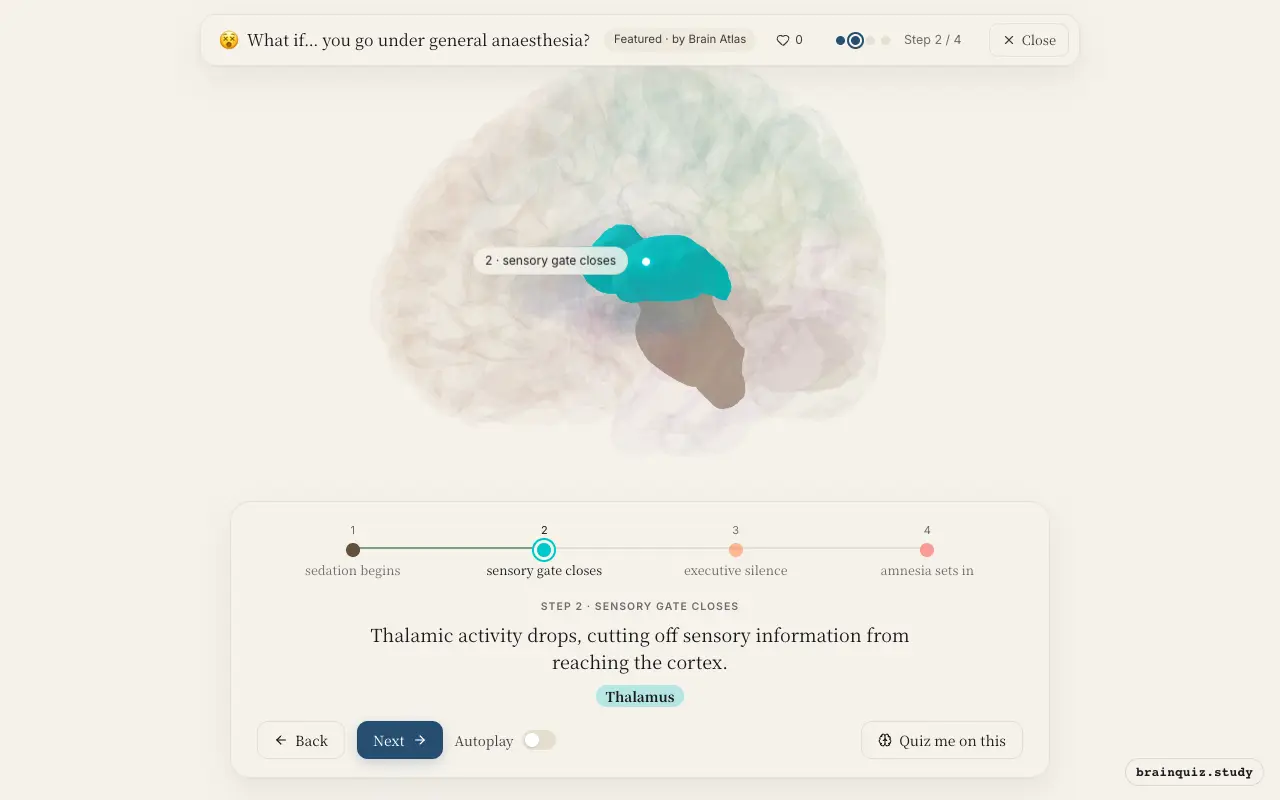
As the main relay station, the thalamus normally forwards sensory signals to the cortex. Anaesthetics hyperpolarise thalamic neurons, reducing their firing and disrupting thalamocortical communication, which contributes to loss of consciousness.
3. Prefrontal Cortex: executive silence
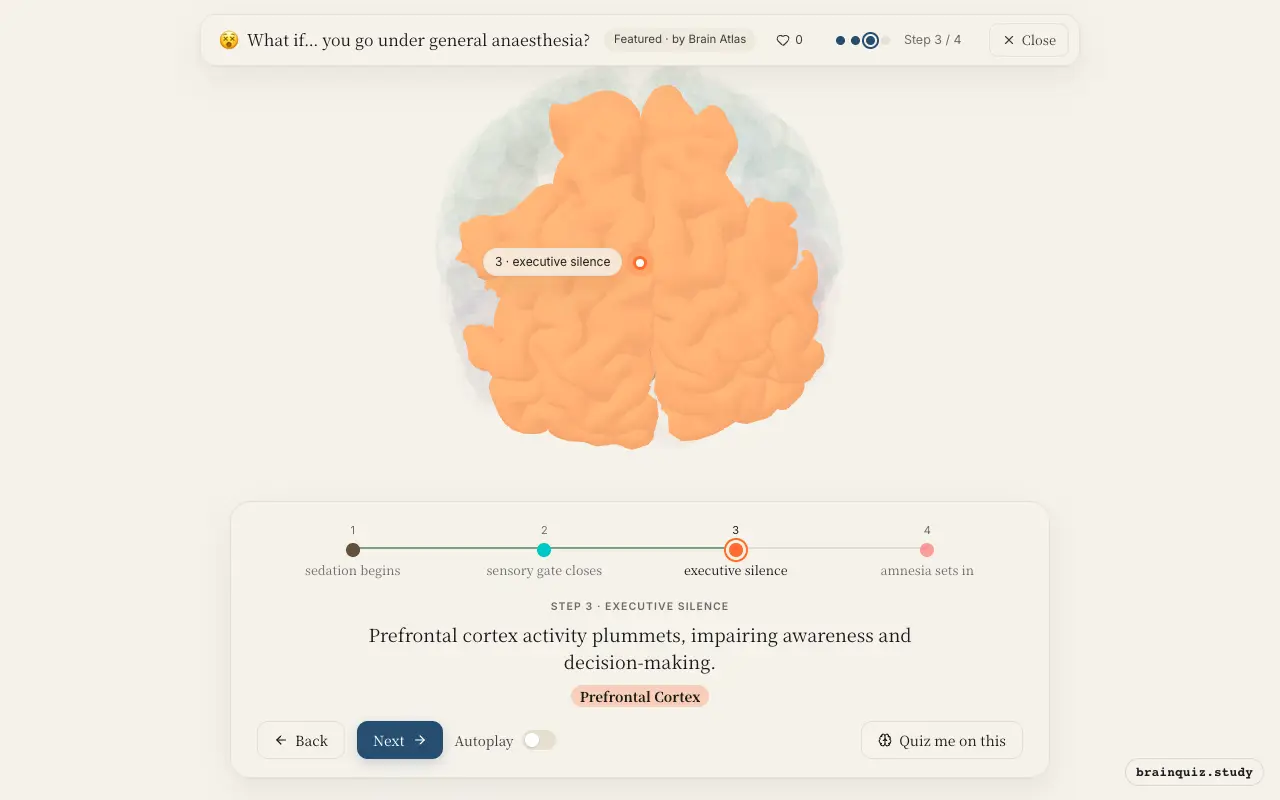
The prefrontal cortex is critical for conscious thought and self-awareness. Anaesthetic-induced inhibition reduces its activity and connectivity with other regions, leading to the absence of conscious experience.
4. Hippocampus: amnesia sets in
Anaesthetics inhibit hippocampal neurons and disrupt synaptic plasticity, preventing the consolidation of new experiences. This ensures patients do not remember surgery, even if some awareness occurred.
Good to know
- General anaesthesia is a drug-induced, reversible coma, not natural sleep.
- The thalamus is thought to act as a gate for consciousness, and its suppression is a hallmark of anaesthetic-induced unconsciousness.
- Different anaesthetics act on different receptors, but many enhance GABA-A receptor activity.
General anaesthesia vs natural sleep
Unlike sleep, where the brain cycles through stages and can be aroused by strong stimuli, anaesthesia produces a deeper, more uniform suppression of brain activity. Sleep involves active brain processes like memory consolidation; anaesthesia essentially turns off cortical integration, with little dreaming and minimal rapid eye movement.
Test yourself
Which brain region is most directly responsible for reducing sensory relay during anaesthesia?
General anaesthesia produces amnesia primarily by inhibiting which structure?
How does general anaesthesia differ from natural sleep?
0 of 3 answered · 0 correct
Simplified: many regions work together at once, and this shows the main players in the order they act. For learning only, not medical advice.