What happens in your brain when you listen to music?
Updated
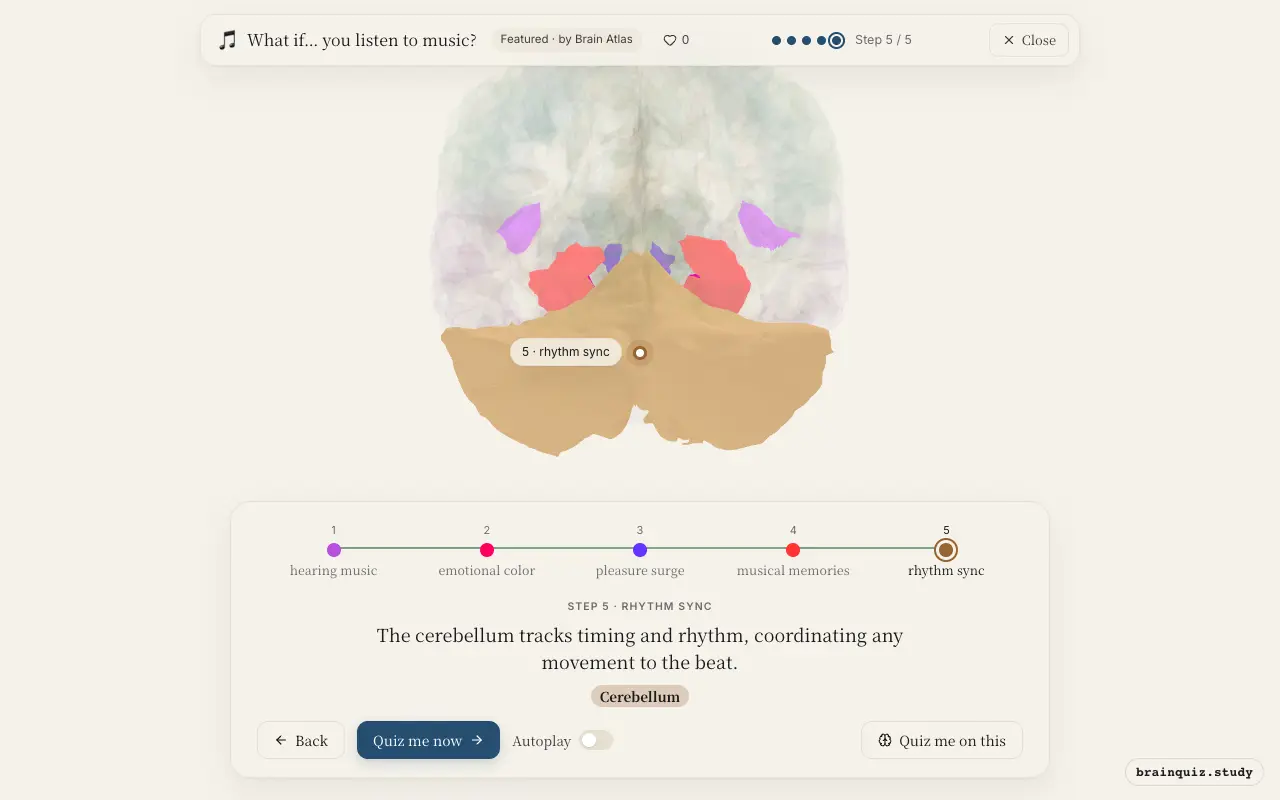
Your auditory cortex decodes sound, the amygdala adds emotional tone, the nucleus accumbens delivers pleasure, the hippocampus links memories, and the cerebellum tracks rhythm and timing.
Watch it light up on the 3D brain
Brain regions that light up
| Order | Region | What it does here |
|---|---|---|
| 1 | Auditory Cortex | The auditory cortex decodes pitch, melody, and harmony from incoming sound. |
| 2 | Amygdala | The amygdala tags the music with emotional significance. |
| 3 | Nucleus Accumbens | The nucleus accumbens releases dopamine, creating feelings of pleasure and reward. |
| 4 | Hippocampus | The hippocampus retrieves personal memories linked to the music. |
| 5 | Cerebellum | The cerebellum tracks timing and rhythm, coordinating any movement to the beat. |
1. Auditory Cortex: hearing music
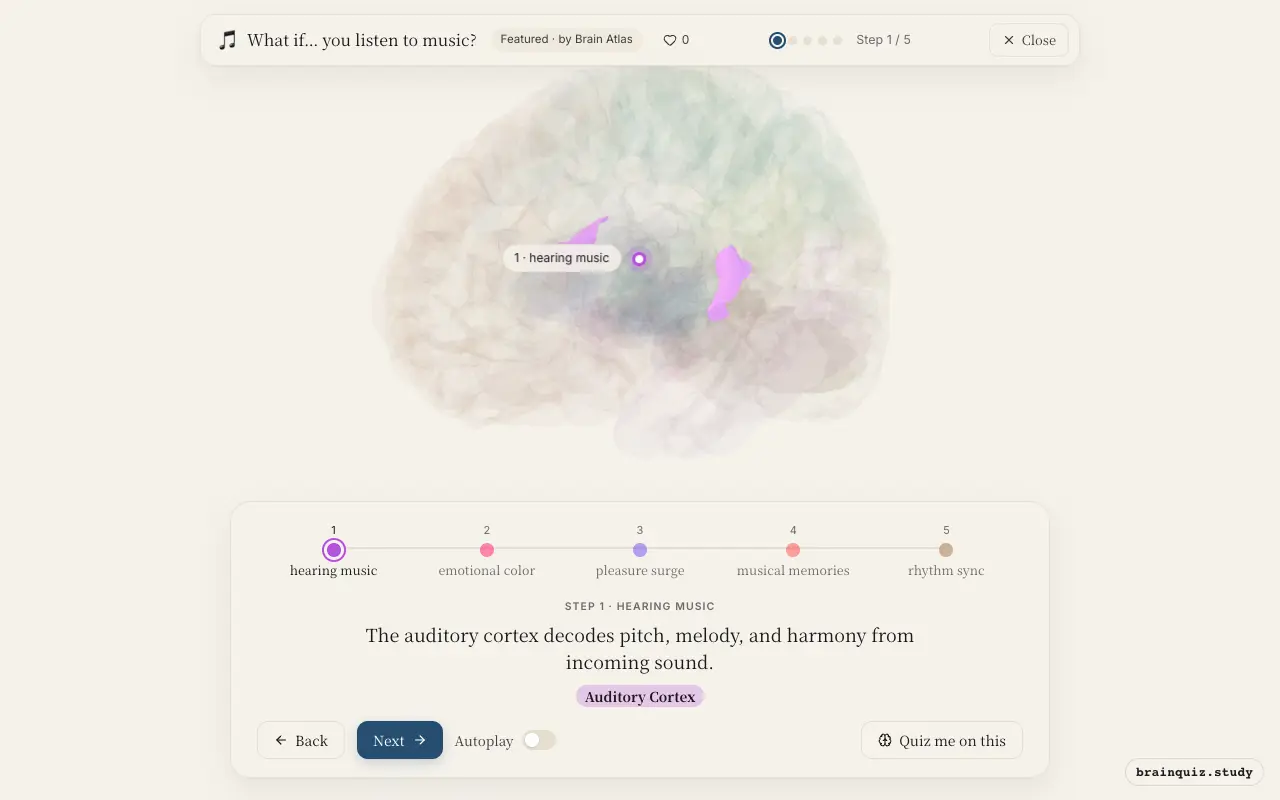
The primary auditory cortex and surrounding areas process the acoustic features of music, such as frequency, timbre, and temporal patterns. This region breaks down complex sound into components that higher areas can interpret as music rather than noise. Without this step, the rest of the brain would not receive a musical signal.
2. Amygdala: emotional color
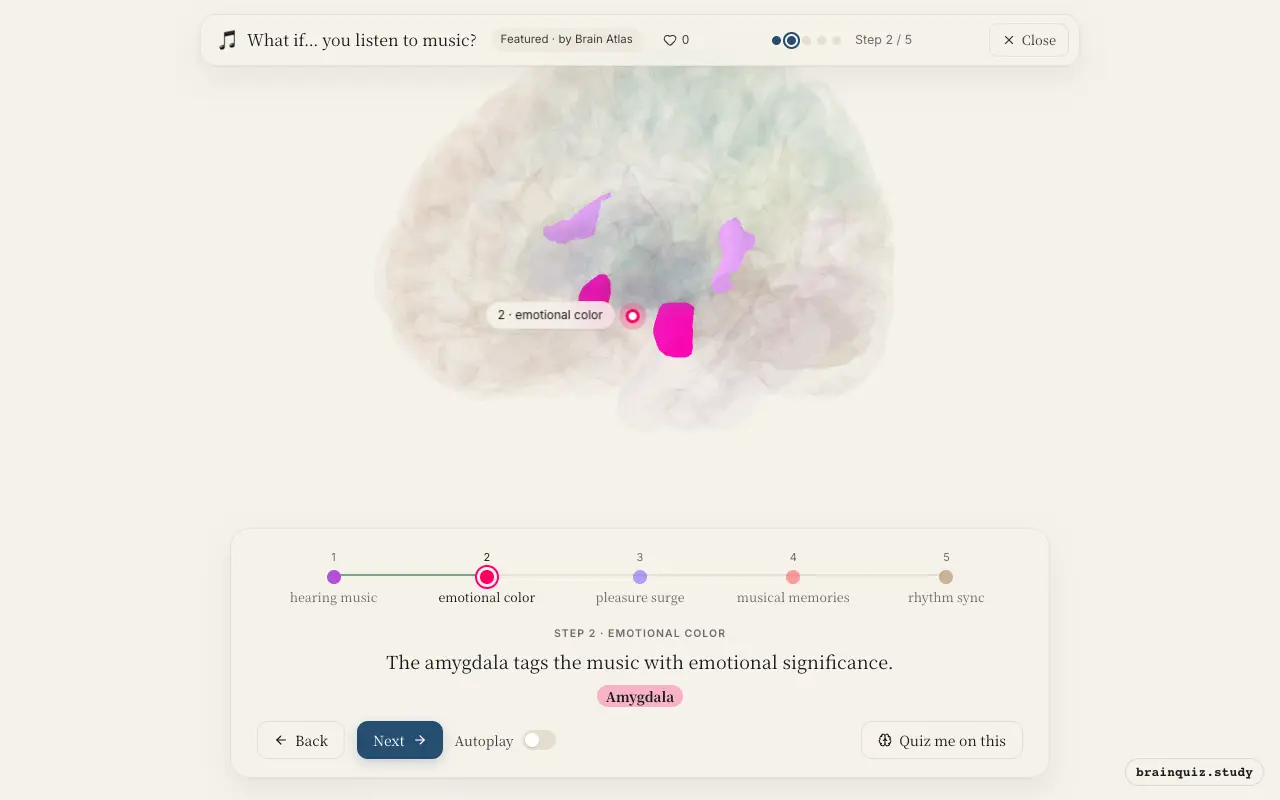
The amygdala evaluates whether the music is pleasant, sad, scary, or exciting by comparing it to past emotional experiences. It helps trigger physiological responses like chills or a racing heart when the music strikes a chord. This emotional labeling influences how much we like or dislike a song.
3. Nucleus Accumbens: pleasure surge
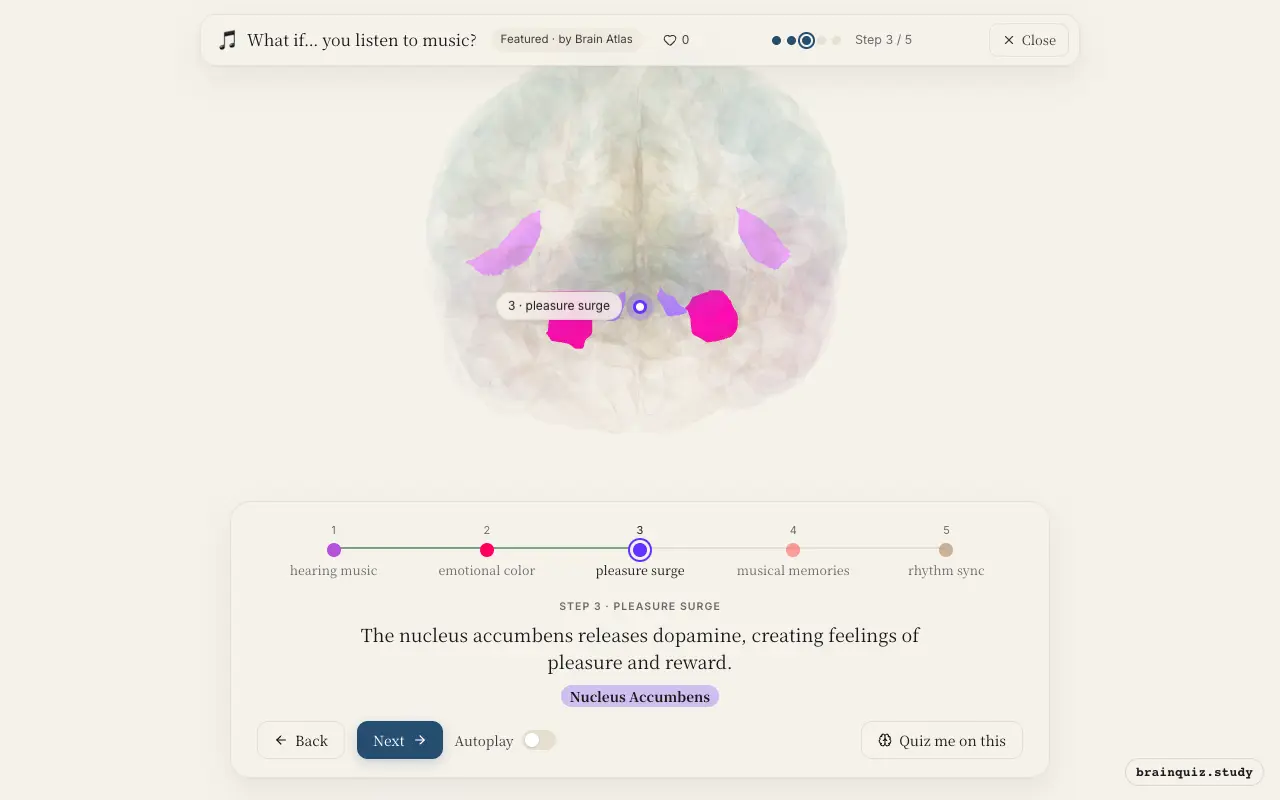
When music is enjoyable, the nucleus accumbens activates as part of the brain's reward circuit, releasing dopamine. This is especially strong during peak emotional moments or when a favorite part of the song arrives. The anticipation of these peaks can itself boost dopamine, making music highly rewarding.
4. Hippocampus: musical memories
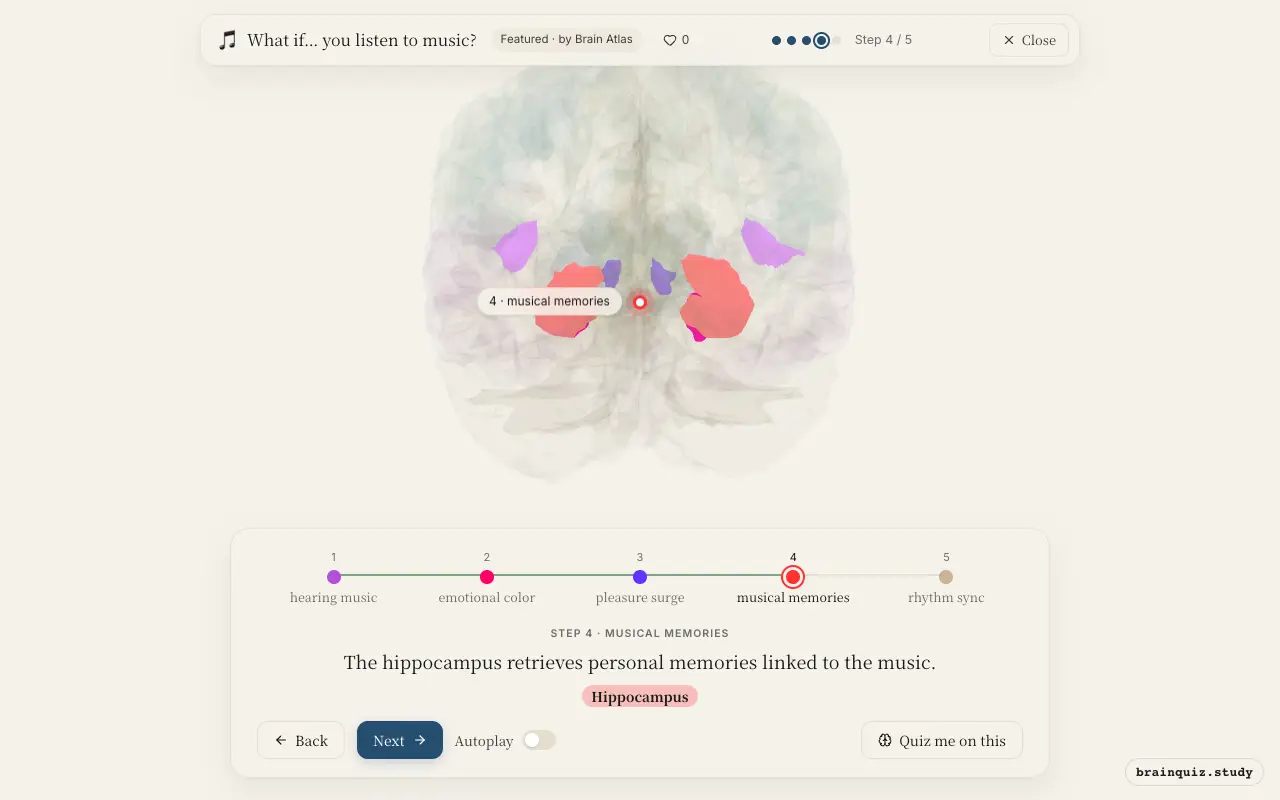
The hippocampus connects the current sound to autobiographical memories, such as a song played at a wedding or a summer road trip. This memory retrieval enriches the listening experience by adding personal meaning. Strong music-memory links can evoke vivid recollections and emotions.
5. Cerebellum: rhythm sync
The cerebellum processes the temporal structure of music, helping you tap your foot or dance in time. It compares the auditory input with motor timing to keep you synchronized with the beat. Even without overt movement, the cerebellum is active when you mentally follow a rhythm.
Good to know
- Dopamine release in the nucleus accumbens during music listening is well documented and peaks during the emotional climax of a song.
- Musical training enhances connectivity between auditory and motor regions, improving timing accuracy.
- The amygdala responds more strongly to dissonant music than to consonant music.
Listening vs Playing Music
Listening to music primarily engages auditory and reward areas, while playing an instrument adds heavy motor cortex and cerebellum involvement. Playing also demands more prefrontal cortex for reading notation and planning movements.
Test yourself
Which brain region is primarily responsible for decoding the pitch and melody of music?
The feeling of pleasure when listening to a favorite song is most directly linked to activity in the:
Which region helps you tap your foot to the beat of the music?
0 of 3 answered · 0 correct
Simplified: many regions work together at once, and this shows the main players in the order they act.