What happens in your brain when you sleep in a new place?
Updated
Sleeping in a new place triggers vigilance: the hippocampus encodes the unfamiliar layout, the amygdala flags potential danger, the hypothalamus releases stress hormones, and the thalamus and brainstem keep arousal high—so you wake easily and get less deep sleep.
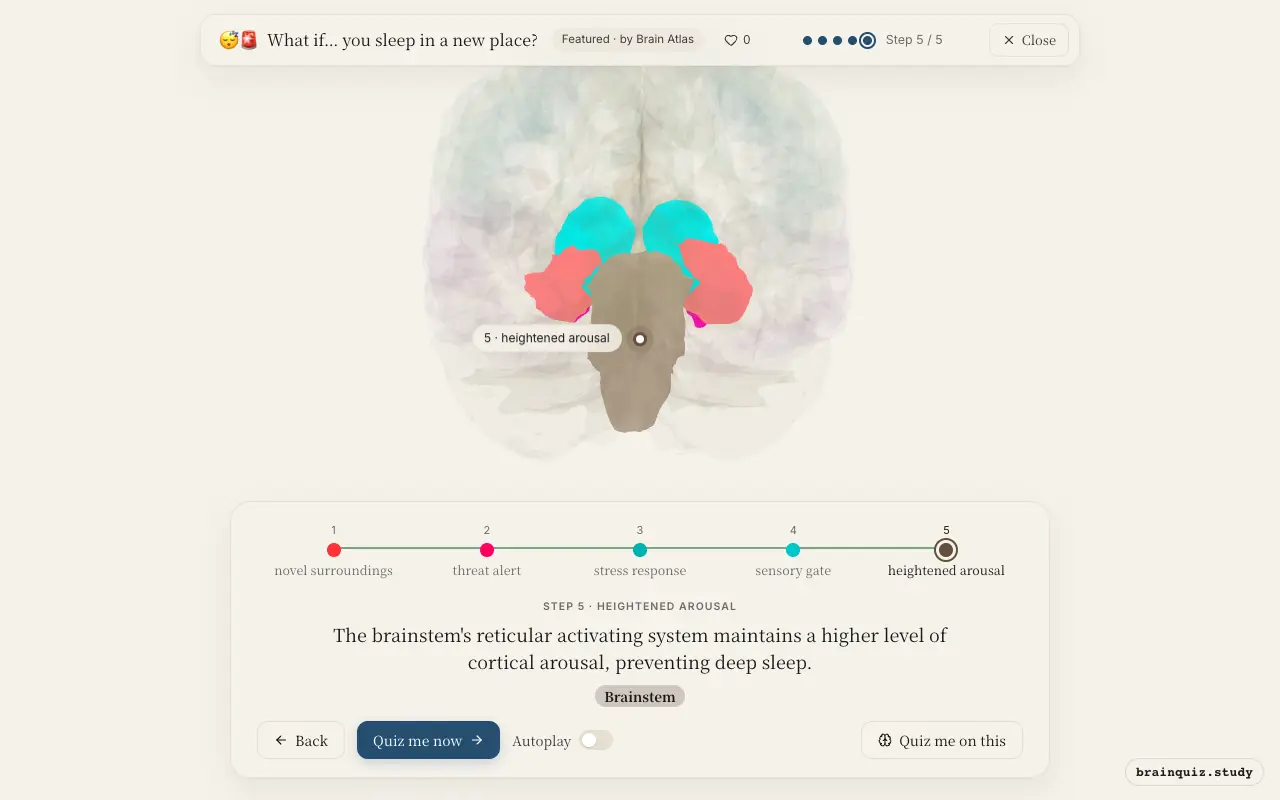
Watch it light up on the 3D brain
Brain regions that light up
| Order | Region | What it does here |
|---|---|---|
| 1 | Hippocampus | The hippocampus compares the new room to stored spatial memories and detects mismatch. |
| 2 | Amygdala | The amygdala responds to the unfamiliar setting by heightening vigilance and emotional arousal. |
| 3 | Hypothalamus | The hypothalamus activates the HPA axis, releasing cortisol and keeping the body in a mild stress state. |
| 4 | Thalamus | The thalamus reduces its normal sensory filtering, so external sounds are more likely to rouse you. |
| 5 | Brainstem | The brainstem's reticular activating system maintains a higher level of cortical arousal, preventing deep sleep. |
1. Hippocampus: novel surroundings
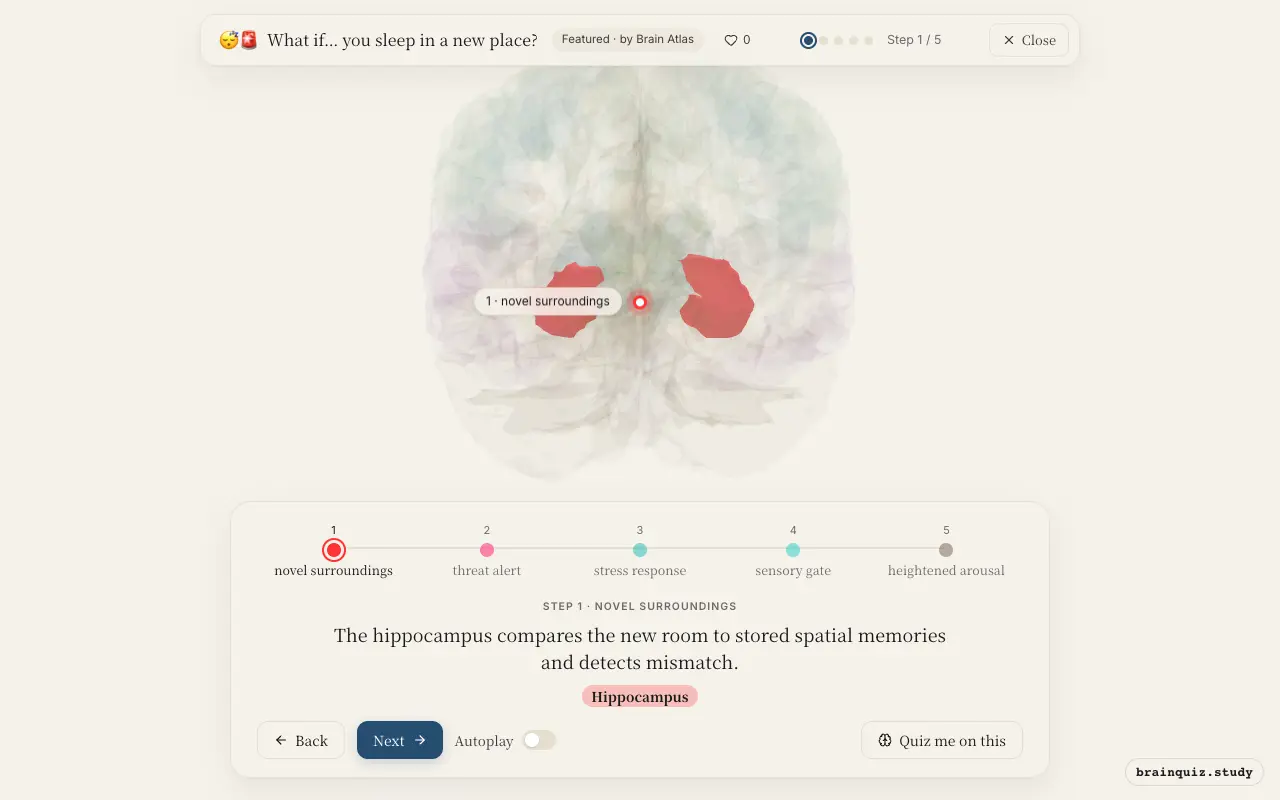
Known for spatial navigation and memory, the hippocampus fires more when you are in a novel environment. It signals that the current place is unfamiliar, which prevents the brain from fully disengaging during sleep.
2. Amygdala: threat alert
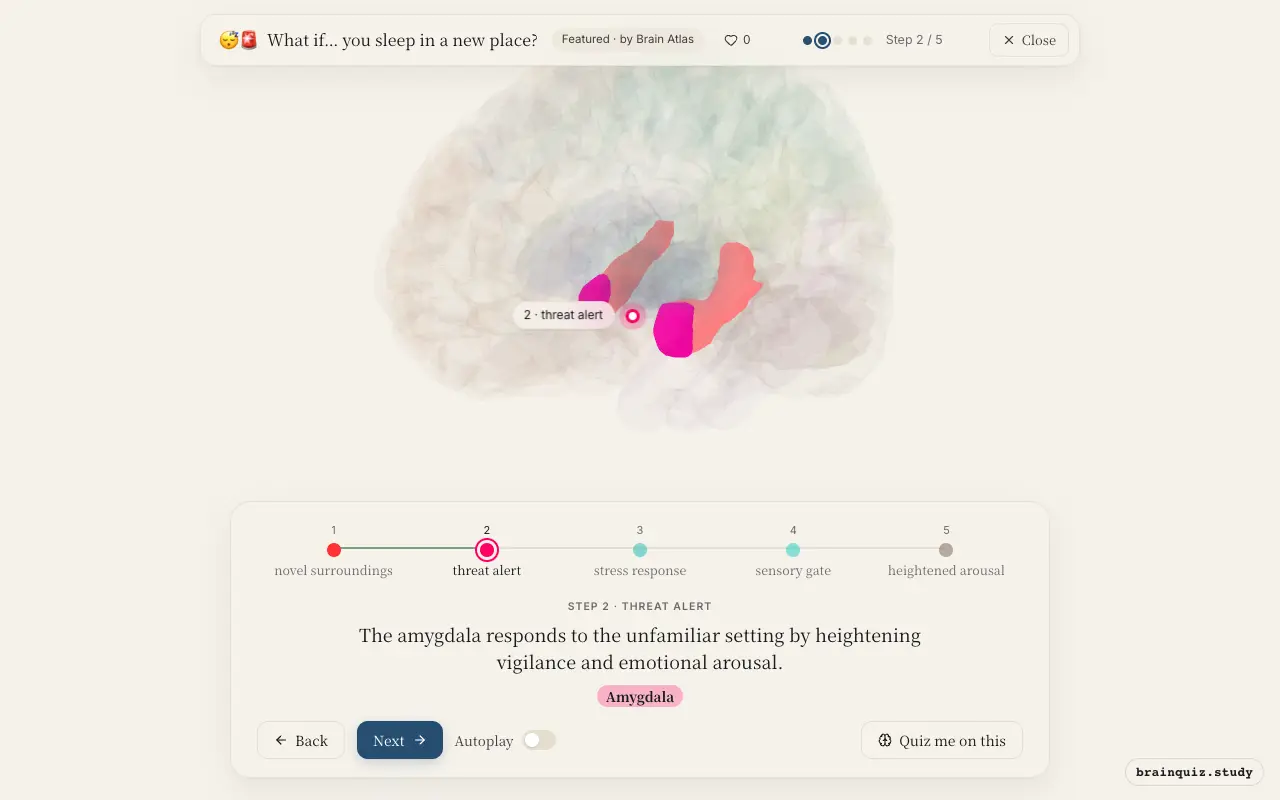
The amygdala, central to fear and threat detection, stays slightly active. This activity raises your baseline arousal, making it harder to fall into the deepest sleep stages.
3. Hypothalamus: stress response
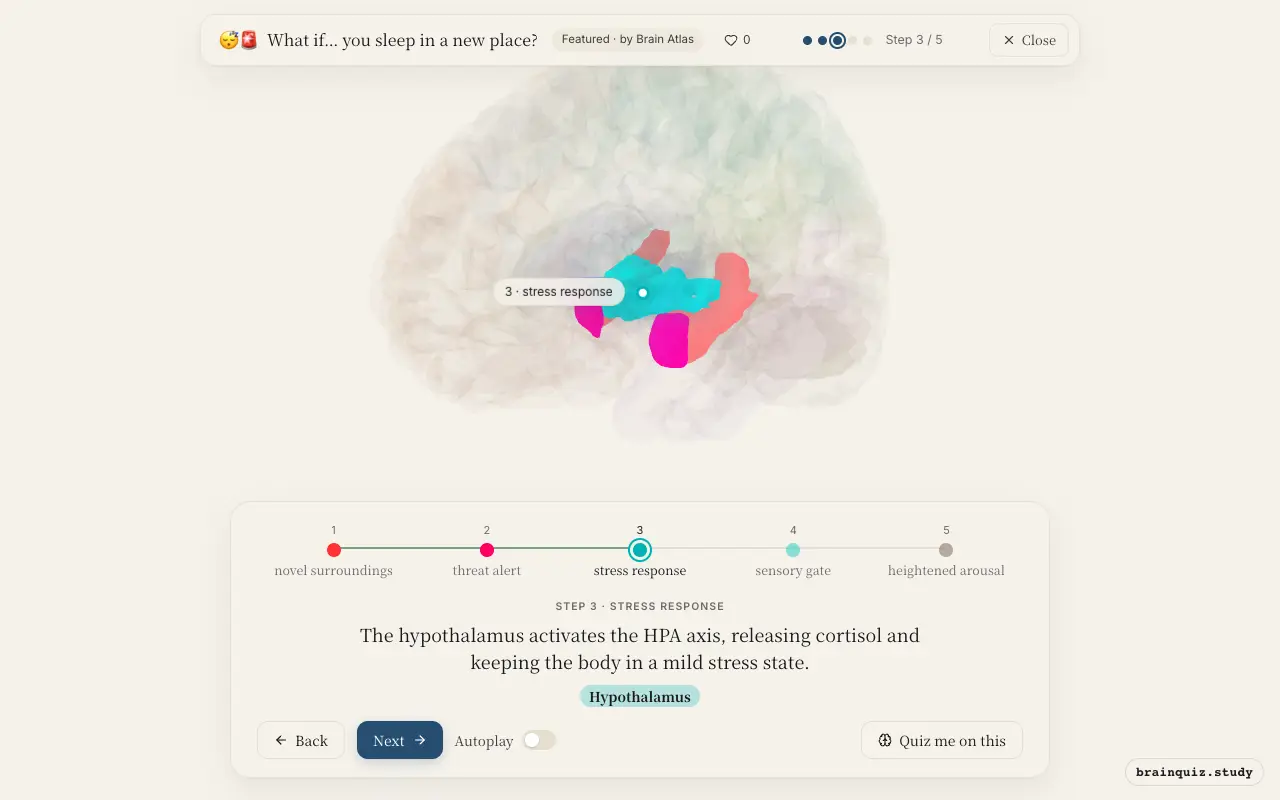
As the master regulator of homeostasis and the stress response, the hypothalamus signals the adrenal glands to produce cortisol. Elevated cortisol interferes with slow-wave sleep, so you spend more time in lighter stages.
4. Thalamus: sensory gate
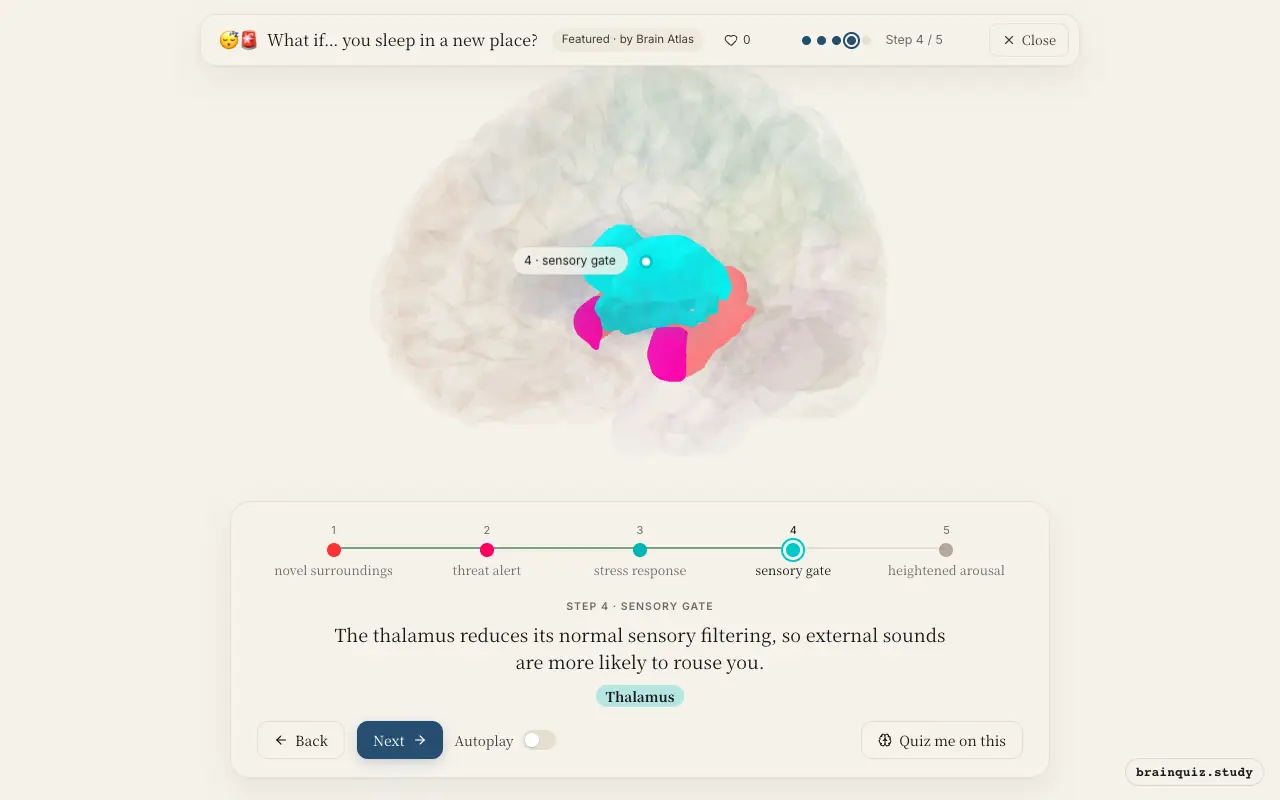
During deep sleep, the thalamus usually blocks most sensory input from reaching the cortex. In a new environment, sleep is lighter and sensory gating appears reduced, allowing even small noises to trigger awakening.
5. Brainstem: heightened arousal
The brainstem houses arousal centers that promote wakefulness and regulate the sleep-wake cycle. In a novel setting, these centers keep the cortex more alert, leading to lighter, more fragmented sleep.
Good to know
- The 'first-night effect' is a well-documented phenomenon where sleep quality is poorer on the first night in a new environment.
- Studies show that during the first night in a new place, slow-wave activity is reduced more in the left hemisphere than the right, suggesting one hemisphere stays more vigilant.
New place vs. familiar bedroom
In your own bedroom, the brain downregulates vigilance and you cycle normally through deep and REM sleep. In a new place, the hippocampus and amygdala keep the brain in a lighter state, with more awakenings and less slow-wave sleep.
Test yourself
Which brain region is primarily responsible for recognizing that the environment is new?
What is the main effect of the amygdala's activity during the first night in a new place?
The 'first-night effect' is characterized by:
0 of 3 answered · 0 correct
Simplified: many regions work together at once, and this shows the main players in the order they act.