What happens in your brain when you take a nap?
Updated
A nap is a short sleep state driven by the hypothalamus which quiets the brainstem's arousal system, allowing the thalamus to disconnect the cortex from sensory input. The hippocampus replays recent experiences for consolidation, while the prefrontal cortex largely goes offline.
Watch it light up on the 3D brain
Brain regions that light up
| Order | Region | What it does here |
|---|---|---|
| 1 | Hypothalamus | The hypothalamus sends signals to promote sleep, reducing the drive for wakefulness. |
| 2 | Brainstem | The brainstem's arousal systems are suppressed, reducing wakefulness. |
| 3 | Thalamus | The thalamus begins generating sleep spindles and blocks sensory signals from reaching the cortex. |
| 4 | Hippocampus | The hippocampus replays recent experiences, supporting memory consolidation during the nap. |
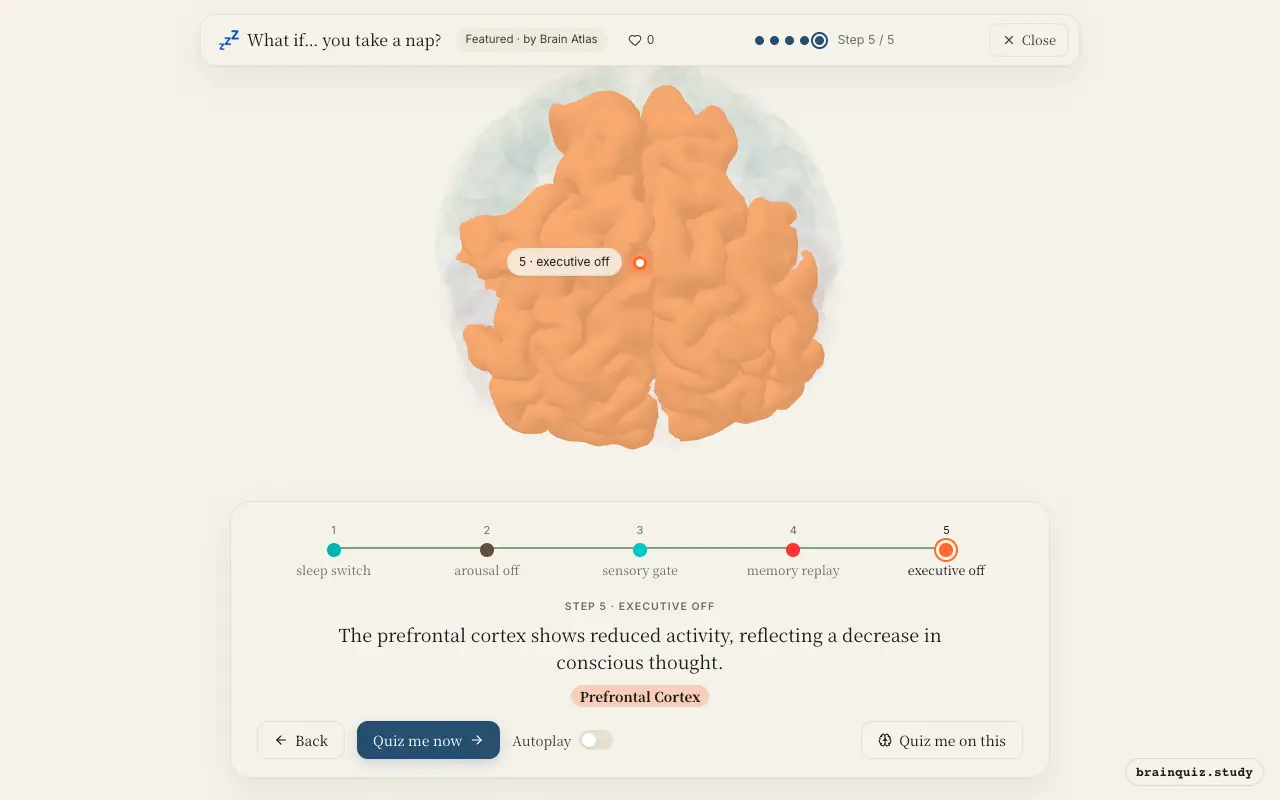
| 5 | Prefrontal Cortex | The prefrontal cortex shows reduced activity, reflecting a decrease in conscious thought. |
1. Hypothalamus: sleep switch
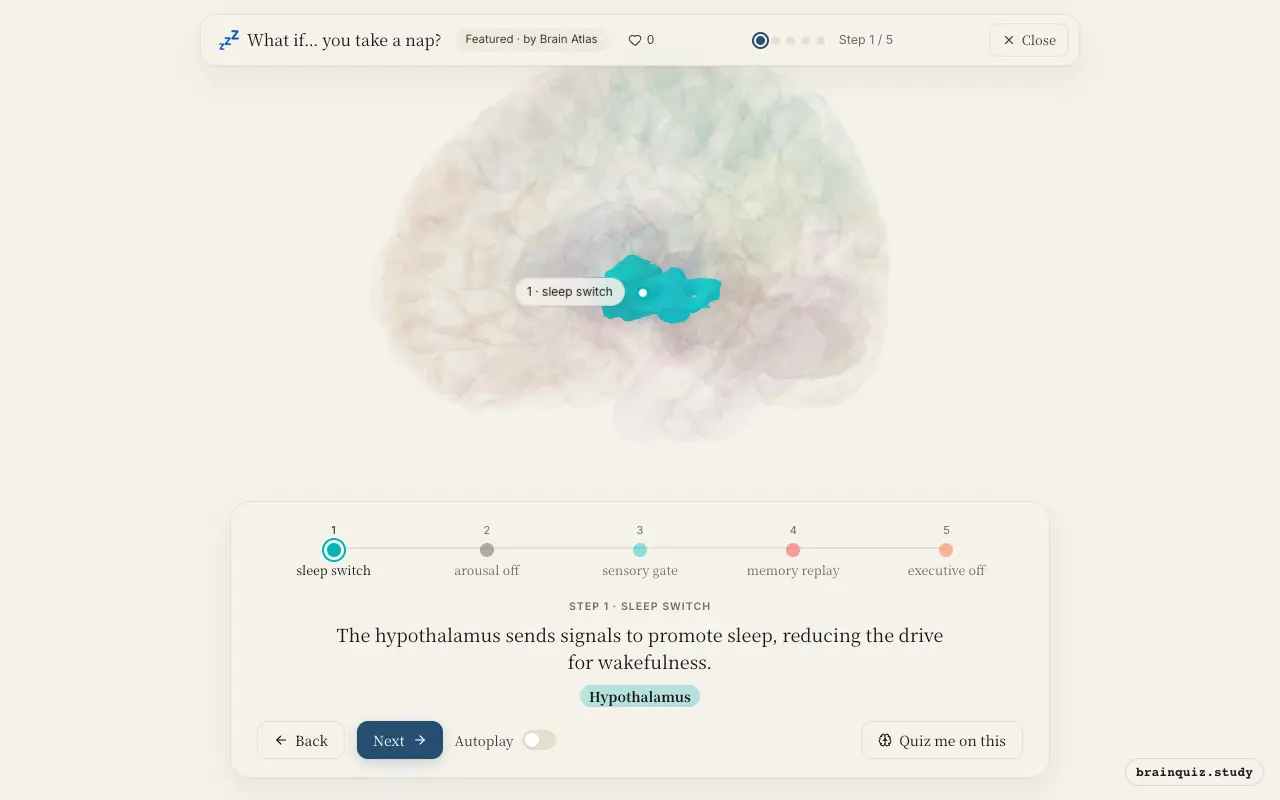
The hypothalamus is the master regulator of sleep and wakefulness. It contains sleep-promoting neurons that inhibit the brain's arousal systems, tipping the balance toward sleep. This inhibition is essential for falling asleep quickly, and it is the first step in transitioning from wakefulness to a nap.
2. Brainstem: arousal off
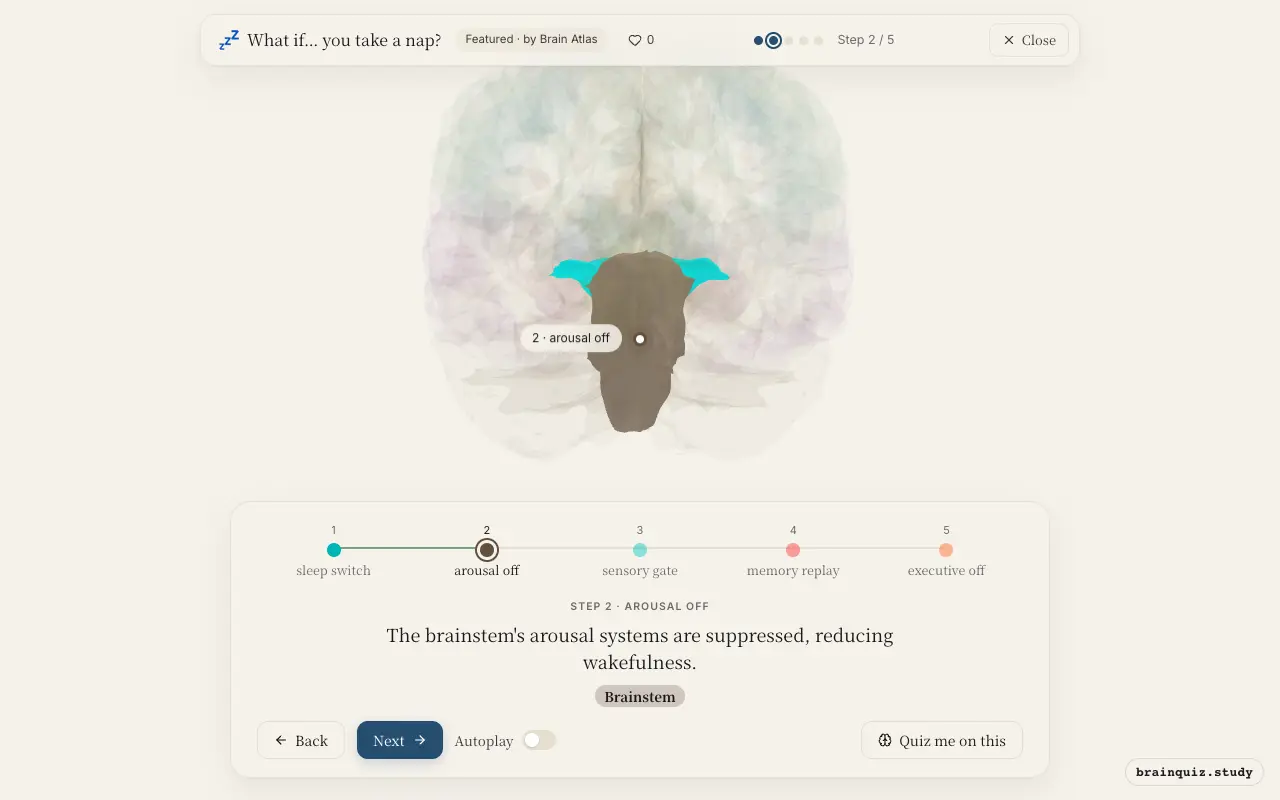
The brainstem houses the reticular activating system, which keeps the brain alert. During nap onset, its activity decreases, allowing cortical activity to slow. This reduction in arousal is necessary for the transition into sleep. Without this suppression, the brain would remain in a wakeful state.
3. Thalamus: sensory gate
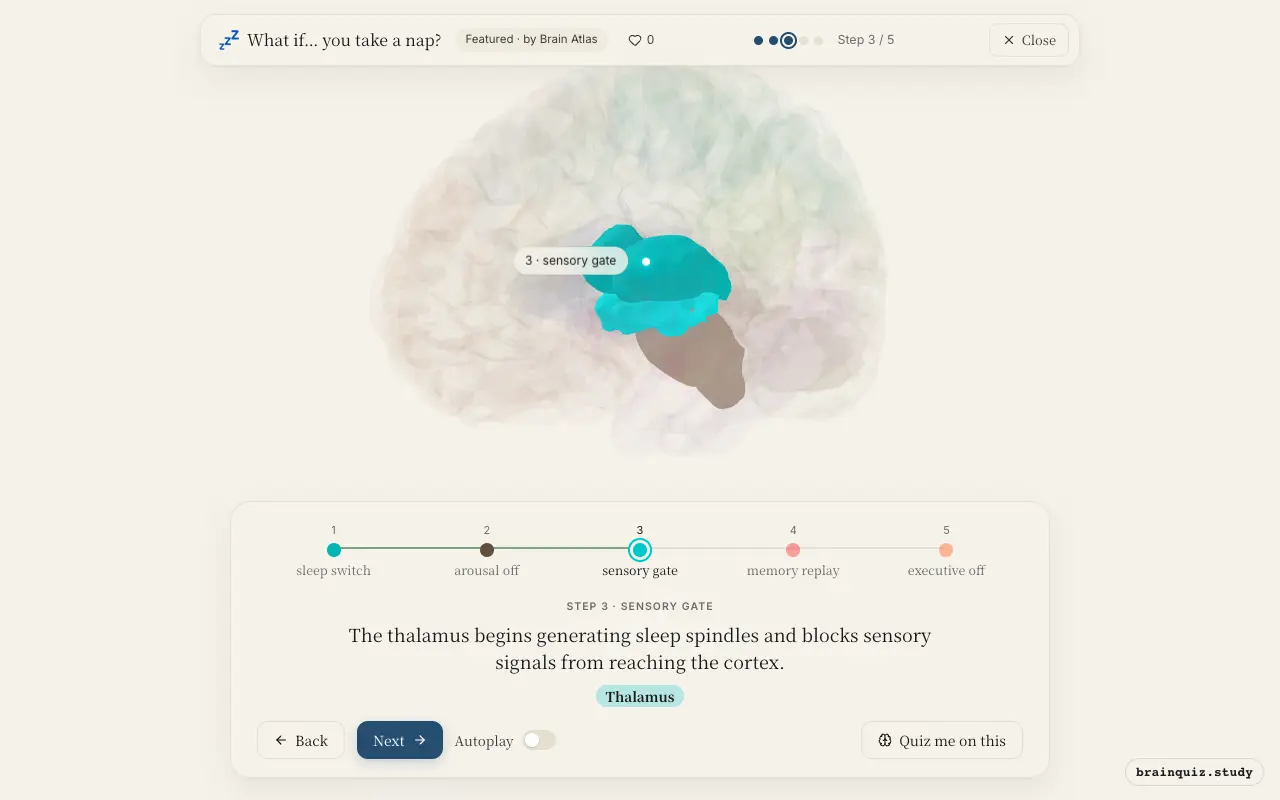
The thalamus acts as a gatekeeper for sensory information. During light sleep, it produces bursts of activity called sleep spindles, which are thought to protect sleep by inhibiting sensory transmission. This isolates the cortex from the outside world, deepening the nap.
4. Hippocampus: memory replay
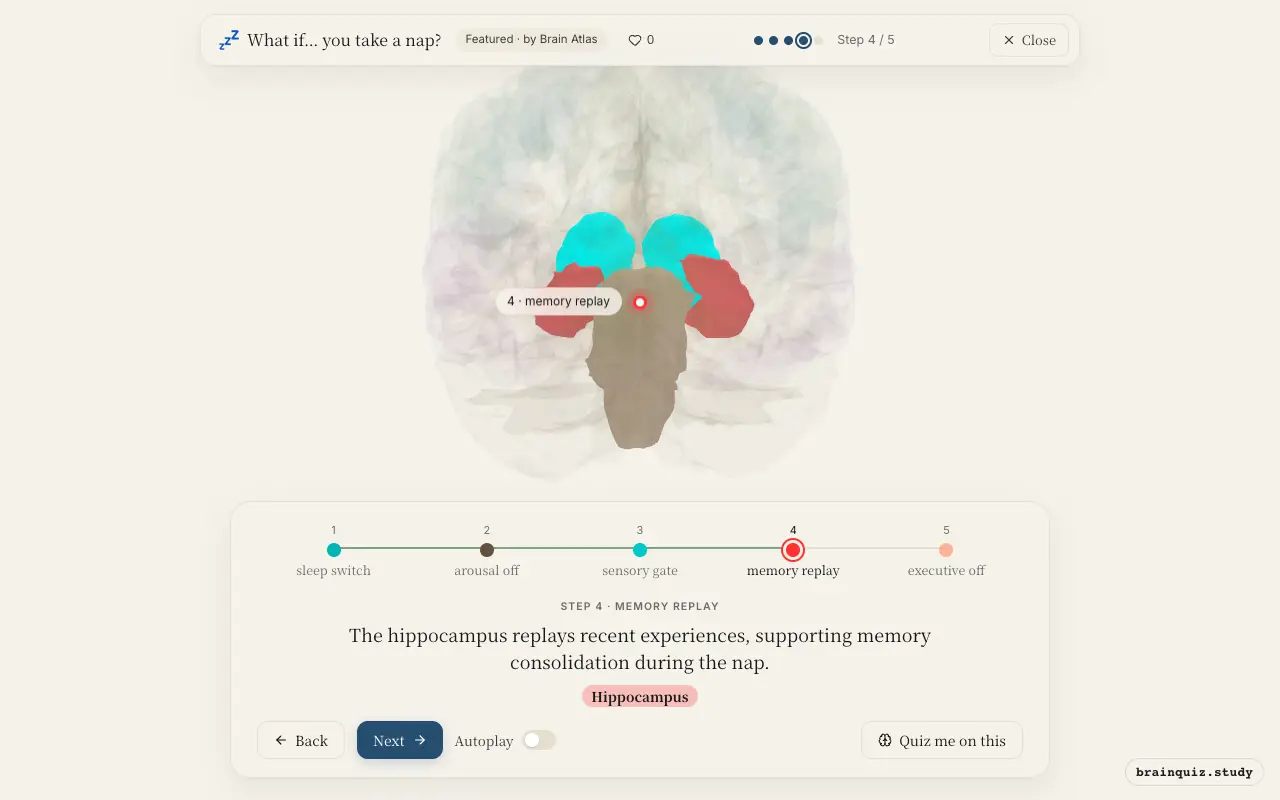
During sleep, the hippocampus reactivates patterns of neural activity from recent waking experiences. This replay is thought to transfer information to the neocortex for long-term storage. Even a short nap can improve memory, thanks to this process. This occurs predominantly during non-REM sleep stages.
5. Prefrontal Cortex: executive off
The prefrontal cortex is responsible for executive functions like planning and decision-making. During a nap, its activity markedly decreases, consistent with the loss of self-awareness and goal-directed behavior. This reduction helps the brain disengage from the demands of waking life.
Good to know
- Naps typically involve light non-REM sleep stages, which include the generation of sleep spindles.
- Memory consolidation during sleep is thought to involve hippocampal replay of recent experiences.
- The prefrontal cortex is one of the first areas to show reduced metabolism during non-REM sleep.
Nap vs Full Night's Sleep
Unlike a full night's sleep, a nap rarely includes deep slow-wave sleep or REM sleep. Wakeful rest does not engage the hippocampus in the same memory replay or produce sleep spindles. Thus, a nap offers unique benefits over simply lying down awake.
Test yourself
Which brain region initiates the transition into a nap by promoting sleep?
What is the primary role of the thalamus during a nap?
Which region shows reduced activity during a nap, consistent with decreased conscious thought?
0 of 3 answered · 0 correct
Simplified: many regions work together at once, and this shows the main players in the order they act.