What happens in your brain when you take MDMA?
Updated
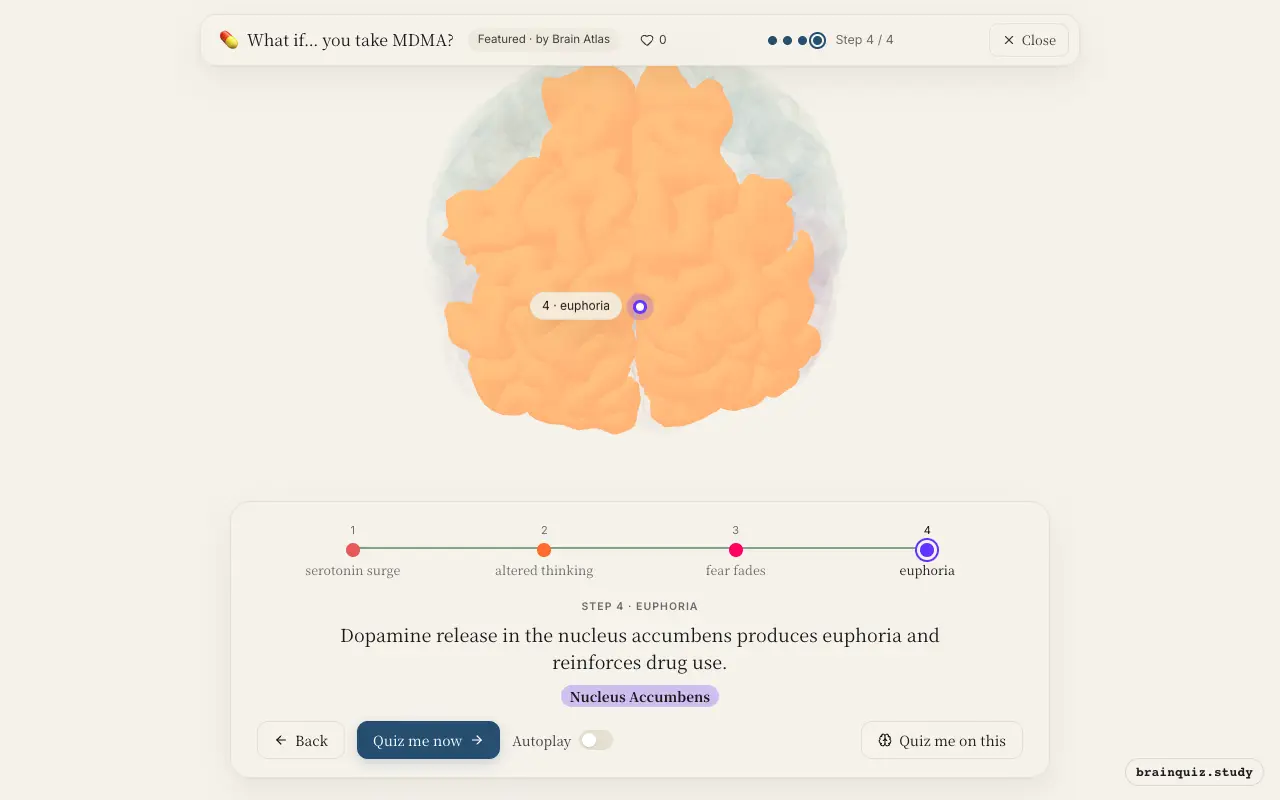
MDMA triggers a surge of serotonin from the dorsal raphe, which reduces amygdala fear responses and prefrontal control, while boosting dopamine in the nucleus accumbens to produce euphoria and empathy.
Watch it light up on the 3D brain
Brain regions that light up
| Order | Region | What it does here |
|---|---|---|
| 1 | Dorsal Raphe Nucleus | MDMA enters the brain and triggers massive serotonin release from the dorsal raphe nucleus. |
| 2 | Prefrontal Cortex | Serotonin floods the prefrontal cortex, reducing anxiety and impairing working memory. |
| 3 | Amygdala | The amygdala's response to fearful stimuli is suppressed, increasing social approach. |
| 4 | Nucleus Accumbens | Dopamine release in the nucleus accumbens produces euphoria and reinforces drug use. |
1. Dorsal Raphe Nucleus: serotonin surge
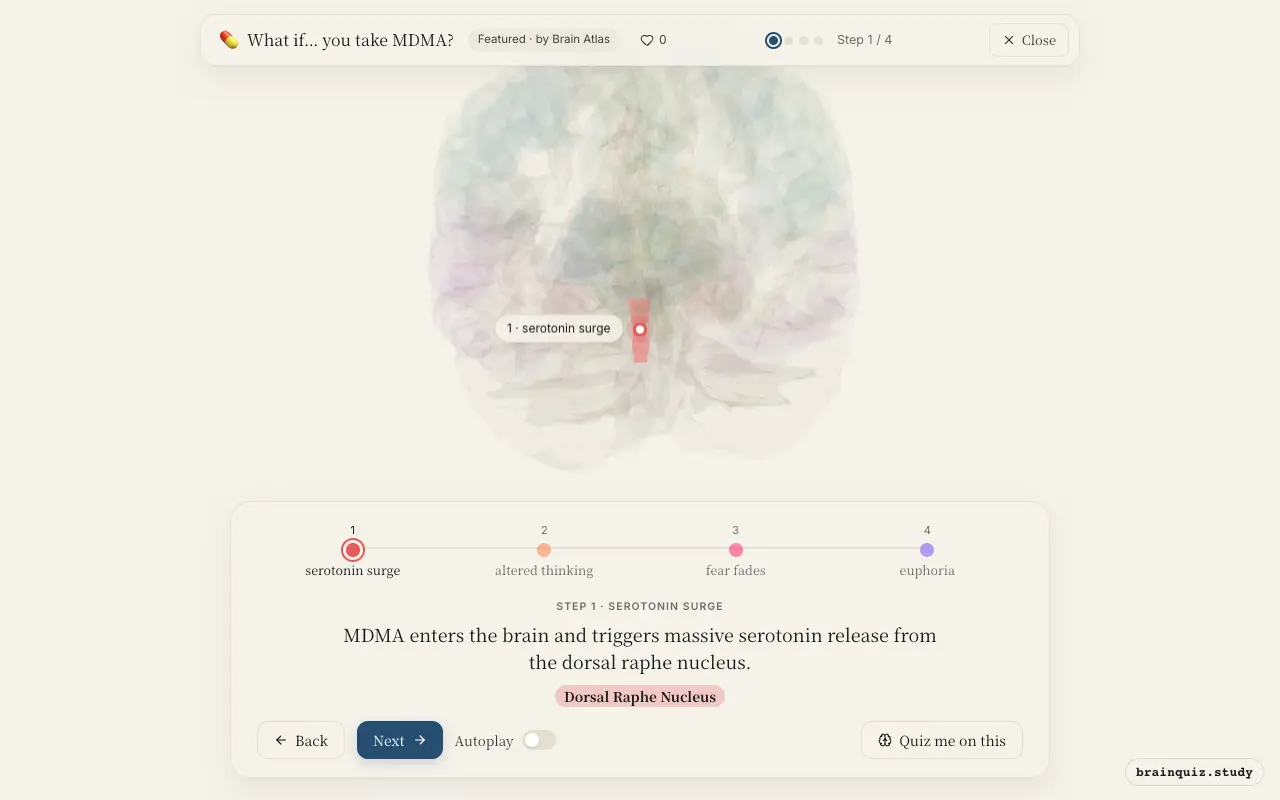
MDMA binds to serotonin transporters and reverses their action, causing a rapid release of serotonin from dorsal raphe neurons. This flood of serotonin is the primary driver of the drug's mood-elevating and empathogenic effects.
2. Prefrontal Cortex: altered thinking
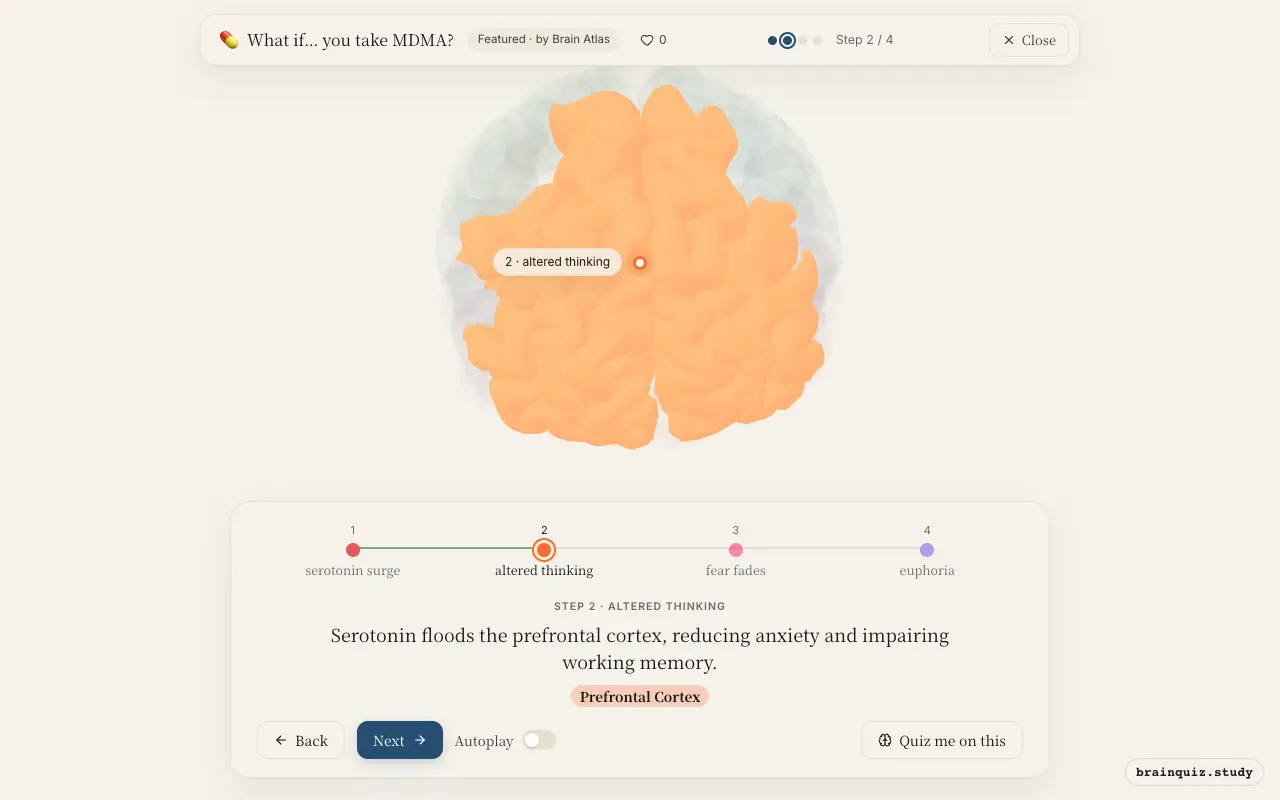
High serotonin levels in the prefrontal cortex dampen threat detection and executive control, leading to reduced social inhibition and a sense of openness. However, this also impairs concentration and decision-making during intoxication.
3. Amygdala: fear fades
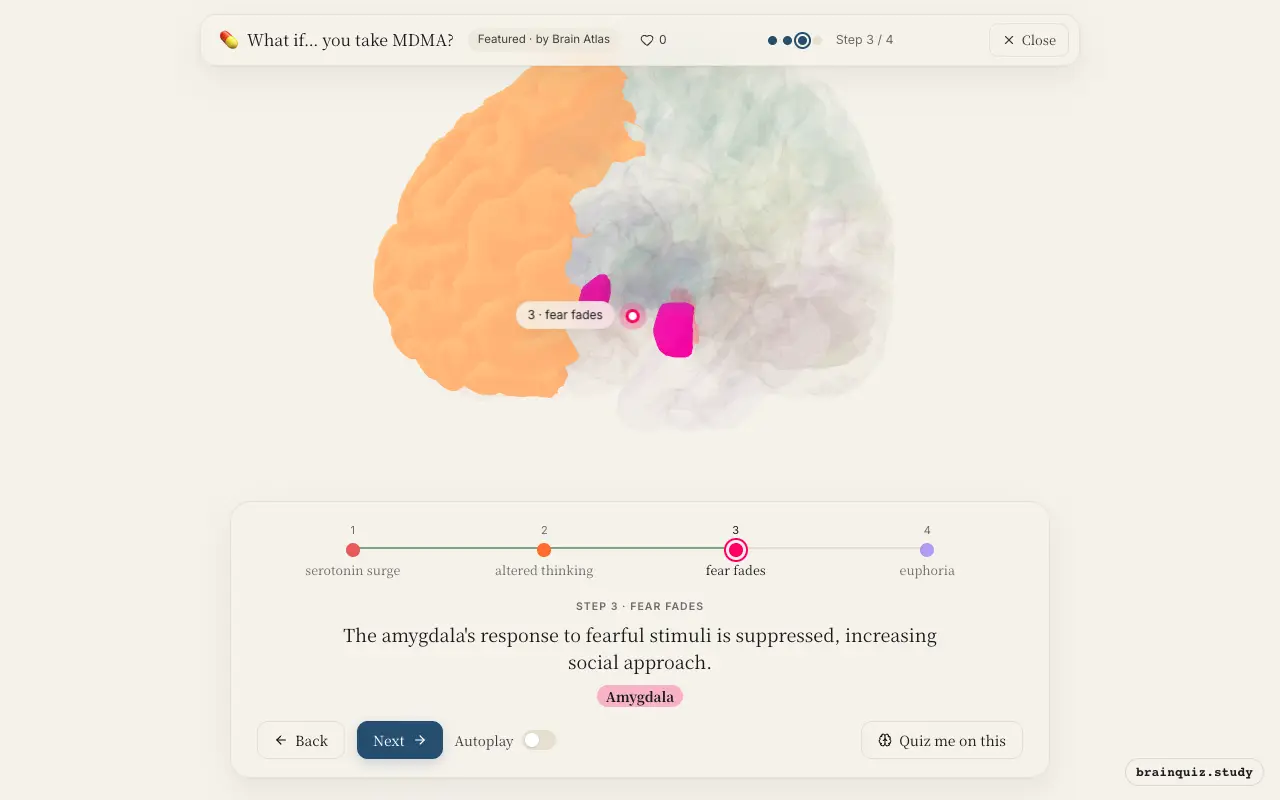
Serotonin in the amygdala reduces its reactivity, so people feel less fearful and more trusting. This effect is thought to underlie MDMA's ability to facilitate therapeutic processing of traumatic memories.
4. Nucleus Accumbens: euphoria
MDMA also increases dopamine, which acts in the nucleus accumbens to create intense pleasure and reward. This dopaminergic component contributes to the drug's addictive potential.
Good to know
- MDMA's subjective effects usually begin within 30–45 minutes and peak at about 90 minutes after oral ingestion.
- MDMA can cause dangerous hyperthermia and dehydration, which are the most common causes of medical emergencies.
- MDMA is being investigated in clinical trials as an adjunct to psychotherapy for post-traumatic stress disorder.
MDMA vs Cocaine: Serotonin vs Dopamine
While both drugs increase dopamine in the nucleus accumbens, MDMA's defining feature is its massive serotonin release from the dorsal raphe. Cocaine primarily blocks reuptake of dopamine, producing sharper euphoria but little of the empathogenic effect seen with MDMA.
Test yourself
Which brain region is the main source of the serotonin surge caused by MDMA?
MDMA reduces activity in which structure to produce its fear-reducing effect?
Which neurotransmitter, besides serotonin, is increased by MDMA and contributes to its euphoric effects in the nucleus accumbens?
0 of 3 answered · 0 correct
Simplified: many regions work together at once, and this shows the main players in the order they act. For learning only, not medical advice.