What happens in your brain when you use cocaine?
Updated
Cocaine blocks dopamine reuptake, causing a surge in the nucleus accumbens that produces intense euphoria. The prefrontal cortex becomes impaired, leading to poor judgment, while the amygdala strengthens drug-related memories and the hypothalamus triggers a stress response.
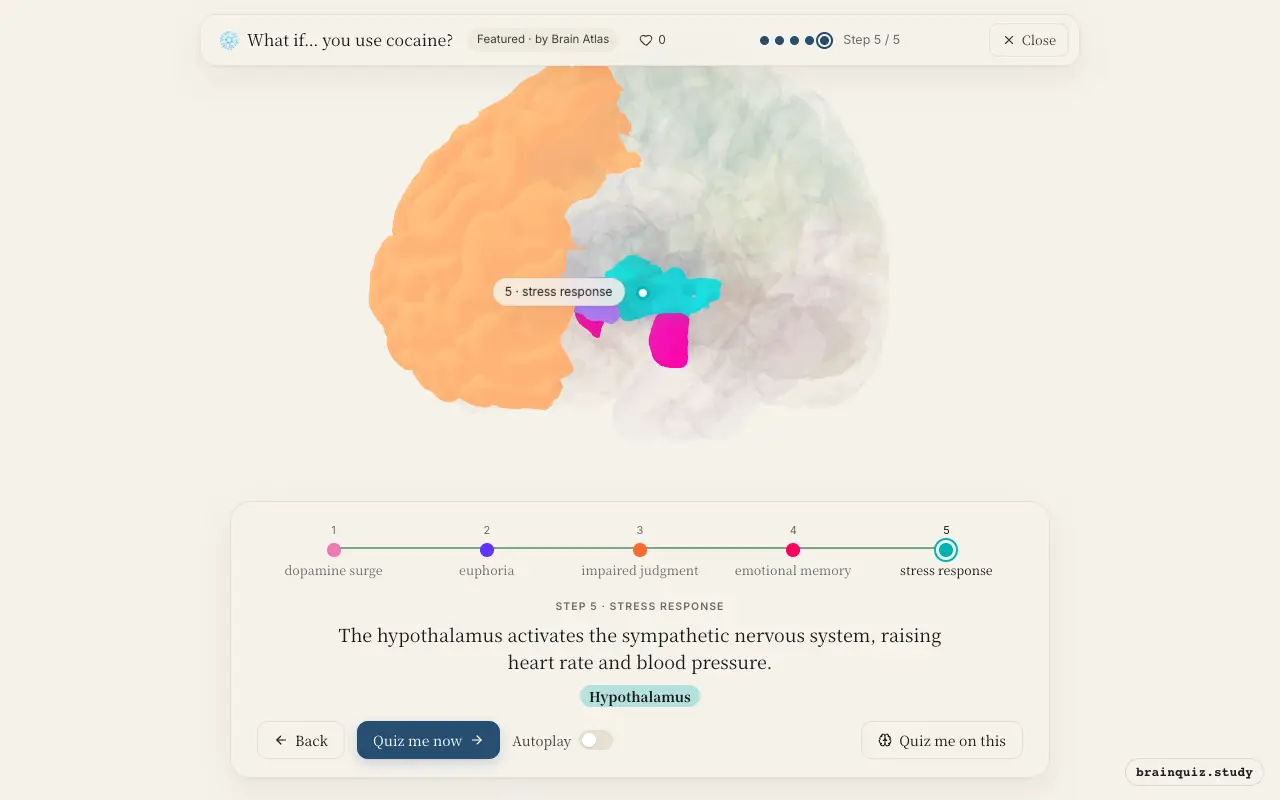
Watch it light up on the 3D brain
Brain regions that light up
| Order | Region | What it does here |
|---|---|---|
| 1 | Ventral Tegmental Area | Cocaine blocks dopamine transporters on VTA neuron terminals, increasing synaptic dopamine. |
| 2 | Nucleus Accumbens | The nucleus accumbens receives excess dopamine, producing intense pleasure. |
| 3 | Prefrontal Cortex | Dopamine in the prefrontal cortex disrupts executive function. |
| 4 | Amygdala | Cocaine activates the amygdala, enhancing emotional salience of drug cues. |
| 5 | Hypothalamus | The hypothalamus activates the sympathetic nervous system, raising heart rate and blood pressure. |
1. Ventral Tegmental Area: dopamine surge
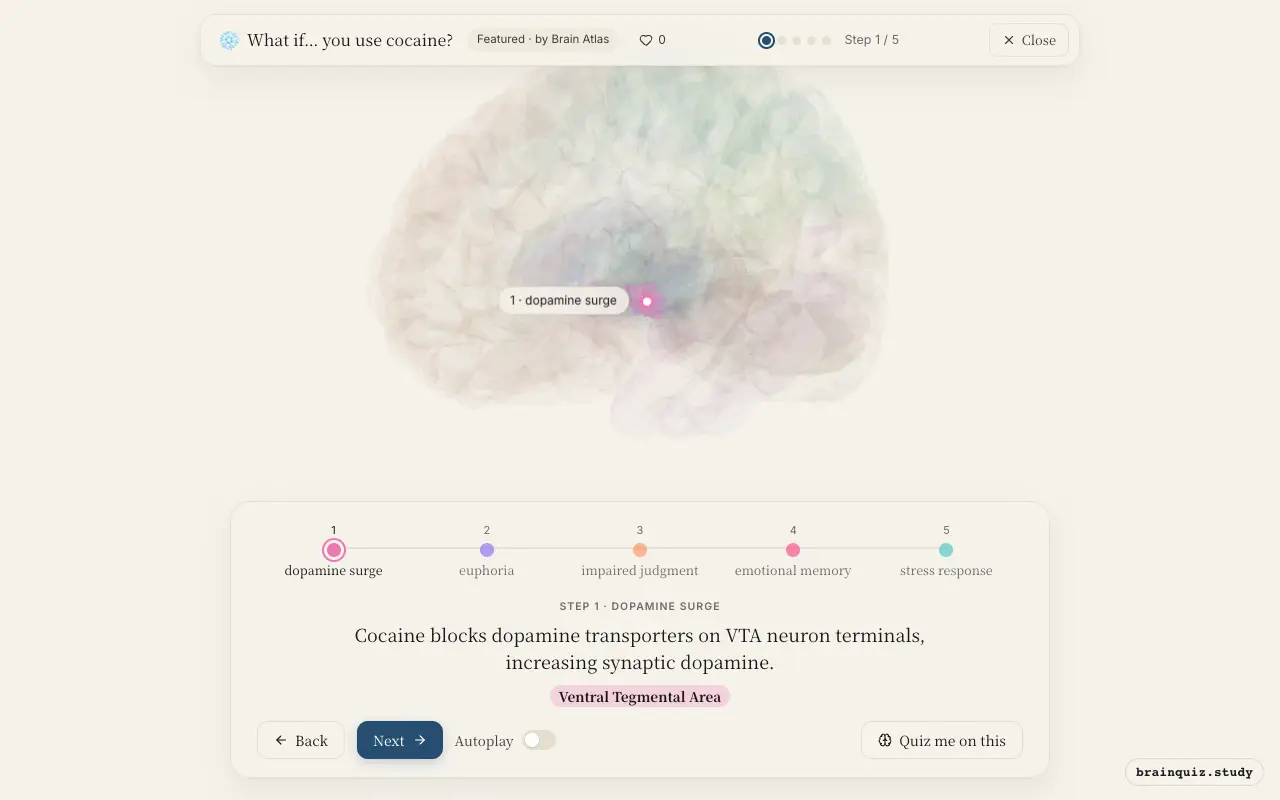
The ventral tegmental area (VTA) is the origin of mesolimbic dopamine neurons. When cocaine is present, it binds to dopamine transporters, preventing reuptake back into the presynaptic terminal. This causes dopamine to accumulate in the synapse in the nucleus accumbens, amplifying the signal received there.
2. Nucleus Accumbens: euphoria
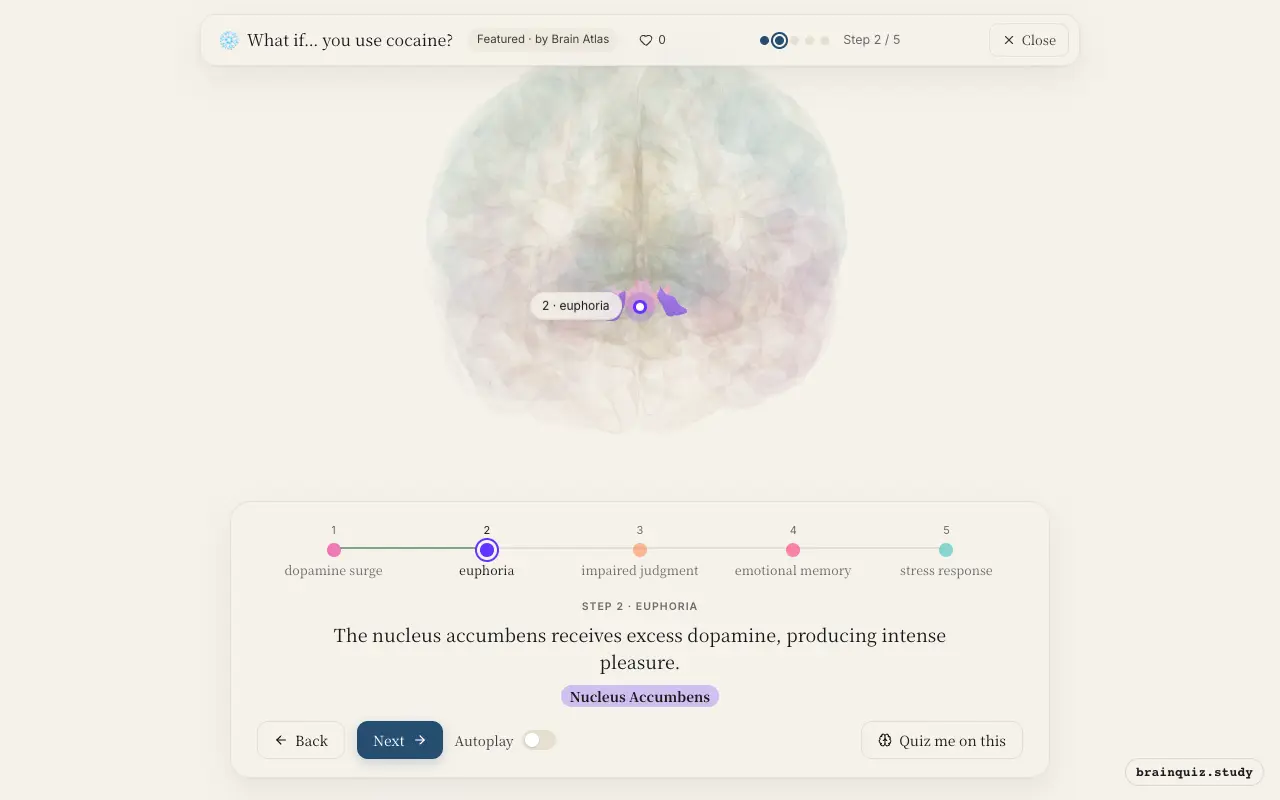
The nucleus accumbens is a key hub in the brain's reward circuit. The dopamine surge from the VTA to the nucleus accumbens creates a feeling of euphoria and reinforces drug-taking behavior. This region is thought to encode reward prediction error, and the abnormally large dopamine signal drives strong reinforcement learning.
3. Prefrontal Cortex: impaired judgment
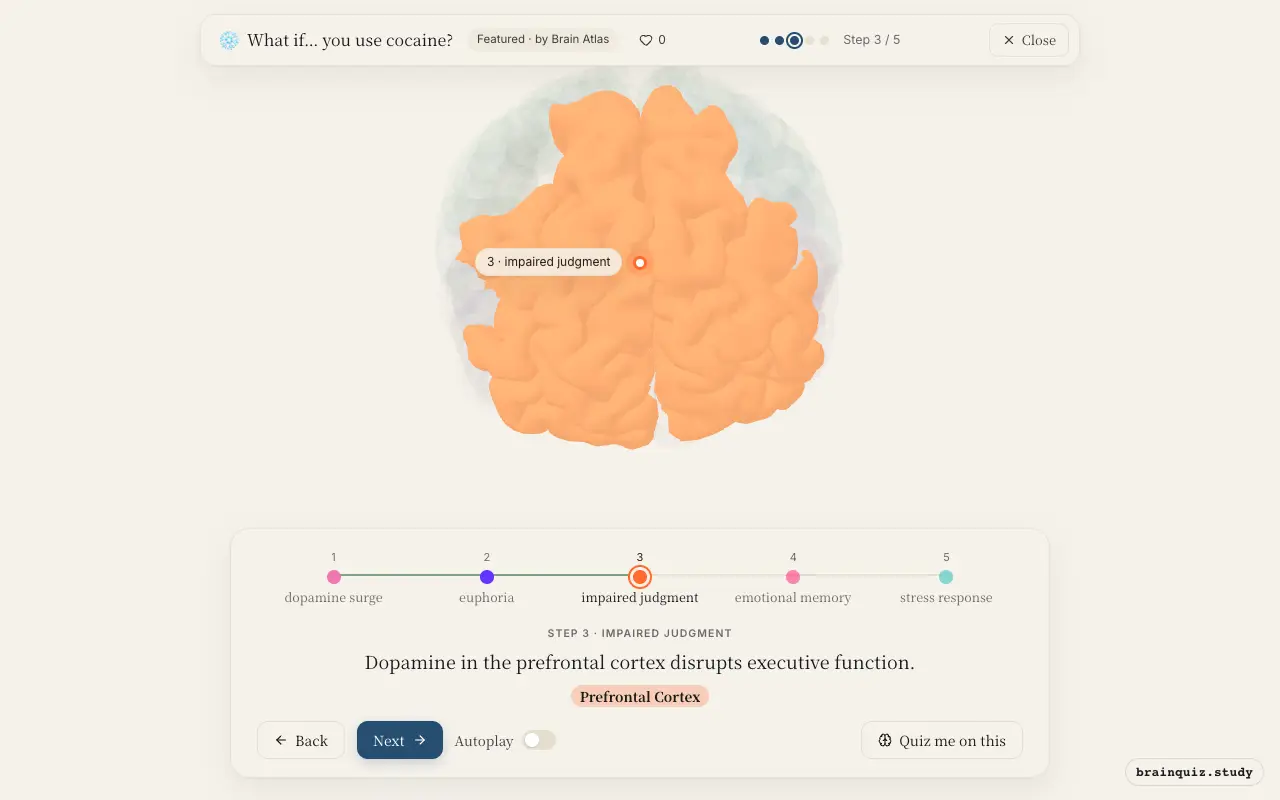
The prefrontal cortex, which normally governs decision-making, impulse control, and working memory, is flooded with dopamine. High levels of dopamine can actually impair its function by overstimulating D1 receptors, leading to poor judgment, impulsivity, and risky behavior. This contributes to the loss of control seen in cocaine intoxication.
4. Amygdala: emotional memory
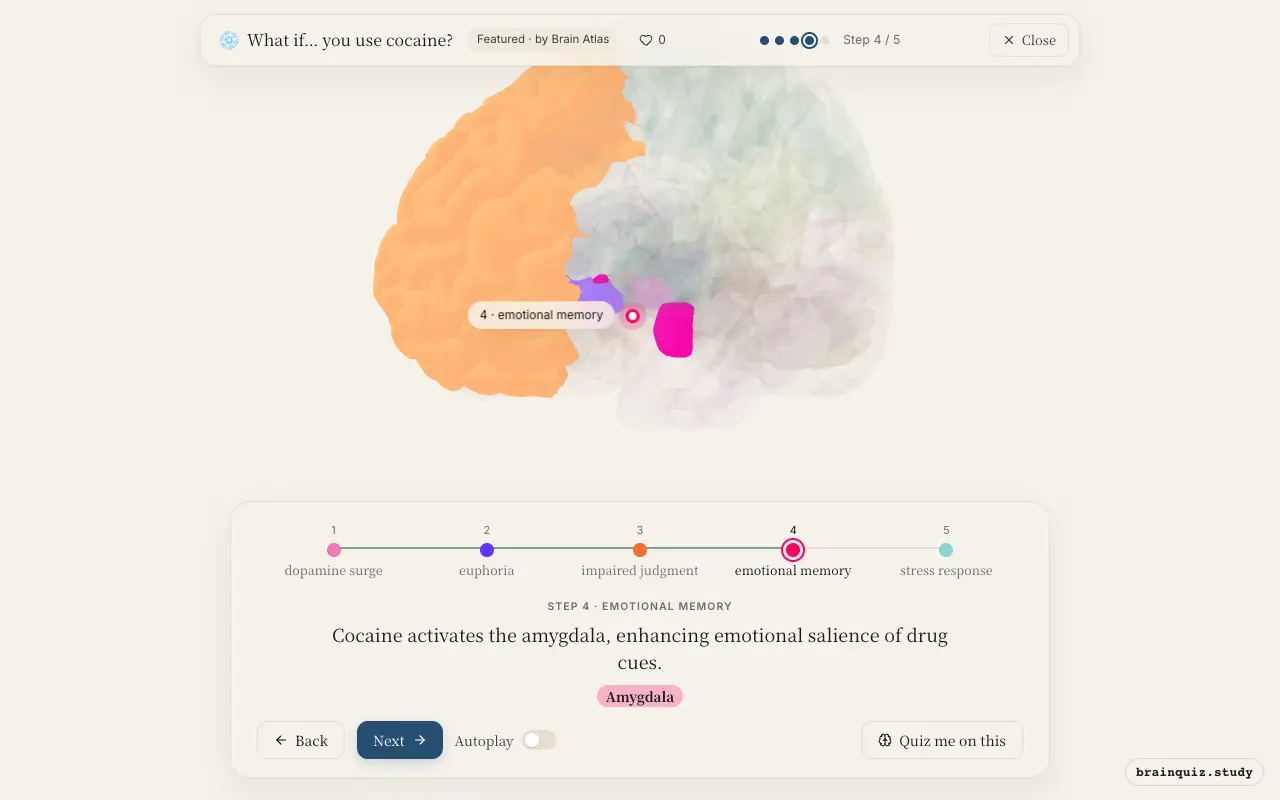
The amygdala processes emotional significance and forms associations between stimuli and outcomes. Cocaine enhances dopamine and norepinephrine signaling in the amygdala, which strengthens memories of drug-related cues and environments. This can trigger intense craving when the user later encounters those cues.
5. Hypothalamus: stress response
Cocaine increases norepinephrine and dopamine levels in the hypothalamus, which coordinates the body's stress response. This leads to activation of the sympathetic nervous system, causing increased heart rate, elevated blood pressure, and dilated pupils. These physical effects contribute to the feeling of arousal and can be dangerous.
Good to know
- Cocaine also blocks reuptake of norepinephrine and serotonin, contributing to its cardiovascular and mood effects.
- Repeated cocaine use leads to downregulation of dopamine D2 receptors in the striatum, which is associated with addiction.
- Cocaine can cause vasoconstriction, reducing blood flow to the brain and increasing risk of stroke.
Cocaine vs Amphetamine
Both drugs increase synaptic dopamine, but cocaine does so by blocking reuptake, while amphetamine also stimulates dopamine release. Consequently, amphetamine produces a more prolonged dopamine elevation, and the patterns of brain activation in the striatum and prefrontal cortex differ in timing and intensity.
Test yourself
Which brain region is the primary source of dopamine neurons that project to the nucleus accumbens during cocaine use?
How does cocaine increase dopamine levels in the synapse?
Which brain region is particularly important for the impaired decision-making seen with cocaine intoxication?
0 of 3 answered · 0 correct
Simplified: many regions work together at once, and this shows the main players in the order they act. For learning only, not medical advice.