What happens in your brain when you argue with someone?
Updated
Your brain hears and understands words (auditory cortex, Wernicke's area), reacts emotionally (amygdala), detects conflict (anterior cingulate), then prefrontal cortex regulates your reply before Broca's area produces speech.
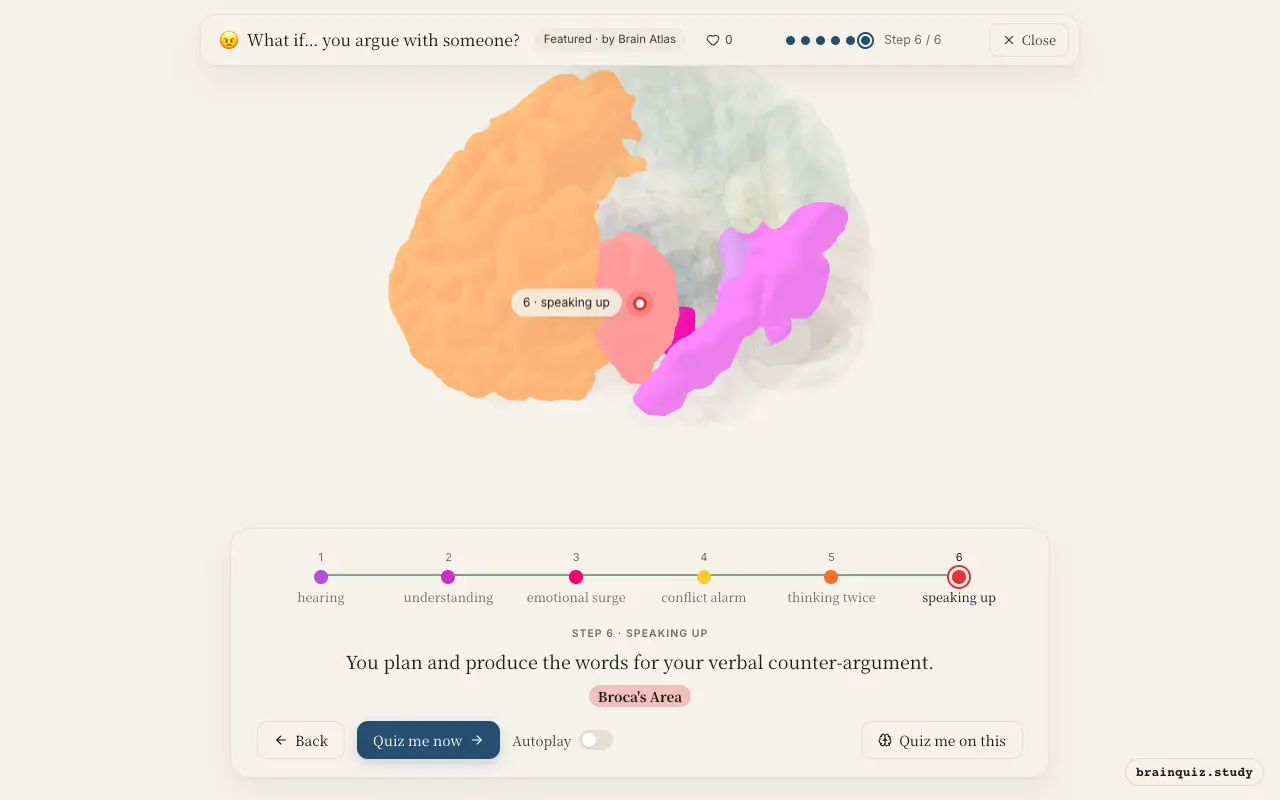
Watch it light up on the 3D brain
Brain regions that light up
| Order | Region | What it does here |
|---|---|---|
| 1 | Auditory Cortex | Sound waves from the other person's voice reach your ears and are processed here. |
| 2 | Wernicke's Area | You decode the meaning of the words and sentences being spoken. |
| 3 | Amygdala | The perceived threat or insult triggers a fast emotional response. |
| 4 | Anterior Cingulate Cortex | This region detects the mismatch between your expectations and the current conflict. |
| 5 | Prefrontal Cortex | You weigh your options and try to control your emotional impulse. |
| 6 | Broca's Area | You plan and produce the words for your verbal counter-argument. |
1. Auditory Cortex: hearing
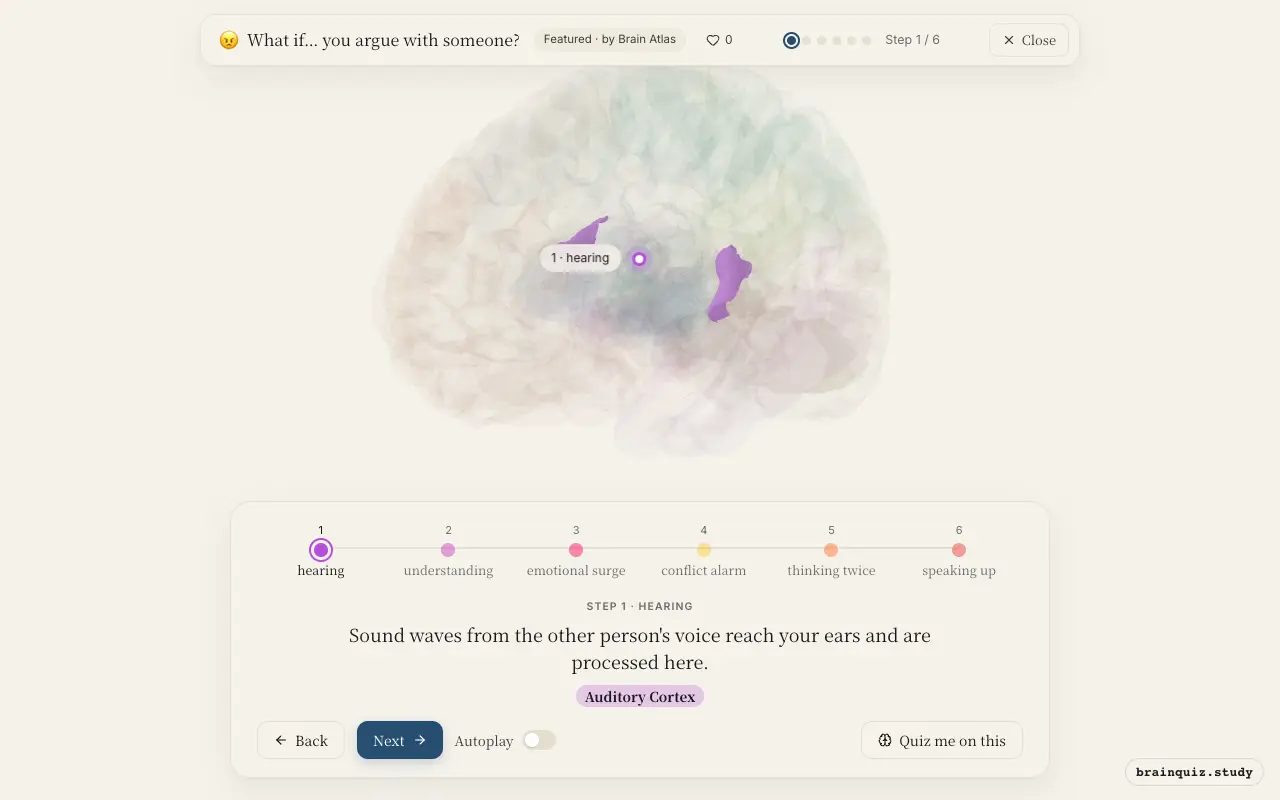
The auditory cortex decodes the acoustic features of speech, such as pitch and timing. It sends this raw auditory information to language areas for further analysis, setting the stage for understanding what was said.
2. Wernicke's Area: understanding
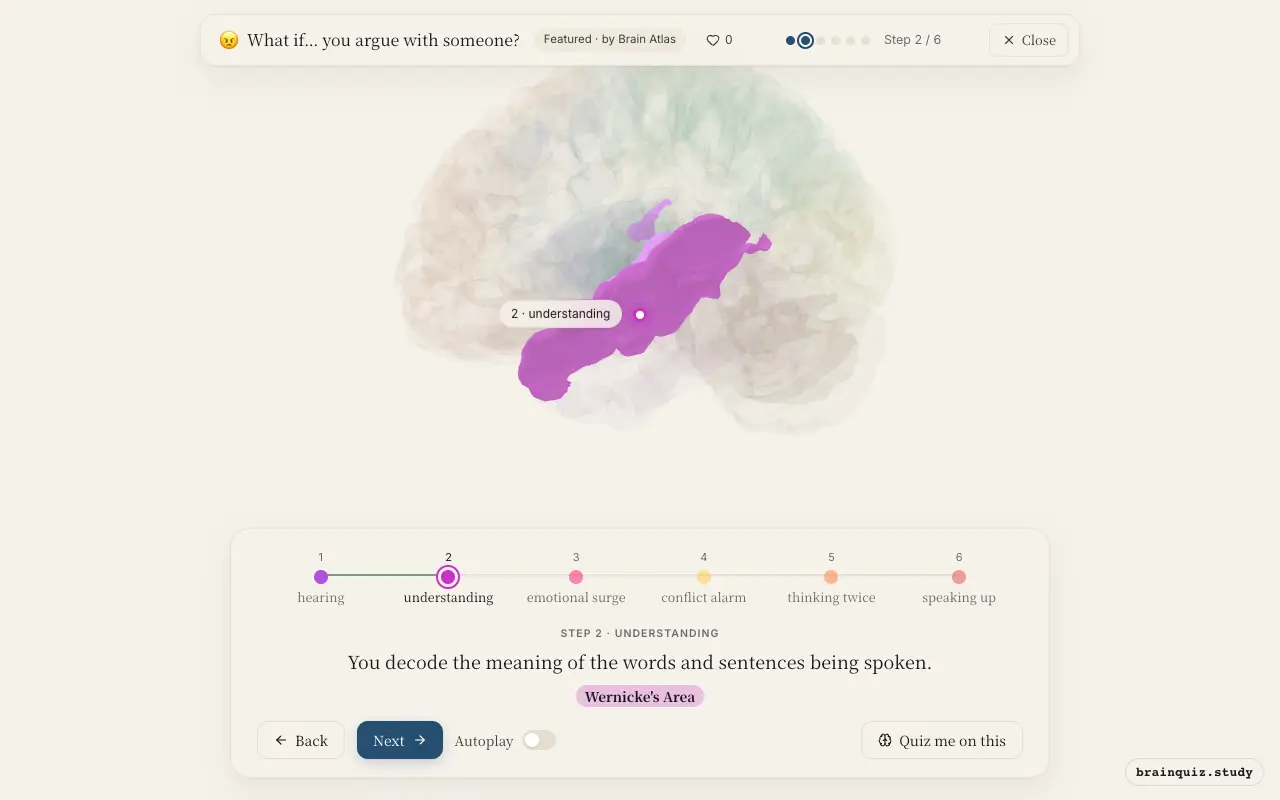
Wernicke's area maps the sounds of speech onto stored linguistic knowledge, allowing you to comprehend the content of the argument. Damage here causes receptive aphasia, where you can hear but not understand language.
3. Amygdala: emotional surge
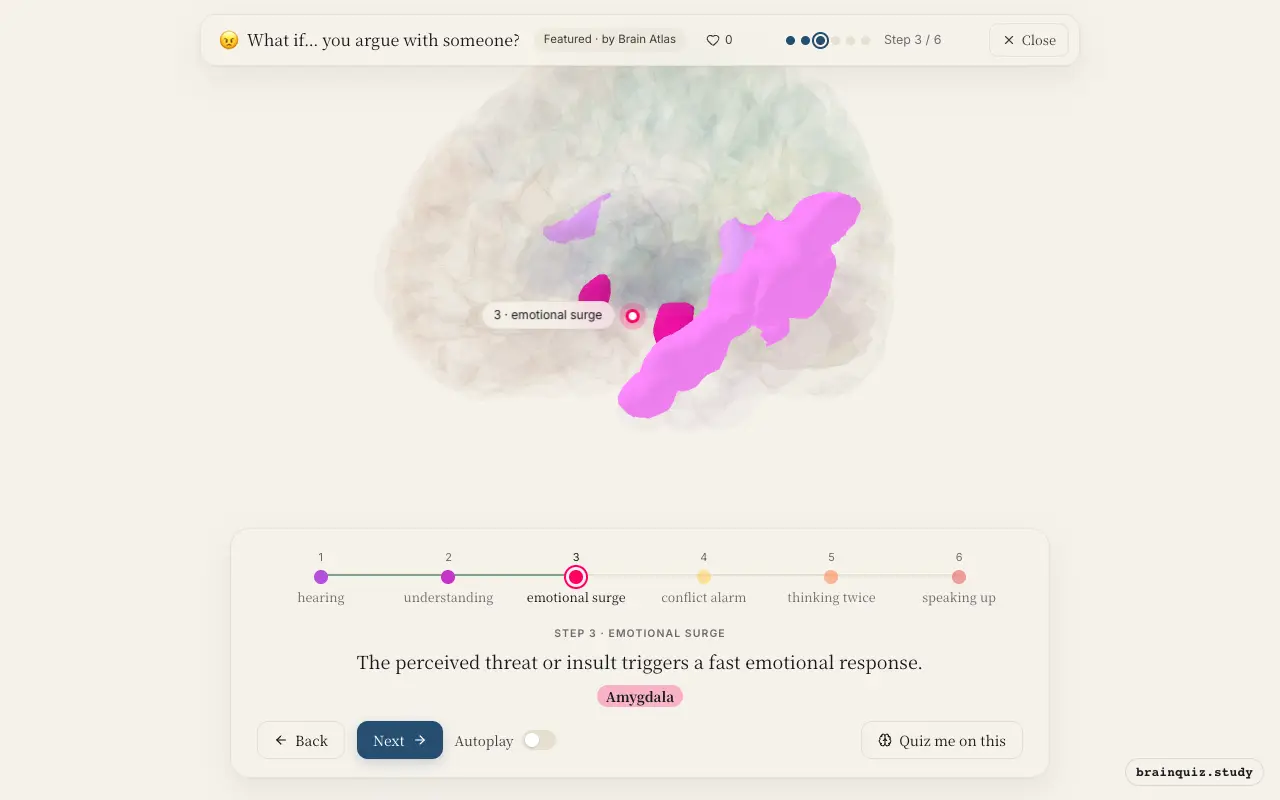
The amygdala evaluates the emotional salience of what you heard, especially signs of anger or hostility. It rapidly activates the autonomic nervous system, raising heart rate and preparing your body for a defensive reaction.
4. Anterior Cingulate Cortex: conflict alarm
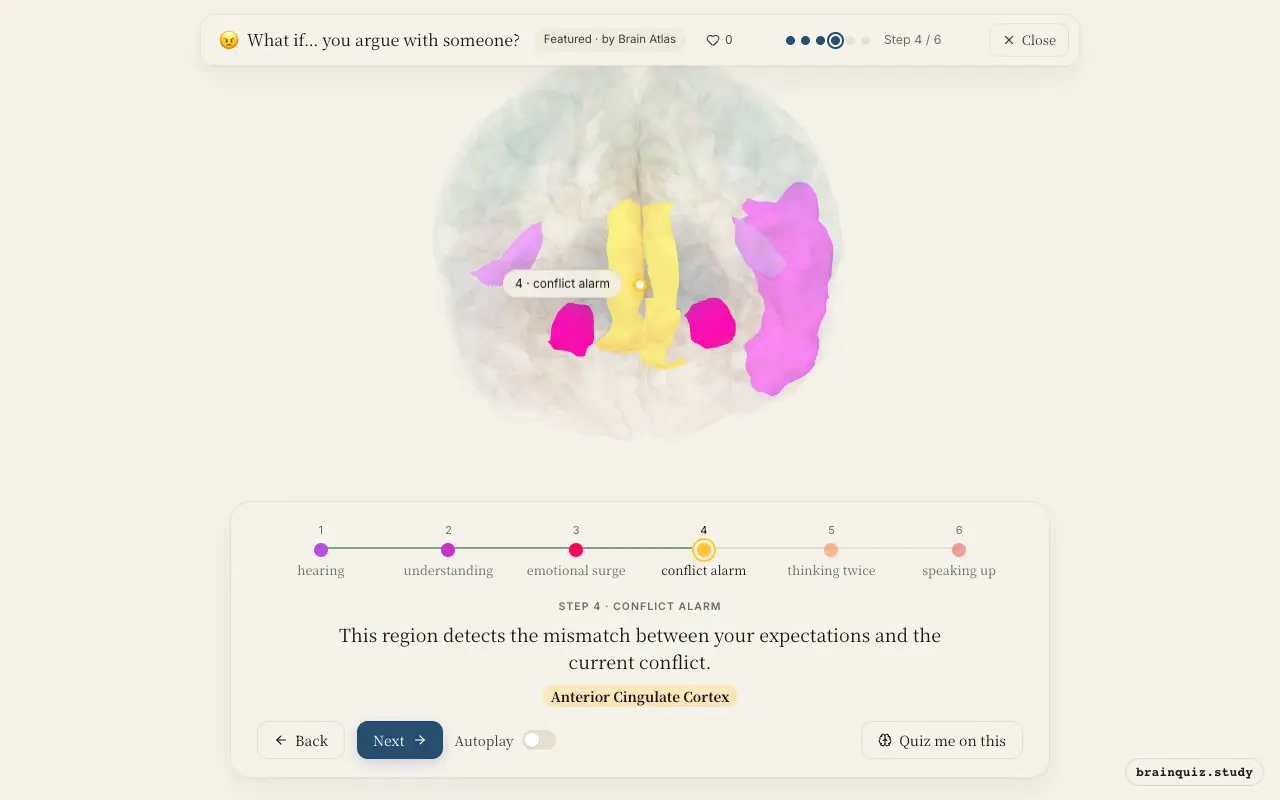
The anterior cingulate cortex monitors for errors and conflict, and it is particularly active when you feel socially rejected or wronged. It signals the need for increased cognitive control, especially when the argument becomes heated.
5. Prefrontal Cortex: thinking twice
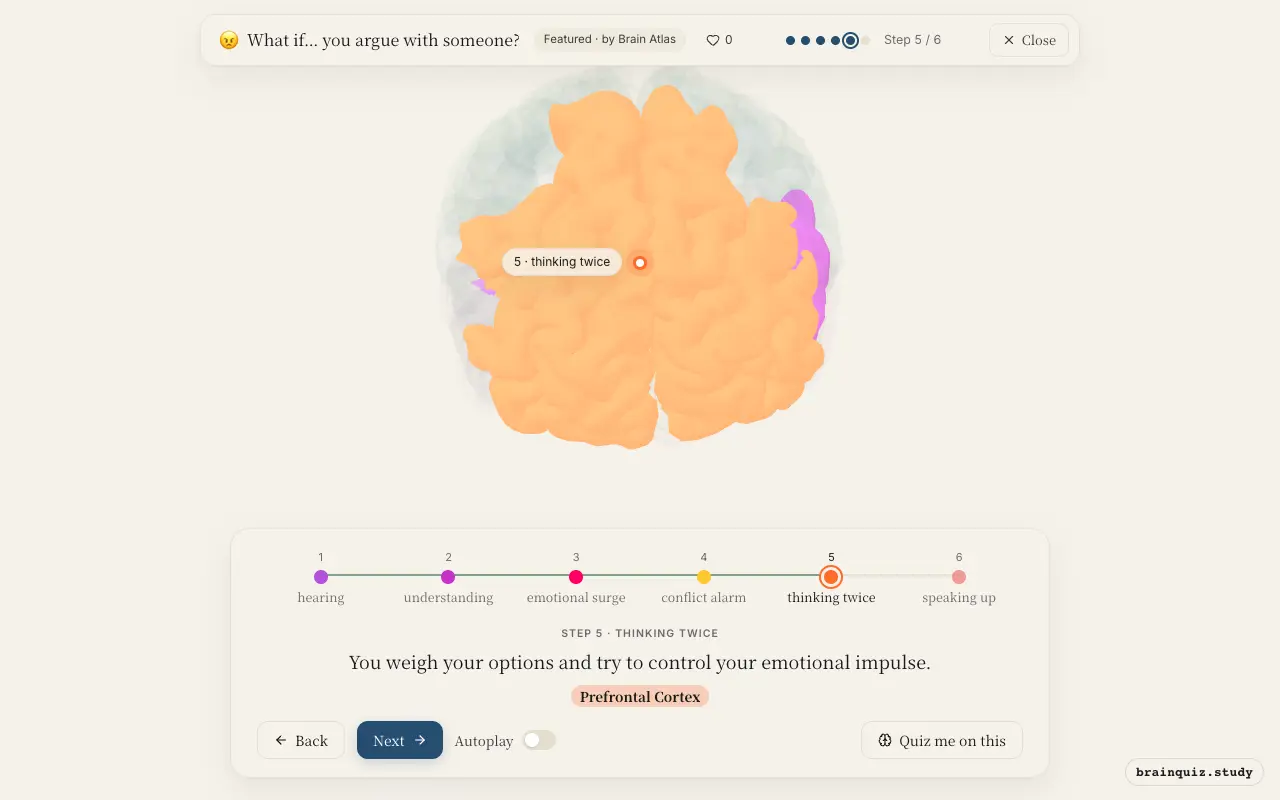
The prefrontal cortex exerts top-down regulation over the amygdala, helping you to consider the consequences of your words. It supports working memory for the argument's points and inhibits the urge to lash out impulsively.
6. Broca's Area: speaking up
Broca's area coordinates the motor programs for speech, turning your intended message into precise articulatory sequences. It sends commands to the motor cortex, which controls the muscles of your mouth, tongue, and vocal cords.
Good to know
- The amygdala's response can be so fast that you may feel anger before you consciously process the insult.
- Chronic arguing raises stress hormones like cortisol, which can impair prefrontal cortex function over time.
- People with stronger prefrontal-amygdala connections tend to regulate emotions better during conflict.
Heated Argument vs. Friendly Disagreement
In a friendly disagreement, the same language areas are active, but the amygdala and anterior cingulate show much lower responses. The prefrontal cortex stays more engaged, keeping the conversation calm and cooperative.
Test yourself
Which brain region first processes the sound of your opponent's voice?
What role does the anterior cingulate cortex play during an argument?
Which region helps you pause and choose a more careful response instead of lashing out?
0 of 3 answered · 0 correct
Simplified: many regions work together at once, and this shows the main players in the order they act.