What happens in your brain when you feel anxious before an exam?
Updated
The amygdala detects the exam as a threat, the hypothalamus triggers the stress response, the locus coeruleus heightens arousal, the prefrontal cortex generates worry, the insula senses bodily arousal, and the anterior cingulate monitors conflict.
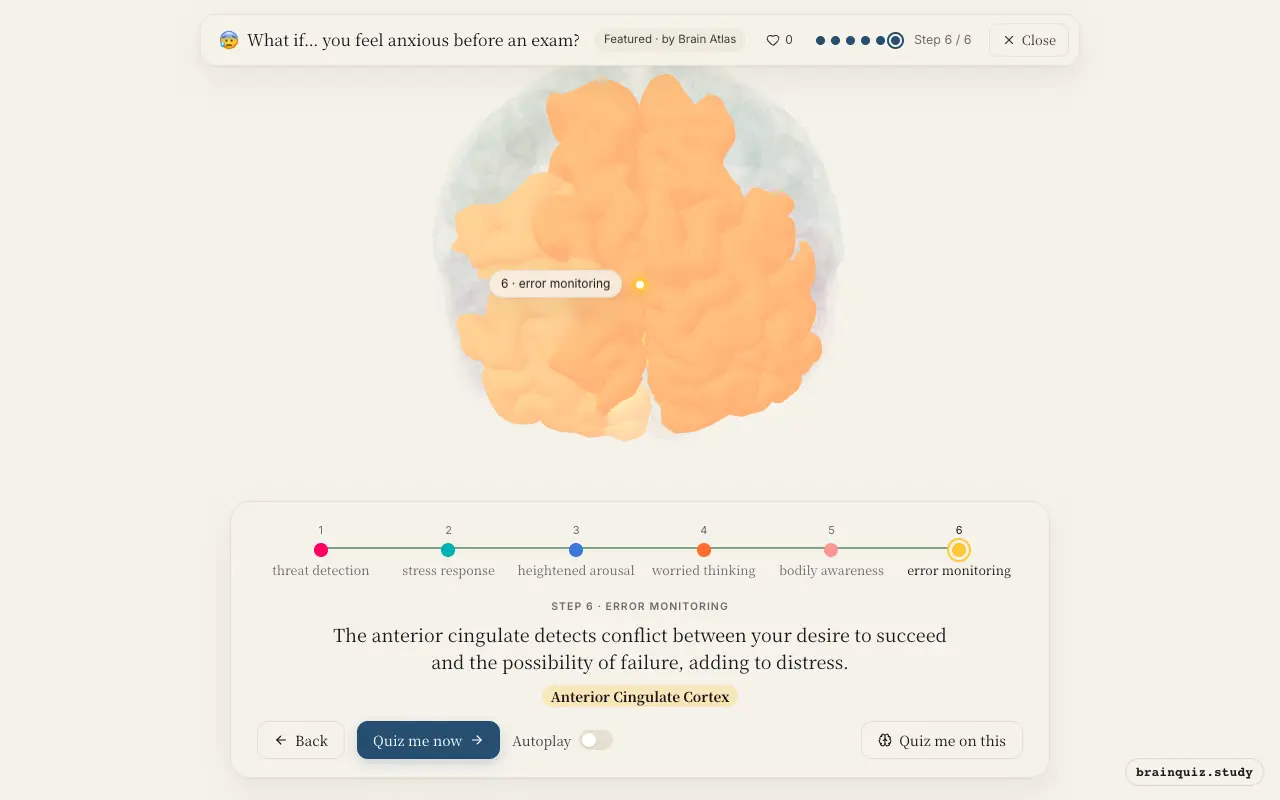
Watch it light up on the 3D brain
Brain regions that light up
| Order | Region | What it does here |
|---|---|---|
| 1 | Amygdala | The amygdala flags the upcoming exam as a potential threat to your goals or self-worth. |
| 2 | Hypothalamus | The hypothalamus activates the sympathetic nervous system and the HPA axis, releasing stress hormones. |
| 3 | Locus Coeruleus | The locus coeruleus floods the brain with norepinephrine, sharpening attention but also increasing vigilance. |
| 4 | Prefrontal Cortex | The prefrontal cortex engages in repetitive worry and attempts to regulate the emotional response, often with limited success. |
| 5 | Insula | The insula perceives your racing heart and sweaty palms, feeding these sensations back into the anxiety loop. |
| 6 | Anterior Cingulate Cortex | The anterior cingulate detects conflict between your desire to succeed and the possibility of failure, adding to distress. |
1. Amygdala: threat detection
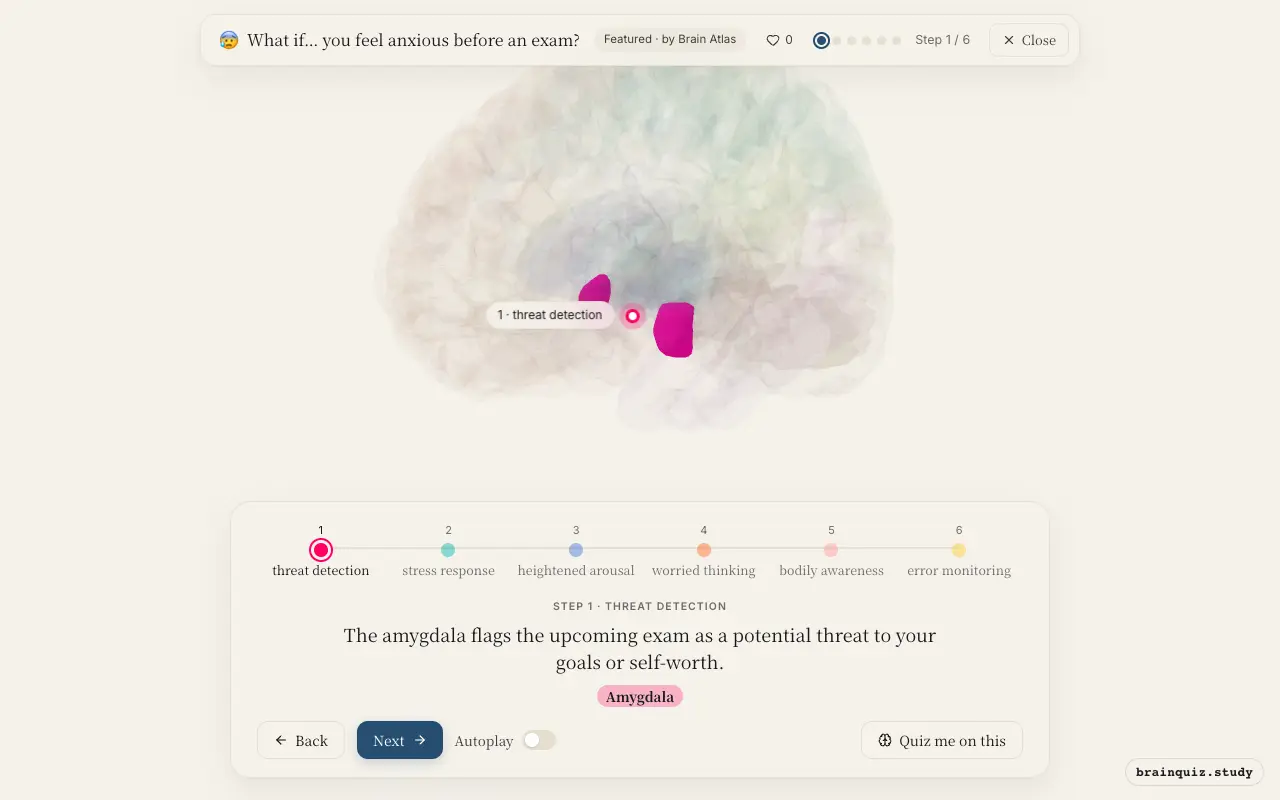
The amygdala rapidly evaluates sensory and contextual cues for emotional salience, especially potential danger. In exam anxiety, it treats the test as a threat, triggering the fear response even though the danger is not physical. This initiates the stress cascade before conscious thought.
2. Hypothalamus: stress response
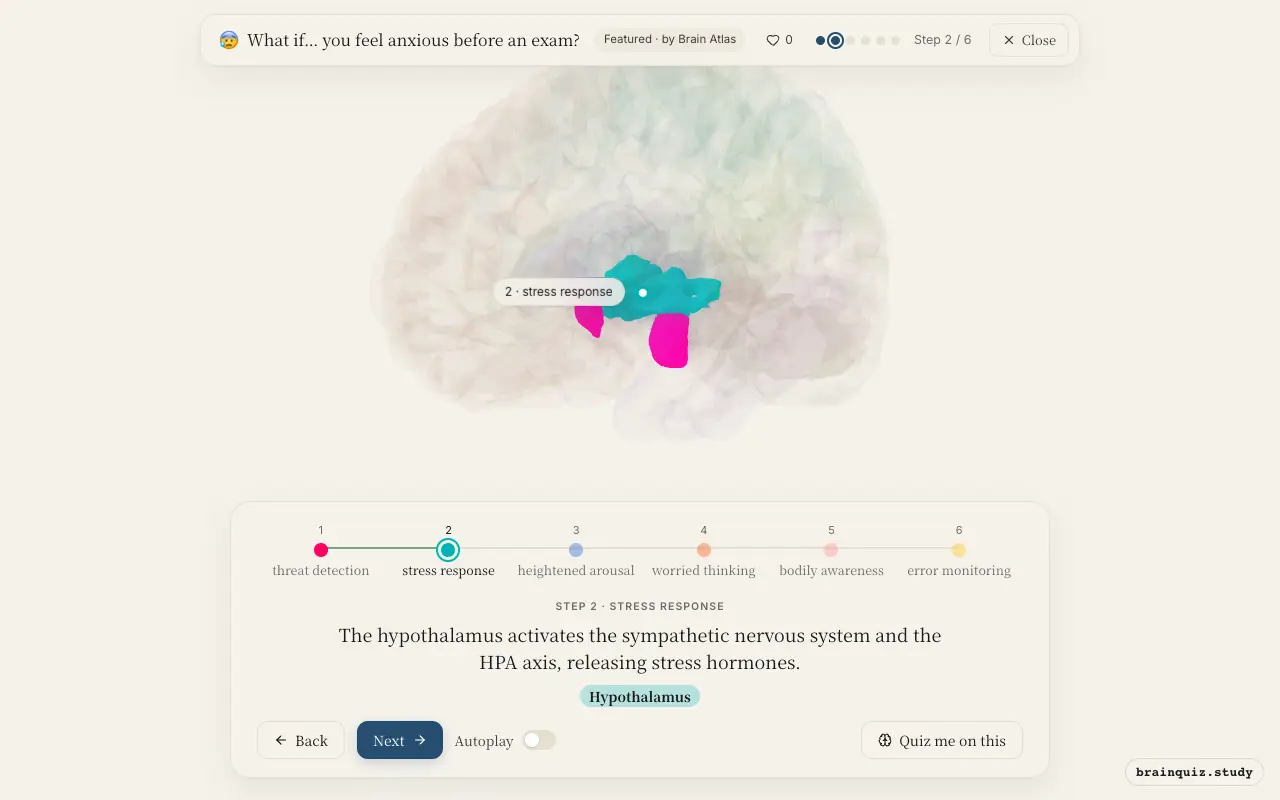
The hypothalamus coordinates the body's stress reaction: it signals the adrenal medulla to release adrenaline and the pituitary to release ACTH, leading to cortisol. This produces the physical symptoms of anxiety like increased heart rate, sweating, and tense muscles, preparing the body for action.
3. Locus Coeruleus: heightened arousal
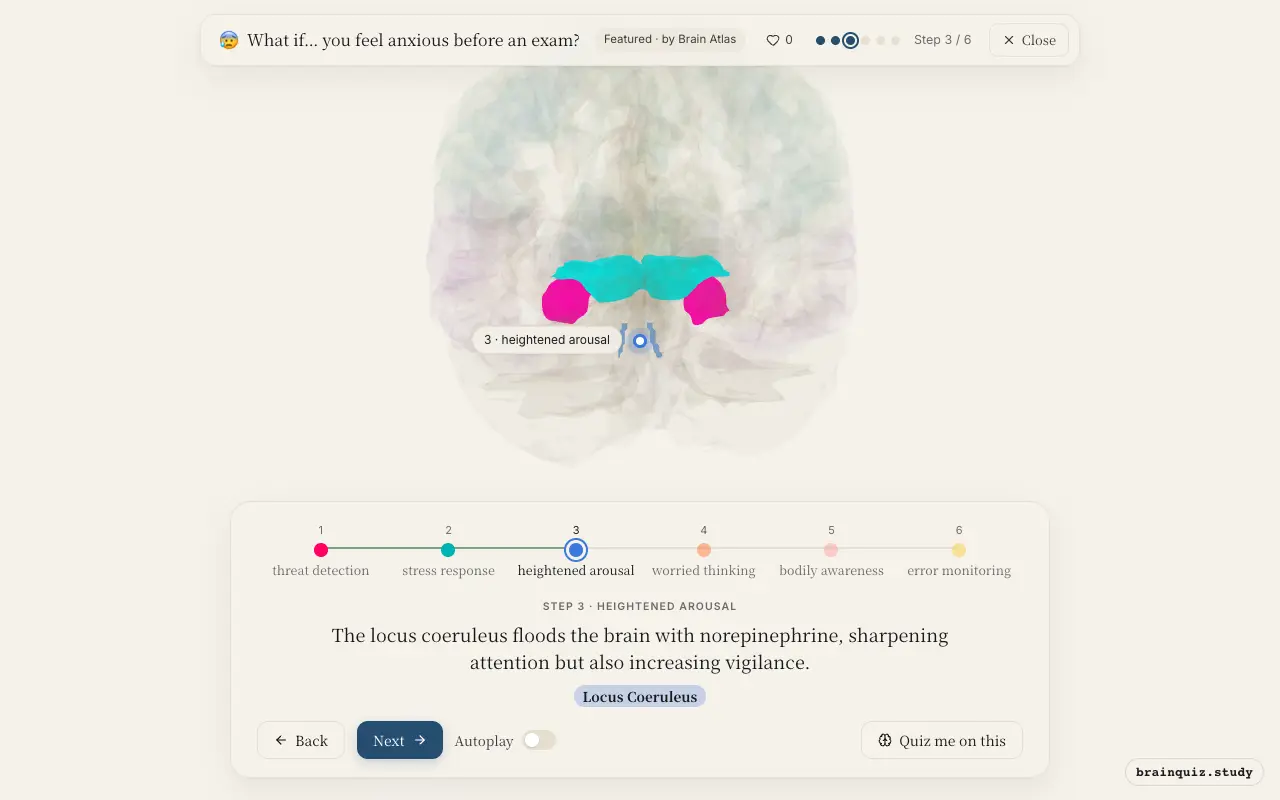
The locus coeruleus is the main source of norepinephrine in the brain. Its activation during anxiety increases arousal, alertness, and sensory processing, which can help focus but also contribute to feelings of jitteriness and hypervigilance. Overactivation impairs cognitive flexibility.
4. Prefrontal Cortex: worried thinking
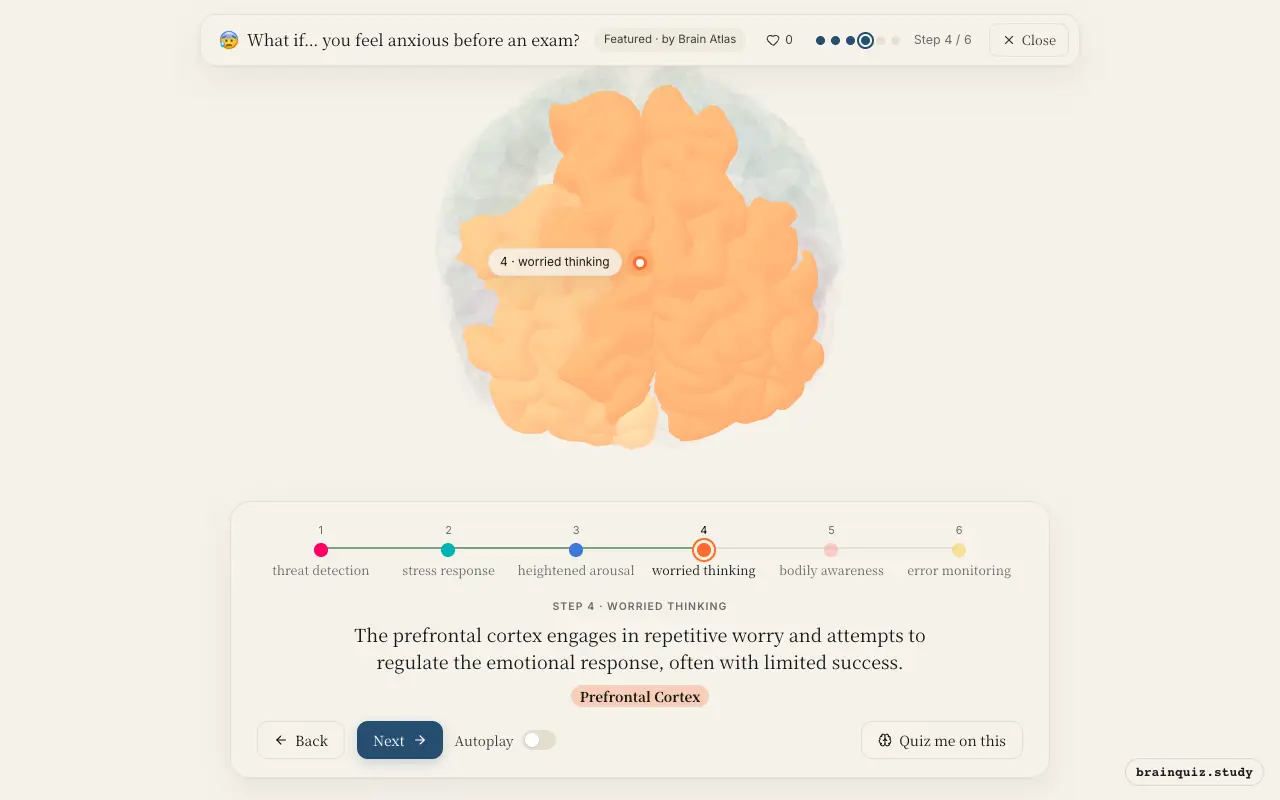
The prefrontal cortex, particularly dorsolateral and ventromedial regions, is involved in cognitive appraisal and emotion regulation. During exam anxiety, it may generate catastrophic thoughts and worries, while its regulatory capacity is reduced by high arousal. This explains why it is hard to 'think straight' when extremely anxious.
5. Insula: bodily awareness
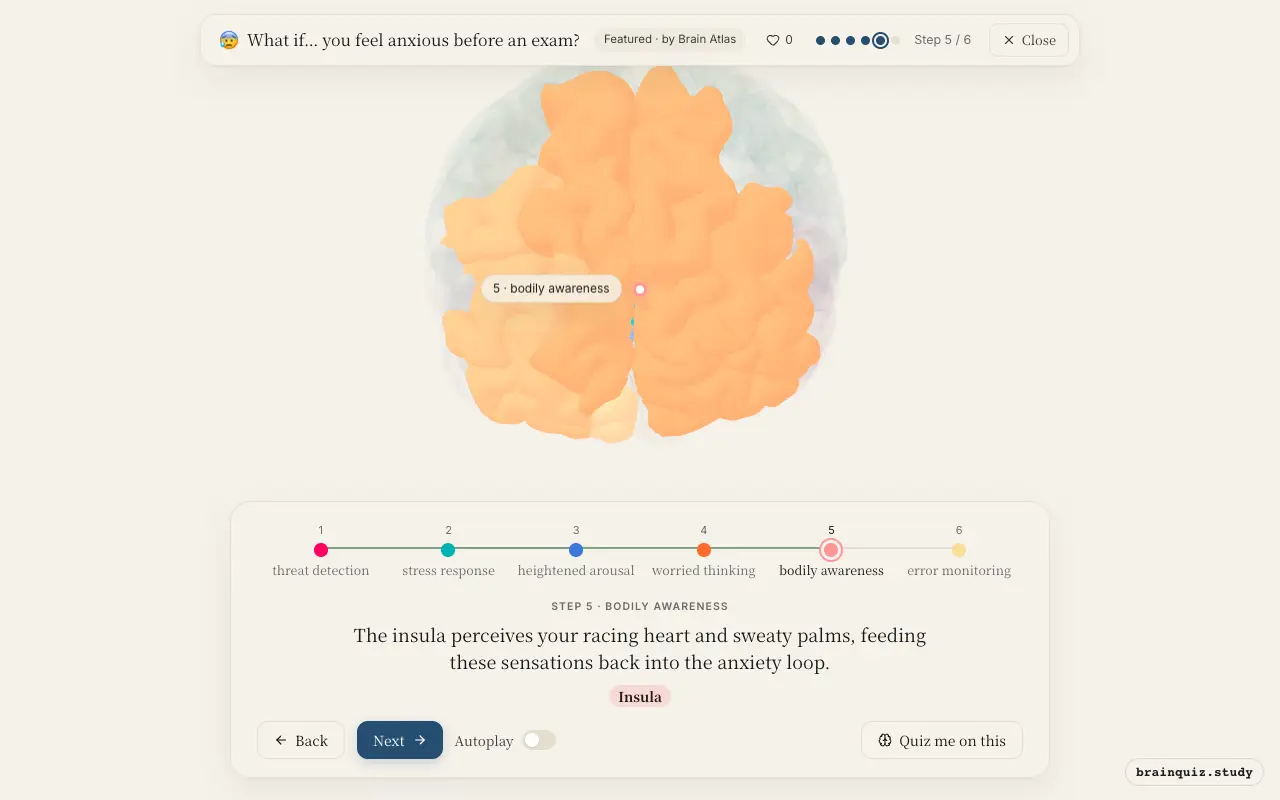
The insula is the primary cortical region for interoception—the sense of the internal state of the body. Heightened signals from the body during stress are interpreted in the insula, making you acutely aware of physical symptoms, which can further amplify anxiety and create a vicious cycle.
6. Anterior Cingulate Cortex: error monitoring
The anterior cingulate cortex monitors for errors, conflicts, and mismatches between goals and outcomes. In exam anxiety, it signals the discrepancy between the desired high performance and the feared poor outcome, contributing to the emotional distress and motivational urgency. It is linked to the 'what if' thinking.
Good to know
- The amygdala can initiate a fear response within milliseconds, before conscious awareness.
- Cortisol released by the HPA axis takes minutes to peak and can impair memory retrieval.
- Chronic exam anxiety is associated with reduced prefrontal regulation of the amygdala.
Exam anxiety vs physical fear
In exam anxiety, the prefrontal cortex and anterior cingulate are heavily engaged in abstract worry and future-oriented thinking, whereas physical fear relies more on rapid amygdala-brainstem pathways with less cortical elaboration. The bodily response is similar, but the cognitive appraisal differs.
Test yourself
Which brain region first flags the exam as a threat?
What role does the insula play in exam anxiety?
How does the prefrontal cortex typically function during high exam anxiety?
0 of 3 answered · 0 correct
Simplified: many regions work together at once, and this shows the main players in the order they act.