What happens in your brain when you feel guilty?
Updated
Guilt recruits the anterior cingulate for conflict detection, the insula for visceral unease, the orbitofrontal cortex for evaluating social harm, and the prefrontal cortex for planning amends.
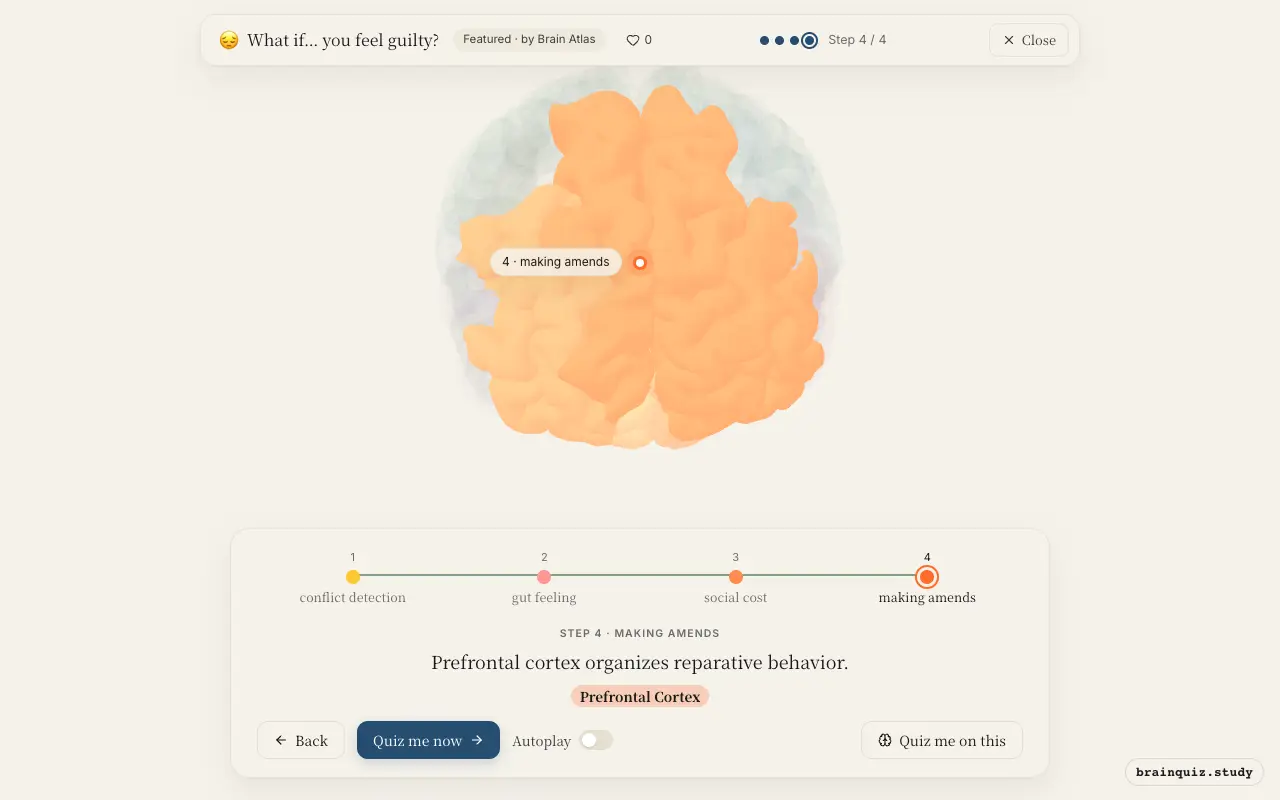
Watch it light up on the 3D brain
Brain regions that light up
| Order | Region | What it does here |
|---|---|---|
| 1 | Anterior Cingulate Cortex | The anterior cingulate flags a mismatch between your action and internal rules. |
| 2 | Insula | The insula generates the visceral discomfort of guilt. |
| 3 | Orbitofrontal Cortex | Orbitofrontal cortex weighs how your action harmed others. |
| 4 | Prefrontal Cortex | Prefrontal cortex organizes reparative behavior. |
1. Anterior Cingulate Cortex: conflict detection
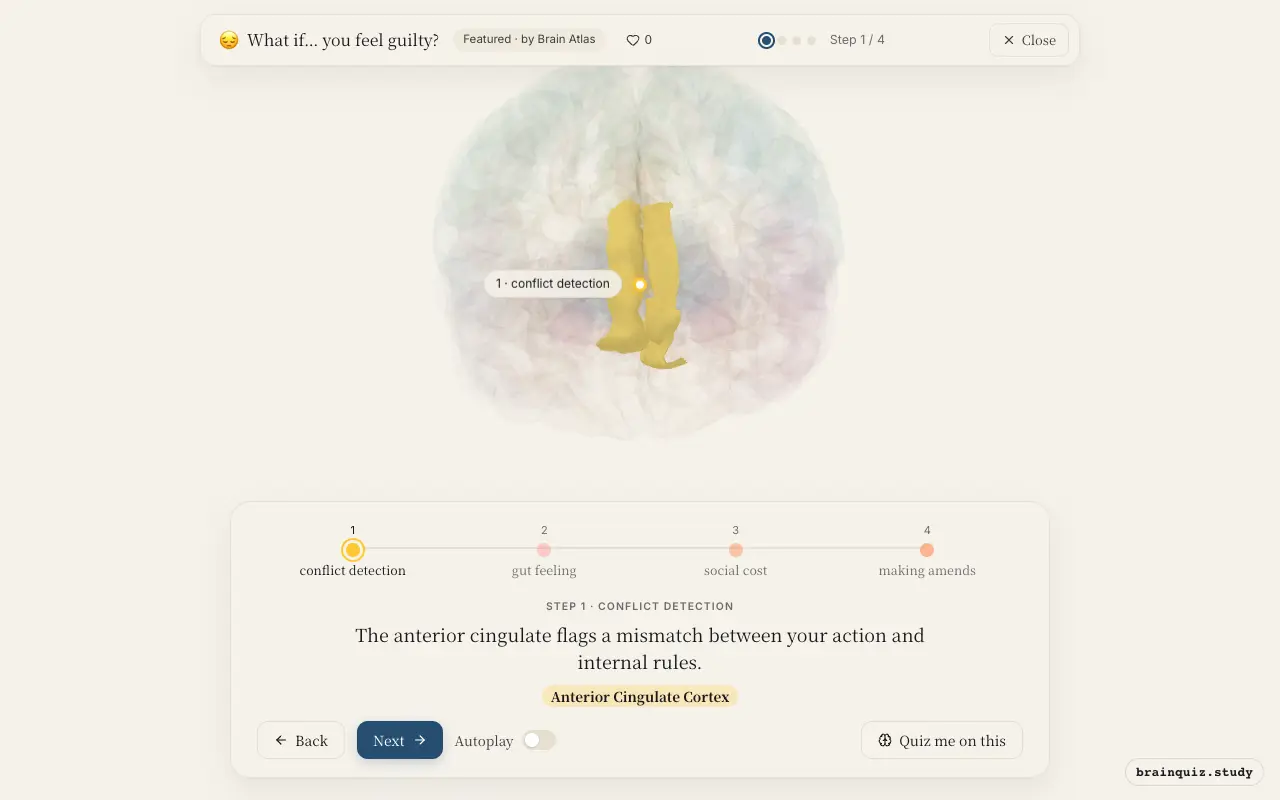
This region monitors errors and conflicts between expected and actual outcomes. In guilt, it detects that your behavior violated a moral or social standard, initiating the emotional response. Studies suggest its activity correlates with the intensity of guilt feelings.
2. Insula: gut feeling
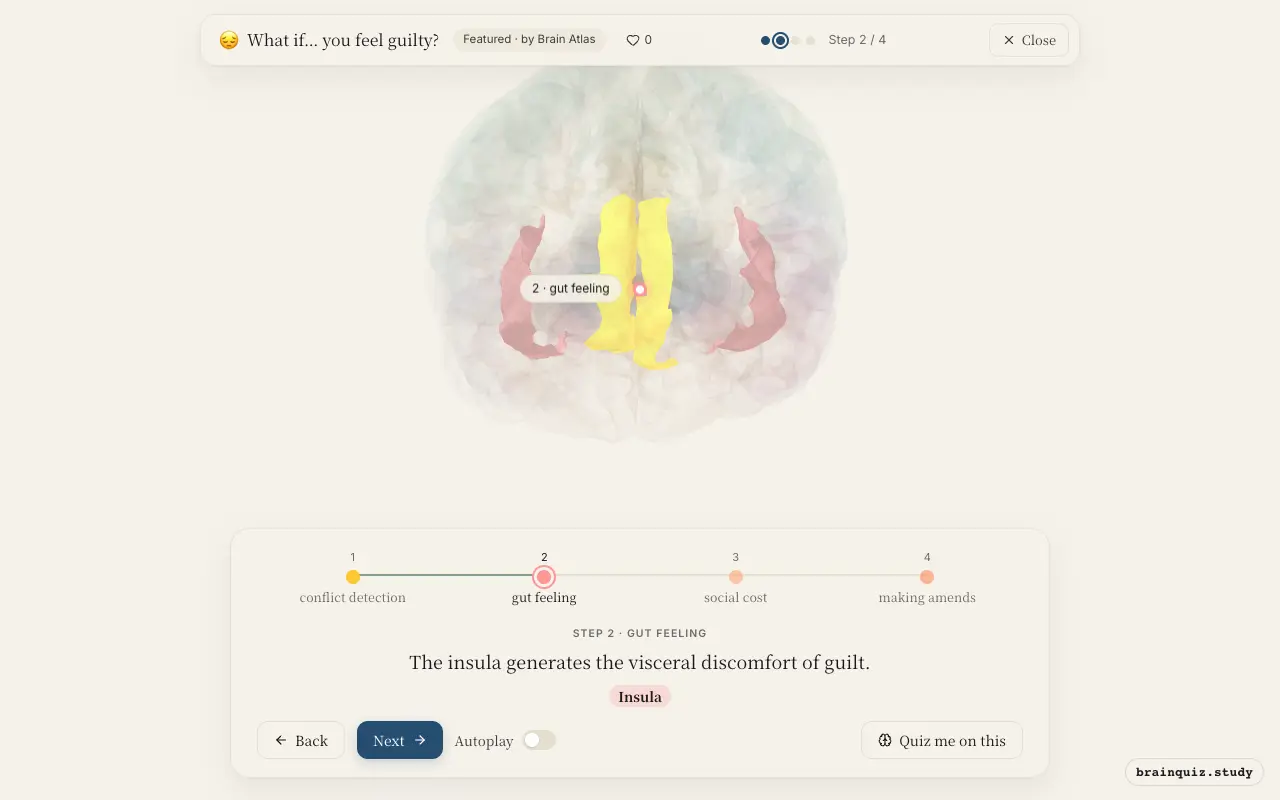
The insula processes interoceptive signals from the body, creating feelings like nausea or tightness in the chest. It also responds to disgust and empathy, linking physical sensations to the awareness that you caused harm. This bodily feedback reinforces the negative emotional state.
3. Orbitofrontal Cortex: social cost
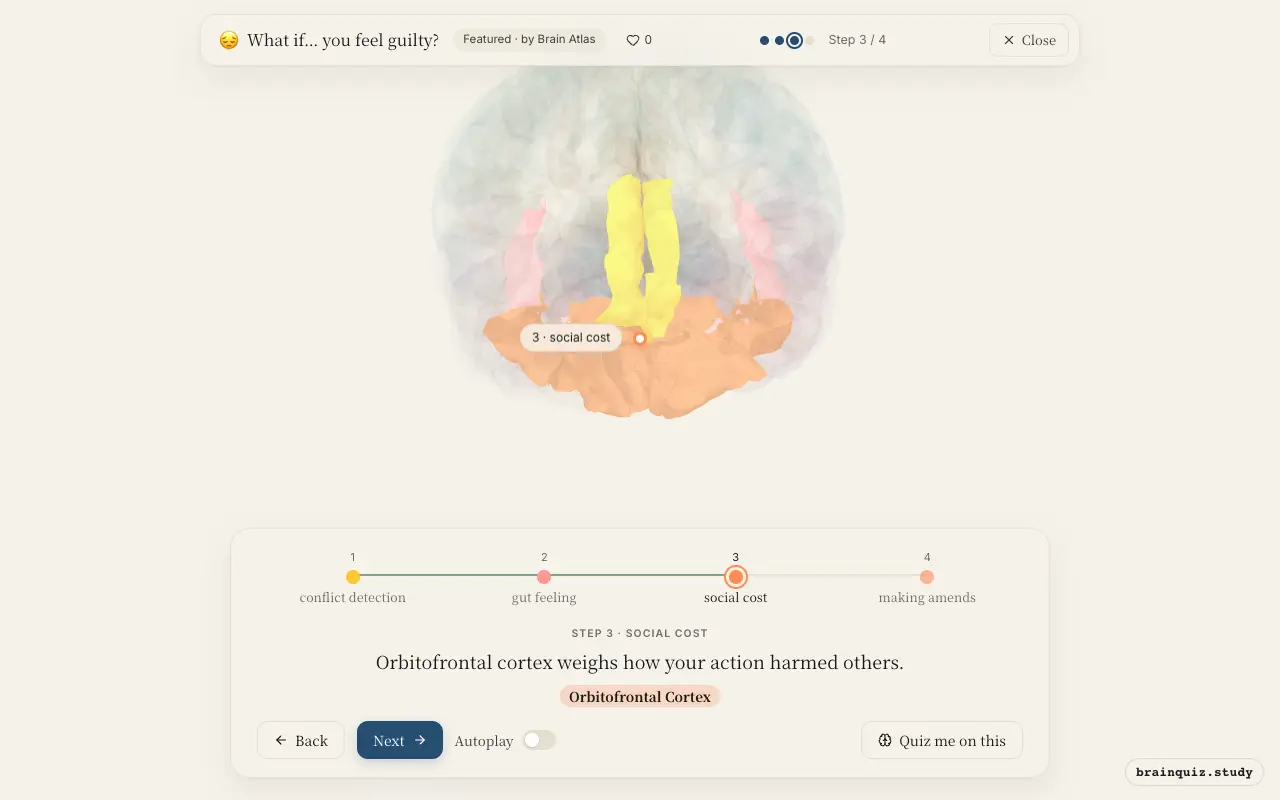
This region evaluates the value and consequences of actions in social contexts. It helps you understand that your behavior disappointed or hurt someone, integrating emotional and social information. Damage to this area can impair the ability to feel appropriate guilt.
4. Prefrontal Cortex: making amends
The prefrontal cortex supports executive functions like planning, decision-making, and impulse control. It shifts focus from the negative feeling to constructive action, such as apologizing or correcting the mistake. This top-down regulation helps resolve guilt adaptively.
Good to know
- Guilt is associated with increased activity in the anterior cingulate cortex and anterior insula.
- Unlike shame, which involves the self, guilt focuses on a specific action and may engage the orbitofrontal cortex more strongly.
- Lesions to the orbitofrontal cortex can lead to reduced guilt and impaired moral reasoning.
Guilt vs Shame
Some studies suggest guilt targets a specific action and activates the anterior cingulate and orbitofrontal cortex, while shame targets the whole self and engages the posterior cingulate and medial prefrontal cortex. Guilt often motivates repair, while shame tends to trigger withdrawal.
Test yourself
Which brain region is most directly involved in detecting the conflict between your action and moral standards during guilt?
The visceral discomfort of guilt, such as a churning stomach, is primarily generated by which region?
Damage to the orbitofrontal cortex would most likely impair which aspect of guilt?
0 of 3 answered · 0 correct
Simplified: many regions work together at once, and this shows the main players in the order they act.