What happens in your brain when you feel left out?
Updated
Feeling left out activates your anterior cingulate cortex to register social pain, your insula to create a bodily ache, and your prefrontal cortex to try to regulate the distress.
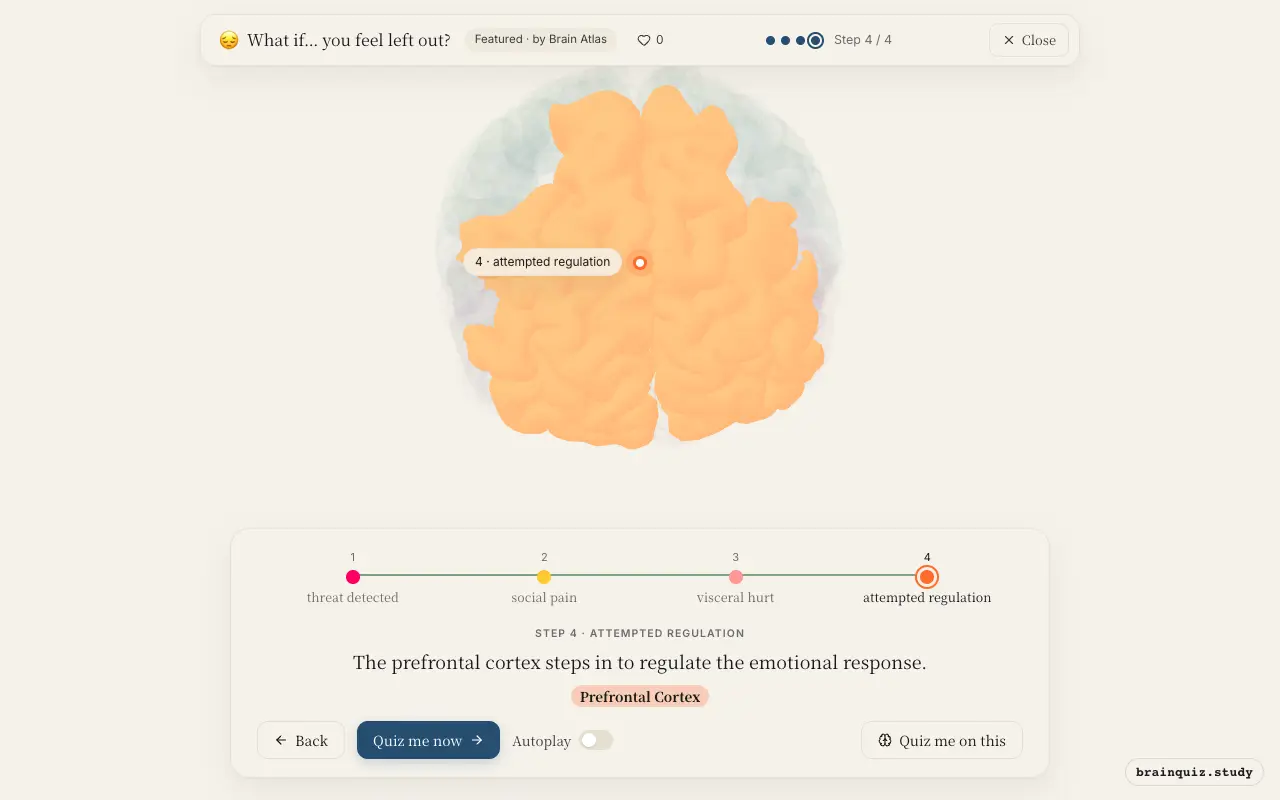
Watch it light up on the 3D brain
Brain regions that light up
| Order | Region | What it does here |
|---|---|---|
| 1 | Amygdala | The amygdala may flag the exclusion as a potential social threat. |
| 2 | Anterior Cingulate Cortex | The anterior cingulate cortex registers the sting of being left out. |
| 3 | Insula | The insula translates the social pain into a bodily feeling of distress. |
| 4 | Prefrontal Cortex | The prefrontal cortex steps in to regulate the emotional response. |
1. Amygdala: threat detected
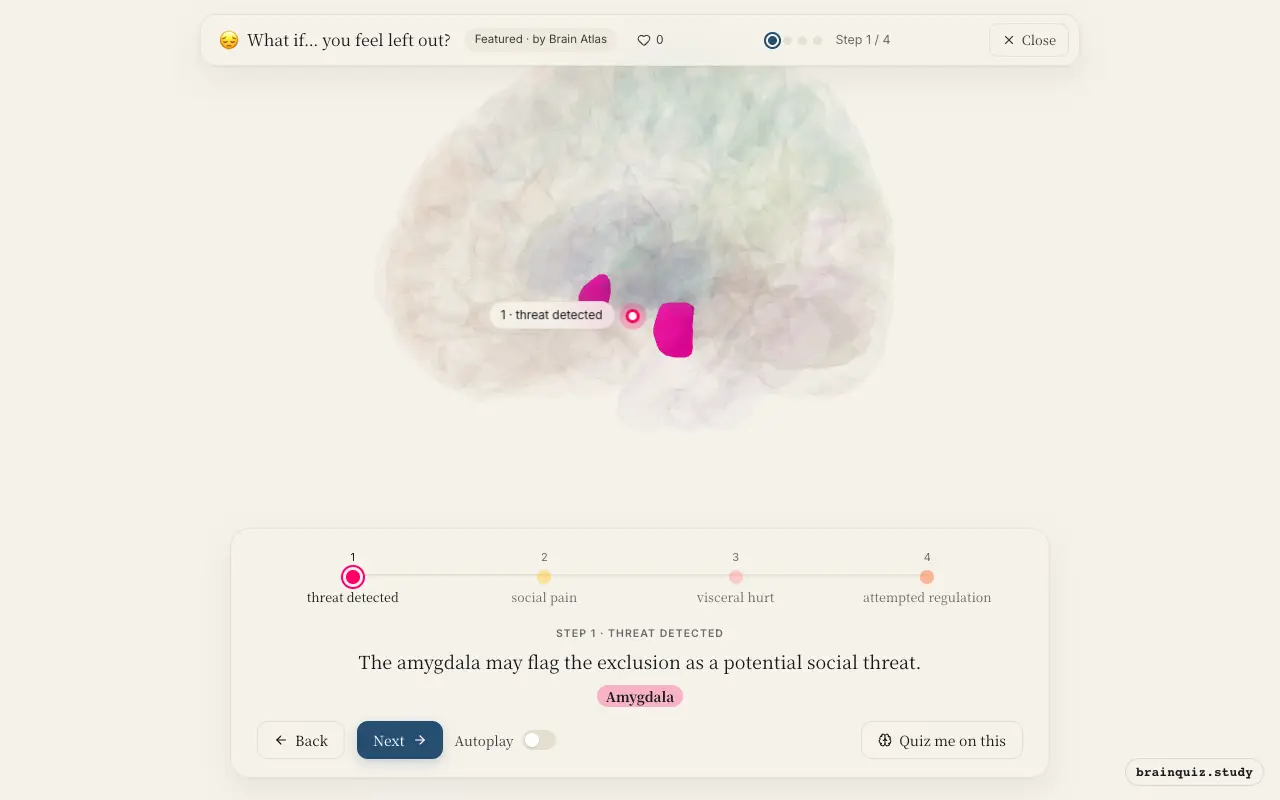
The amygdala is sensitive to socially relevant cues, especially those that signal potential rejection or harm. It rapidly evaluates the social environment and triggers an emotional response. This early alert prepares the brain for the distress of being excluded.
2. Anterior Cingulate Cortex: social pain
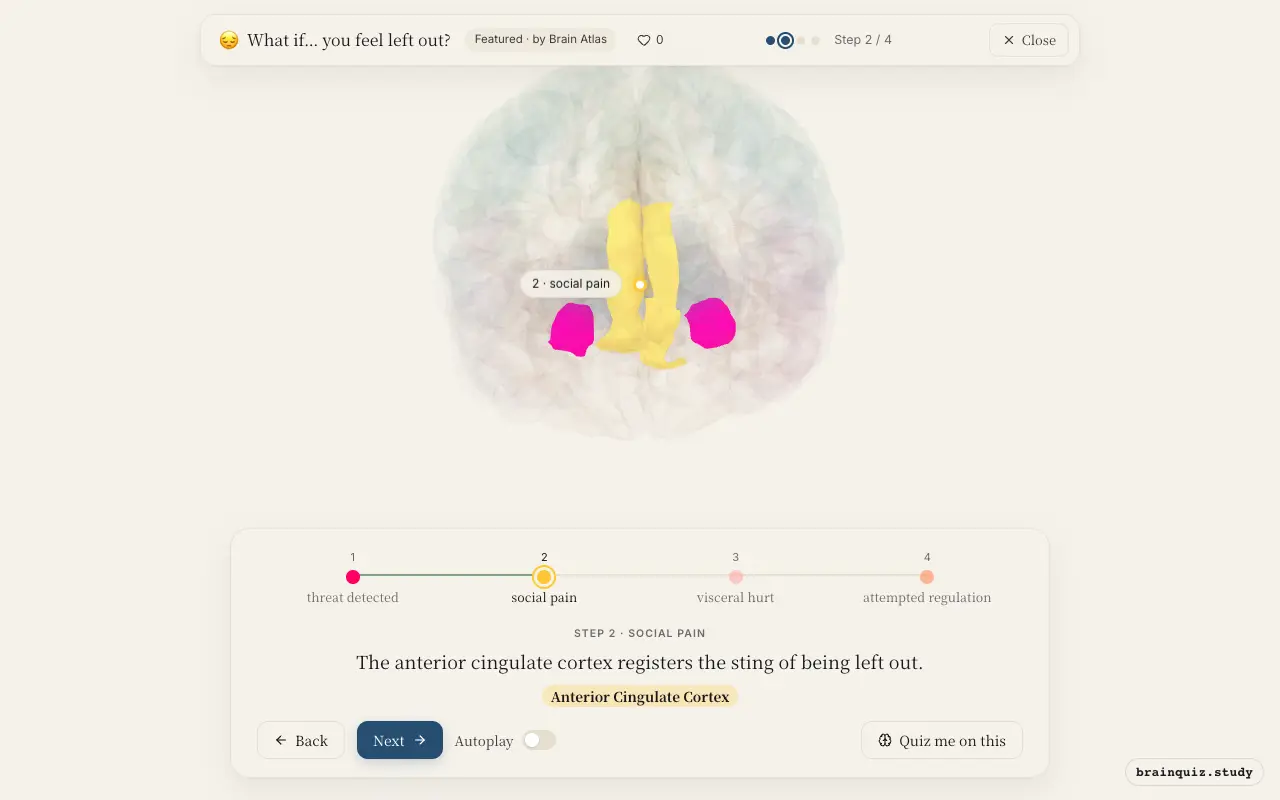
The dorsal anterior cingulate cortex is consistently activated during social exclusion, overlapping with the network for physical pain. It signals the unpleasantness of social disconnection, essentially coding the 'hurt' of being excluded. This region's activity is thought to motivate the need to restore social bonds.
3. Insula: visceral hurt
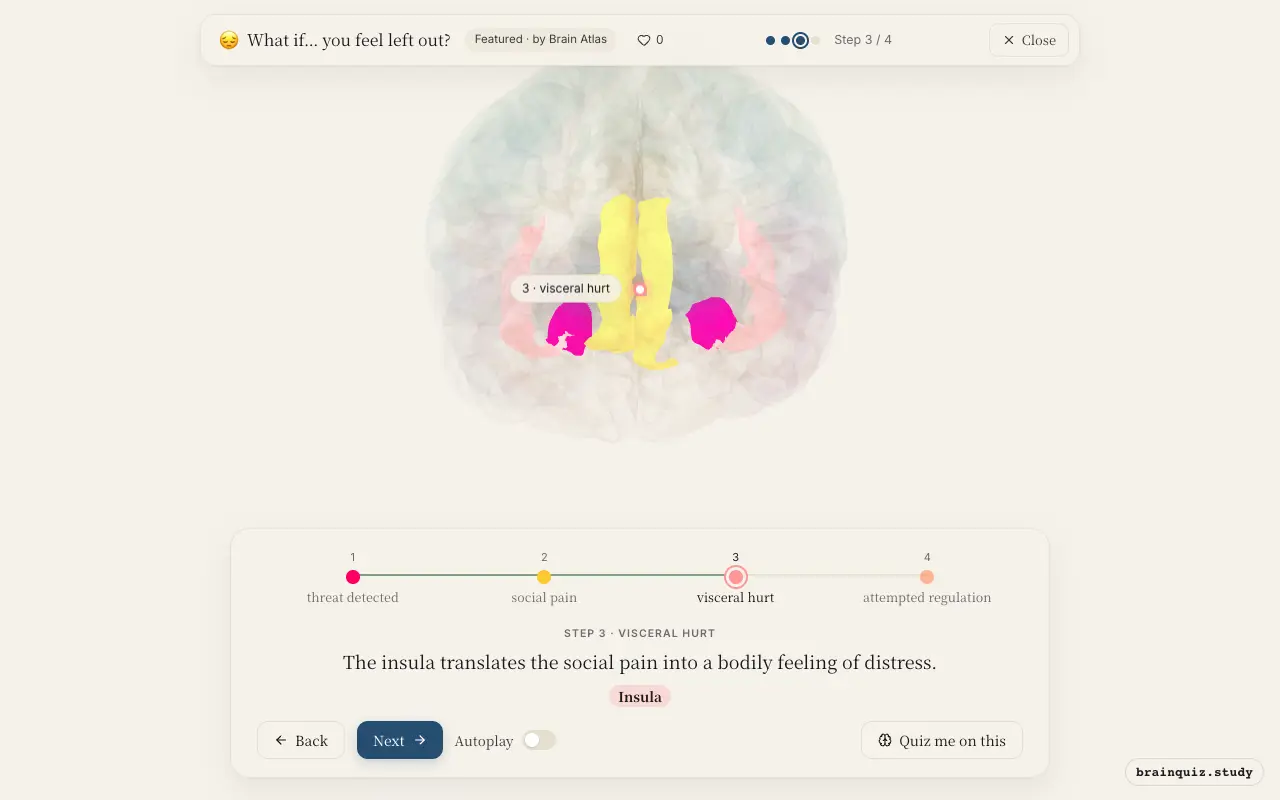
The insula integrates internal bodily states with emotional experience, giving rise to the 'gut feeling' of being left out. It maps the physiological reactions—like a racing heart or a sinking stomach—that accompany social rejection. This interoceptive awareness makes the emotional pain feel physically real.
4. Prefrontal Cortex: attempted regulation
The prefrontal cortex, particularly the dorsolateral and ventrolateral regions, works to reappraise the situation and dampen the negative feelings. It may help you rationalize the exclusion or plan a coping strategy. Effective regulation depends on the strength of prefrontal connections with the emotional limbic areas.
Good to know
- Social exclusion activates overlapping brain regions as physical pain, especially the dorsal anterior cingulate cortex and anterior insula.
- The intensity of ACC activation during exclusion correlates with self-reported distress; the more it lights up, the worse you feel.
- Stronger functional connectivity between the prefrontal cortex and amygdala is associated with better emotion regulation.
Social vs Physical Pain
Both social rejection and physical pain activate the dorsal anterior cingulate cortex and insula. However, physical pain additionally recruits the somatosensory cortex for localized sensation, while social pain may involve greater prefrontal regulation. This overlap helps explain why exclusion can feel as agonizing as a bodily injury.
Test yourself
Which brain region is most consistently activated during social exclusion?
The insula's role in feeling left out is to:
What does the prefrontal cortex do when you feel left out?
0 of 3 answered · 0 correct
Simplified: many regions work together at once, and this shows the main players in the order they act.