What happens in your brain when you feel lonely?
Updated
Loneliness activates the anterior cingulate cortex for social pain, the insula for bodily awareness of distress, the amygdala for threat detection, and the prefrontal cortex for attempts to regulate emotion. The posterior cingulate cortex fuels self-referential rumination.
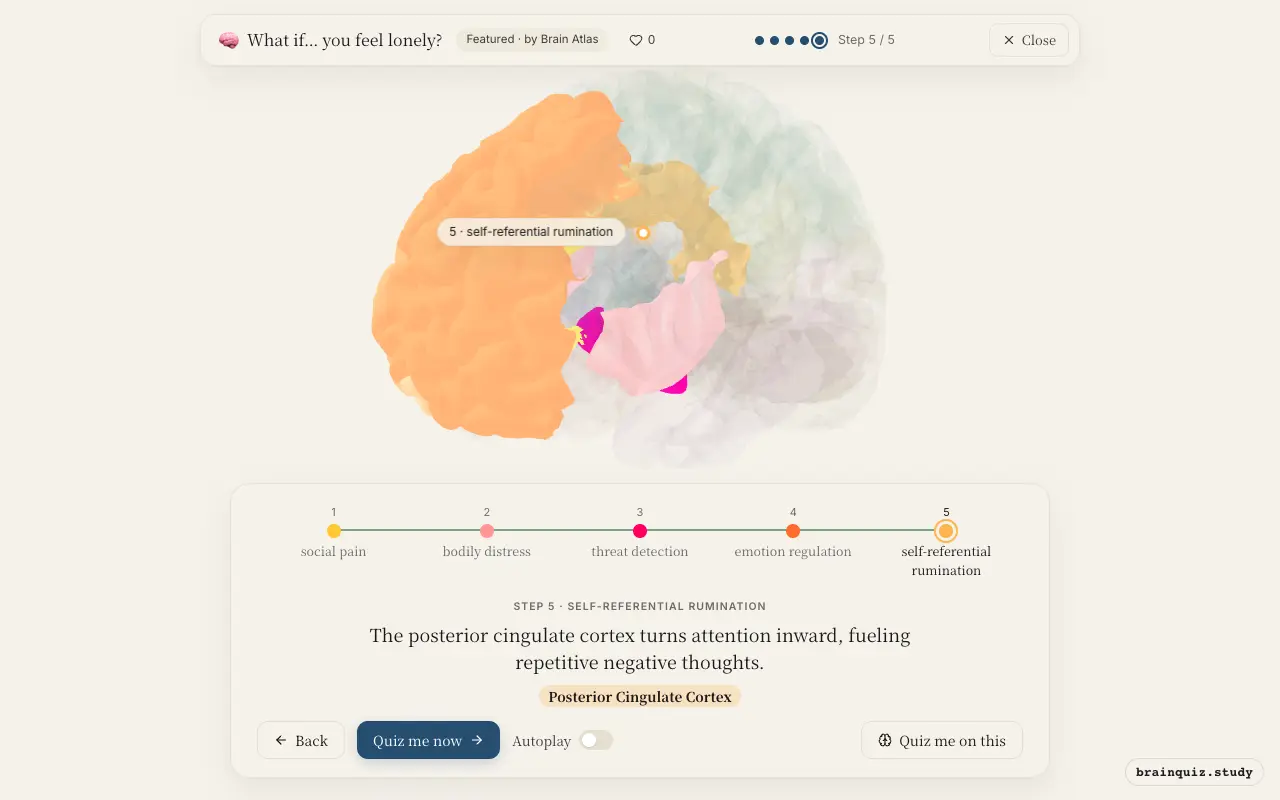
Watch it light up on the 3D brain
Brain regions that light up
| Order | Region | What it does here |
|---|---|---|
| 1 | Anterior Cingulate Cortex | The anterior cingulate cortex fires, signalling the ache of social disconnection. |
| 2 | Insula | The insula registers unpleasant bodily feelings that come with loneliness. |
| 3 | Amygdala | The amygdala becomes more reactive, making social cues seem threatening. |
| 4 | Prefrontal Cortex | The prefrontal cortex tries to regulate the emotional response but often struggles. |
| 5 | Posterior Cingulate Cortex | The posterior cingulate cortex turns attention inward, fueling repetitive negative thoughts. |
1. Anterior Cingulate Cortex: social pain
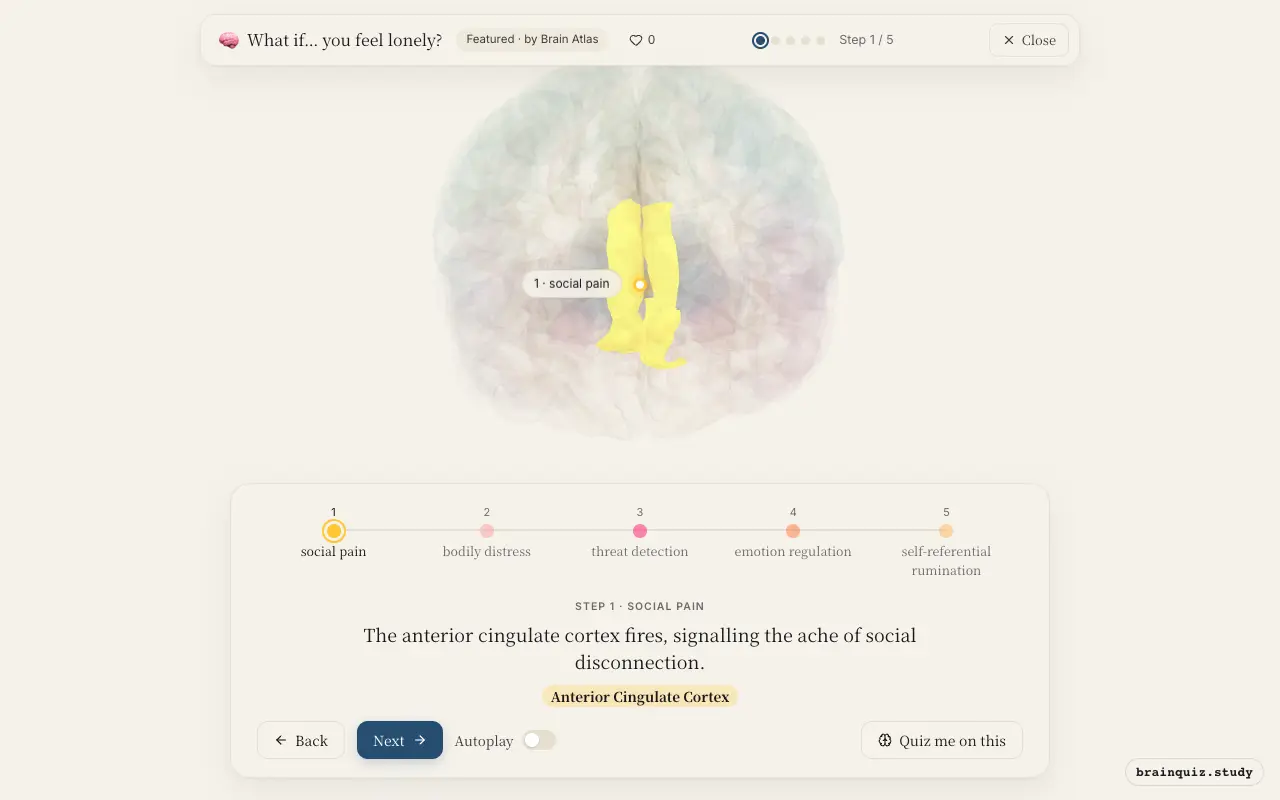
This region processes physical and social pain, and loneliness is thought to trigger it because social exclusion threatens survival. It may also monitor mismatches between expected and actual social contact, contributing to distress.
2. Insula: bodily distress
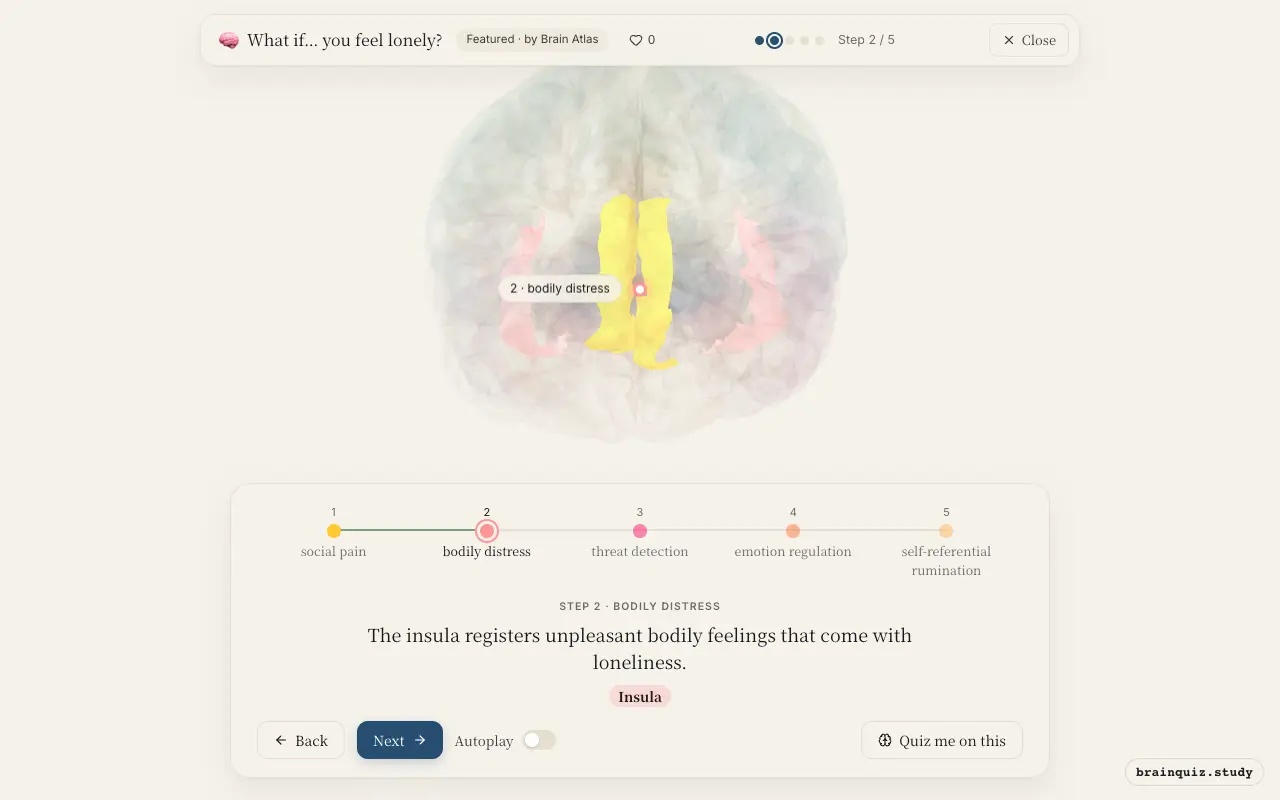
The insula integrates interoceptive signals from the body, making you aware of a heavy chest or stomach knot. It contributes to the emotional experience of loneliness by linking physical sensations to the feeling of isolation.
3. Amygdala: threat detection
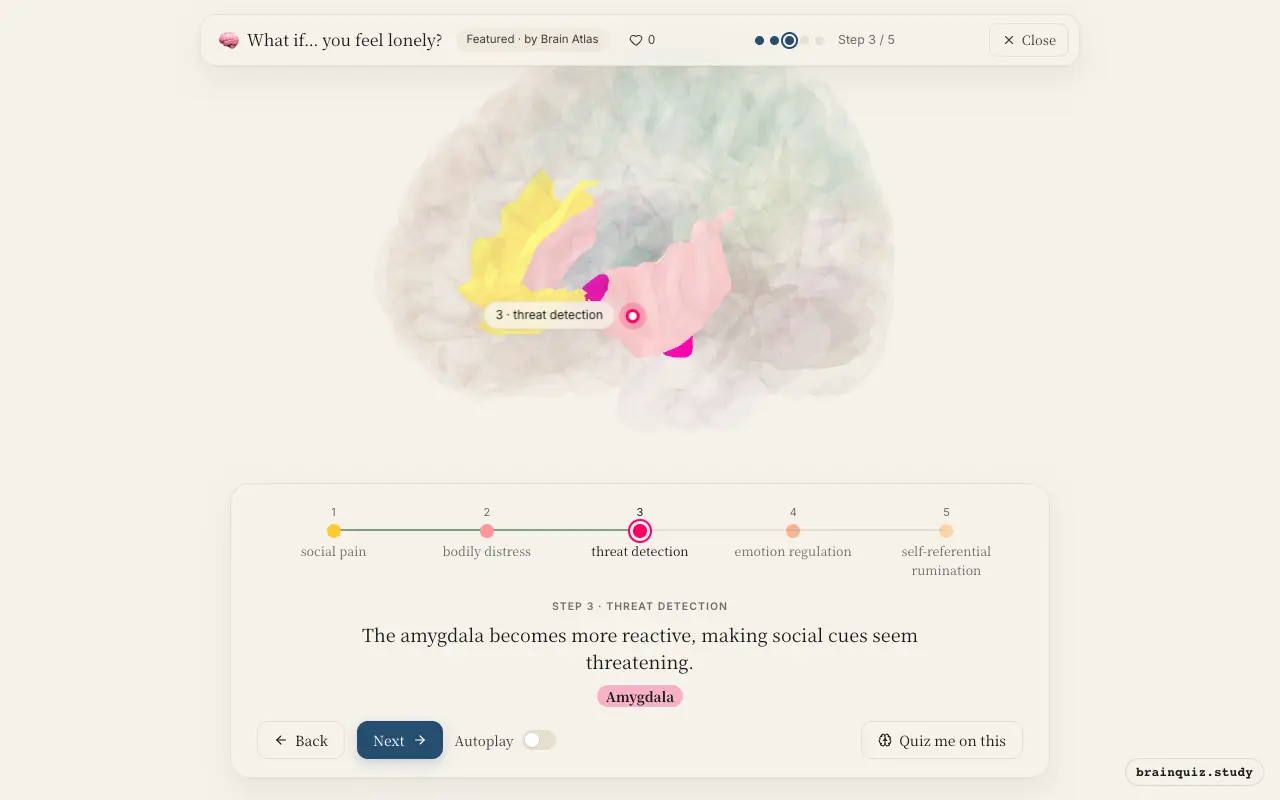
Lonely individuals may show heightened amygdala responses to negative social stimuli, increasing vigilance for rejection or hostility. This can create a vicious cycle where perceived threats further discourage social approach.
4. Prefrontal Cortex: emotion regulation
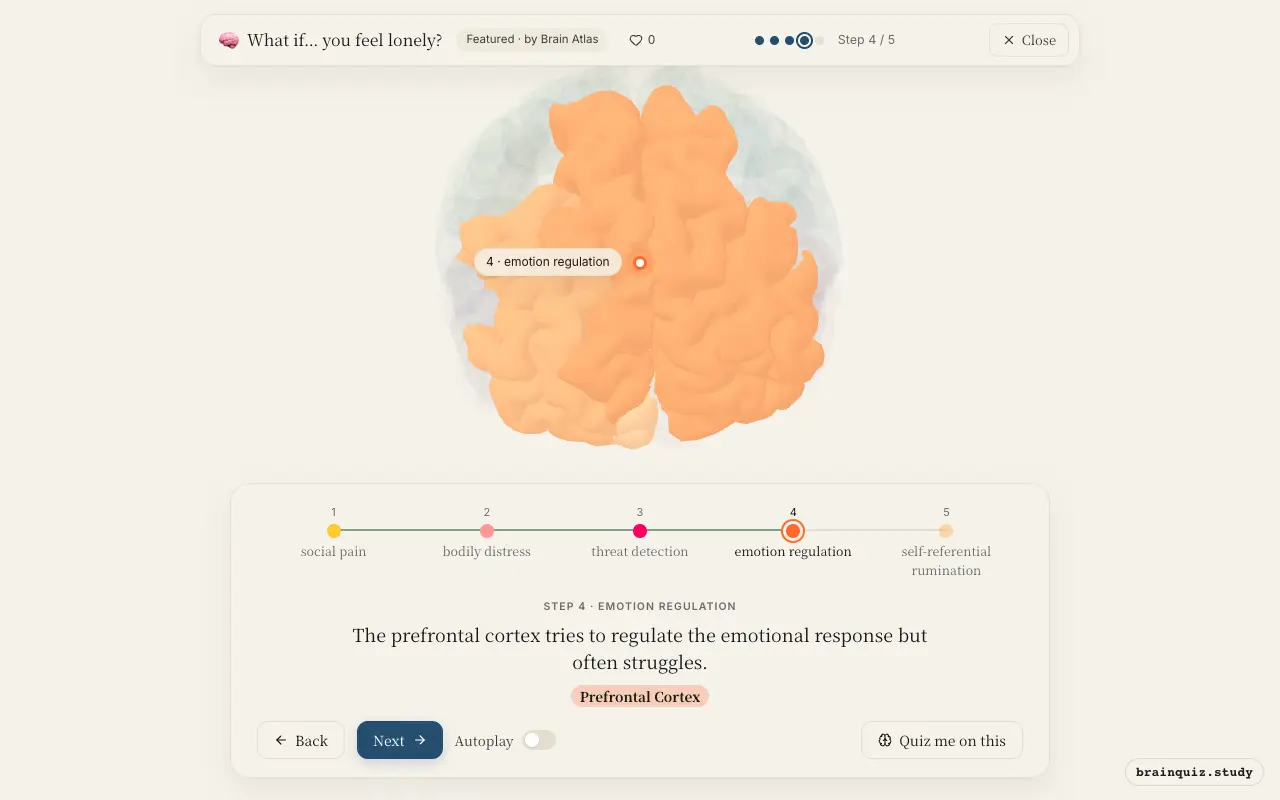
Loneliness can impair prefrontal control over emotional areas, reducing the ability to reappraise negative feelings or inhibit rumination. This may explain why chronic loneliness feels overwhelming and hard to shake.
5. Posterior Cingulate Cortex: self-referential rumination
As a hub of the default mode network, the posterior cingulate is active during self-focused thinking and autobiographical memory. Loneliness is linked to increased default mode activity, which may promote rumination about one's social deficits.
Good to know
- Loneliness is associated with altered white matter integrity in brain regions involved in social cognition.
- The brain's response to loneliness overlaps with that of physical pain, supporting the 'social pain' theory.
- Chronic loneliness can increase cortisol levels, which may damage hippocampal neurons over time.
Loneliness vs. Social Rejection
Social rejection triggers a sharp, acute response in the anterior cingulate and insula, similar to physical pain, but it resolves quickly. Loneliness is a chronic state with heightened default mode network activity and prefrontal dysregulation, leading to persistent rumination and hypervigilance rather than a brief pain spike.
Test yourself
Which brain region is most directly associated with the 'social pain' of loneliness?
What role does the posterior cingulate cortex play in loneliness?
Loneliness is thought to impair the function of which region responsible for emotion regulation?
0 of 3 answered · 0 correct
Simplified: many regions work together at once, and this shows the main players in the order they act.