What happens in your brain when you feel proud?
Updated
When you feel proud, your prefrontal cortex evaluates the achievement, the orbitofrontal cortex tags it as rewarding, the nucleus accumbens receives dopamine for pleasure, the insula creates the bodily feeling, and the posterior cingulate links it to your self-concept.
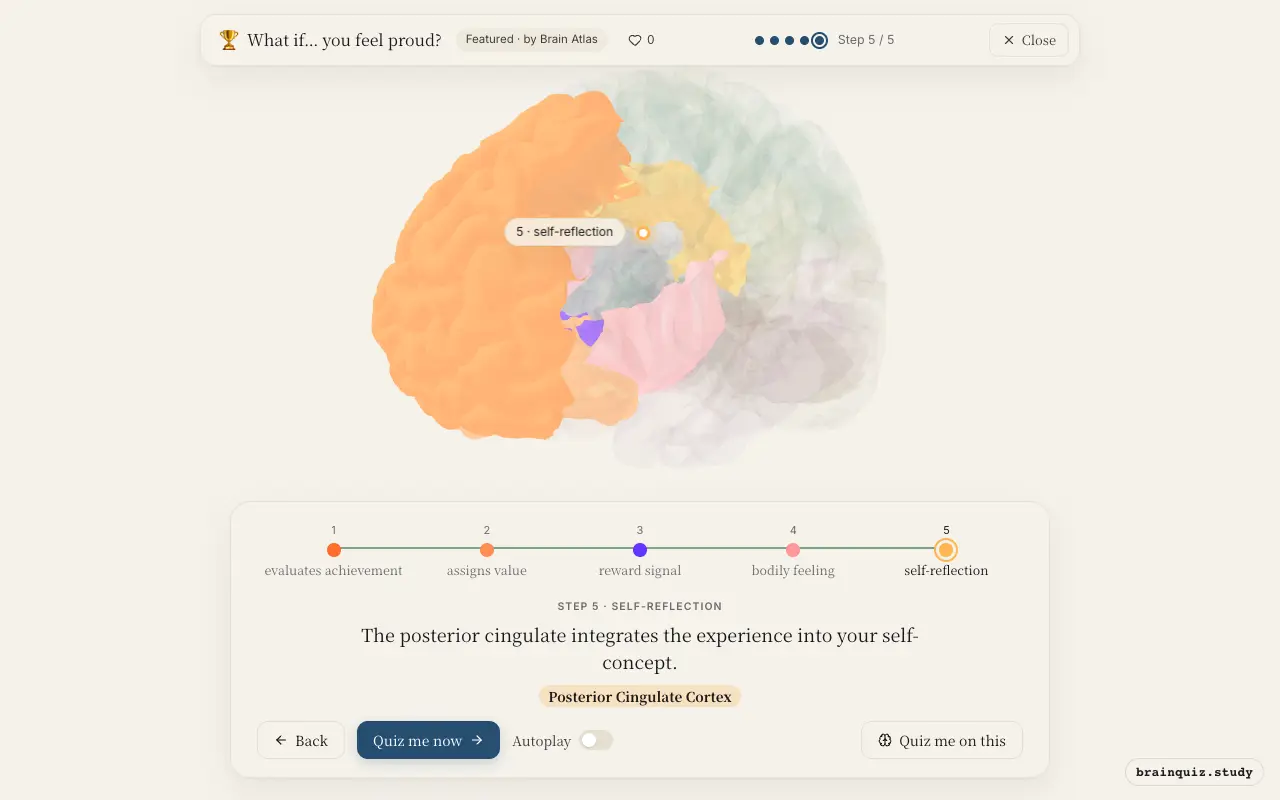
Watch it light up on the 3D brain
Brain regions that light up
| Order | Region | What it does here |
|---|---|---|
| 1 | Prefrontal Cortex | Your prefrontal cortex compares the outcome to your goals and standards. |
| 2 | Orbitofrontal Cortex | The orbitofrontal cortex tags the achievement as rewarding and desirable. |
| 3 | Nucleus Accumbens | The nucleus accumbens receives dopamine, creating pleasure and motivation. |
| 4 | Insula | Your insula generates the physical sensations of pride, like a warm chest. |
| 5 | Posterior Cingulate Cortex | The posterior cingulate integrates the experience into your self-concept. |
1. Prefrontal Cortex: evaluates achievement
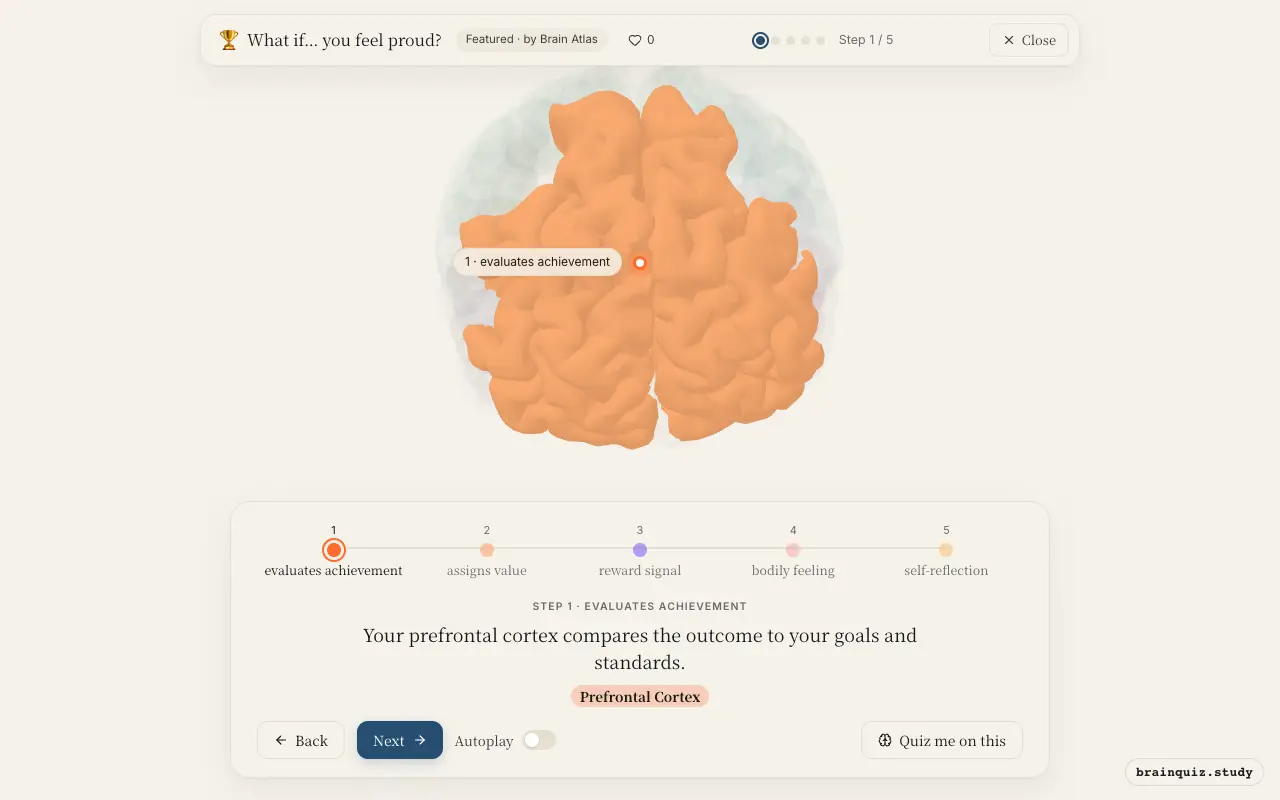
The prefrontal cortex handles executive functions like planning and decision-making. When you feel proud, it assesses whether your action met or exceeded expectations. This evaluation is the first step in generating the emotion, as it determines if the event is worthy of pride.
2. Orbitofrontal Cortex: assigns value
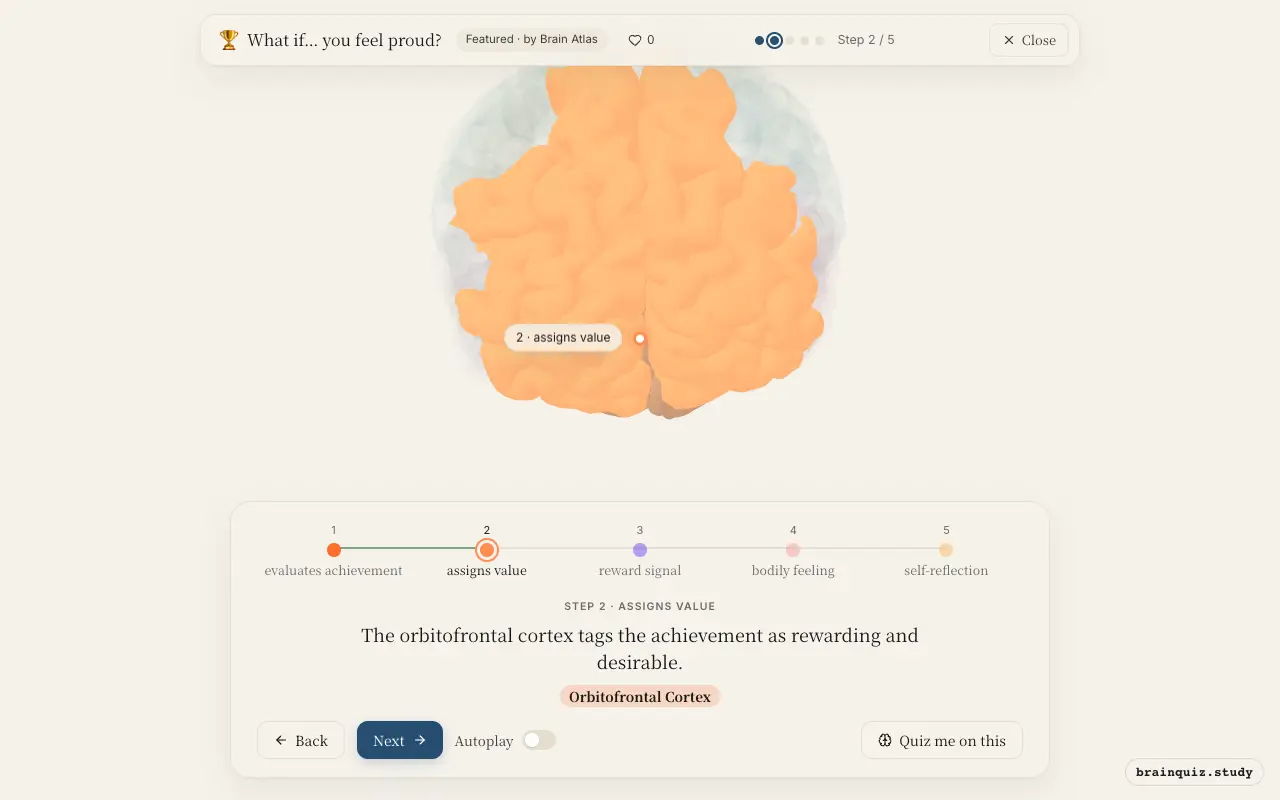
The orbitofrontal cortex processes reward and emotional value. It evaluates the positive outcome and signals that the achievement is good. This region helps regulate the emotional response, contributing to pride that matches the accomplishment.
3. Nucleus Accumbens: reward signal
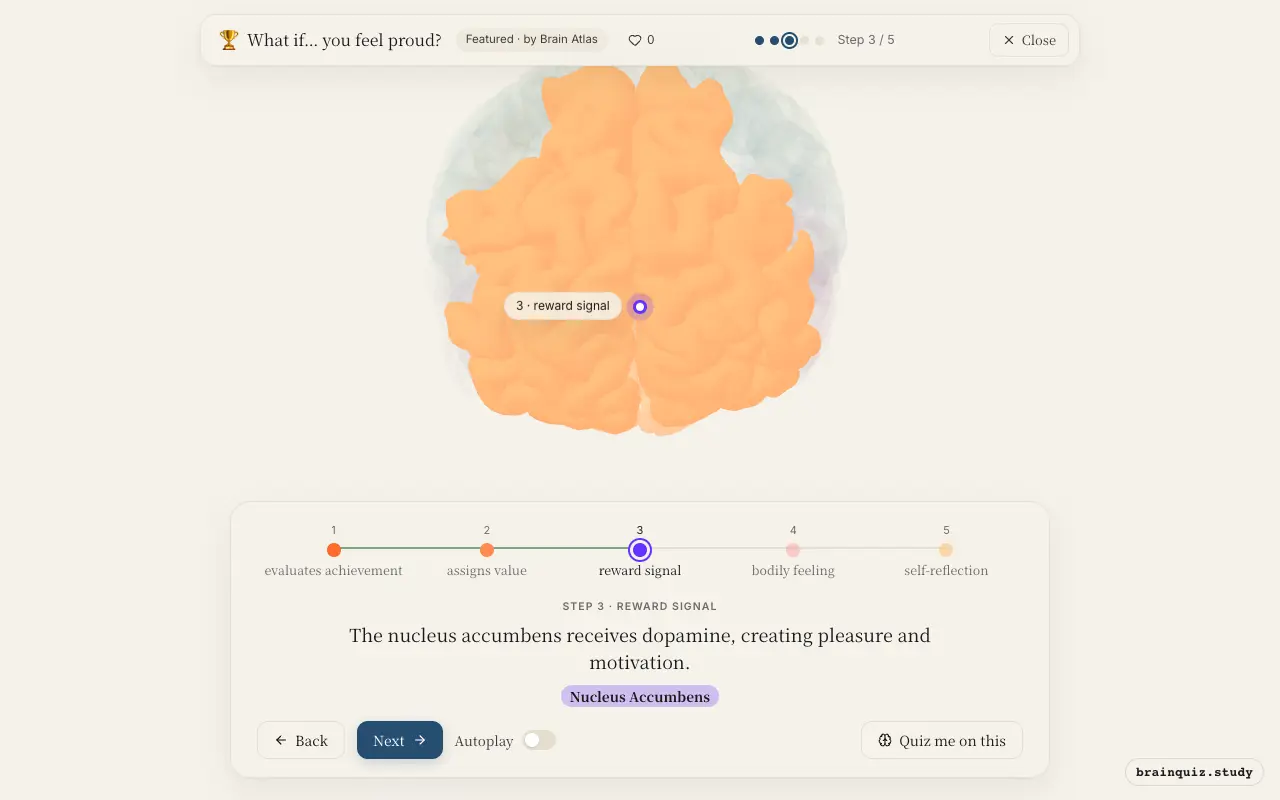
The nucleus accumbens is a core part of the brain's reward circuit. Dopamine release here produces the pleasurable feeling associated with pride. It also reinforces the behavior, making you more likely to repeat the achievement.
4. Insula: bodily feeling
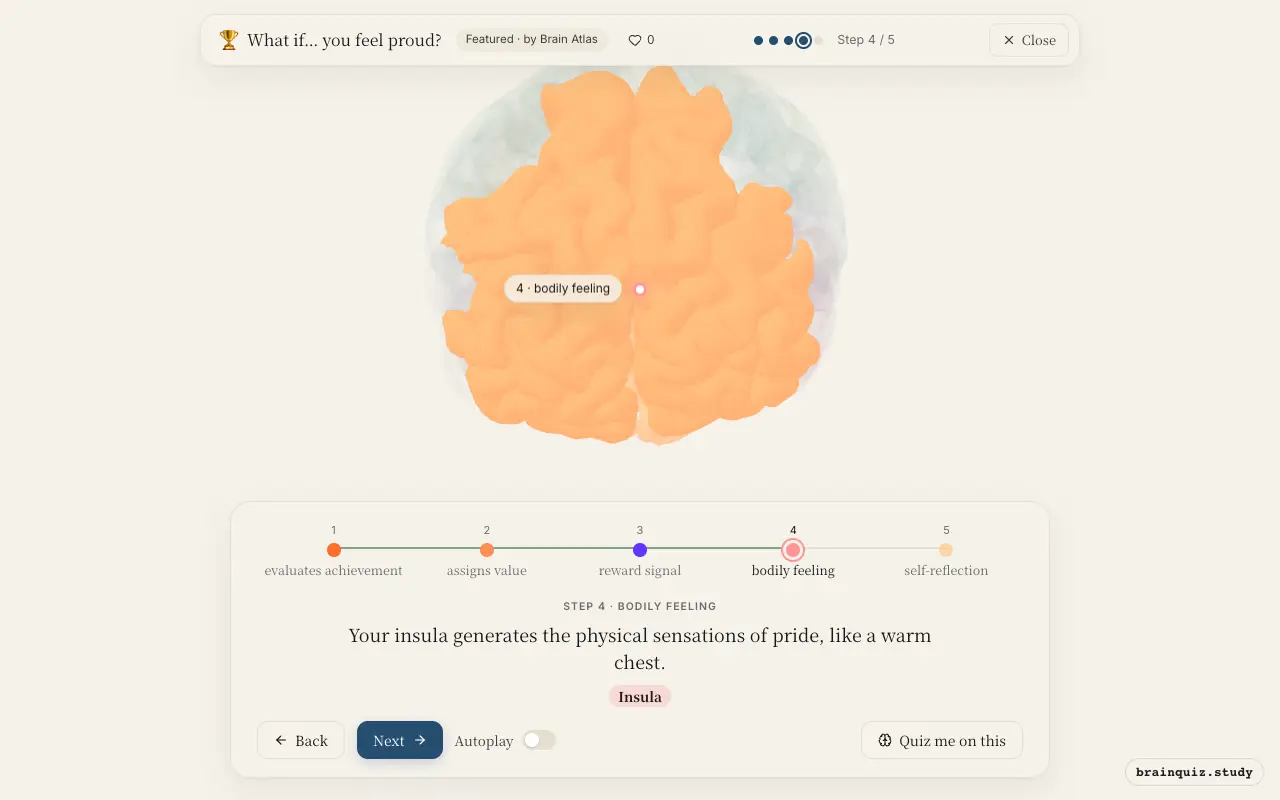
The insula processes interoception, the sense of your body's internal state. During pride, it creates the subjective bodily experience, such as warmth or expansion in the chest. This visceral component makes the emotion feel real and embodied.
5. Posterior Cingulate Cortex: self-reflection
The posterior cingulate is a hub of the default mode network, active during self-referential thought. It links the proud moment to your autobiographical memory and identity. This integration helps you build a positive self-image over time.
Good to know
- Pride is classified as a self-conscious emotion, requiring self-evaluation and awareness of social standards.
- The neurotransmitter dopamine is thought to be involved in the rewarding aspects of pride, though its exact role is debated.
- Studies suggest that pride activates brain regions involved in reward and self-referential processing, overlapping with those for basic rewards like food.
Pride vs. Guilt
Both are self-conscious emotions, but pride involves reward circuitry like the nucleus accumbens and orbitofrontal cortex, while guilt engages the anterior cingulate cortex for conflict and the amygdala for negative affect. Guilt lacks the dopamine-driven pleasure of pride.
Test yourself
Which brain region is most directly responsible for the pleasurable feeling of pride?
What is the role of the prefrontal cortex in feeling proud?
How does the insula contribute to the experience of pride?
0 of 3 answered · 0 correct
Simplified: many regions work together at once, and this shows the main players in the order they act.