What happens in your brain when you get a fever?
Updated
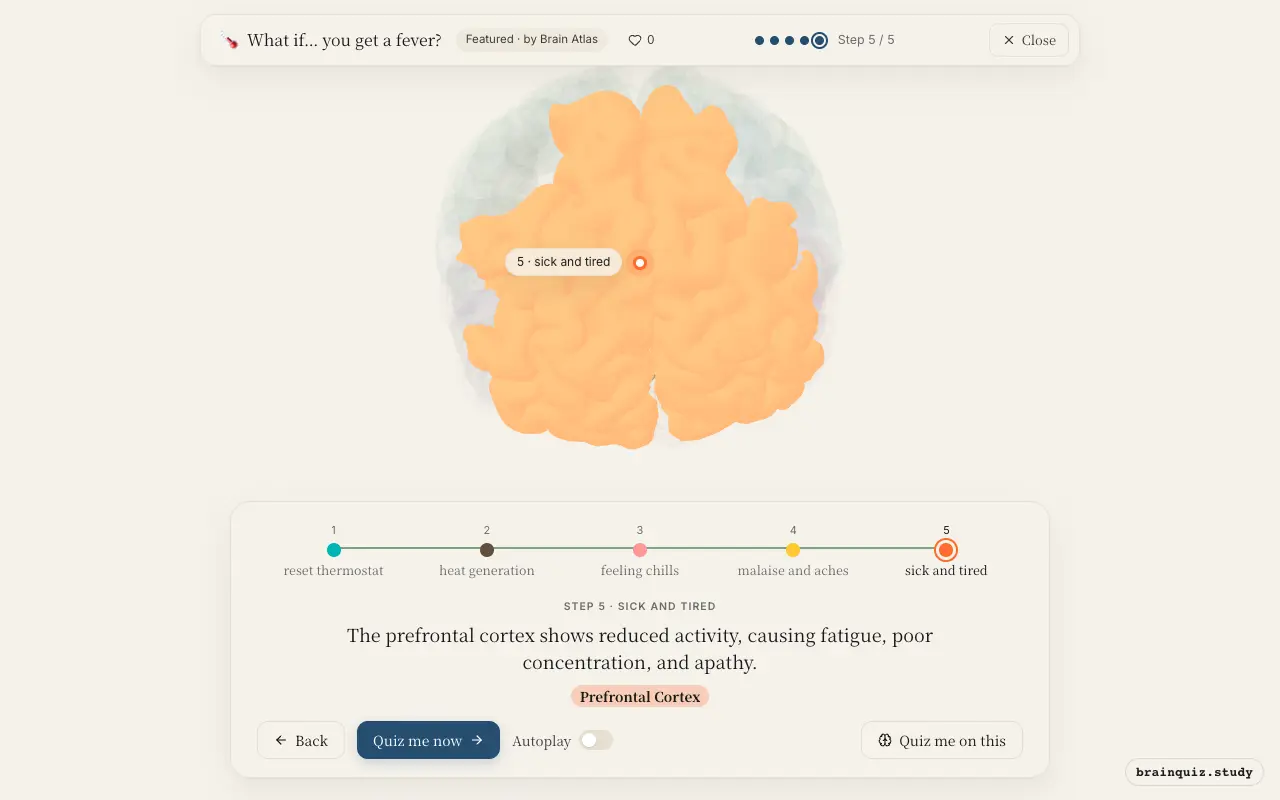
The hypothalamus resets the body's thermostat higher, the brainstem triggers shivering, the insula makes you feel chills, the anterior cingulate creates malaise, and the prefrontal cortex causes fatigue.
Watch it light up on the 3D brain
Brain regions that light up
| Order | Region | What it does here |
|---|---|---|
| 1 | Hypothalamus | The hypothalamus detects immune signals and raises the body's temperature set point. |
| 2 | Brainstem | The brainstem carries neural commands that cause shivering and vasoconstriction. |
| 3 | Insula | The insula integrates body sensations, creating the feeling of chills despite rising temperature. |
| 4 | Anterior Cingulate Cortex | The anterior cingulate cortex processes the discomfort and pain associated with fever. |
| 5 | Prefrontal Cortex | The prefrontal cortex shows reduced activity, causing fatigue, poor concentration, and apathy. |
1. Hypothalamus: reset thermostat
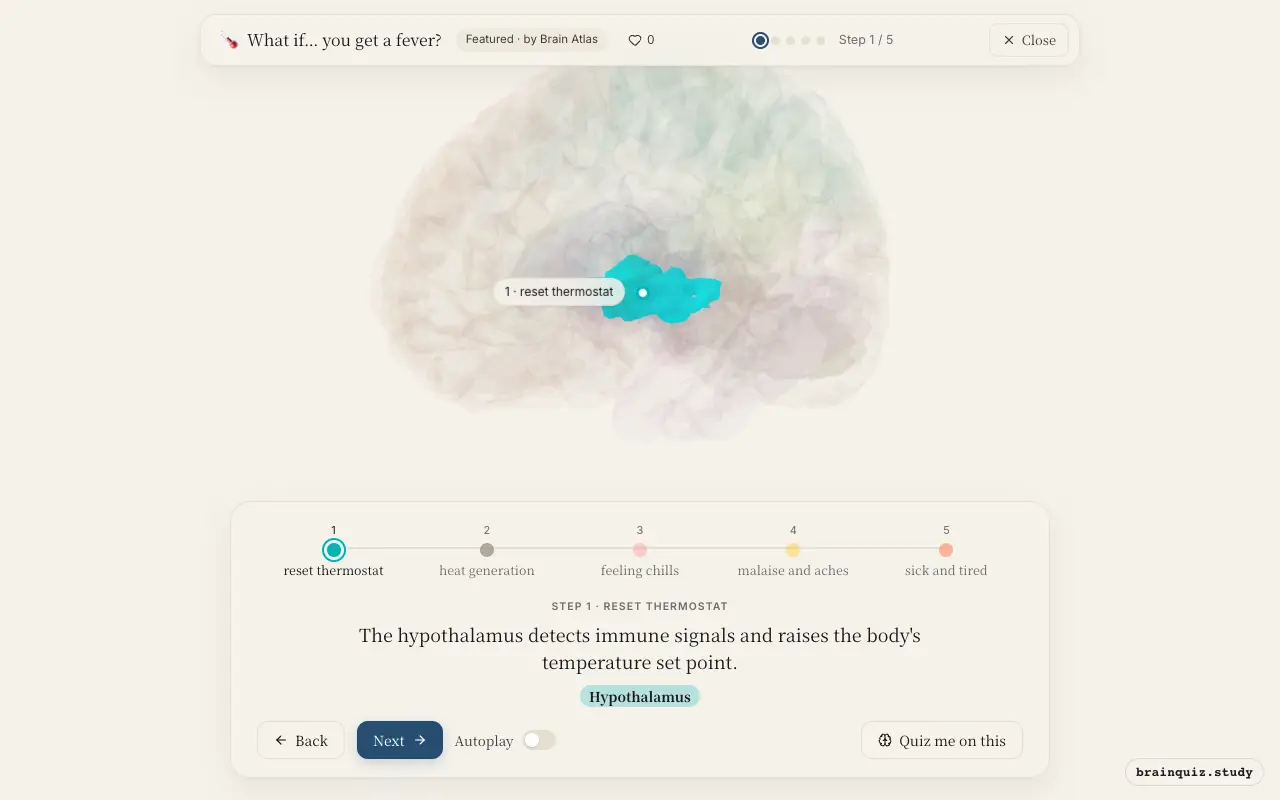
Cytokines released during infection trigger the hypothalamus to produce prostaglandins, which shift the thermoregulatory set point upward. This makes the body think it is too cold even when temperature is normal. The hypothalamus then initiates heat-generating responses to reach the new higher set point.
2. Brainstem: heat generation
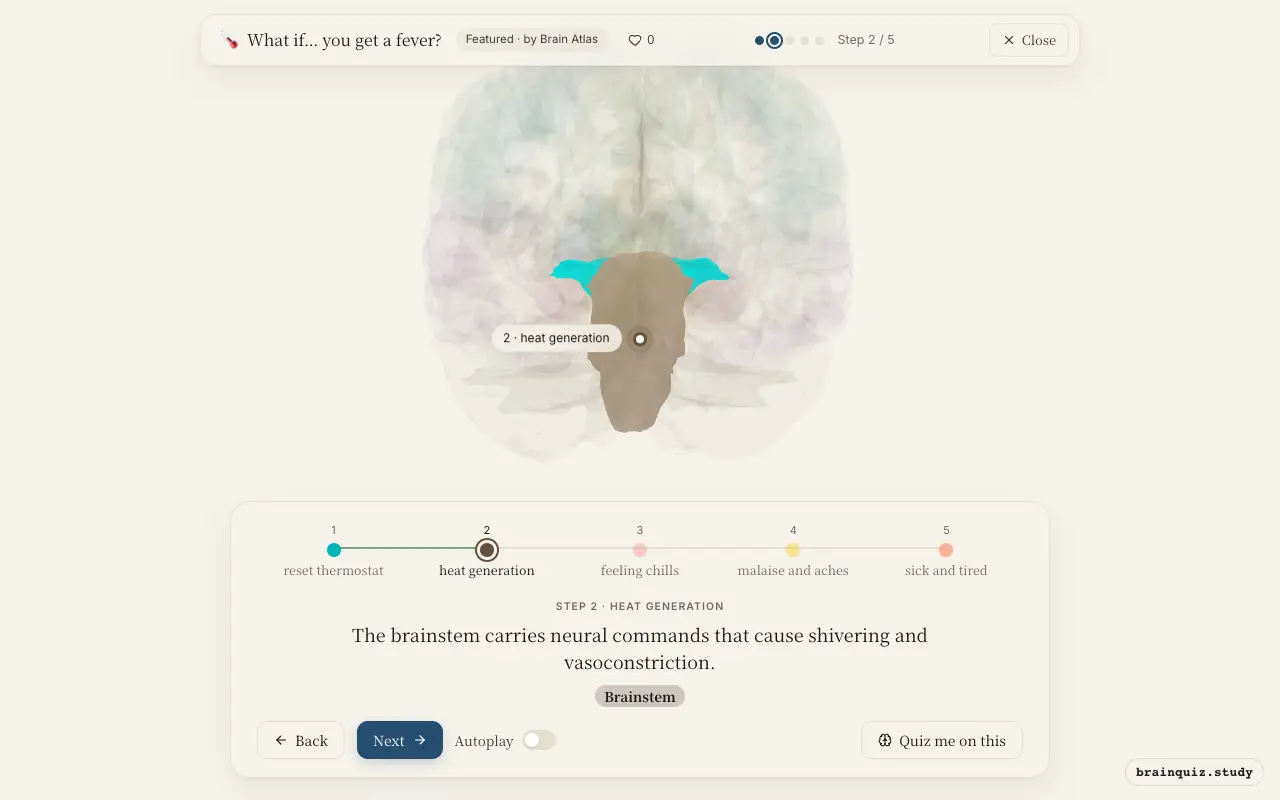
Signals from the hypothalamus activate brainstem centers that increase muscle tone and cause shivering, as well as constrict skin blood vessels to conserve heat. This raises core body temperature to match the new set point. The brainstem also coordinates sweating inhibition until the fever breaks.
3. Insula: feeling chills
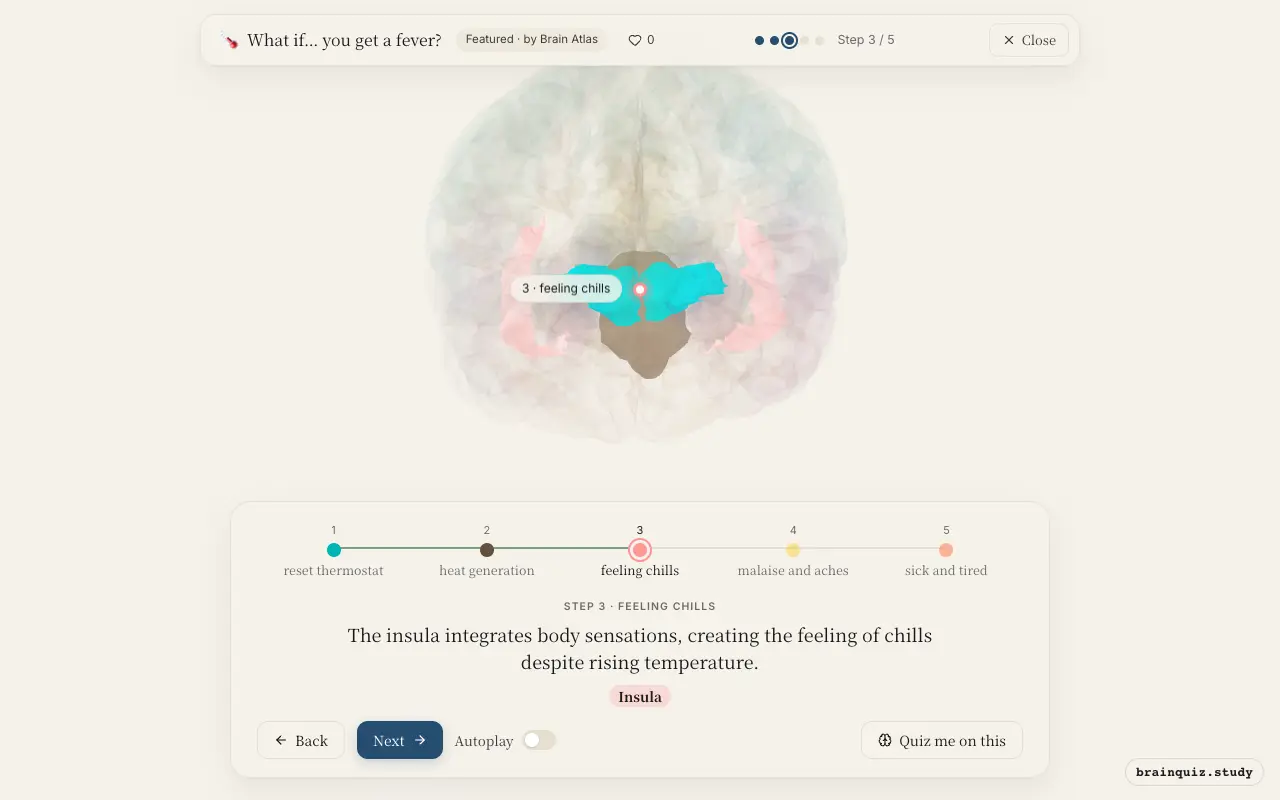
As the body heats up, the insula receives interoceptive signals from skin and internal organs. Because the set point is higher than actual temperature, the insula interprets the discrepancy as feeling cold, producing chills. This subjective experience motivates behaviors like seeking warmth or blankets.
4. Anterior Cingulate Cortex: malaise and aches
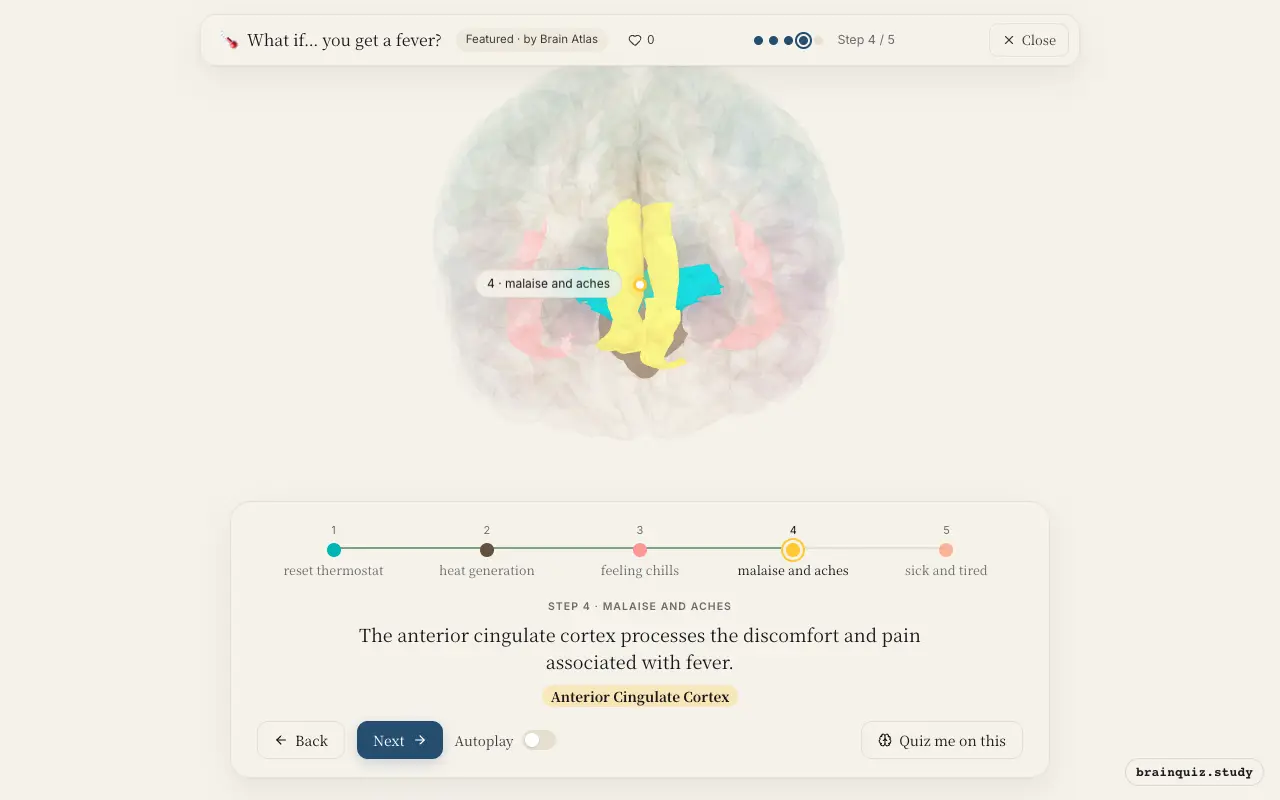
Fever often brings headache, muscle aches, and general malaise. The anterior cingulate is part of the brain's pain matrix and becomes active during these unpleasant sensations. It also contributes to the motivational aspect of sickness, making you want to rest and withdraw from activity.
5. Prefrontal Cortex: sick and tired
Fever triggers sickness behavior, which includes lethargy and cognitive slowing. The prefrontal cortex, responsible for executive functions, is affected by inflammatory signals, leading to reduced motivation and difficulty focusing. This is adaptive: it conserves energy for the immune response.
Good to know
- Fever is typically defined as a core body temperature above 38°C (100.4°F).
- Prostaglandin E2, produced in the hypothalamus, is a key mediator of the febrile response.
- Antipyretics like ibuprofen work by blocking prostaglandin synthesis, lowering the set point.
Fever vs. Hyperthermia
In fever, the hypothalamus actively raises the set point, so the body generates heat until it reaches the new target. In hyperthermia (e.g., heat stroke), the set point remains normal but heat production or exposure overwhelms cooling mechanisms. The brain's response differs: hyperthermia does not involve the same prostaglandin-mediated set point shift.
Test yourself
Which brain region acts as the body's thermostat during a fever?
What causes the sensation of chills during a fever's rising phase?
How do antipyretic drugs reduce fever?
0 of 3 answered · 0 correct
Simplified: many regions work together at once, and this shows the main players in the order they act.