What happens in your brain when you get goosebumps from music?
Updated
Your auditory cortex processes the music, the amygdala tags it as emotionally significant, the nucleus accumbens releases dopamine creating pleasure, and the hypothalamus triggers the goosebumps via sympathetic activation, while the insula makes you aware of the sensation.
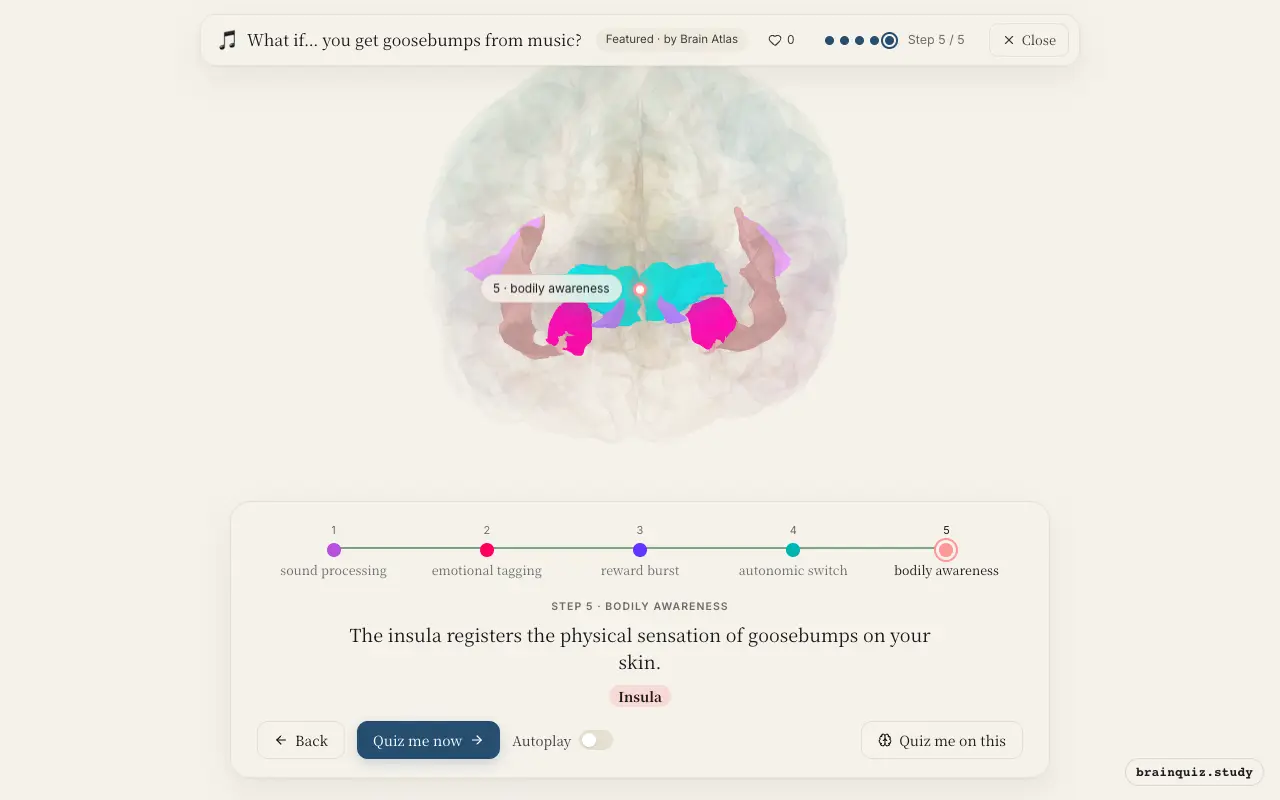
Watch it light up on the 3D brain
Brain regions that light up
| Order | Region | What it does here |
|---|---|---|
| 1 | Auditory Cortex | The auditory cortex decodes the music's melody, harmony, and rhythm. |
| 2 | Amygdala | The amygdala evaluates the music's emotional significance. |
| 3 | Nucleus Accumbens | The nucleus accumbens releases dopamine, creating intense pleasure. |
| 4 | Hypothalamus | The hypothalamus activates the sympathetic nervous system, causing piloerection. |
| 5 | Insula | The insula registers the physical sensation of goosebumps on your skin. |
1. Auditory Cortex: sound processing
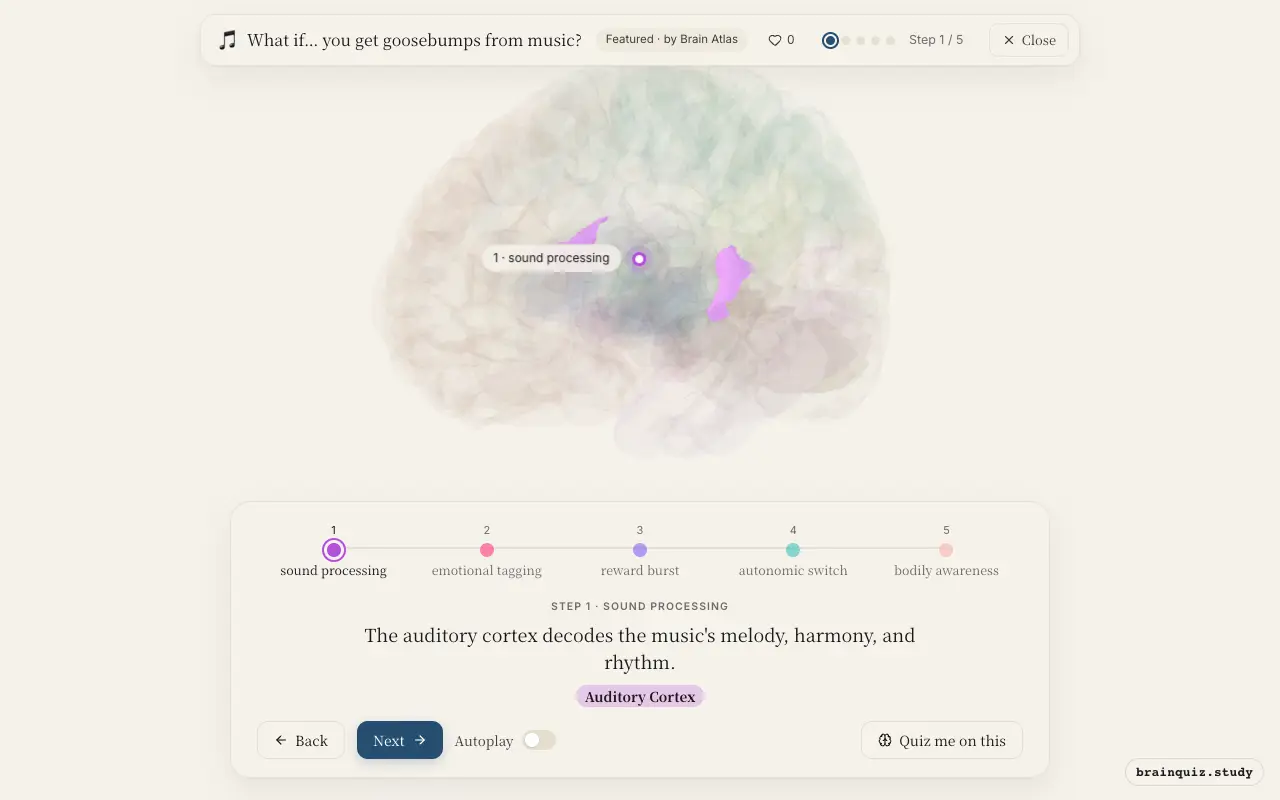
The auditory cortex receives and analyzes complex musical features like pitch, timbre, and timing. It breaks down the sound into patterns that can be recognized as familiar or novel. This initial perceptual analysis primes the rest of the brain for an emotional reaction.
2. Amygdala: emotional tagging
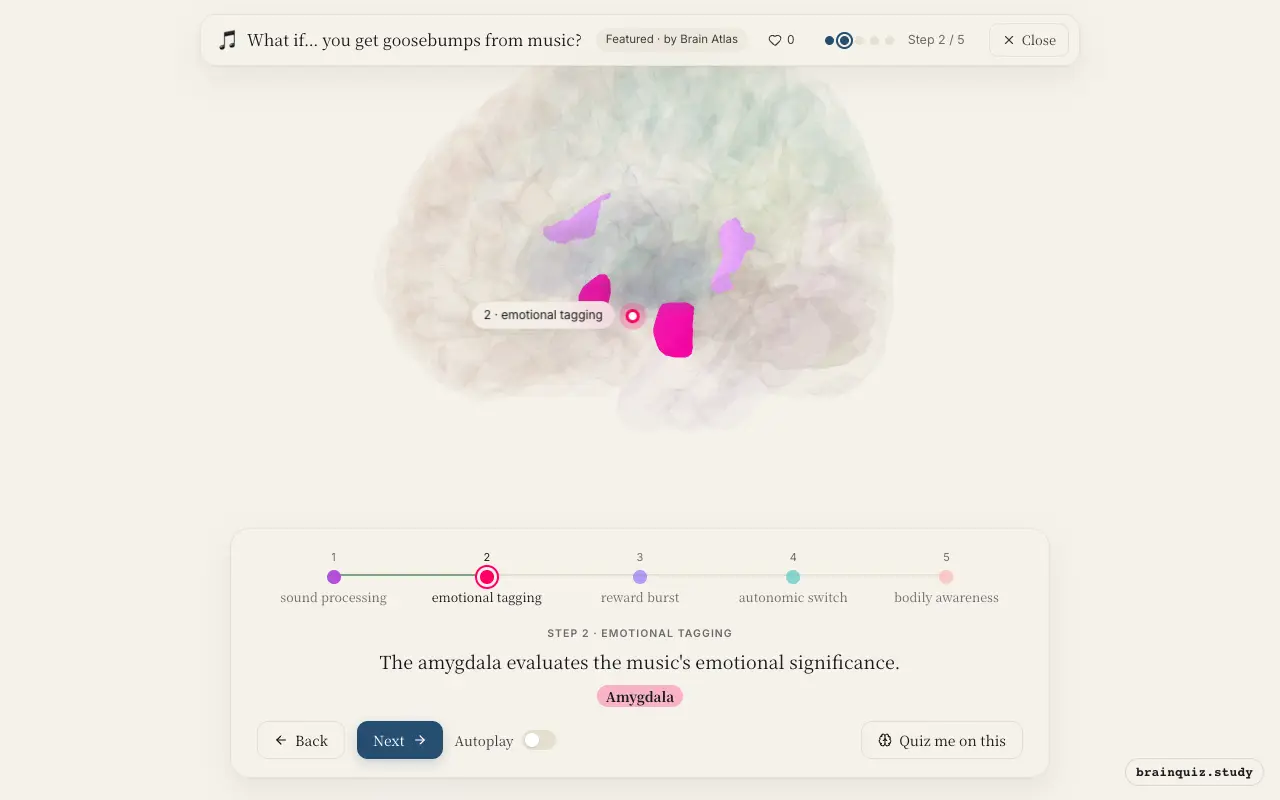
The amygdala rapidly assesses whether the music carries emotional weight, especially if it is associated with memories or strong feelings. It sends signals that the sound is salient, preparing the brain for a deeper response. This tagging is crucial for music to evoke a powerful reaction.
3. Nucleus Accumbens: reward burst
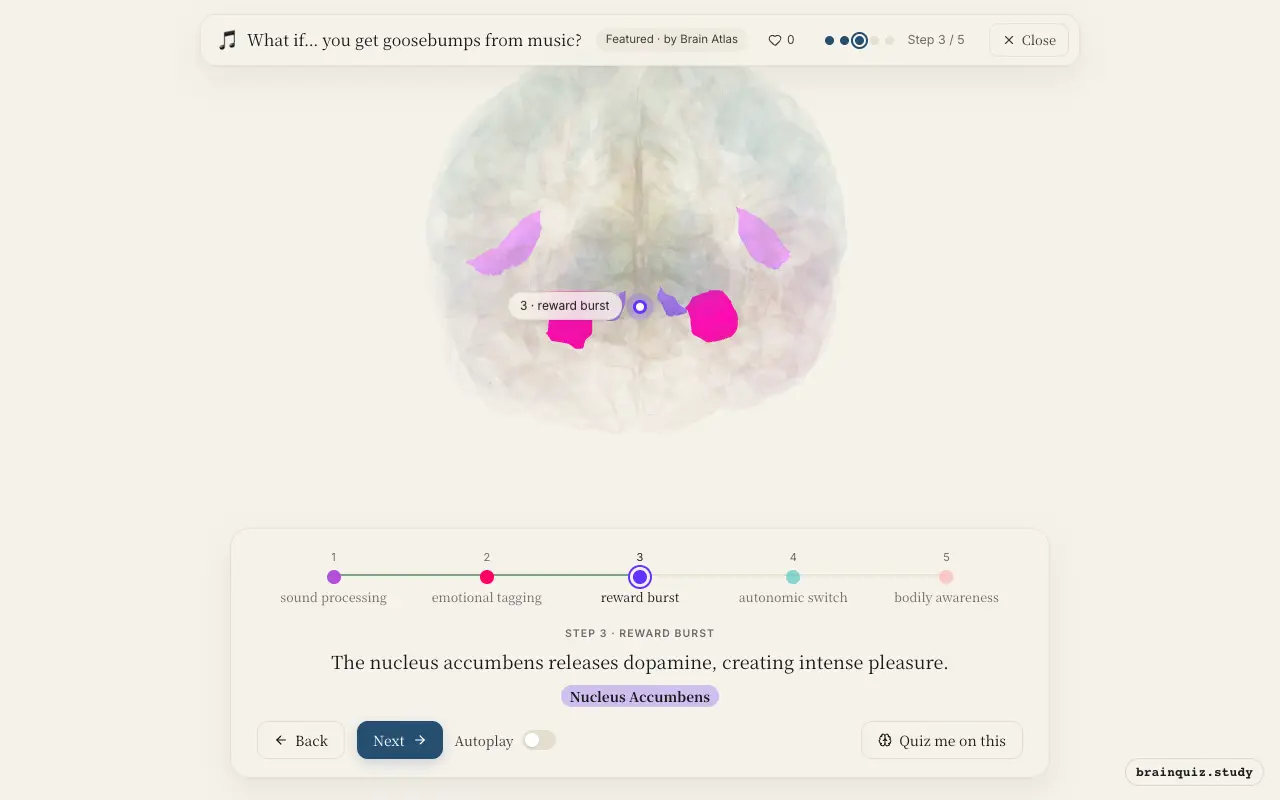
The nucleus accumbens is a hub of the brain's reward circuitry. During frisson, dopamine surges here, producing feelings of euphoria and motivation. This reward response is thought to be why people seek out music that gives them chills.
4. Hypothalamus: autonomic switch
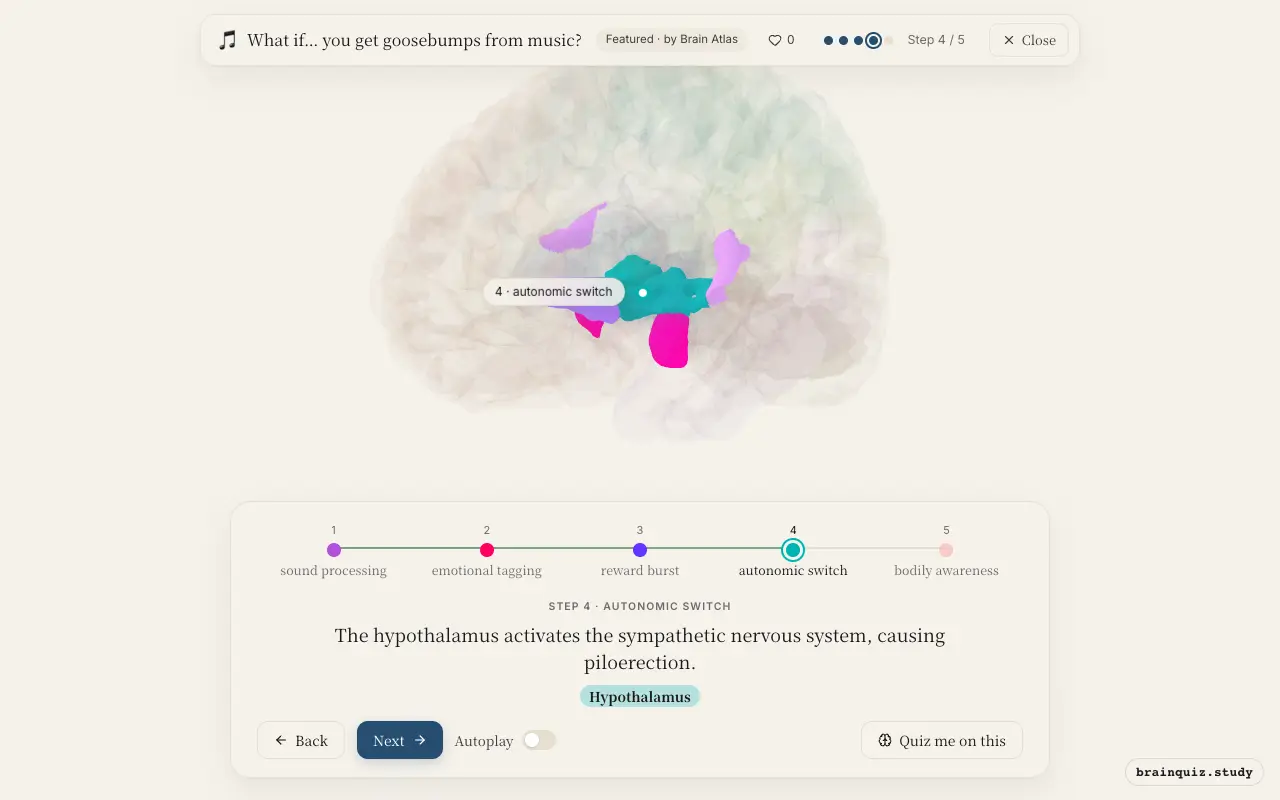
The hypothalamus coordinates the body's autonomic responses. It triggers the sympathetic nervous system, which causes tiny muscles at hair follicles to contract, raising the hairs. This is the physical basis of goosebumps, along with increased heart rate and breathing.
5. Insula: bodily awareness
The insula integrates internal body states, allowing you to consciously feel the tingling and chill on your skin. It also contributes to the subjective emotional experience, linking the bodily reaction to the feeling of being moved. This awareness completes the frisson response.
Good to know
- Dopamine release in the nucleus accumbens during music chills can be up to 21% above baseline, similar to responses to food or sex.
- Not everyone experiences frisson; studies suggest around 50-80% of people report getting chills from music.
- The intensity of music-induced chills is associated with stronger connectivity between the auditory cortex and reward areas.
Music goosebumps vs. fear goosebumps
Both involve sympathetic activation and piloerection, but music chills engage reward circuitry—nucleus accumbens and dopamine—while fear chills rely on the amygdala detecting threat and releasing adrenaline. The subjective feeling differs: euphoria versus alarm.
Test yourself
Which brain region first processes the music that leads to goosebumps?
What neurotransmitter is central to the reward response during music chills?
What causes the physical goosebumps?
0 of 3 answered · 0 correct
Simplified: many regions work together at once, and this shows the main players in the order they act.