What happens in your brain when you get likes on a post?
Updated
Seeing likes triggers a fast reward cascade: the orbitofrontal cortex evaluates their social value, the ventral tegmental area releases dopamine to the nucleus accumbens for pleasure, and the prefrontal cortex and posterior cingulate reflect on self-relevance.
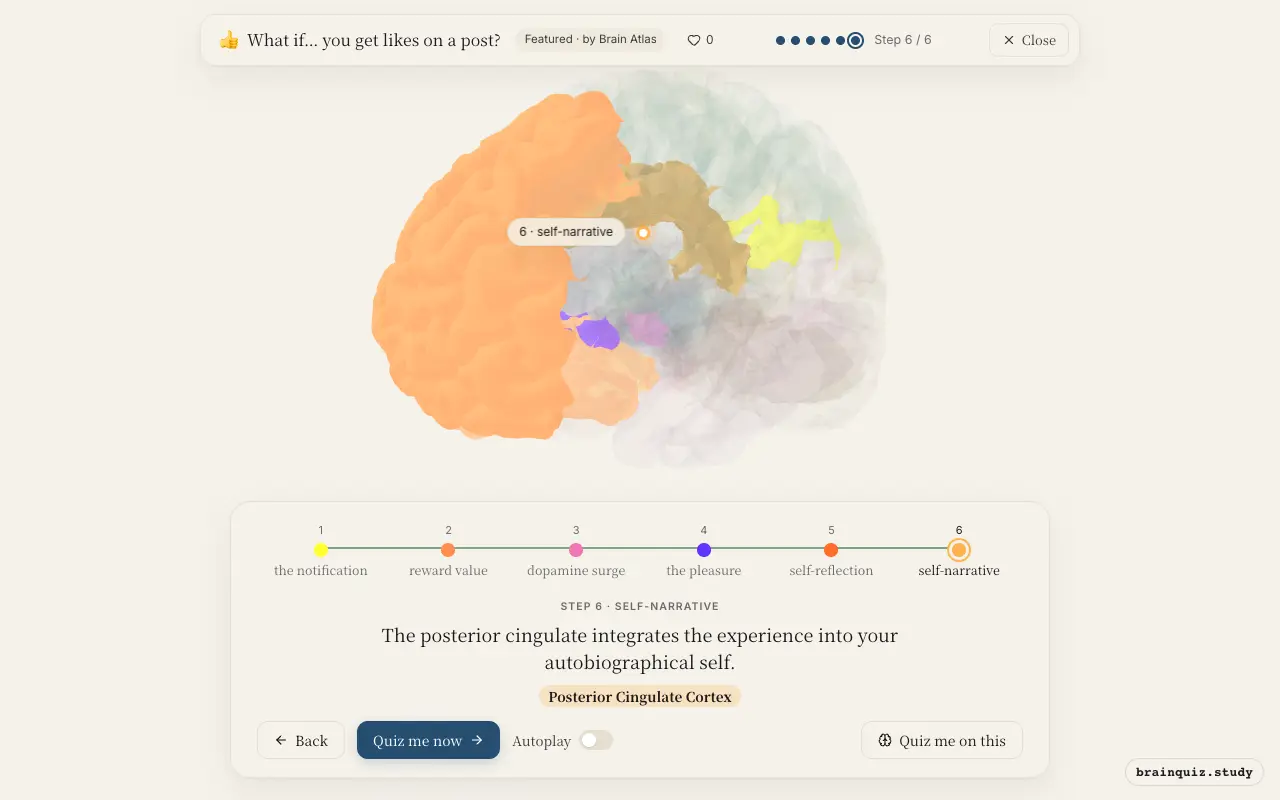
Watch it light up on the 3D brain
Brain regions that light up
| Order | Region | What it does here |
|---|---|---|
| 1 | Visual Cortex | Your visual cortex processes the like count and notification on screen. |
| 2 | Orbitofrontal Cortex | The orbitofrontal cortex quickly assesses the likes as socially rewarding. |
| 3 | Ventral Tegmental Area | The ventral tegmental area releases dopamine in response to the reward signal. |
| 4 | Nucleus Accumbens | The nucleus accumbens receives dopamine and generates feelings of pleasure and motivation. |
| 5 | Prefrontal Cortex | The prefrontal cortex evaluates what the likes mean for your social standing and self-esteem. |
| 6 | Posterior Cingulate Cortex | The posterior cingulate integrates the experience into your autobiographical self. |
1. Visual Cortex: the notification
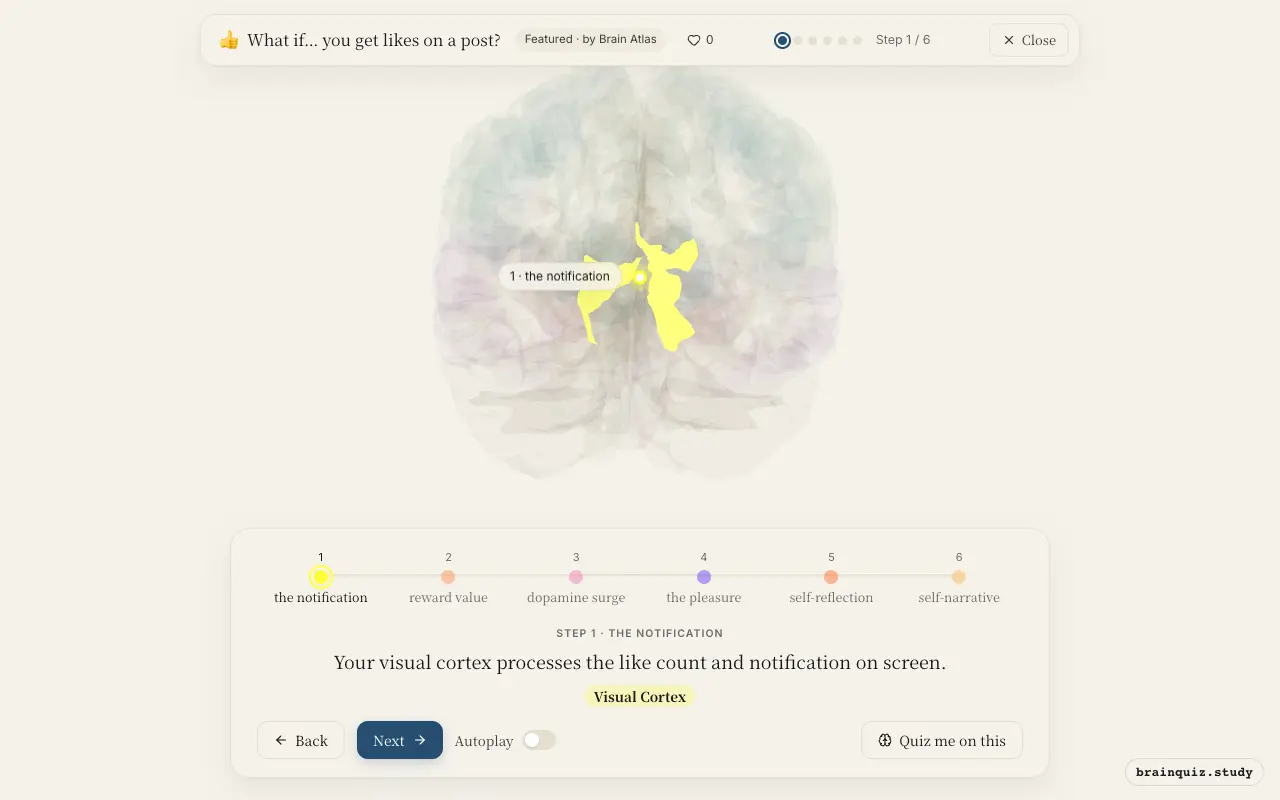
The primary visual cortex and visual association areas decode the shapes and numbers, sending the information forward for emotional evaluation. This step happens within milliseconds of seeing the post, before conscious awareness of the meaning.
2. Orbitofrontal Cortex: reward value
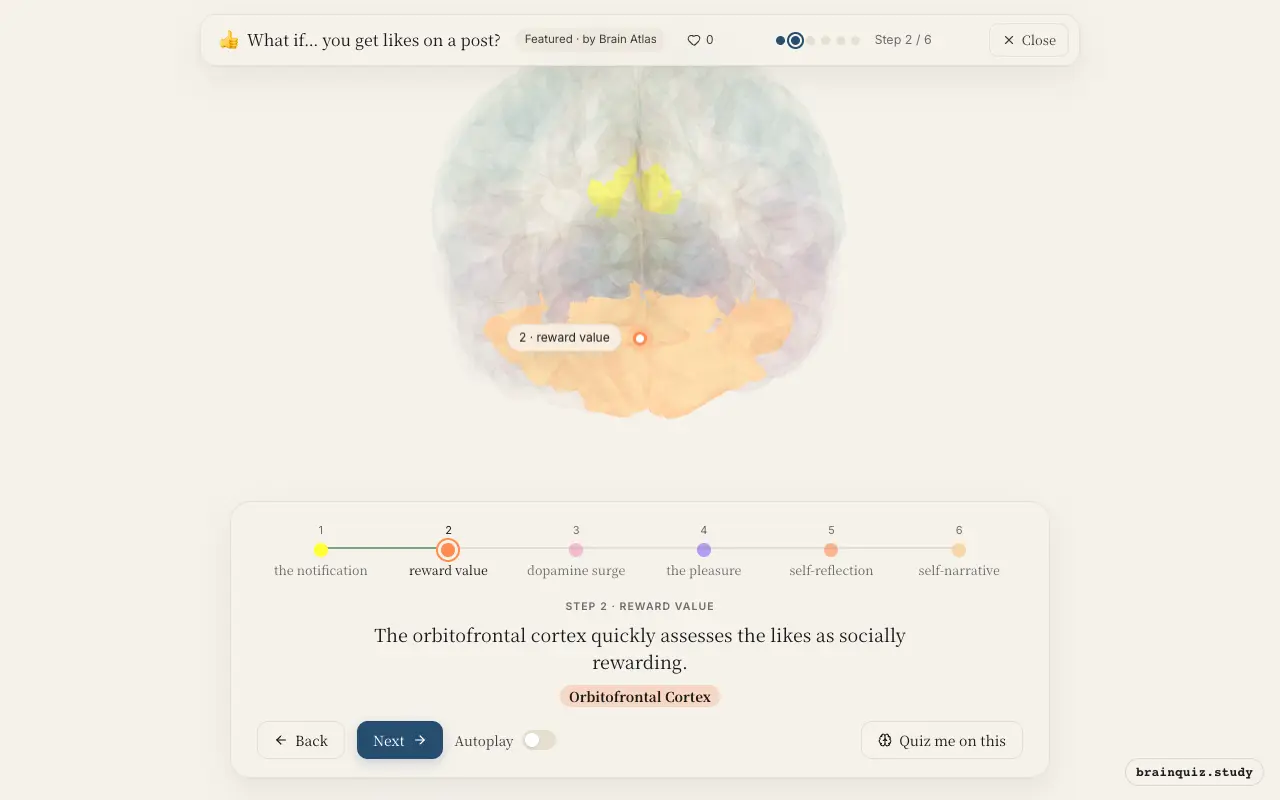
This region integrates sensory information with past experience to assign value. It signals that these likes are a positive social outcome, comparing them to expectations. Damage here impairs the ability to gauge social reward.
3. Ventral Tegmental Area: dopamine surge
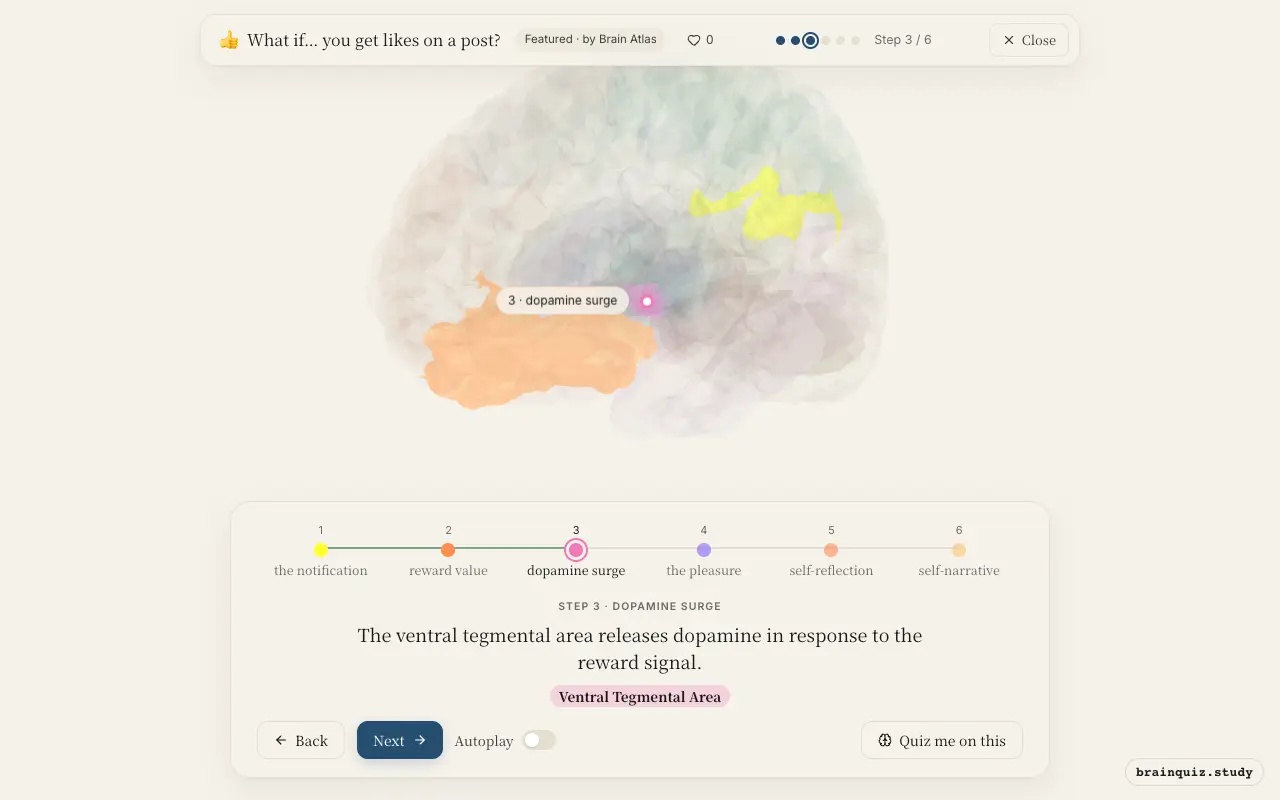
Located in the midbrain, the VTA is the origin of the mesolimbic dopamine pathway. When the orbitofrontal cortex signals reward, VTA neurons fire and release dopamine into the nucleus accumbens and prefrontal cortex.
4. Nucleus Accumbens: the pleasure
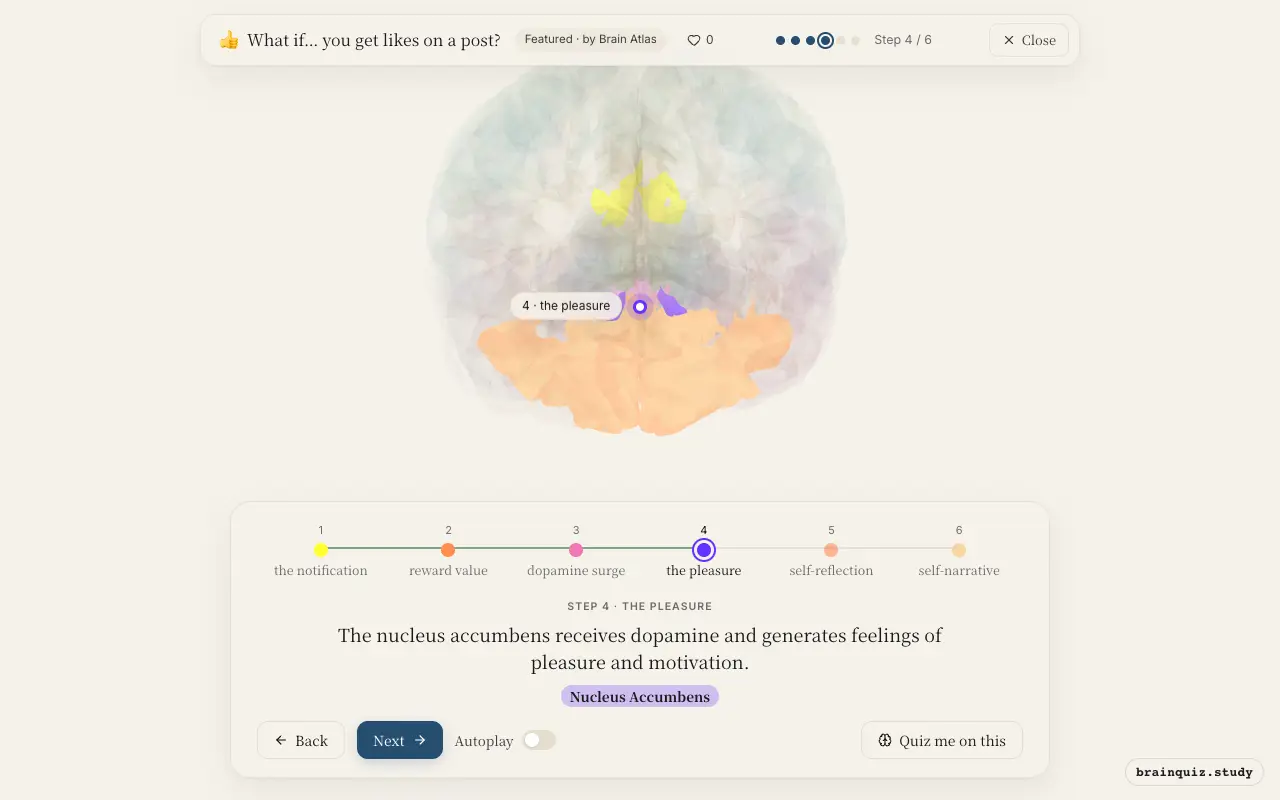
As the key hub of the brain's reward circuit, the nucleus accumbens integrates dopamine signals to produce the subjective experience of liking. It also drives the urge to seek more likes by reinforcing the behavior.
5. Prefrontal Cortex: self-reflection
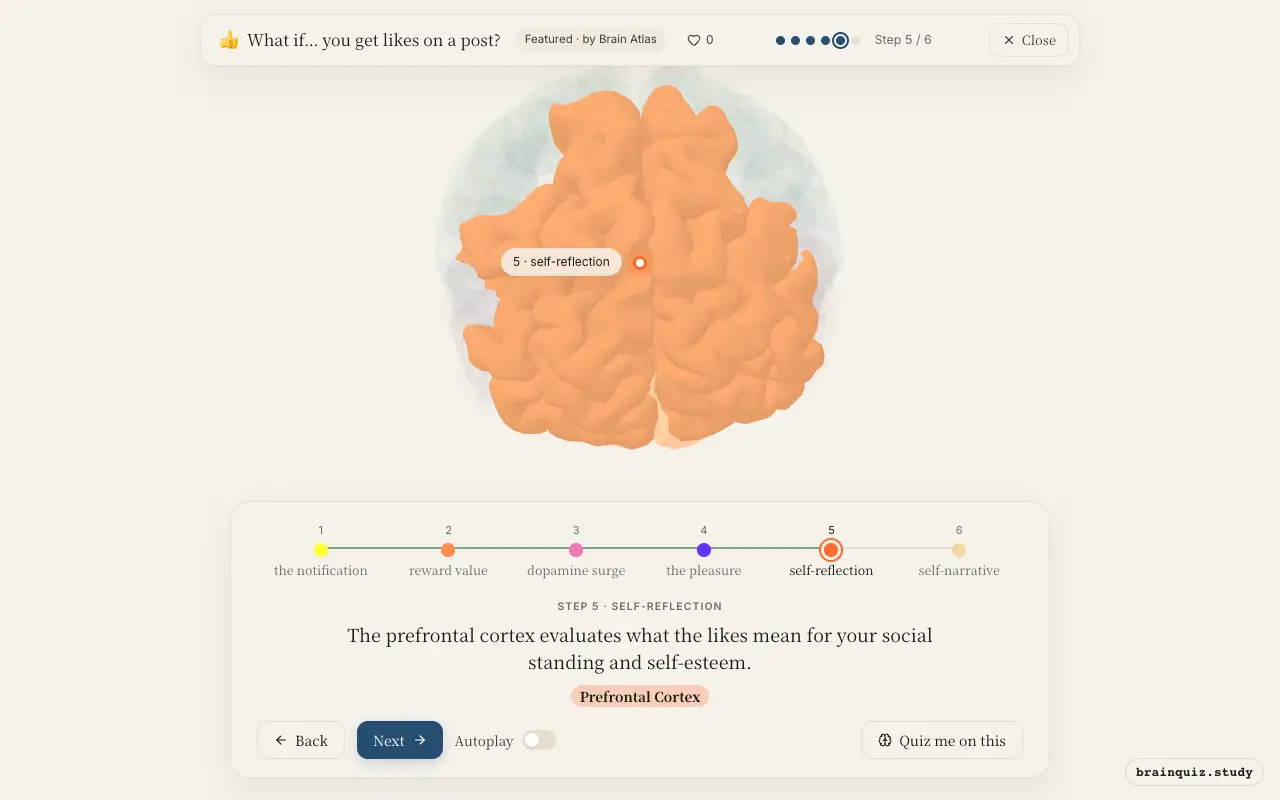
The medial prefrontal cortex, in particular, is active during self-referential thinking. It compares the social feedback to your self-concept and personal goals, shaping how you interpret the likes—whether as validation or mere numbers.
6. Posterior Cingulate Cortex: self-narrative
As a hub of the default mode network, the posterior cingulate cortex links the current event to memories and self-identity. It helps consolidate the moment as part of your social story, influencing future expectations.
Good to know
- Receiving social approval activates reward circuitry overlapping with that for food or money, with dopamine playing a central role.
- Adolescents show heightened neural responses to social rewards like likes, which may explain the intense pull of social media.
- The brain's default mode network, including the posterior cingulate, is engaged when reflecting on oneself in relation to others.
Likes vs. dislikes
While likes engage the reward pathway via the ventral tegmental area and nucleus accumbens, dislikes or negative feedback activate the anterior cingulate cortex and insula, which process social pain and conflict. Both grab attention, but dislikes produce distress rather than pleasure, often leading to avoidance rather than seeking.
Test yourself
Which brain region is most directly responsible for the feeling of pleasure from likes?
What role does the ventral tegmental area play in processing likes?
The posterior cingulate cortex is most active when you:
0 of 3 answered · 0 correct
Simplified: many regions work together at once, and this shows the main players in the order they act.