What happens in your brain when you get stuck in traffic?
Updated
Stuck traffic creates goal conflict: your anterior cingulate flags it, your amygdala and hypothalamus trigger stress, your insula makes you feel bodily tension, and your prefrontal cortex attempts to regulate the frustration.
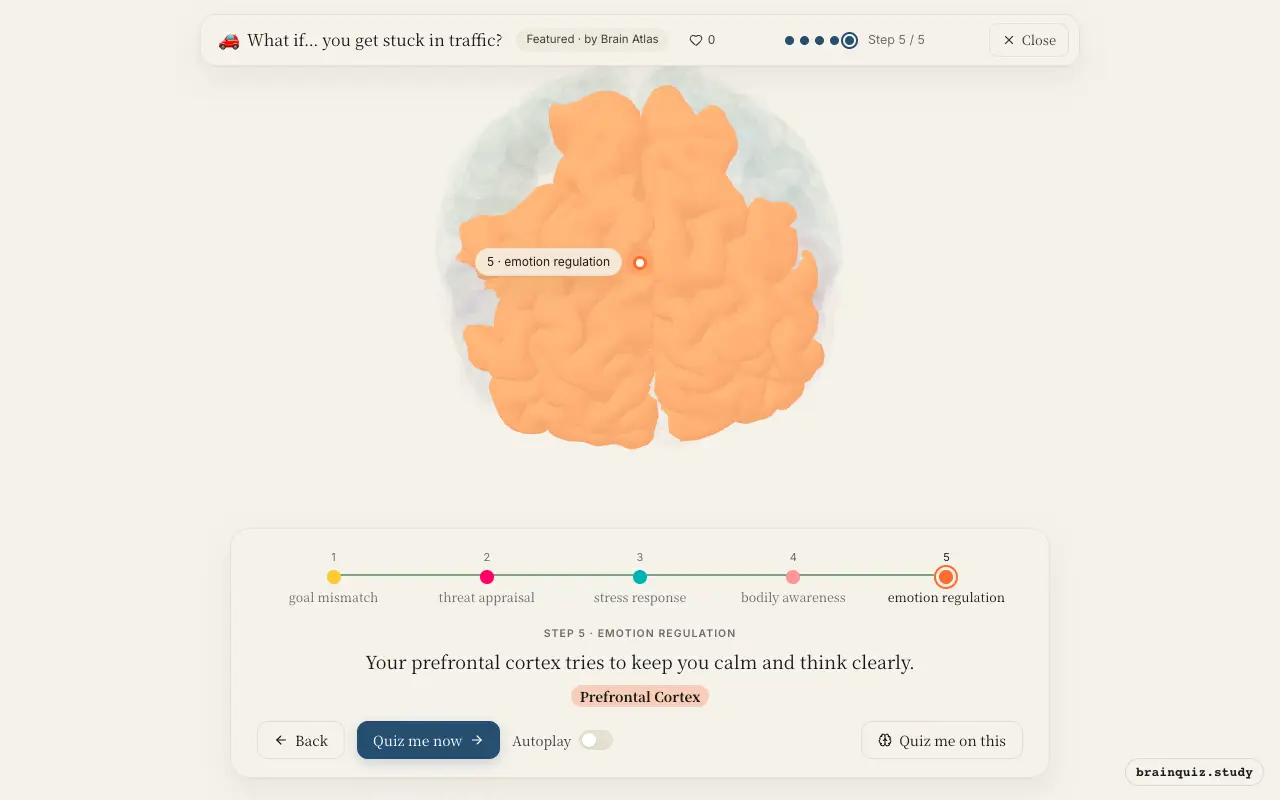
Watch it light up on the 3D brain
Brain regions that light up
| Order | Region | What it does here |
|---|---|---|
| 1 | Anterior Cingulate Cortex | Your brain flags a conflict: you want to move, but the car doesn't. |
| 2 | Amygdala | The amygdala interprets the standstill as a threat to your schedule. |
| 3 | Hypothalamus | The hypothalamus kicks off the body's stress cascade. |
| 4 | Insula | Your insula tunes into the physical sensations of stress. |
| 5 | Prefrontal Cortex | Your prefrontal cortex tries to keep you calm and think clearly. |
1. Anterior Cingulate Cortex: goal mismatch
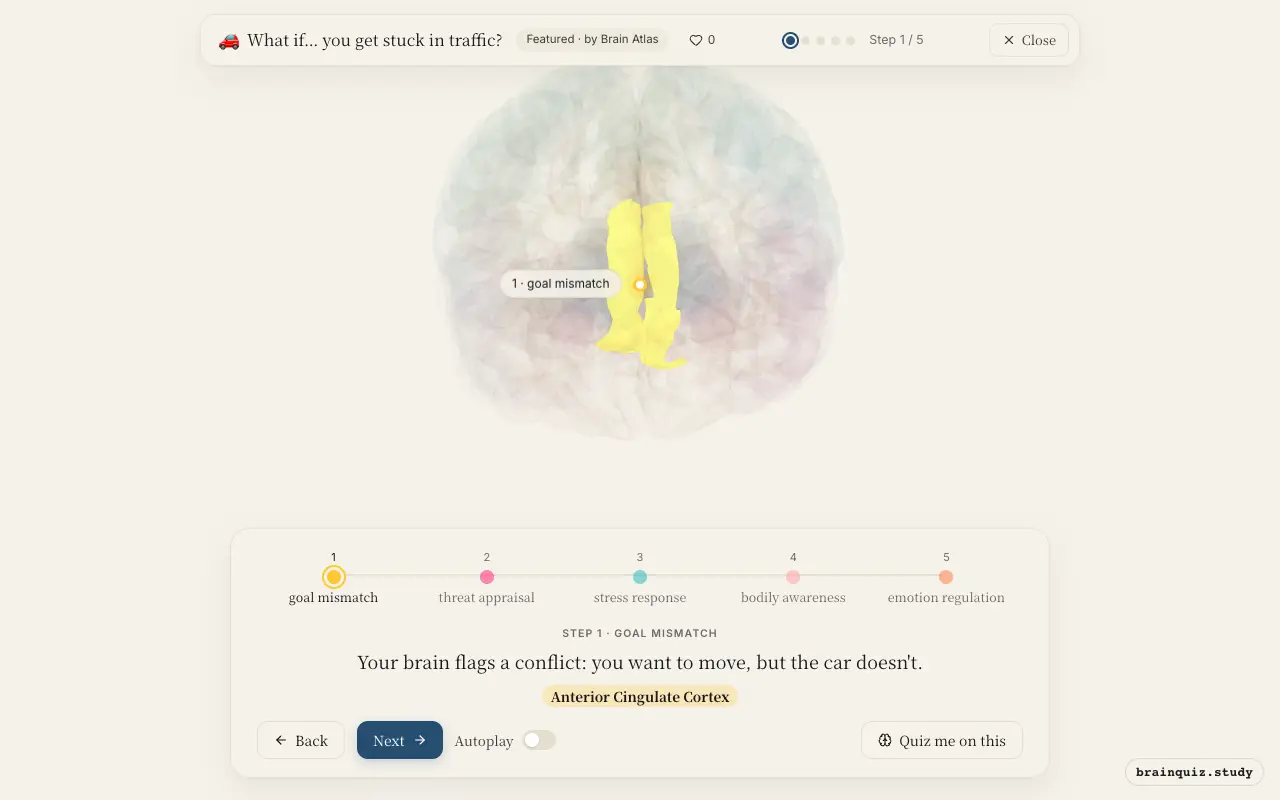
The anterior cingulate cortex monitors ongoing actions against goals. When the expected outcome (moving forward) doesn't occur, it signals an error or conflict. This activates a sense of frustration and motivates you to resolve the discrepancy, perhaps by changing lanes or honking.
2. Amygdala: threat appraisal
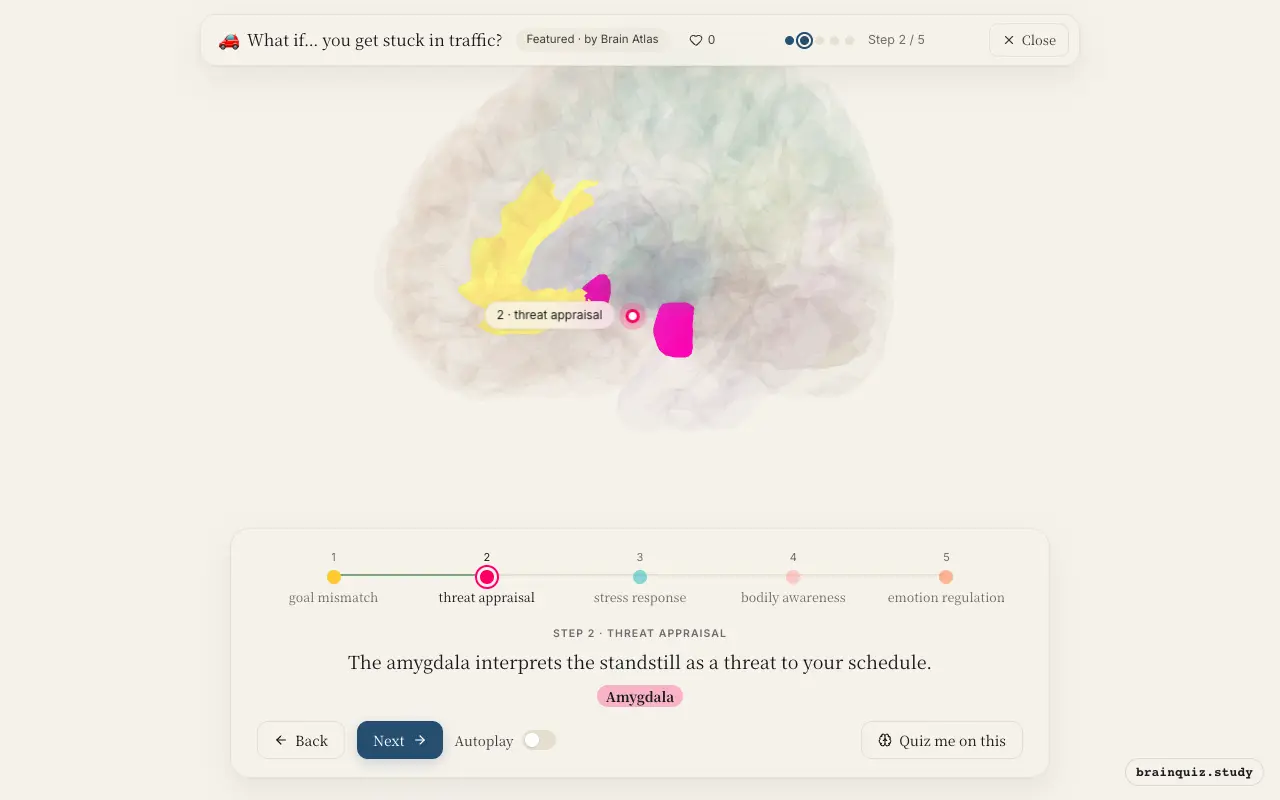
The amygdala rapidly evaluates the emotional significance of the situation. Being stuck can be perceived as a threat to your goals, time, or social commitments, triggering fear or anger. This emotional tagging enhances attention to the jam and prepares the body for action.
3. Hypothalamus: stress response
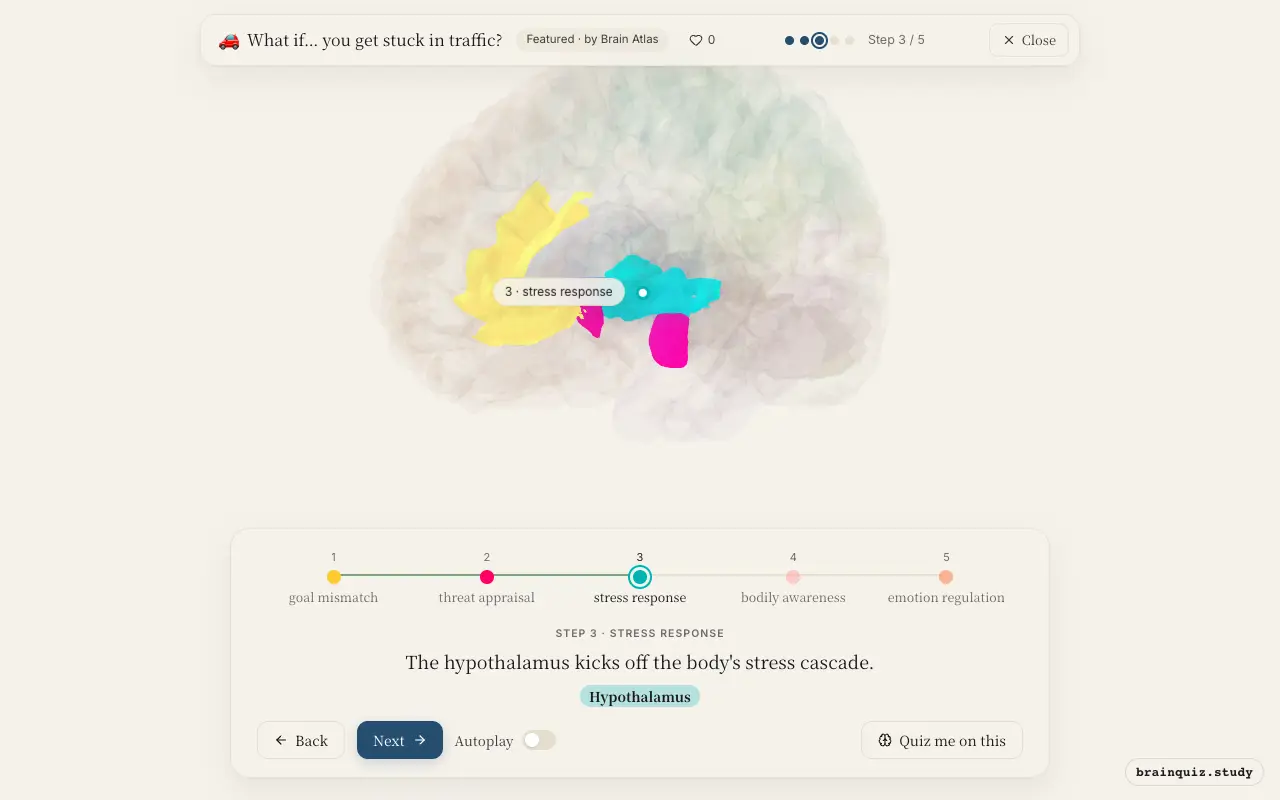
Activated by the amygdala, the hypothalamus initiates the hypothalamic-pituitary-adrenal (HPA) axis, releasing corticotropin-releasing hormone, which eventually leads to cortisol secretion. It also stimulates the sympathetic nervous system, increasing heart rate, blood pressure, and muscle tension. This readies you for fight or flight, but in a car you can do neither, so the arousal builds.
4. Insula: bodily awareness
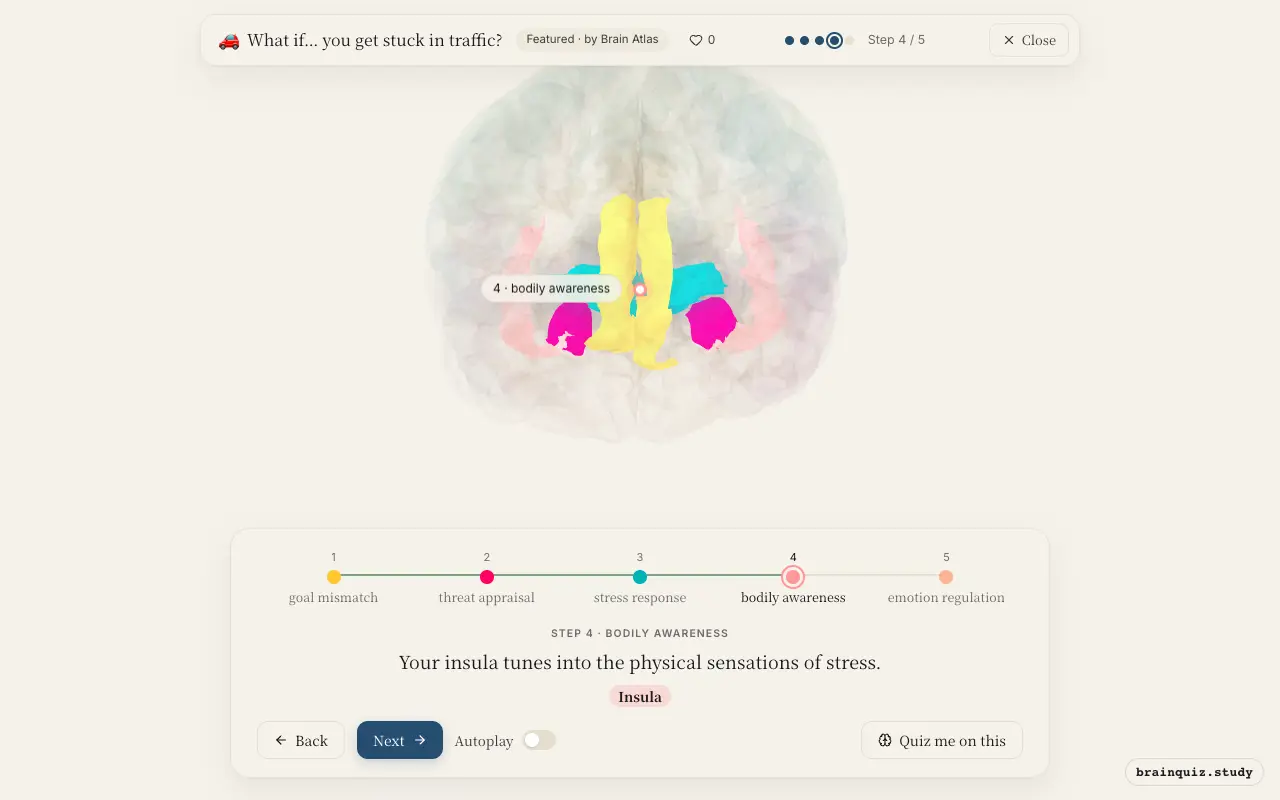
The insula receives signals from the body, such as a racing heart, sweaty palms, or a tight jaw, and integrates them into conscious feelings. This interoceptive awareness makes the stress feel real and urgent. It also contributes to the unpleasantness and even disgust associated with being trapped.
5. Prefrontal Cortex: emotion regulation
The lateral prefrontal cortex exerts top-down control over the amygdala, dampening the emotional response. It helps you reappraise the situation—perhaps reminding you that honking won't help—and engages working memory to plan an alternate route. However, this effortful regulation depletes cognitive resources, contributing to mental fatigue.
Good to know
- The anterior cingulate cortex is a key node in conflict monitoring, firing when expected and actual outcomes diverge.
- Chronic traffic-related stress has been linked to elevated cortisol levels and increased risk of cardiovascular problems.
- The insula's interoceptive signals can amplify subjective feelings of frustration, making a traffic jam feel worse than it objectively is.
Stuck in traffic vs. cruising on open road
On an open road, the anterior cingulate sees no conflict, the amygdala stays quiet, and the prefrontal cortex can relax or engage in mind-wandering (default mode network). In traffic, the brain treats immobility as a low-grade threat, keeping stress circuits active.
Test yourself
Which region first detects the mismatch between wanting to move and being stuck?
Why does the hypothalamus activate in traffic?
What role does the prefrontal cortex play in this scenario?
0 of 3 answered · 0 correct
Simplified: many regions work together at once, and this shows the main players in the order they act.