What happens in your brain when you go skydiving?
Updated
The amygdala triggers fear, the prefrontal cortex decides to jump, the hypothalamus initiates a stress response, the motor cortex executes the leap, and the cerebellum coordinates your body in freefall.
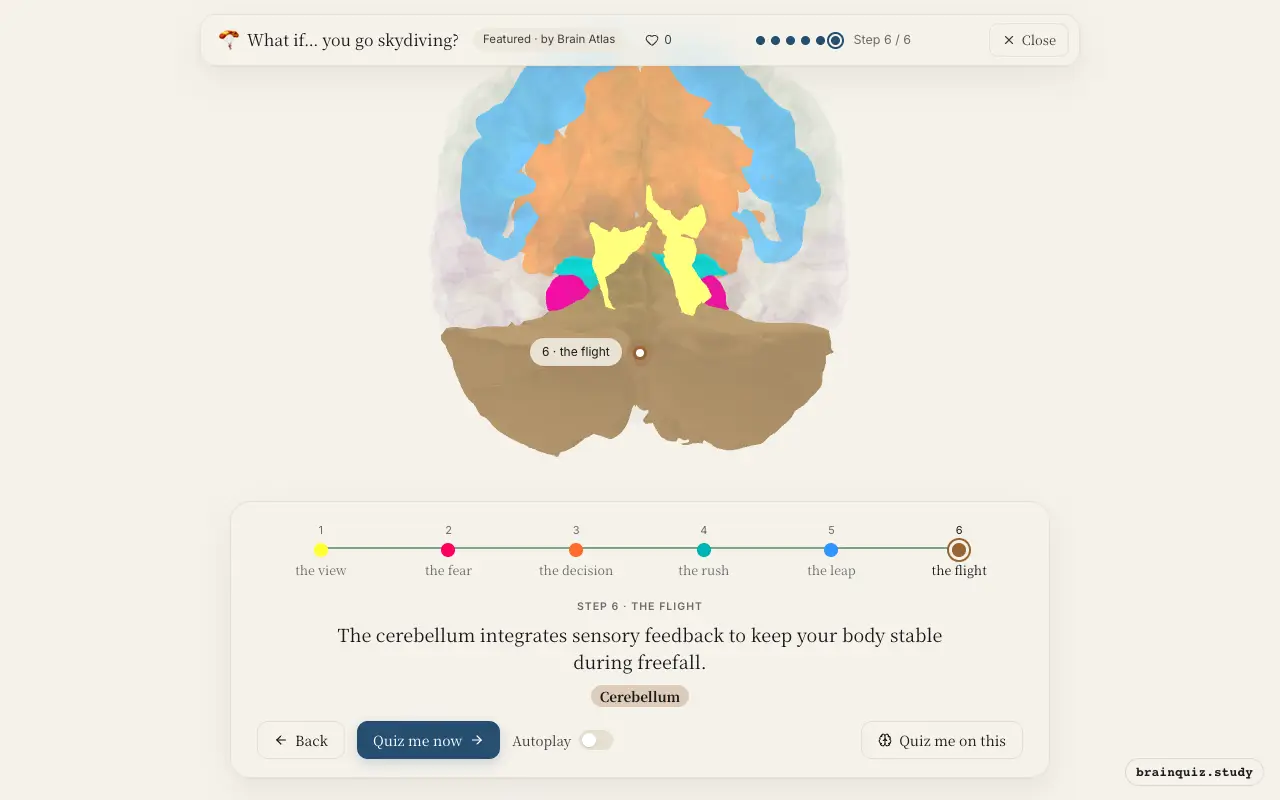
Watch it light up on the 3D brain
Brain regions that light up
| Order | Region | What it does here |
|---|---|---|
| 1 | Visual Cortex | Your visual cortex processes the dizzying height and the ground far below. |
| 2 | Amygdala | The amygdala detects the threat and triggers a rapid fear response. |
| 3 | Prefrontal Cortex | Your prefrontal cortex evaluates the risk and overrides the fear to decide to jump. |
| 4 | Hypothalamus | The hypothalamus activates the sympathetic nervous system, releasing adrenaline. |
| 5 | Motor Cortex | The motor cortex sends commands to your muscles to push off from the plane. |
| 6 | Cerebellum | The cerebellum integrates sensory feedback to keep your body stable during freefall. |
1. Visual Cortex: the view
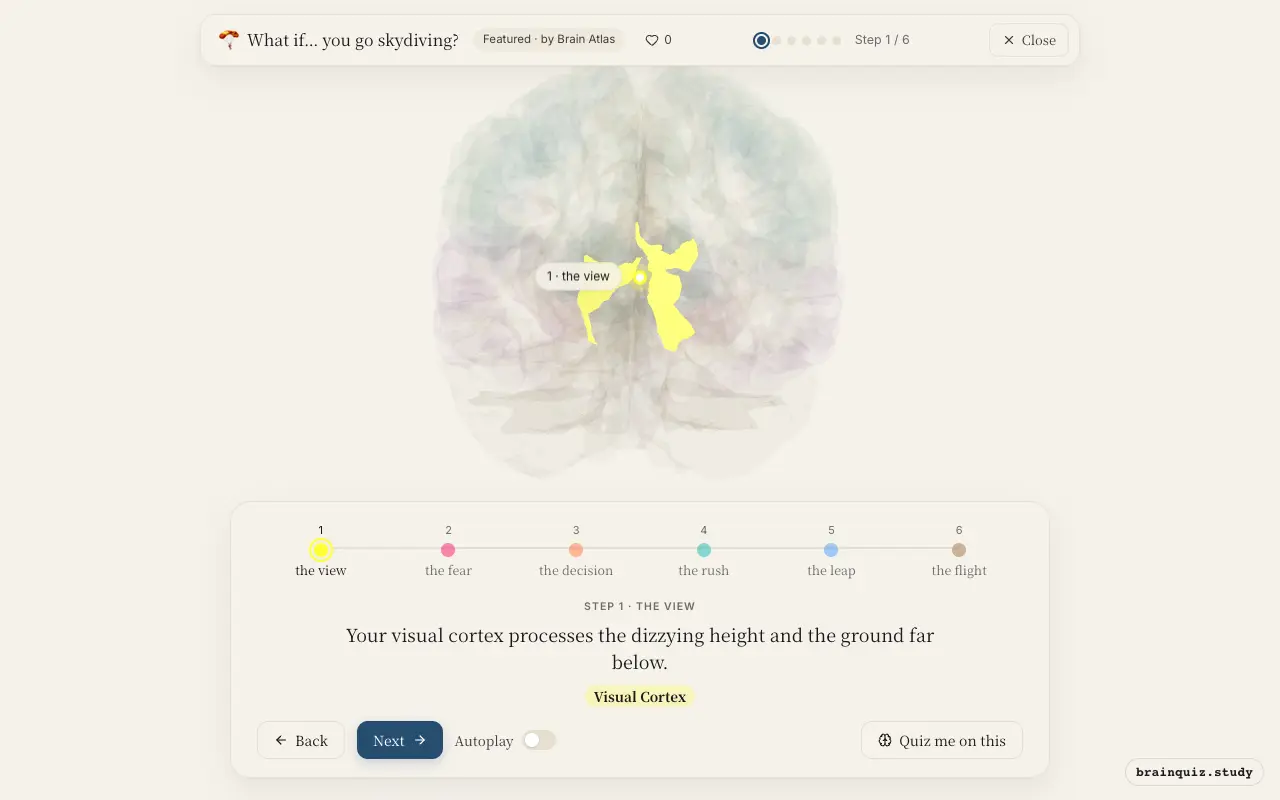
The visual cortex receives input from the eyes and constructs a representation of the scene, including depth and motion cues. This rapid visual processing provides the raw information that other regions use to assess the danger of the situation.
2. Amygdala: the fear
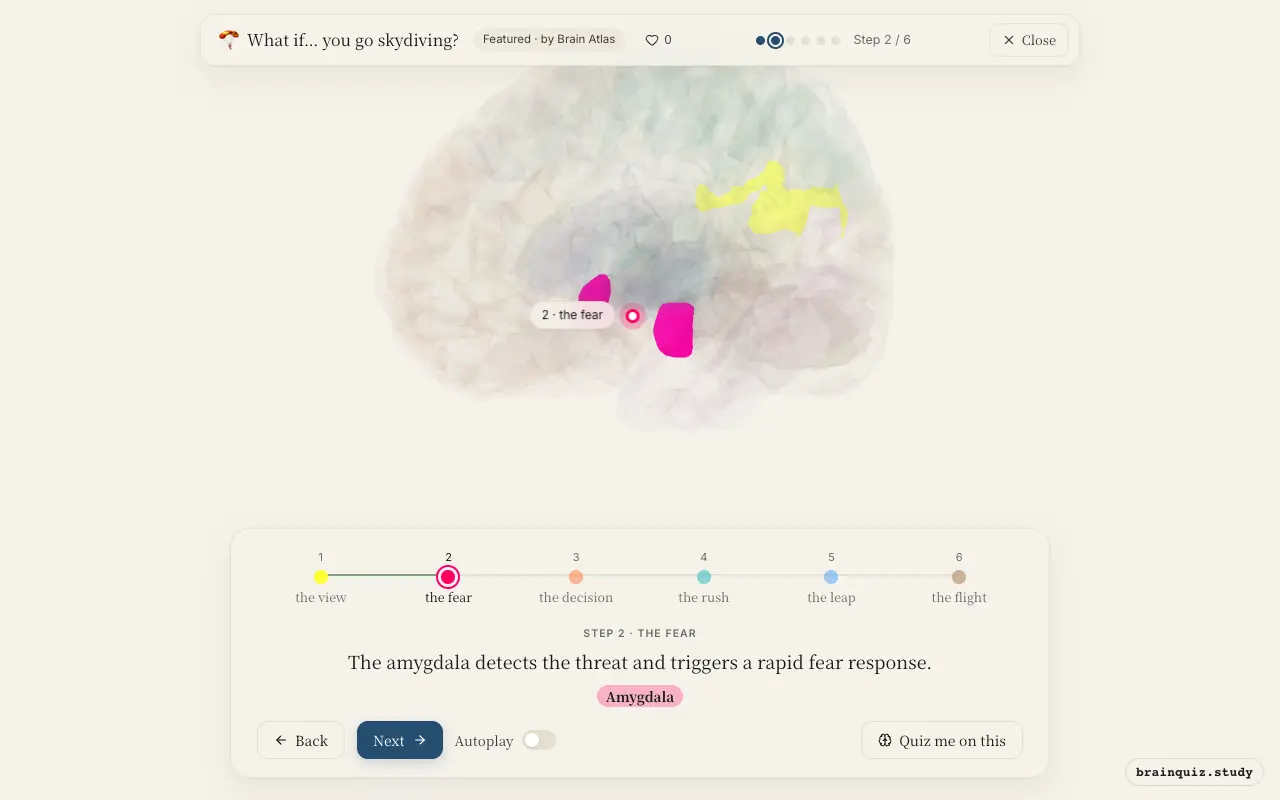
The amygdala is central to threat detection and emotional memory. It activates within milliseconds of seeing the height, before conscious awareness, and initiates a cascade of physiological changes such as increased heart rate and sweating.
3. Prefrontal Cortex: the decision
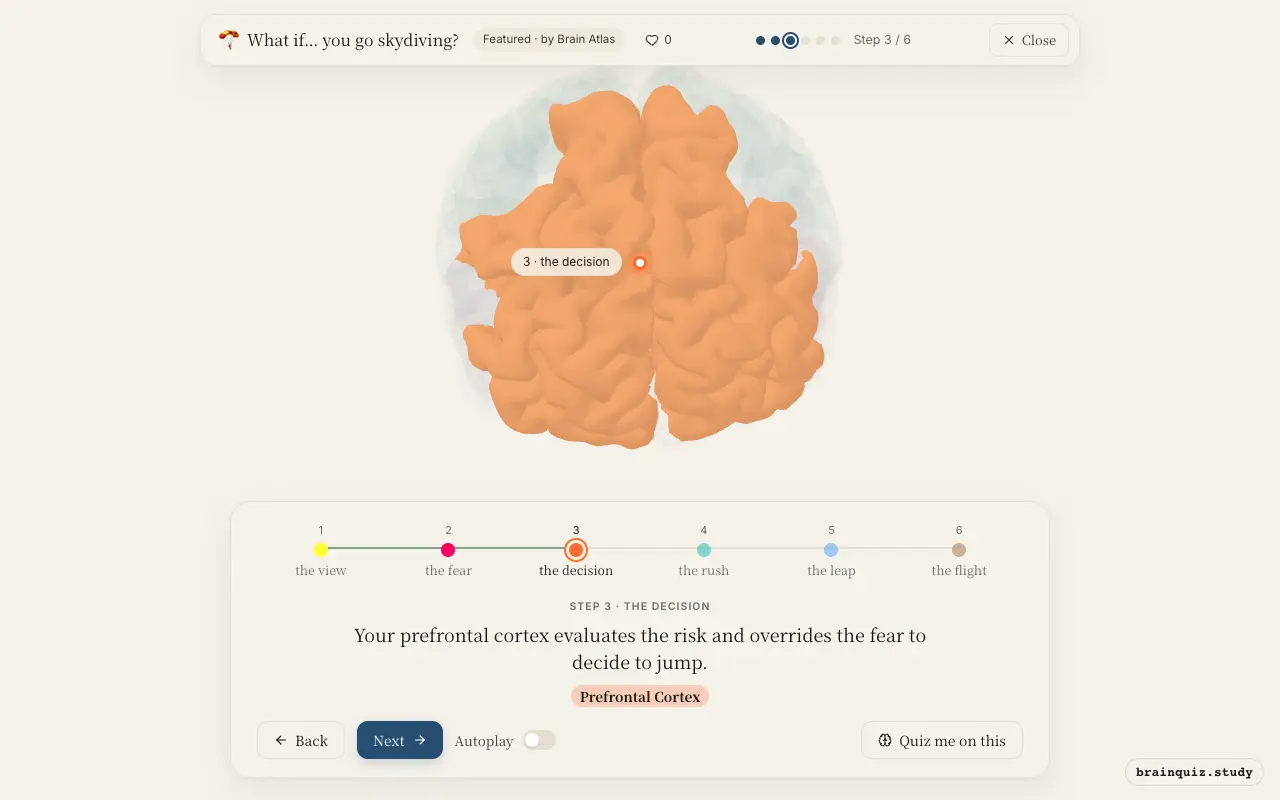
The prefrontal cortex supports executive functions like planning and impulse control. It communicates with the amygdala to dampen the fear response and allows you to make a rational decision based on training and expected reward.
4. Hypothalamus: the rush

The hypothalamus coordinates the body's stress response by triggering the release of adrenaline and cortisol from the adrenal glands. This increases heart rate, blood pressure, and energy availability, preparing you for action.
5. Motor Cortex: the leap
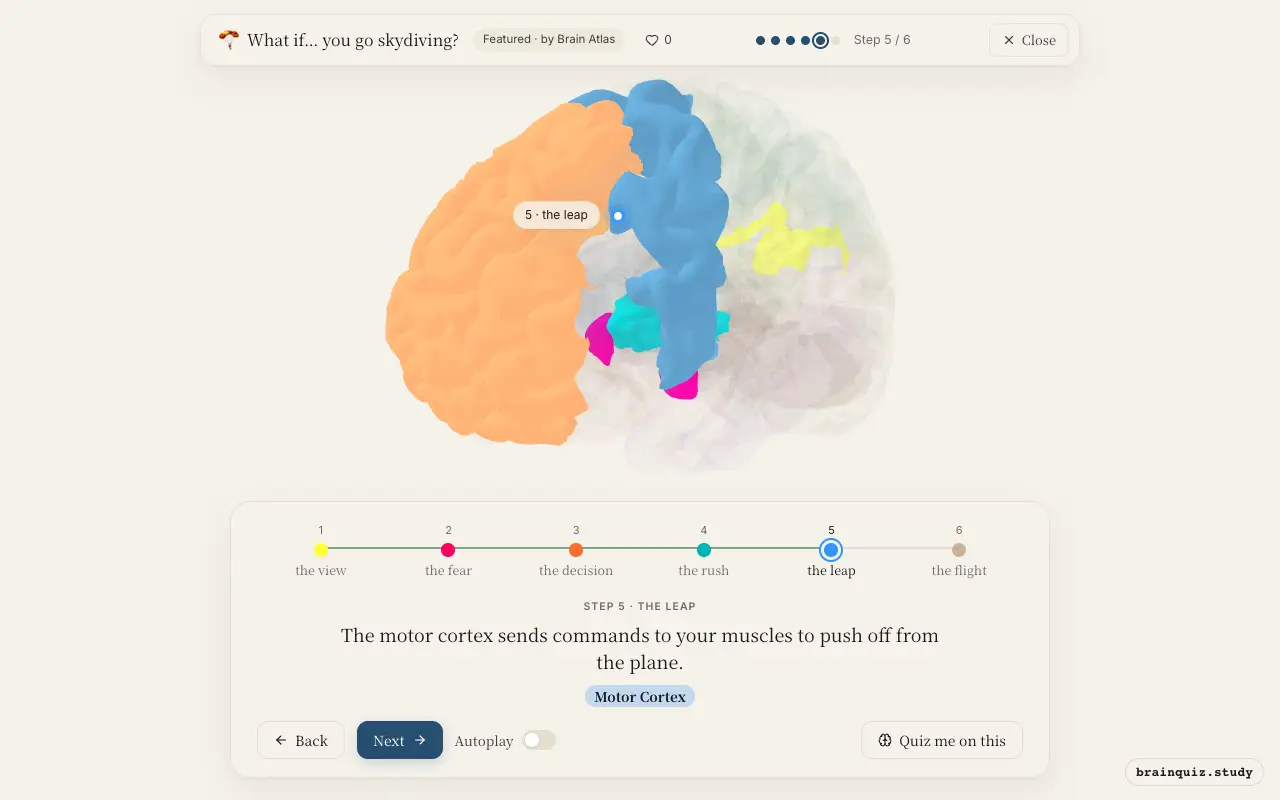
The motor cortex initiates voluntary movement by sending signals down the corticospinal tract to lower motor neurons. It generates the precise sequence of muscle activations needed to step out of the aircraft.
6. Cerebellum: the flight
The cerebellum receives input from the vestibular system, proprioceptors, and visual system to monitor body position and adjust muscle tone in real time. It ensures coordinated posture and limb movements despite the chaotic sensory environment.
Good to know
- The amygdala can respond to a threat in less than 100 milliseconds, before conscious awareness.
- The prefrontal cortex can inhibit amygdala activity, a process known as emotion regulation.
- Adrenaline released during the stress response enhances memory consolidation for emotional events.
Skydiving vs. Roller Coaster
Both trigger fear and adrenaline, but skydiving requires a deliberate decision to jump, engaging the prefrontal cortex more strongly. Roller coasters involve predictable tracks, so the cerebellum handles more rhythmic motion rather than novel freefall adjustments.
Test yourself
Which brain region is primarily responsible for the initial fear response when you look out the plane door?
What role does the prefrontal cortex play in skydiving?
Which region coordinates your body position during freefall?
0 of 3 answered · 0 correct
Simplified: many regions work together at once, and this shows the main players in the order they act.