What happens in your brain when you get a runner's high?
Updated
A runner's high involves the hypothalamus releasing endorphins, the periaqueductal grey reducing pain, the anterior cingulate processing effort, the insula monitoring bodily states, and the nucleus accumbens generating euphoria.
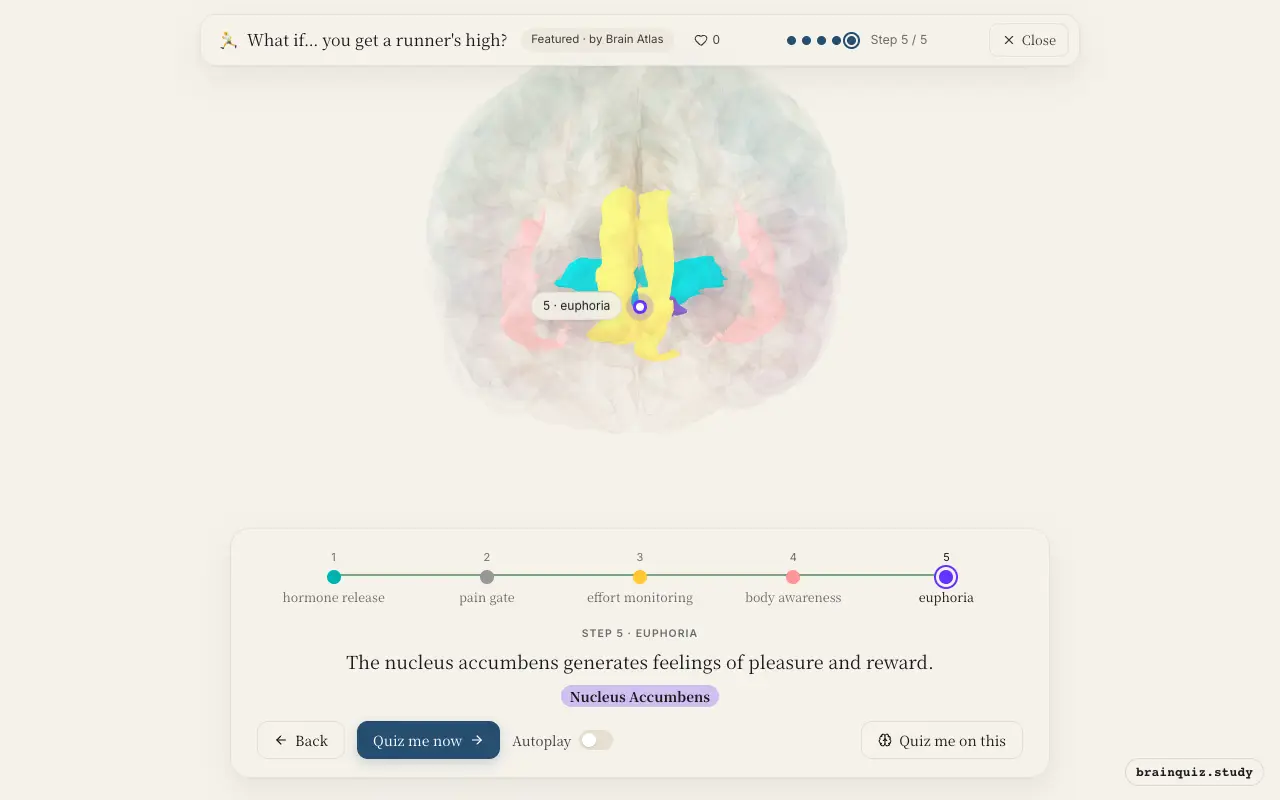
Watch it light up on the 3D brain
Brain regions that light up
| Order | Region | What it does here |
|---|---|---|
| 1 | Hypothalamus | The hypothalamus initiates the release of endorphins into the bloodstream. |
| 2 | Periaqueductal Grey | The periaqueductal grey dampens pain signals ascending from the body. |
| 3 | Anterior Cingulate Cortex | The anterior cingulate cortex evaluates the physical effort and pain associated with running. |
| 4 | Insula | The insula tracks internal bodily states such as heart rate and breathing. |
| 5 | Nucleus Accumbens | The nucleus accumbens generates feelings of pleasure and reward. |
1. Hypothalamus: hormone release
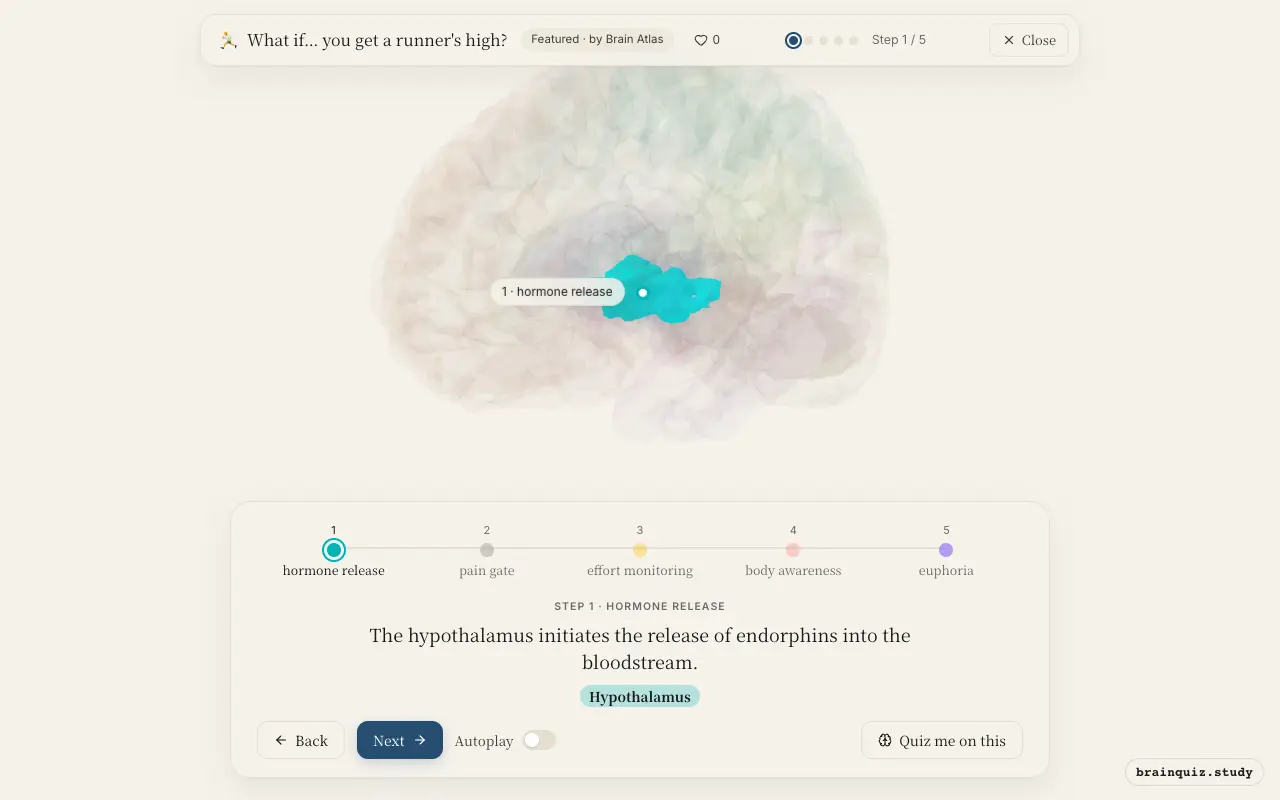
Endorphins are endogenous opioid peptides that act as natural painkillers. During prolonged exercise, the hypothalamus and pituitary gland release these peptides, which then travel through the blood and cerebrospinal fluid to bind opioid receptors in the brain and spinal cord.
2. Periaqueductal Grey: pain gate
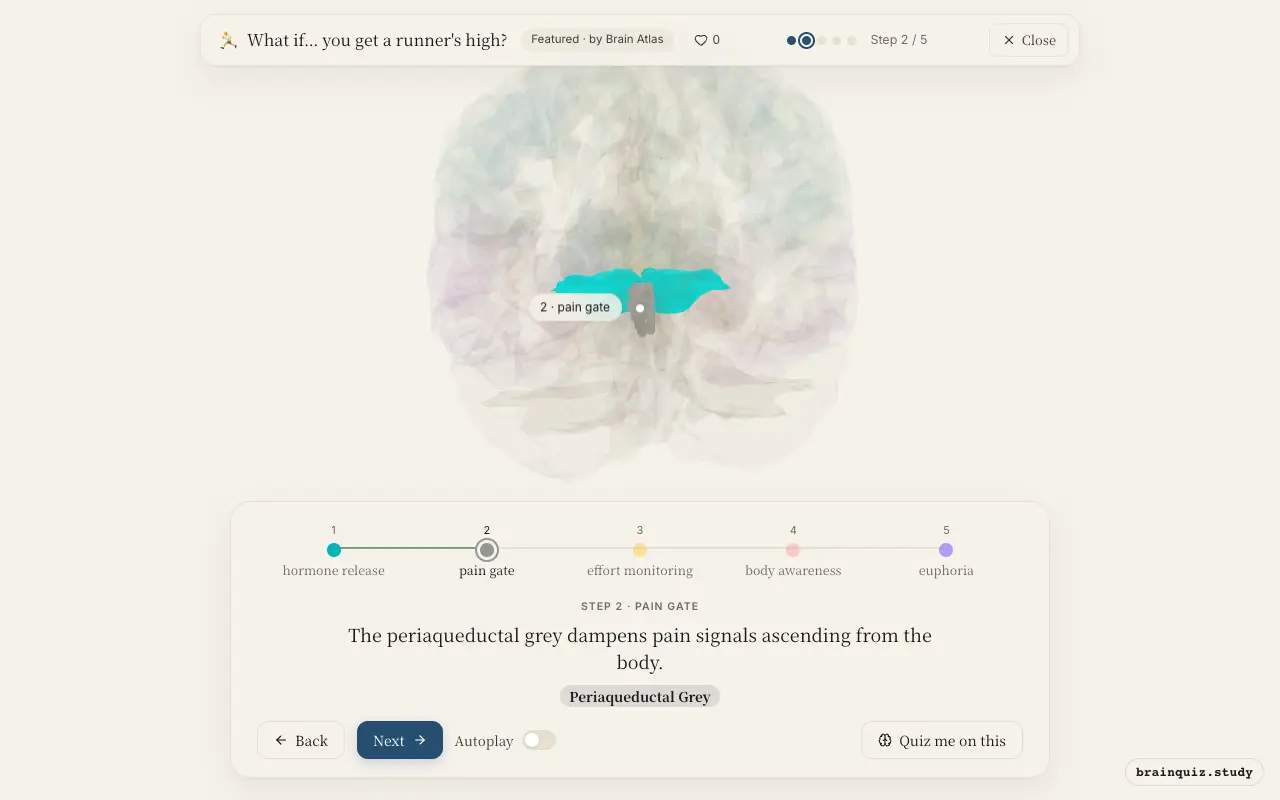
Endorphins activate the periaqueductal grey, which in turn sends descending inhibitory signals to the spinal cord. This reduces the transmission of pain information, contributing to the analgesic effect felt during a runner's high.
3. Anterior Cingulate Cortex: effort monitoring
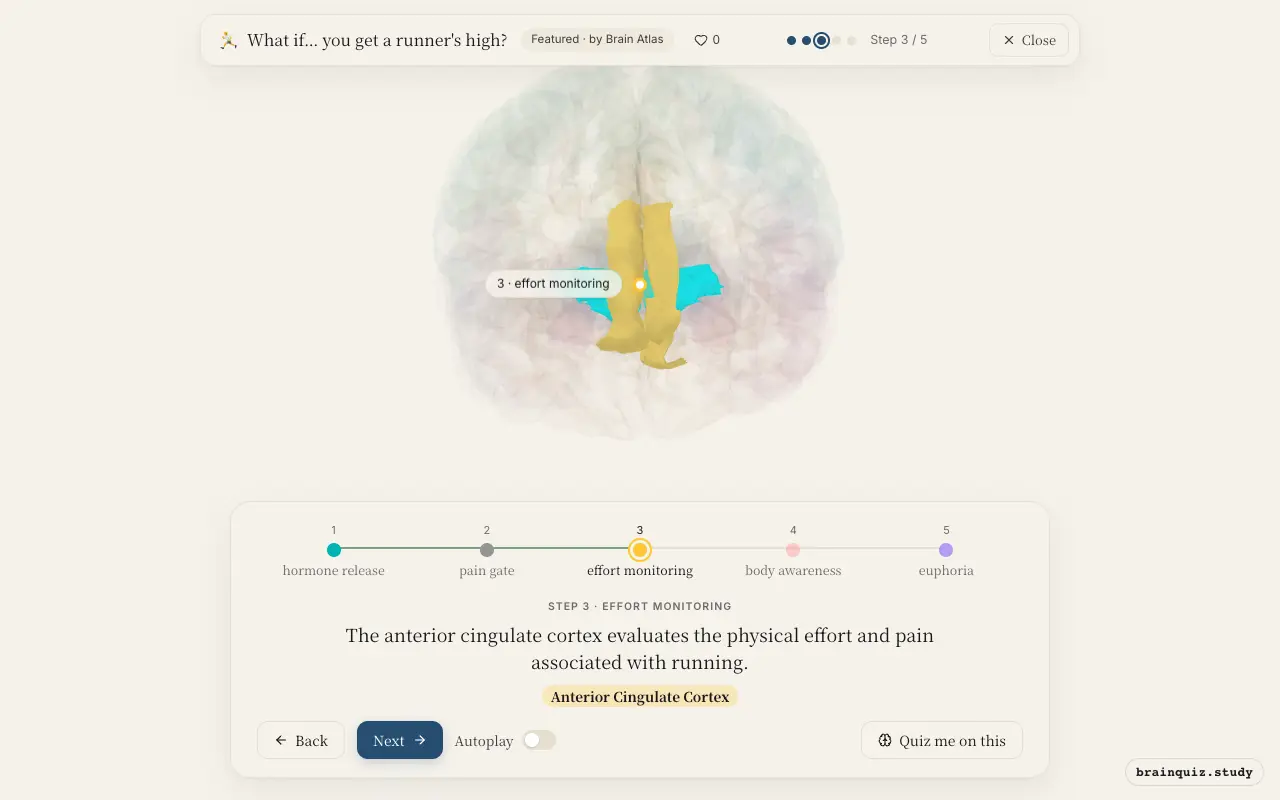
The anterior cingulate cortex is involved in pain processing and conflict monitoring. During exercise, it integrates signals about physical exertion and discomfort, helping to adjust motivation and effort. Its activity may be modulated by endorphins, reducing the subjective unpleasantness of pain.
4. Insula: body awareness
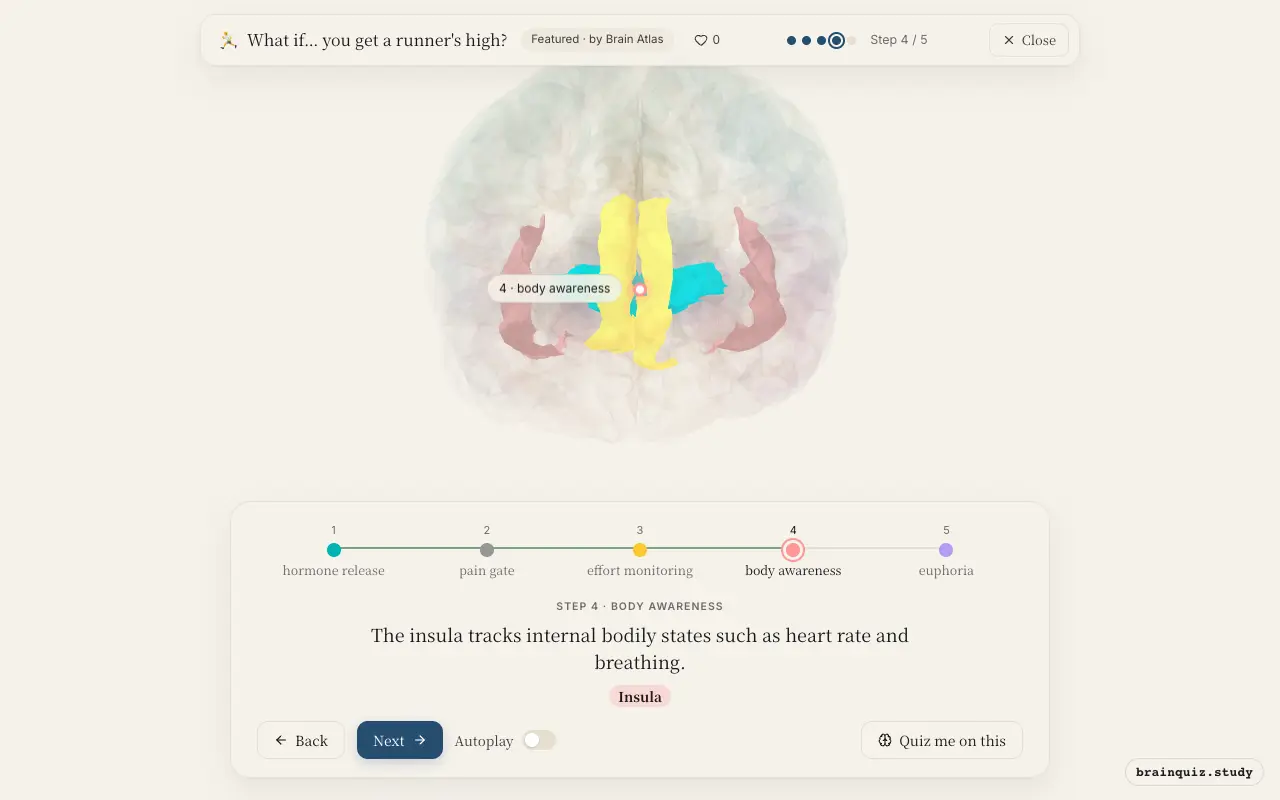
The insula is key for interoception, the perception of internal body signals. During a runner's high, it processes increased heart rate, respiration, and muscle tension, contributing to the altered body awareness and feelings of well-being.
5. Nucleus Accumbens: euphoria
Endorphins act on opioid receptors in the nucleus accumbens, a central hub of the brain's reward circuitry. This activation produces euphoria and reinforces the behavior, making the runner feel a sense of accomplishment and well-being.
Good to know
- Endorphins are chemically similar to opiate drugs like morphine and bind to the same receptors in the brain.
- The runner's high is more likely to occur during prolonged, continuous exercise like distance running than during short, intense bursts.
- Studies suggest that endocannabinoids, not just endorphins, may also contribute to the euphoric feeling after exercise.
Runner's high vs typical workout
In a typical workout without euphoria, the same regions are active but to a lesser degree. The hypothalamus releases fewer endorphins, so the periaqueductal grey provides less pain relief, and the nucleus accumbens shows weaker reward activation. A runner's high involves a more pronounced opioid response and greater dampening of pain and effort signals.
Test yourself
Which brain region is primarily responsible for releasing endorphins during a runner's high?
How does the periaqueductal grey contribute to the runner's high?
What role does the nucleus accumbens play in the runner's high?
0 of 3 answered · 0 correct
Simplified: many regions work together at once, and this shows the main players in the order they act.