What happens in your brain when you ride a bike?
Updated
Visual cortex processes the scene, premotor cortex plans movement, motor cortex executes commands, cerebellum coordinates balance, and somatosensory cortex provides feedback—together enabling smooth cycling.
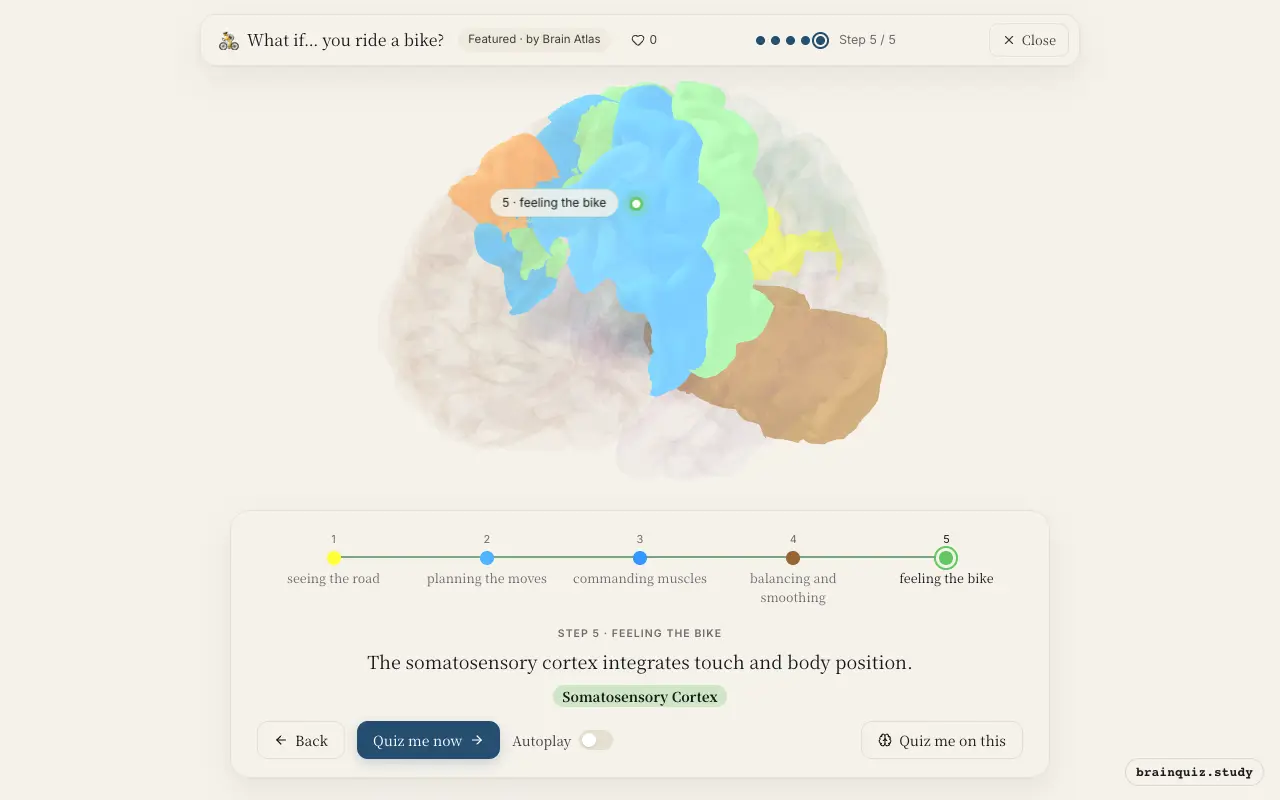
Watch it light up on the 3D brain
Brain regions that light up
| Order | Region | What it does here |
|---|---|---|
| 1 | Visual Cortex | The visual cortex processes the road, obstacles, and motion. |
| 2 | Premotor Cortex | The premotor cortex plans the sequence of muscle activations. |
| 3 | Motor Cortex | The motor cortex sends signals to leg and arm muscles. |
| 4 | Cerebellum | The cerebellum fine-tunes movement using feedback. |
| 5 | Somatosensory Cortex | The somatosensory cortex integrates touch and body position. |
1. Visual Cortex: seeing the road
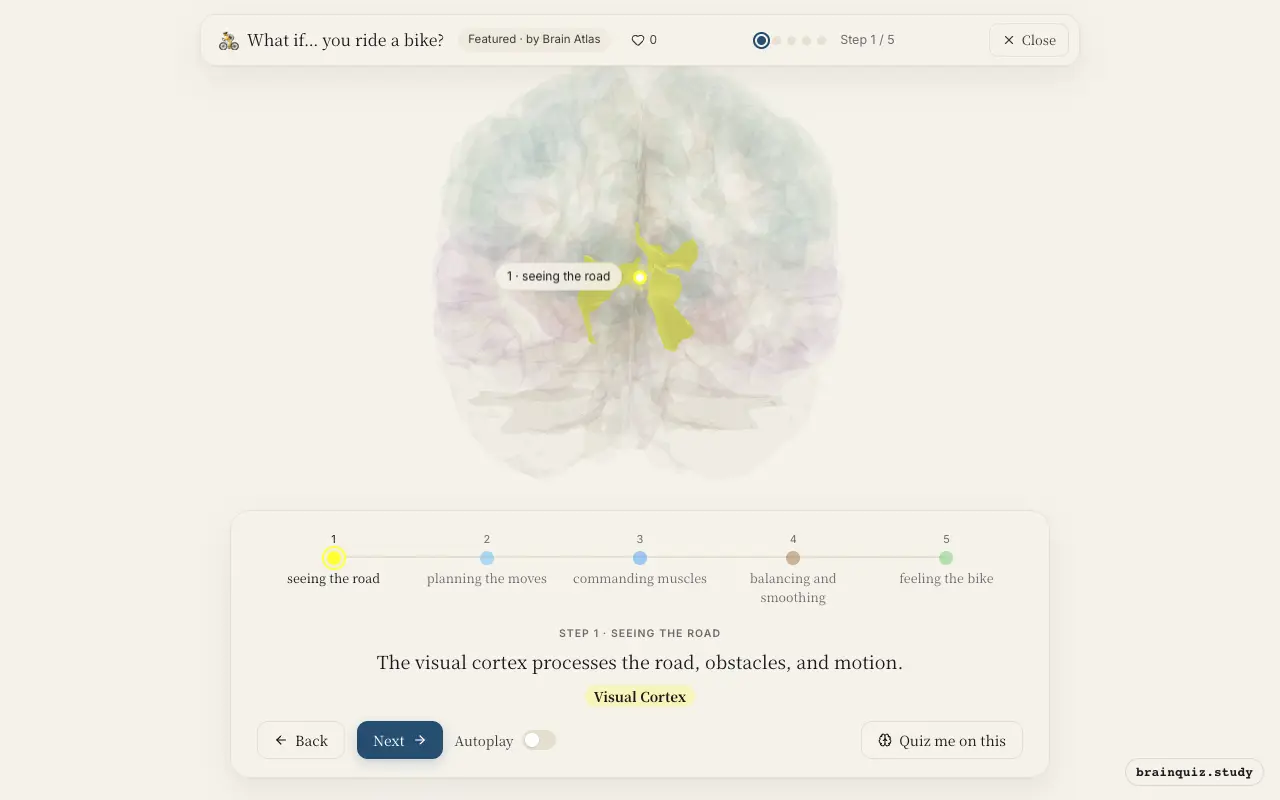
The visual cortex processes the visual scene, identifying the road, obstacles, and motion. It sends this information to other brain areas for planning. Without this processing, you could not navigate the bike safely.
2. Premotor Cortex: planning the moves
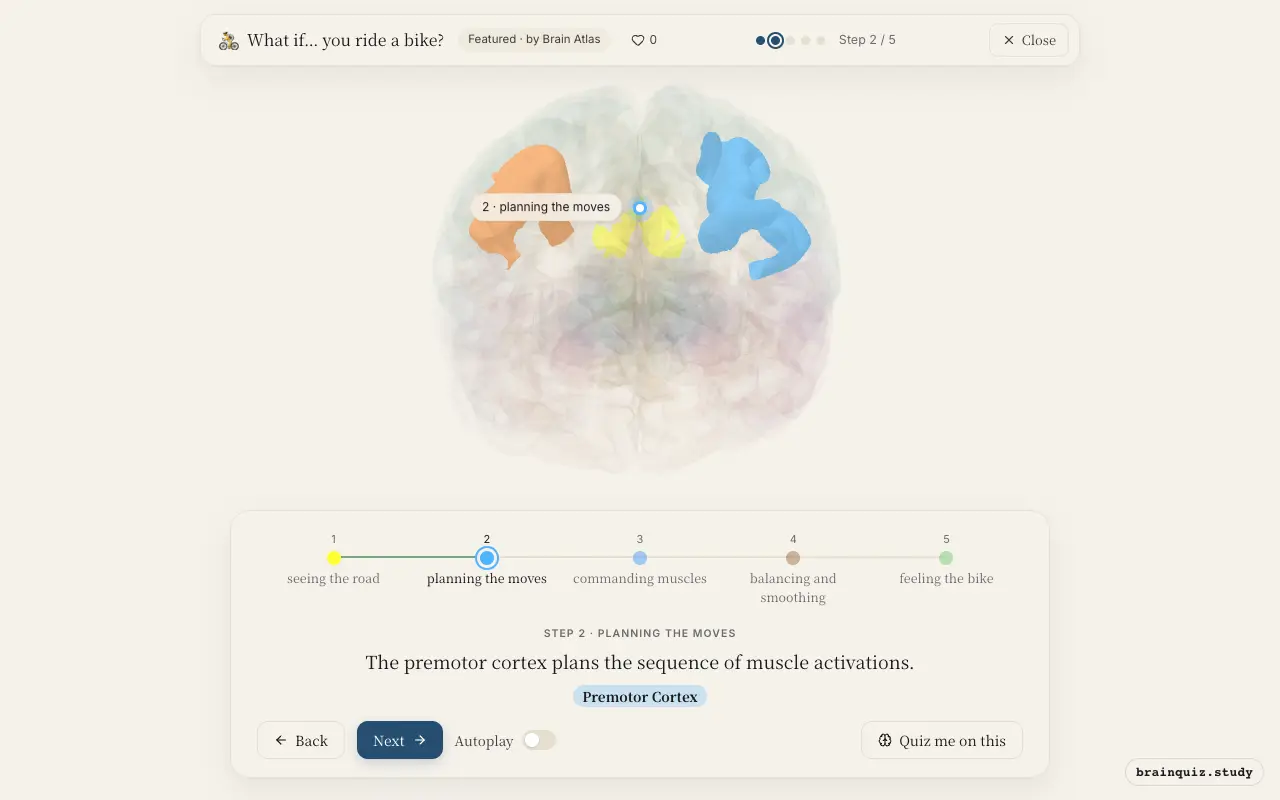
The premotor cortex uses visual information to plan the sequence of muscle activations required for pedaling and steering. It prepares the motor commands before they are sent to the primary motor cortex. This planning occurs just before movement begins.
3. Motor Cortex: commanding muscles
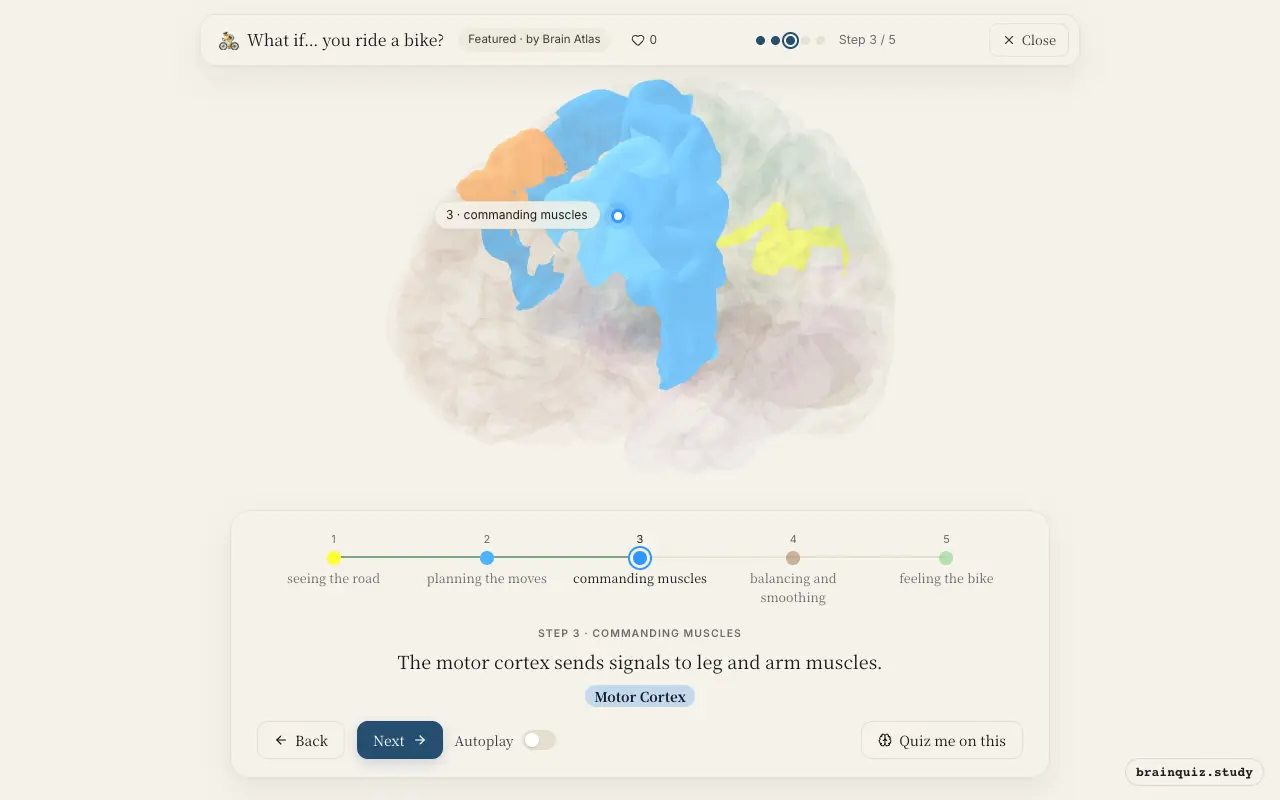
The primary motor cortex sends neural signals down the corticospinal tract to activate leg and arm muscles. It has a somatotopic organization, with specific areas for different body parts. These signals produce the voluntary movements of cycling.
4. Cerebellum: balancing and smoothing
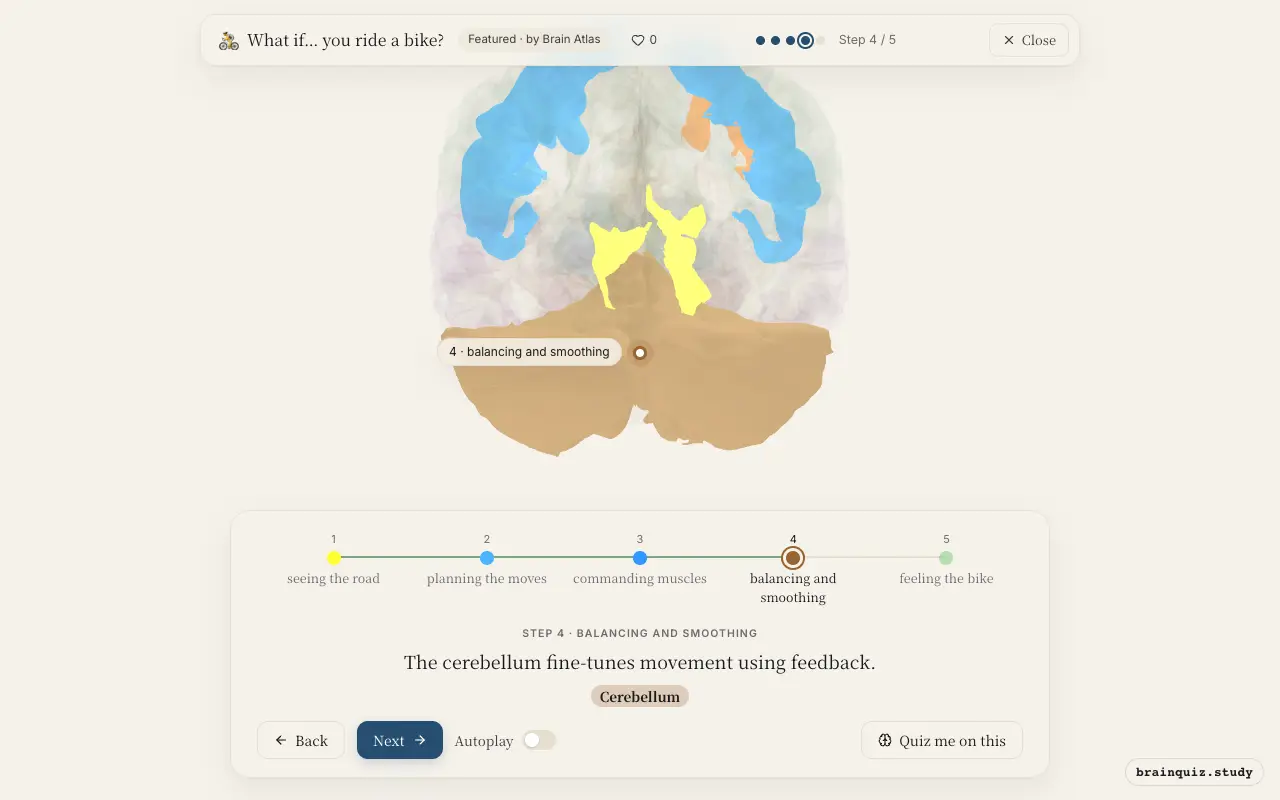
The cerebellum receives a copy of the motor command and sensory feedback from the moving limbs. It compares intended and actual movement, then sends corrective signals to fine-tune ongoing motion. This ensures balance, smooth pedaling, and coordination.
5. Somatosensory Cortex: feeling the bike
The somatosensory cortex processes touch, pressure, and proprioceptive signals from the body, including the hands on the handlebars and feet on pedals. It informs the brain about limb position and contact with the bike, allowing real-time adjustments to maintain stability and control.
Good to know
- The cerebellum contains more neurons than the rest of the brain combined, reflecting its critical role in motor coordination.
- Proprioceptive feedback from muscle spindles and joint receptors is essential for maintaining balance while cycling.
- Basal ganglia help automate well-learned movements, making cycling effortless with practice.
Learning to ride vs expert riding
When learning, the prefrontal cortex is highly active as you consciously monitor balance and pedal timing. Once mastered, activity shifts to the cerebellum and basal ganglia, allowing automatic, effortless cycling. This shift reflects the transition from controlled to automatic processing.
Test yourself
Which brain region is primarily responsible for planning the sequence of movements before you start pedaling?
What role does the cerebellum play during cycling?
Damage to which brain region would most likely impair your ability to maintain balance while riding a bike?
0 of 3 answered · 0 correct
Simplified: many regions work together at once, and this shows the main players in the order they act.