What happens in your brain when you gossip?
Updated
When you gossip, your auditory cortex processes the words, the amygdala flags emotional salience, the prefrontal cortex plans your response, the nucleus accumbens drives the rewarding urge to share, and Broca's area with motor cortex produce speech.
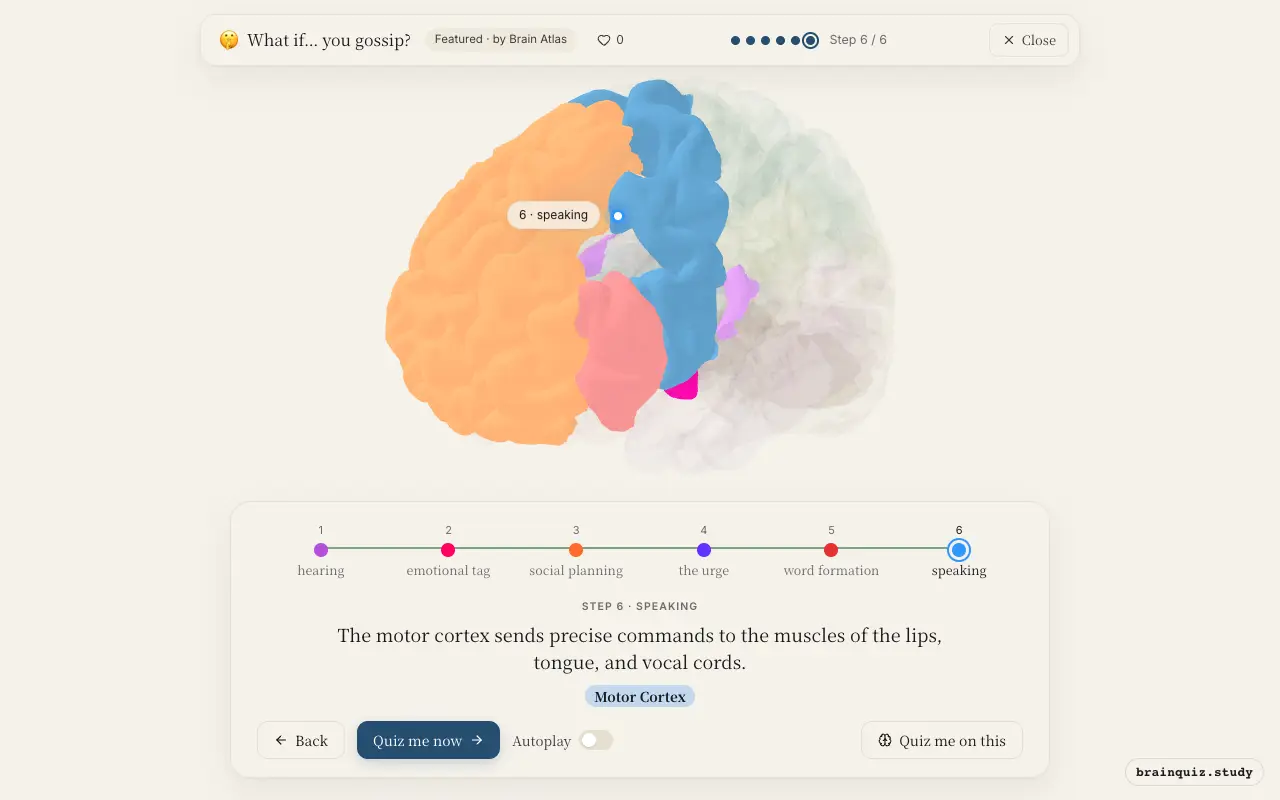
Watch it light up on the 3D brain
Brain regions that light up
| Order | Region | What it does here |
|---|---|---|
| 1 | Auditory Cortex | The auditory cortex processes the spoken words of the gossip. |
| 2 | Amygdala | The amygdala evaluates the social and emotional significance of the information. |
| 3 | Prefrontal Cortex | The prefrontal cortex weighs the social consequences and plans what to say next. |
| 4 | Nucleus Accumbens | The nucleus accumbens generates a sense of reward and motivates you to share. |
| 5 | Broca's Area | Broca's area converts the planned message into grammatical sentences. |
| 6 | Motor Cortex | The motor cortex sends precise commands to the muscles of the lips, tongue, and vocal cords. |
1. Auditory Cortex: hearing
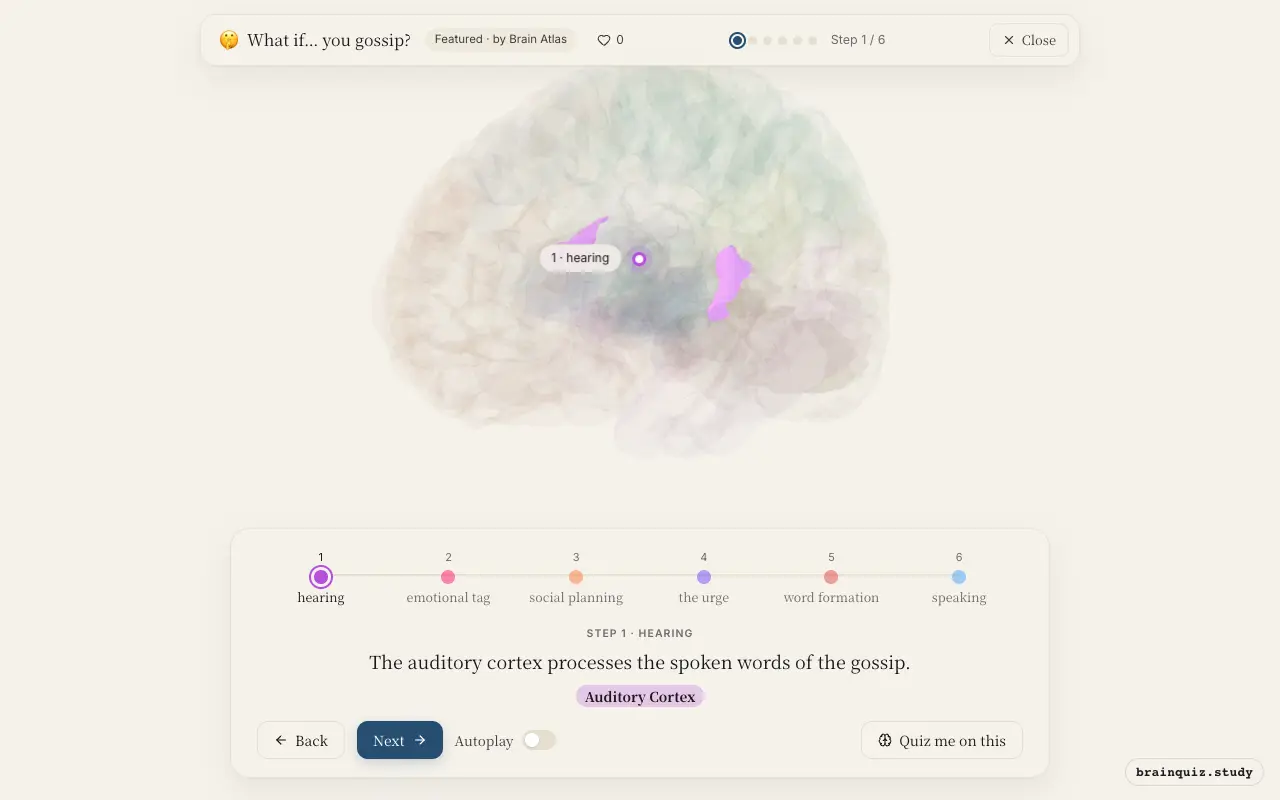
Sound waves are converted into neural signals and analyzed for pitch and phonemes. This region extracts the acoustic features that will be passed on. Without it, you wouldn't understand what was said.
2. Amygdala: emotional tag
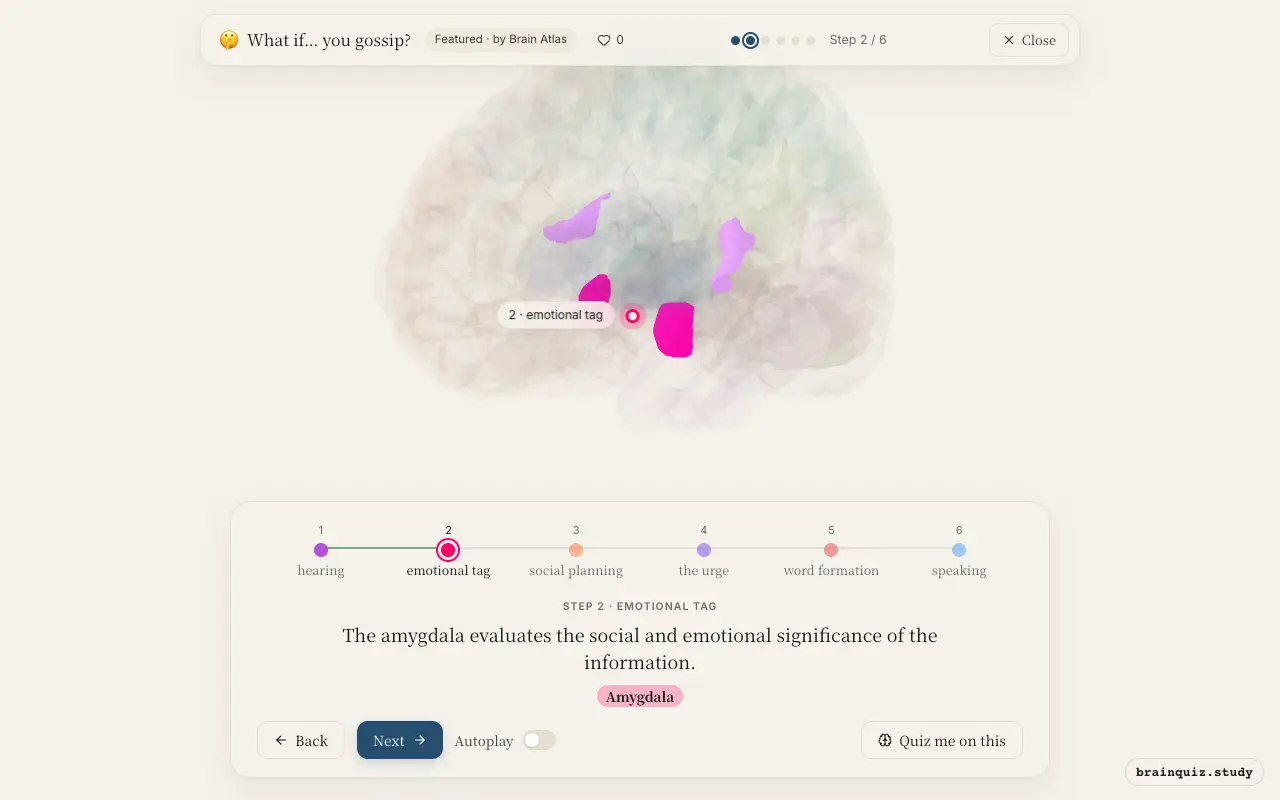
It rapidly flags whether the gossip is threatening, scandalous, or socially valuable. This emotional salience influences how strongly you react. The amygdala helps prioritize the information for further processing.
3. Prefrontal Cortex: social planning
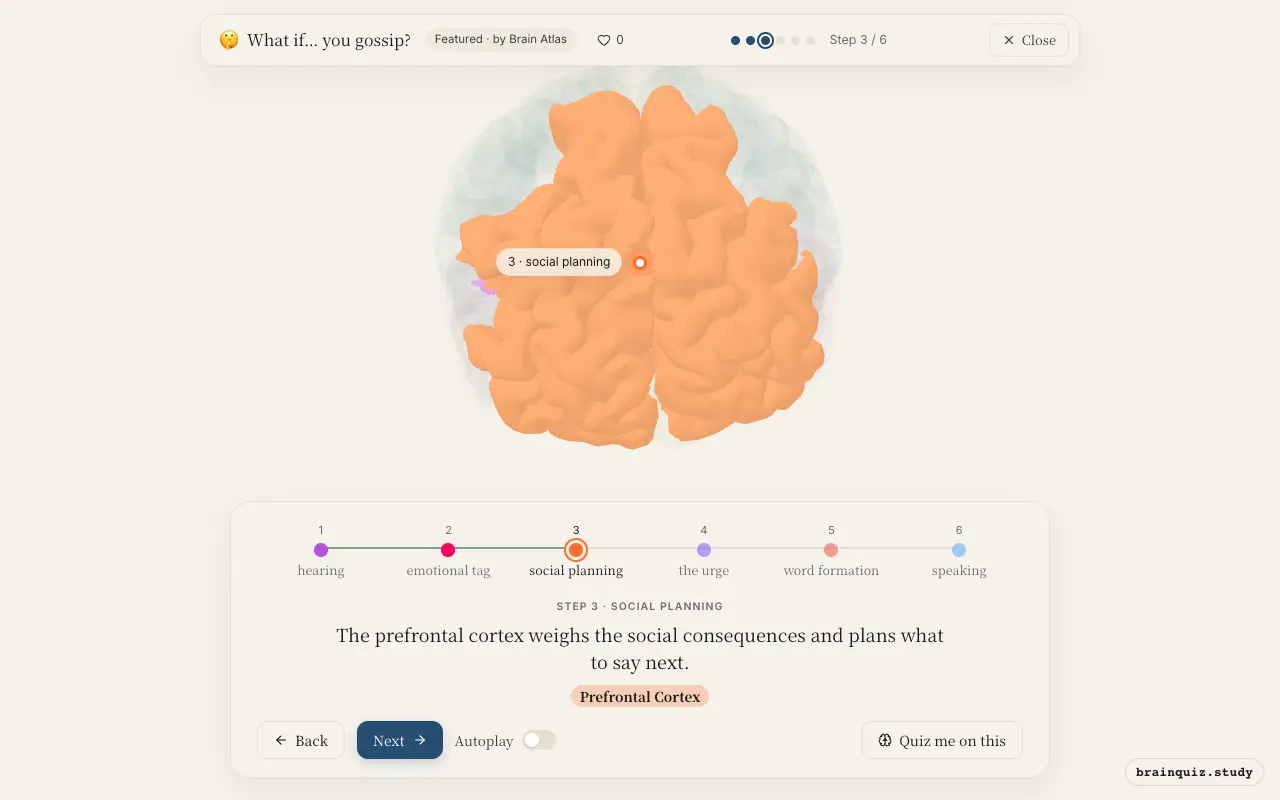
This region evaluates whether sharing the gossip is appropriate, considering social norms and potential outcomes. It also coordinates retrieval of related memories and constructs a narrative. Executive control here guides the conversation.
4. Nucleus Accumbens: the urge
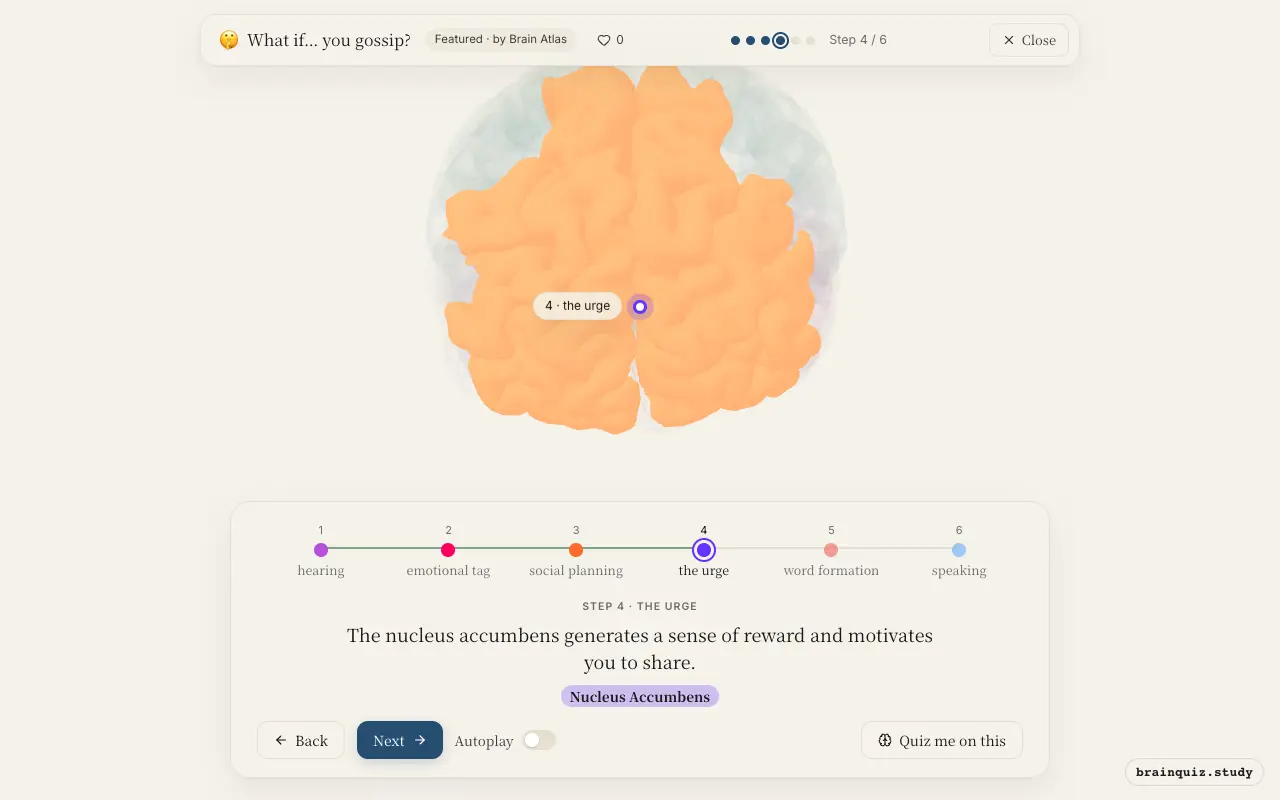
Sharing gossip is often socially rewarding; dopamine is released in this area when anticipation of social bonding occurs. It drives the impulse to pass the information on. The pleasure of being 'in the know' arises here.
5. Broca's Area: word formation
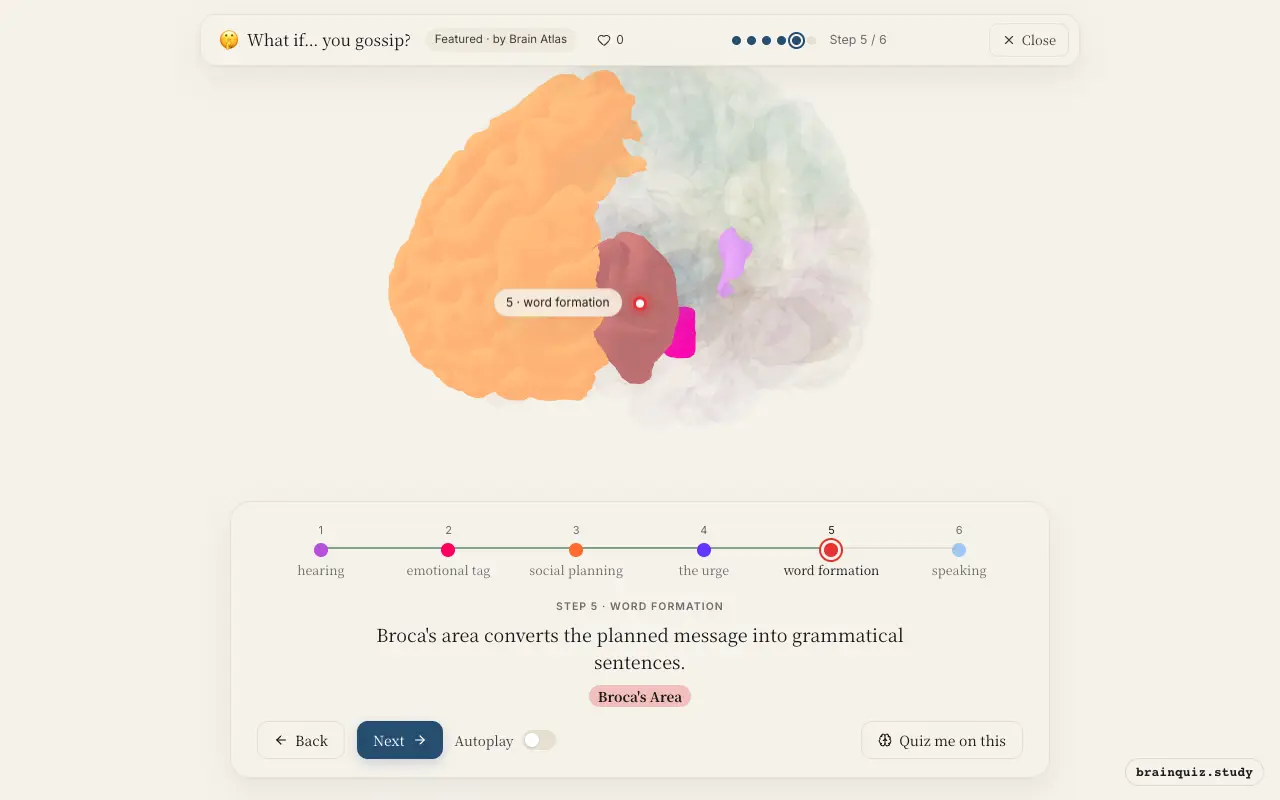
This region arranges words according to syntax and grammar. It coordinates with the prefrontal cortex to express the intended meaning. Damage here would impair fluent gossip.
6. Motor Cortex: speaking
It controls the fine motor movements required for articulation. Neurons in the face area of the motor cortex fire to produce speech sounds. This final step turns thought into audible gossip.
Good to know
- Gossip is a universal human behavior that often involves sharing evaluative information about absent third parties.
- Some studies suggest that the brain's reward system, including the nucleus accumbens, may be activated when people anticipate sharing social information, making gossip potentially motivating.
- Social exclusion activates pain-related regions such as the insula and anterior cingulate cortex; negative gossip may have similar effects, while positive gossip might buffer them.
Gossip vs. Small Talk
Small talk likely relies on language and prefrontal regions for polite exchange, while gossip may recruit the amygdala and nucleus accumbens more strongly because it involves emotionally charged, socially relevant information. This makes gossip more emotionally engaging and harder to resist than idle chat.
Test yourself
Which brain region is most directly responsible for the rewarding feeling when sharing gossip?
Damage to which region would most likely impair the ability to form grammatical sentences while gossiping?
What role does the prefrontal cortex play during gossip?
0 of 3 answered · 0 correct
Simplified: many regions work together at once, and this shows the main players in the order they act.