What happens in your brain when you have a panic attack?
Updated
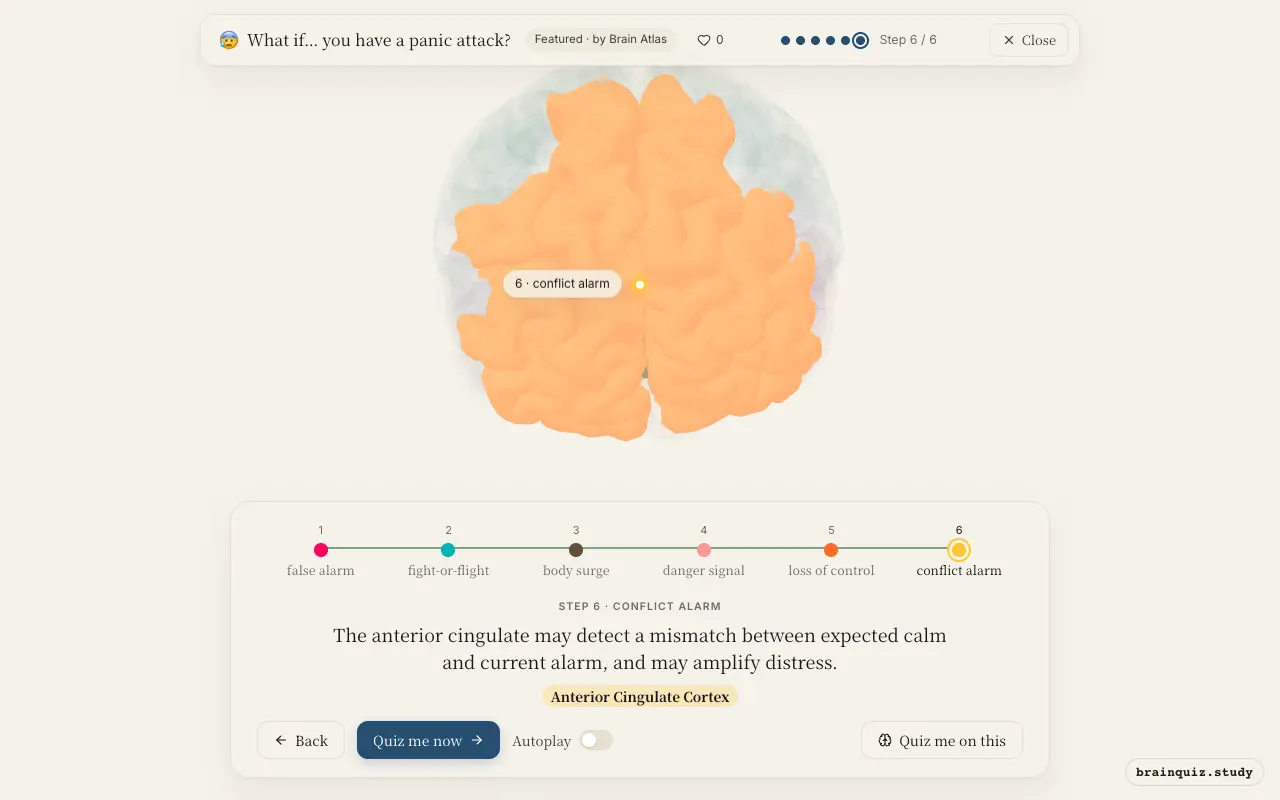
During a panic attack, the amygdala sounds a false alarm, the hypothalamus triggers fight-or-flight, the brainstem speeds heart and breathing, the insula misreads these changes as danger, and the prefrontal cortex loses its calming grip.
Watch it light up on the 3D brain
Brain regions that light up
| Order | Region | What it does here |
|---|---|---|
| 1 | Amygdala | The amygdala detects a threat, even if none exists, and triggers fear. |
| 2 | Hypothalamus | The hypothalamus activates the sympathetic nervous system, preparing the body for action. |
| 3 | Brainstem | The brainstem speeds heart rate and breathing, and heightens arousal via noradrenaline. |
| 4 | Insula | The insula senses racing heart and breathlessness, interpreting them as evidence of danger. |
| 5 | Prefrontal Cortex | The prefrontal cortex struggles to apply the brakes, often becoming less active, so fear escalates. |
| 6 | Anterior Cingulate Cortex | The anterior cingulate may detect a mismatch between expected calm and current alarm, and may amplify distress. |
1. Amygdala: false alarm
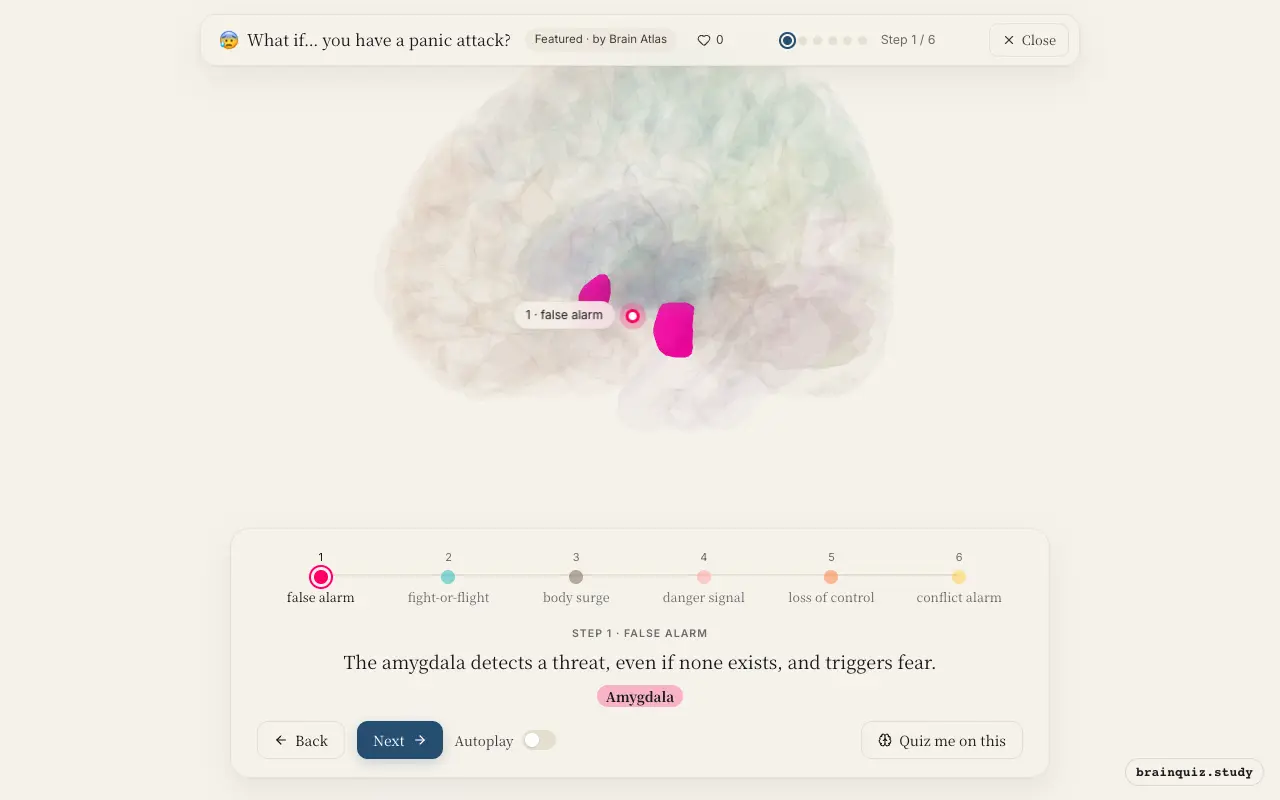
The amygdala is the brain's threat detector. During a panic attack, it fires even without an external threat, perhaps triggered by internal cues or memories. This hyperactivity is thought to arise from both genetic and learned factors, and it sets off the fear cascade.
2. Hypothalamus: fight-or-flight
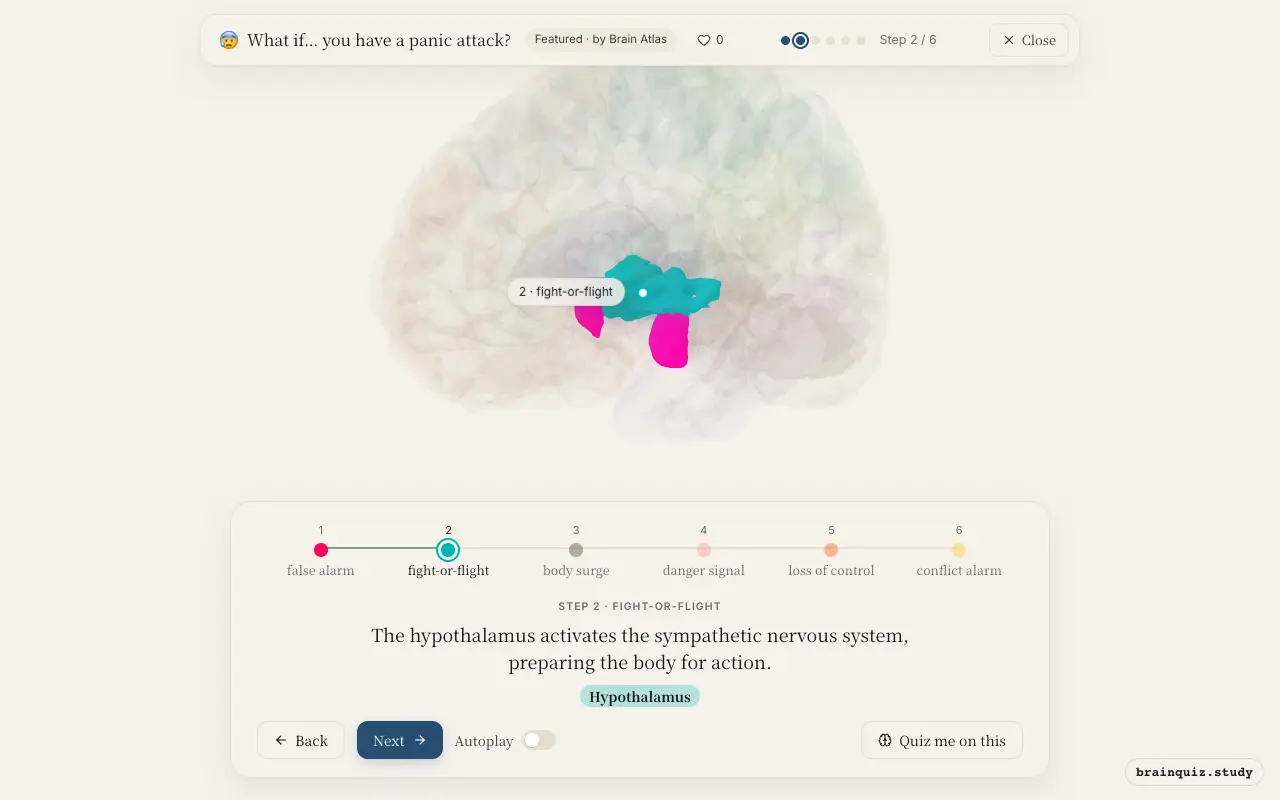
The hypothalamus coordinates the body's stress response. It sends signals to the brainstem and spinal cord to activate the sympathetic nervous system, causing the release of adrenaline from the adrenal glands and preparing the body for fight or flight. This rapid activation is what produces many of the physical symptoms of panic.
3. Brainstem: body surge
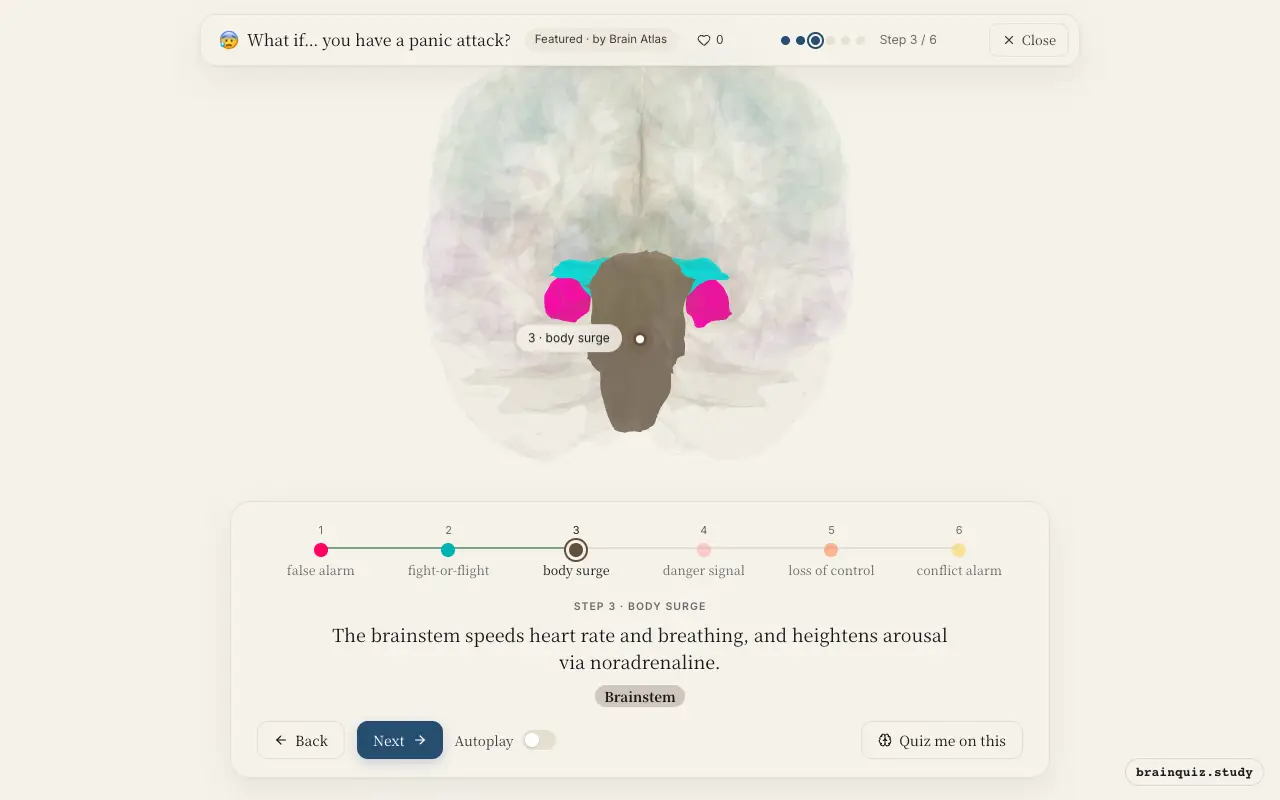
The brainstem contains autonomic centers that increase heart rate, blood pressure, and respiration. It also houses the locus coeruleus, which releases norepinephrine to boost alertness and fear. Together, these changes create the sensation of being overwhelmed. The brainstem also triggers rapid, shallow breathing, which can lead to hyperventilation.
4. Insula: danger signal
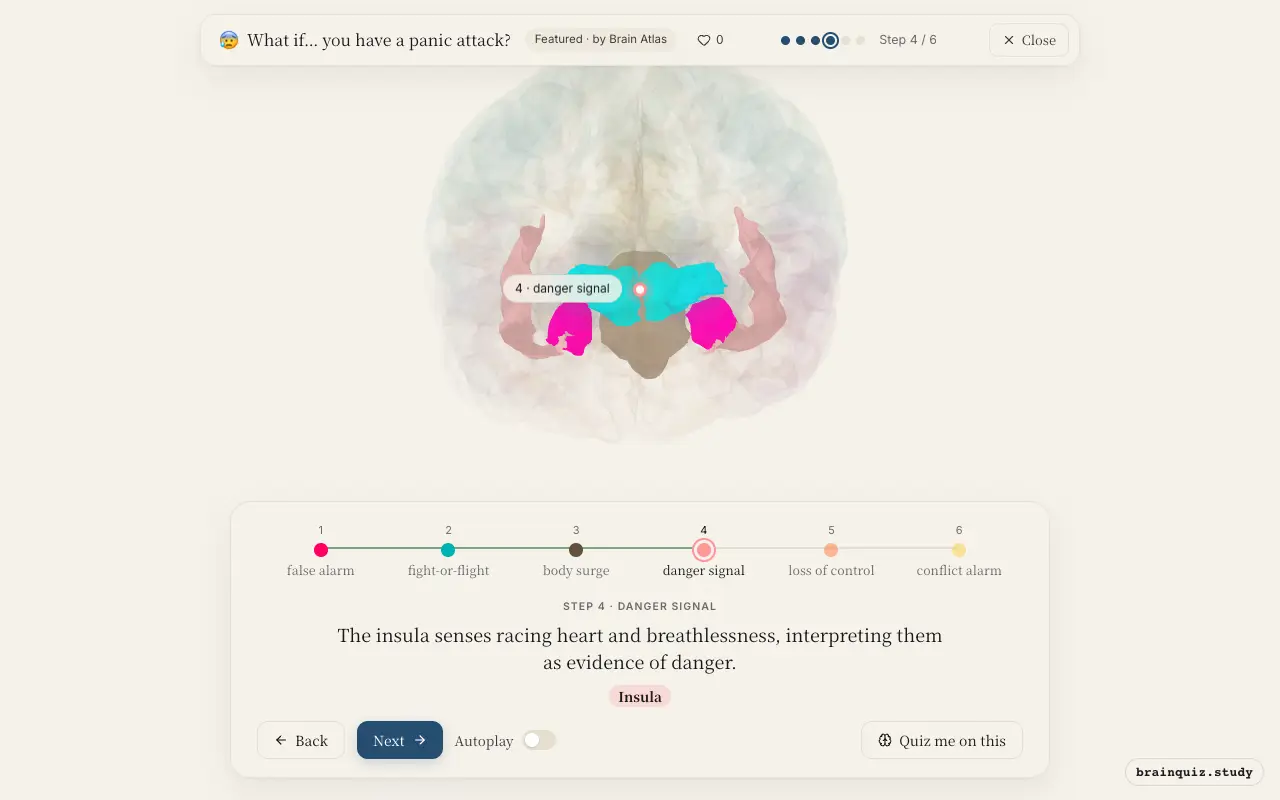
The insula tracks the body's internal state. It receives signals of a pounding heart, rapid breathing, and dizziness. These sensations are misinterpreted as signs of imminent catastrophe, fueling more anxiety and creating a vicious cycle. This misinterpretation is a hallmark of panic disorder.
5. Prefrontal Cortex: loss of control
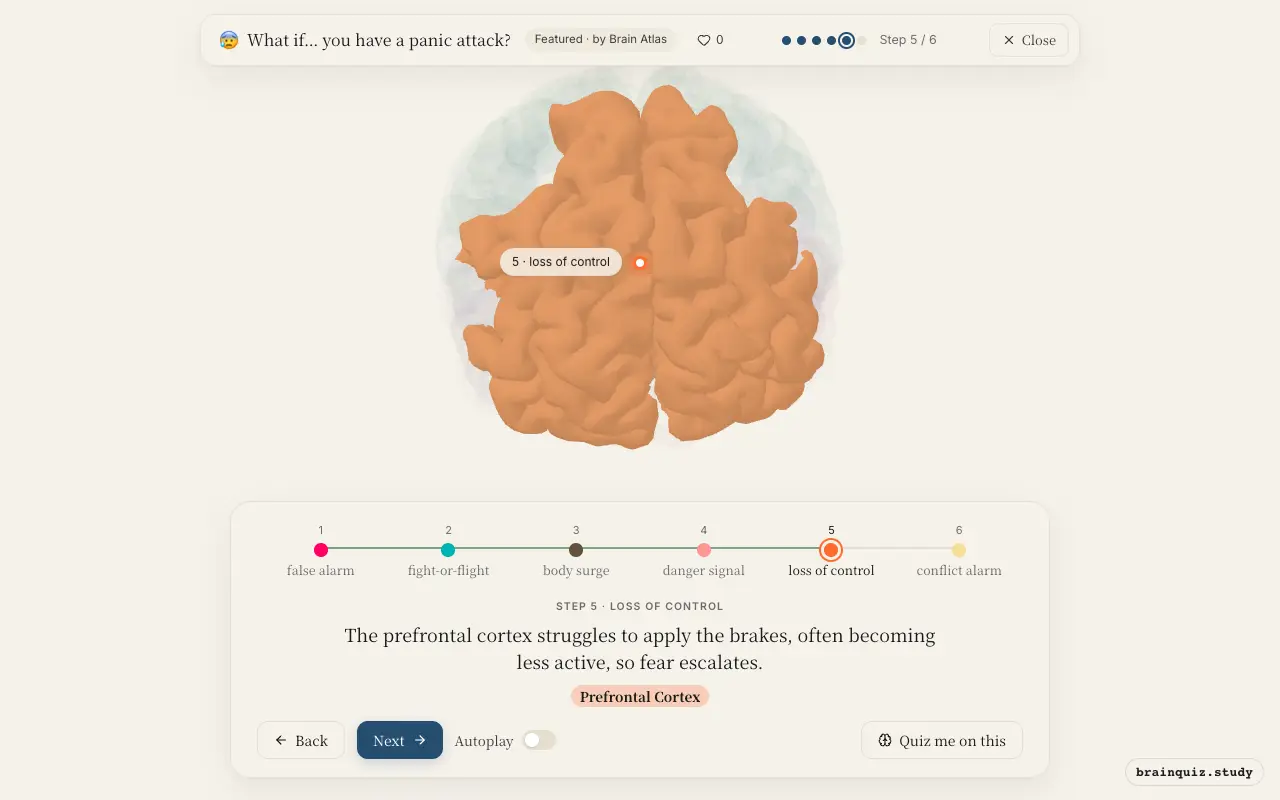
The prefrontal cortex normally regulates emotion by inhibiting the amygdala. During a panic attack, its activity may drop, reducing this top-down control. Without this brake, fear spirals, and the person may feel they are losing control. Studies suggest reduced prefrontal engagement is a neural signature of acute panic.
6. Anterior Cingulate Cortex: conflict alarm
The anterior cingulate monitors for errors and conflicts. It may notice a mismatch between the body's alarm state and the absence of real danger, and it may signal distress. This adds to the subjective experience of panic. Its hyperactivity is part of the salience network, which prioritizes threat-related signals.
Good to know
- The locus coeruleus, a brainstem nucleus, releases norepinephrine that amplifies arousal and fear during a panic attack.
- Hyperventilation reduces blood carbon dioxide, causing dizziness and tingling that can be misinterpreted as danger.
- According to the cognitive model, panic attacks often arise from catastrophic misinterpretation of benign bodily sensations.
Panic attack vs genuine danger
In a normal fear response to a real threat, the amygdala and brainstem activate, but the prefrontal cortex stays engaged to assess and plan. During a panic attack, the threat is internal or false, and prefrontal regulation may be weaker, so the fear response can overshoot.
Test yourself
Which brain region initially triggers a panic attack by sounding a false alarm?
What role does the insula play during a panic attack?
Why does the prefrontal cortex often fail to stop a panic attack?
0 of 3 answered · 0 correct
Simplified: many regions work together at once, and this shows the main players in the order they act. For learning only, not medical advice.