What happens in your brain when you have brain fog?
Updated
Prefrontal cortex underactivity reduces focus; posterior cingulate overactivity triggers mind wandering; anterior cingulate struggles to correct errors; hippocampus impairs memory; thalamus fails to filter sensory input.
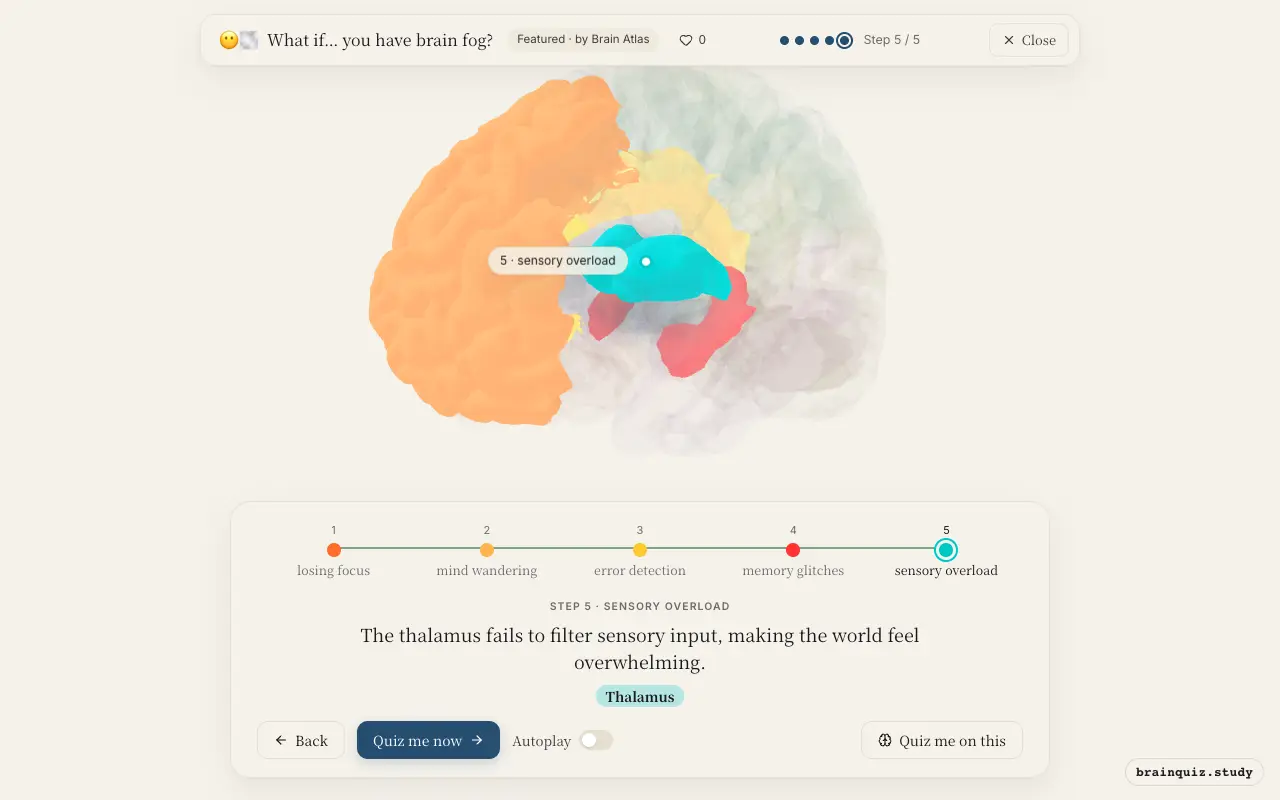
Watch it light up on the 3D brain
Brain regions that light up
| Order | Region | What it does here |
|---|---|---|
| 1 | Prefrontal Cortex | The prefrontal cortex underperforms, making it hard to hold thoughts or switch tasks. |
| 2 | Posterior Cingulate Cortex | The posterior cingulate becomes overactive, pulling attention into internal thoughts. |
| 3 | Anterior Cingulate Cortex | The anterior cingulate detects the mismatch between intention and performance, adding mental effort. |
| 4 | Hippocampus | The hippocampus struggles to encode and retrieve new memories, causing forgetfulness. |
| 5 | Thalamus | The thalamus fails to filter sensory input, making the world feel overwhelming. |
1. Prefrontal Cortex: losing focus
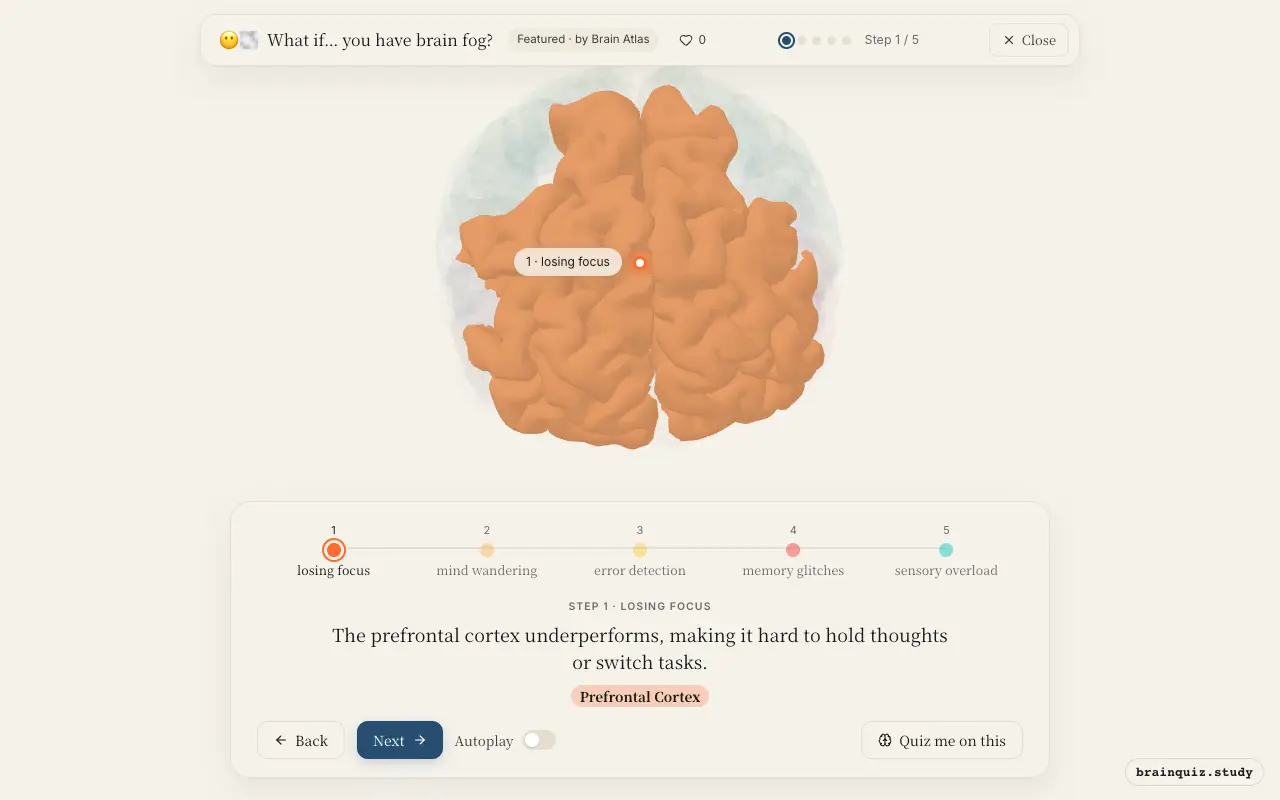
This region orchestrates executive functions like working memory and decision-making. In brain fog, its activity is often diminished, leading to difficulties with concentration, planning, and maintaining attention on a single task. The result is a sense of mental clouding and slowed thinking.
2. Posterior Cingulate Cortex: mind wandering
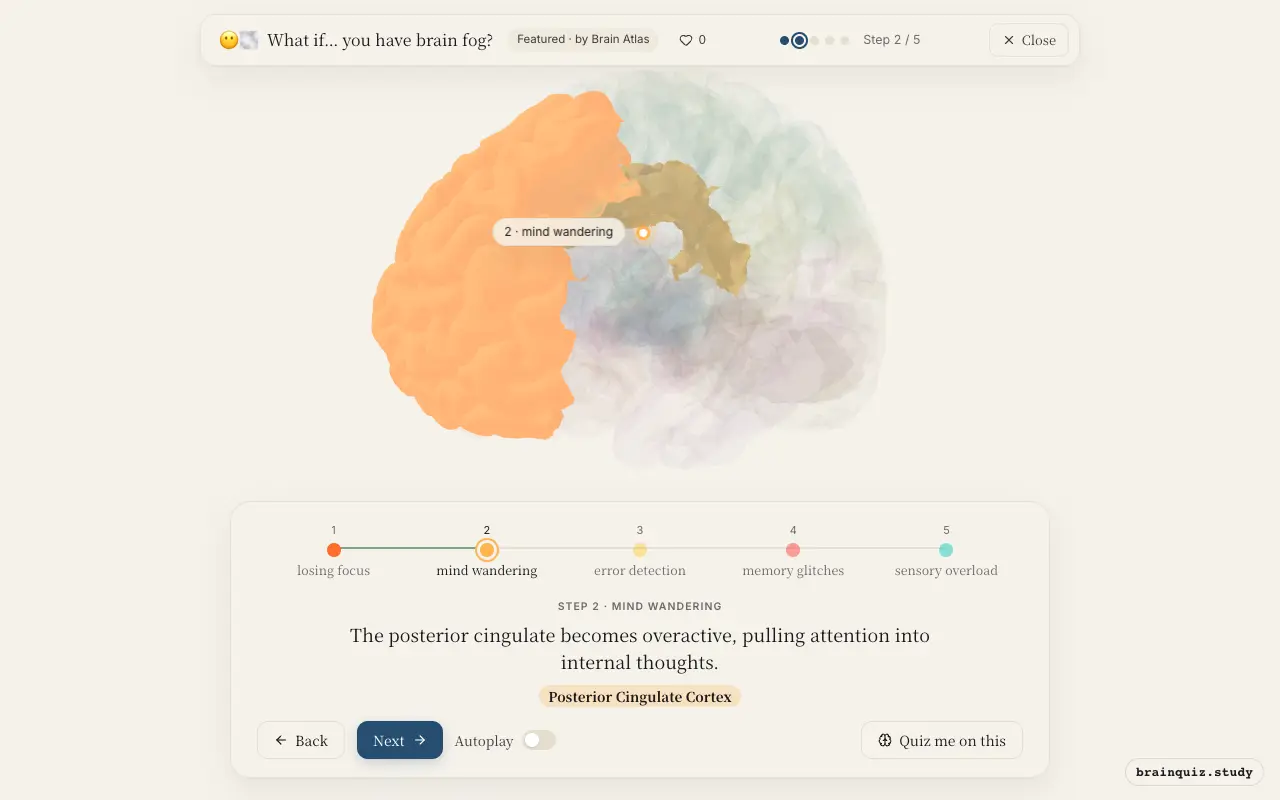
As a hub of the default mode network, the posterior cingulate is active during self-referential thinking and mind wandering. In brain fog, it may intrude during tasks, stealing cognitive resources from the external focus and causing distractibility and lapses in attention.
3. Anterior Cingulate Cortex: error detection
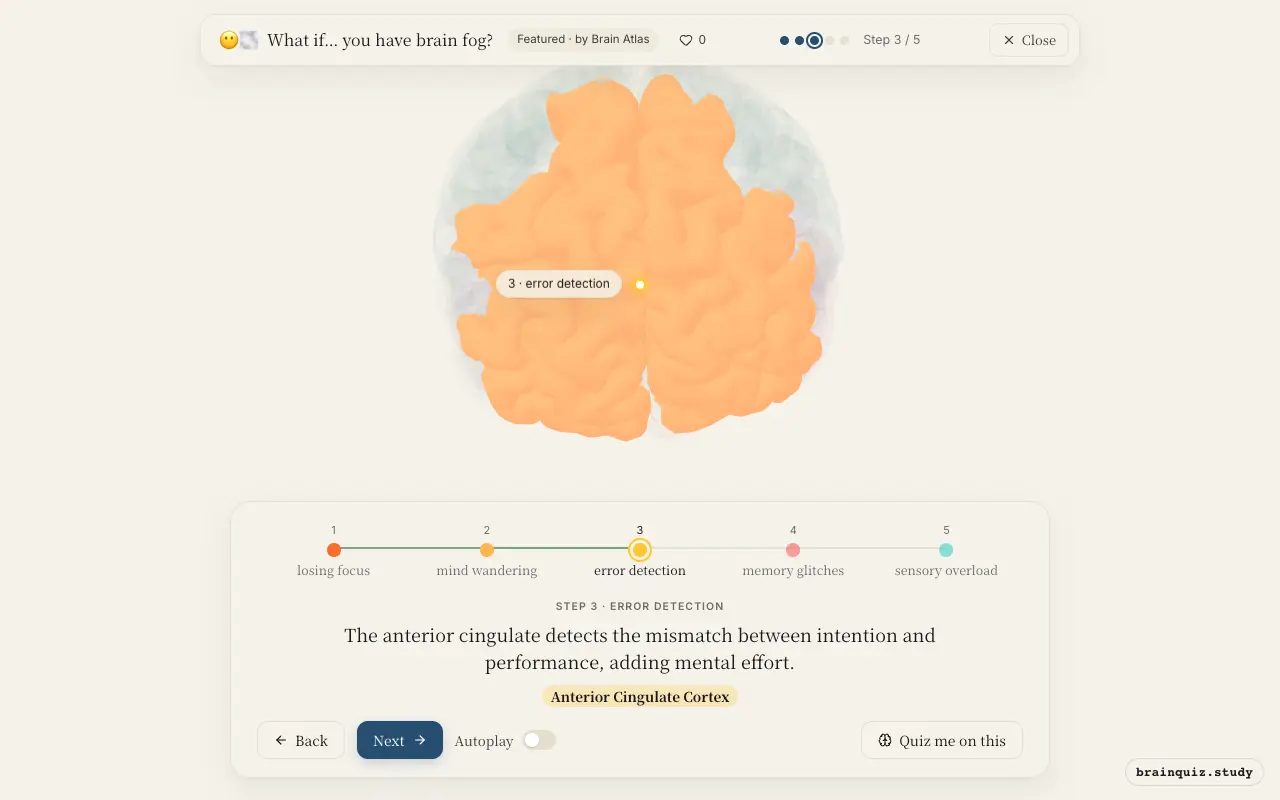
This region monitors for conflicts and errors. When brain fog causes mistakes or slow responses, the anterior cingulate may become overactive in a futile attempt to correct them, contributing to feelings of mental fatigue and frustration. It signals that something is wrong but cannot easily fix it.
4. Hippocampus: memory glitches
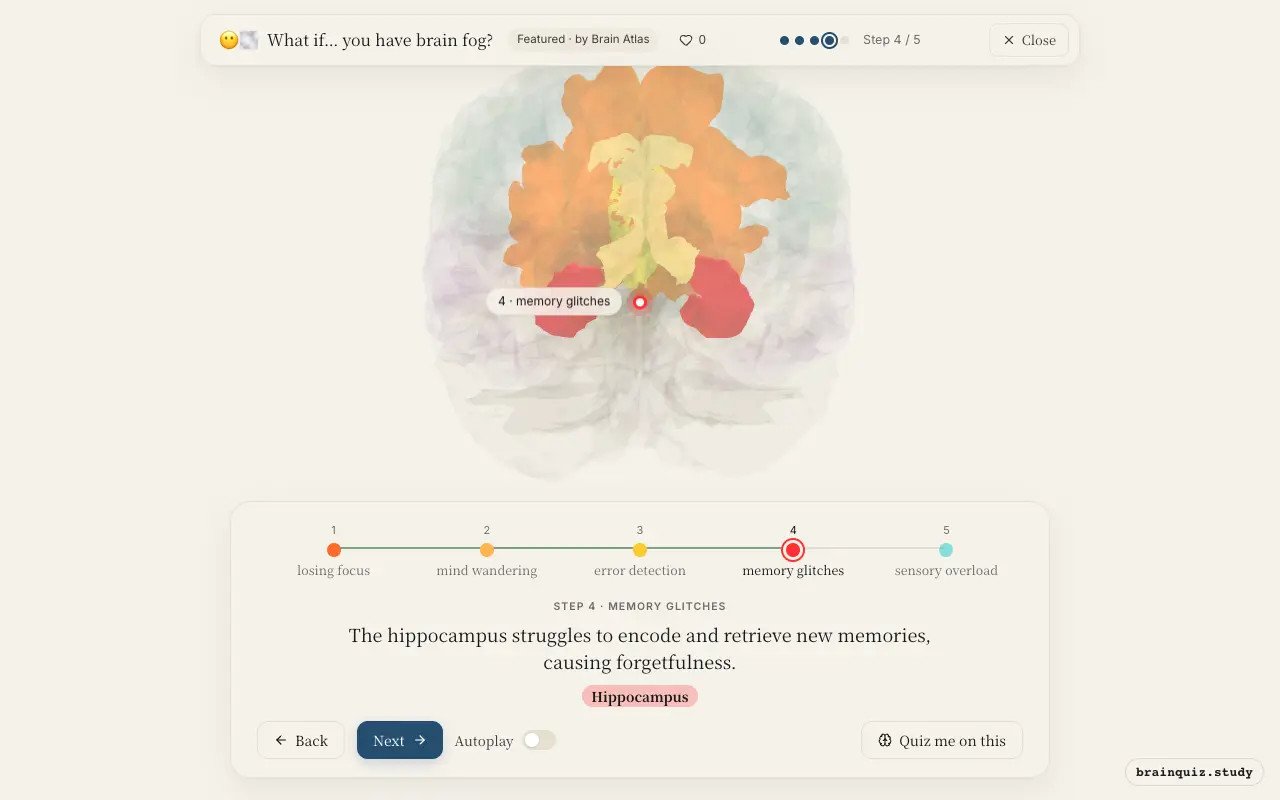
The hippocampus is essential for forming new memories and retrieving recent ones. Brain fog often involves reduced hippocampal function, possibly due to stress hormones or inflammation, leading to difficulty remembering names, appointments, or what you just read. This contributes to the overall fogginess.
5. Thalamus: sensory overload
The thalamus acts as a relay station, gating sensory information before it reaches the cortex. In brain fog, its filtering ability may be impaired, so irrelevant stimuli (like background noise) demand attention, adding to cognitive load and making it harder to focus on what matters.
Good to know
- Brain fog is a subjective feeling of mental clouding, not a formal diagnosis, and is common after sleep deprivation, stress, or illness.
- Neuroimaging studies suggest that brain fog involves reduced connectivity within the central executive network and increased connectivity within the default mode network.
- Inflammation, whether from infection or autoimmune conditions, can release cytokines that disrupt prefrontal cortex and hippocampal function.
Brain fog vs. ADHD focus lapses
While both cause attention problems, ADHD is a neurodevelopmental condition with chronic differences in dopamine signaling and prefrontal function, whereas brain fog is a temporary, usually reversible state often triggered by sleep loss, stress, or illness. Brain fog can also involve pronounced memory and sensory filtering issues.
Test yourself
Which brain region is typically underactive in brain fog, leading to poor concentration?
What is the role of the posterior cingulate in brain fog?
Why might the thalamus contribute to brain fog?
0 of 3 answered · 0 correct
Simplified: many regions work together at once, and this shows the main players in the order they act. For learning only, not medical advice.