What happens in your brain when you have your first kiss?
Updated
Somatosensory cortex registers lip touch, amygdala tags emotional salience, nucleus accumbens signals reward, hypothalamus triggers racing heart, hippocampus encodes the vivid memory.
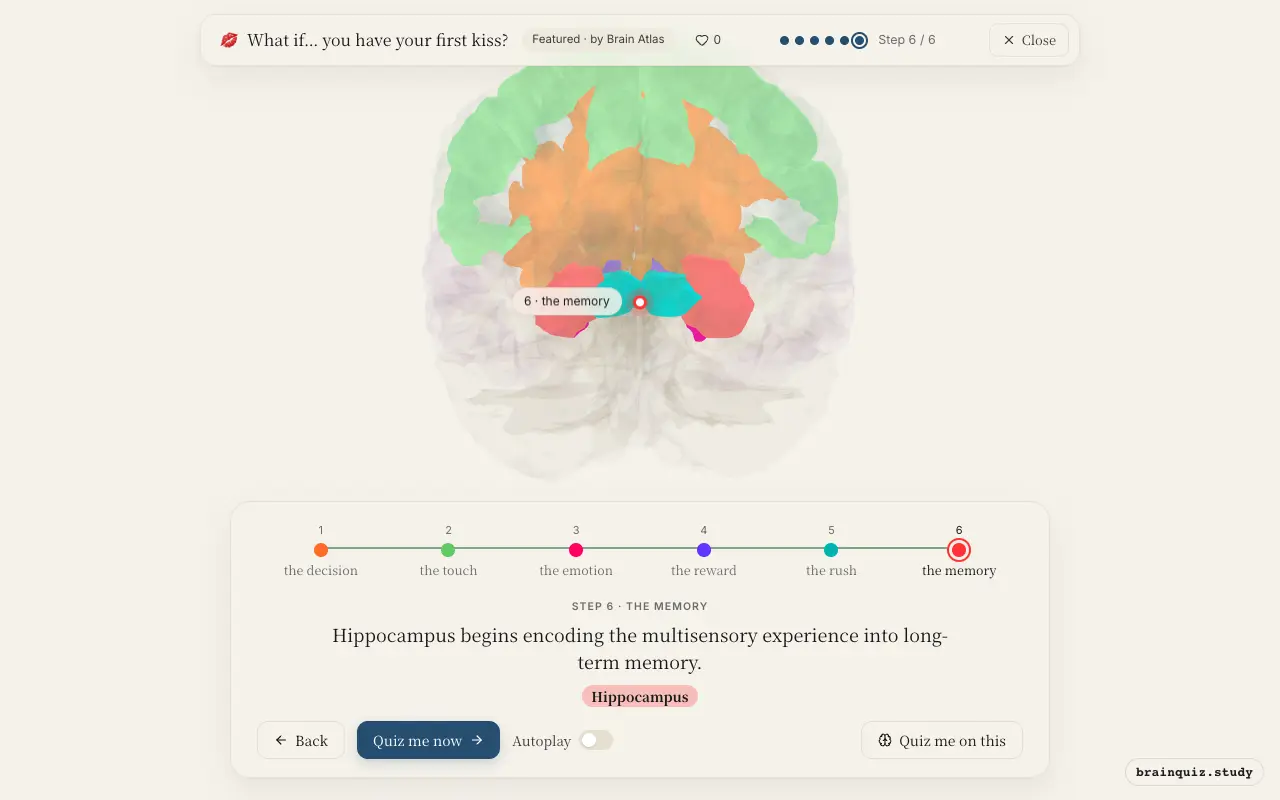
Watch it light up on the 3D brain
Brain regions that light up
| Order | Region | What it does here |
|---|---|---|
| 1 | Prefrontal Cortex | Prefrontal cortex evaluates context and initiates the lean-in. |
| 2 | Somatosensory Cortex | Somatosensory cortex processes the soft pressure and warmth of lips. |
| 3 | Amygdala | Amygdala flags the kiss as emotionally significant and triggers arousal. |
| 4 | Nucleus Accumbens | Nucleus accumbens receives dopamine, creating intense pleasure. |
| 5 | Hypothalamus | Hypothalamus activates the sympathetic nervous system, causing butterflies and racing heart. |
| 6 | Hippocampus | Hippocampus begins encoding the multisensory experience into long-term memory. |
1. Prefrontal Cortex: the decision
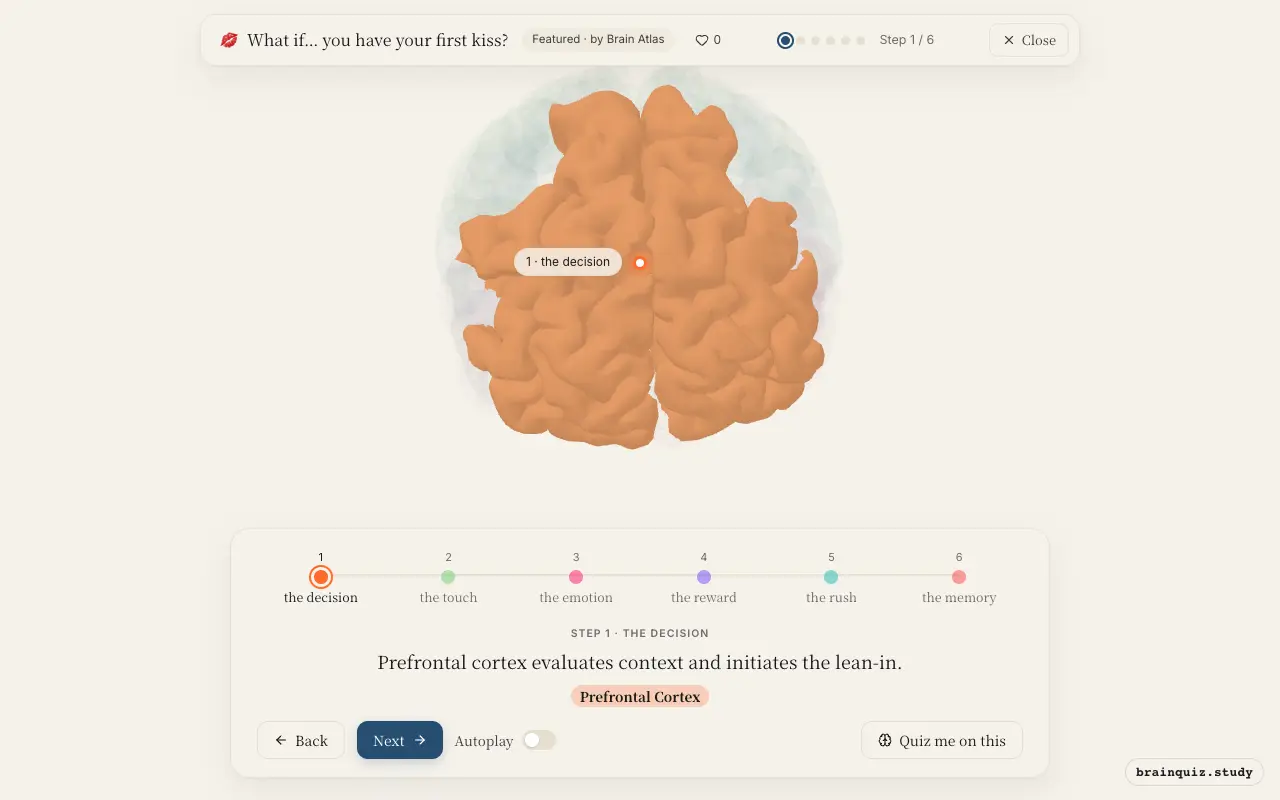
The prefrontal cortex weighs social cues, consent, and potential outcomes before you act. It plans the motor sequence and suppresses hesitation, allowing the kiss to happen. This executive oversight is essential for navigating the complex social moment.
2. Somatosensory Cortex: the touch
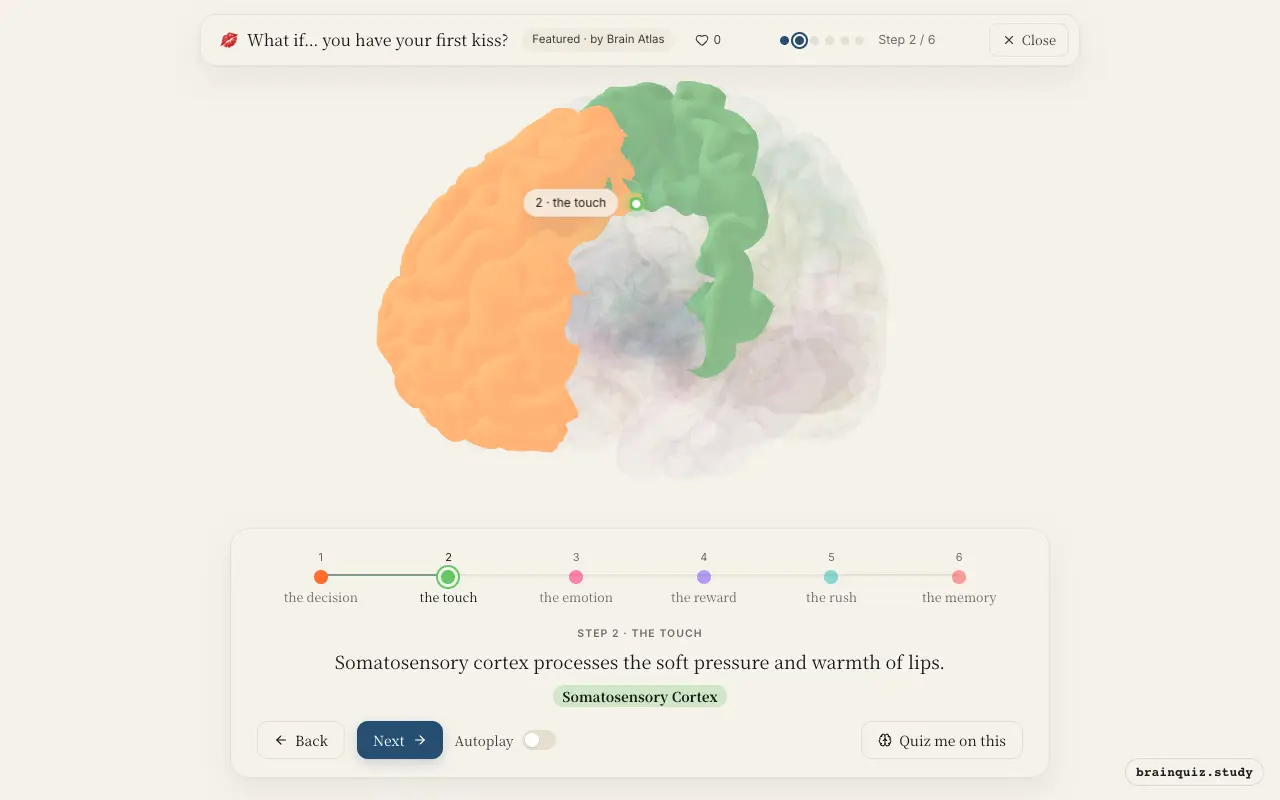
Lips are densely packed with mechanoreceptors, sending a flood of touch signals to the somatosensory cortex. This region maps the precise location and intensity of the kiss, creating the immediate physical sensation that feels so intense.
3. Amygdala: the emotion
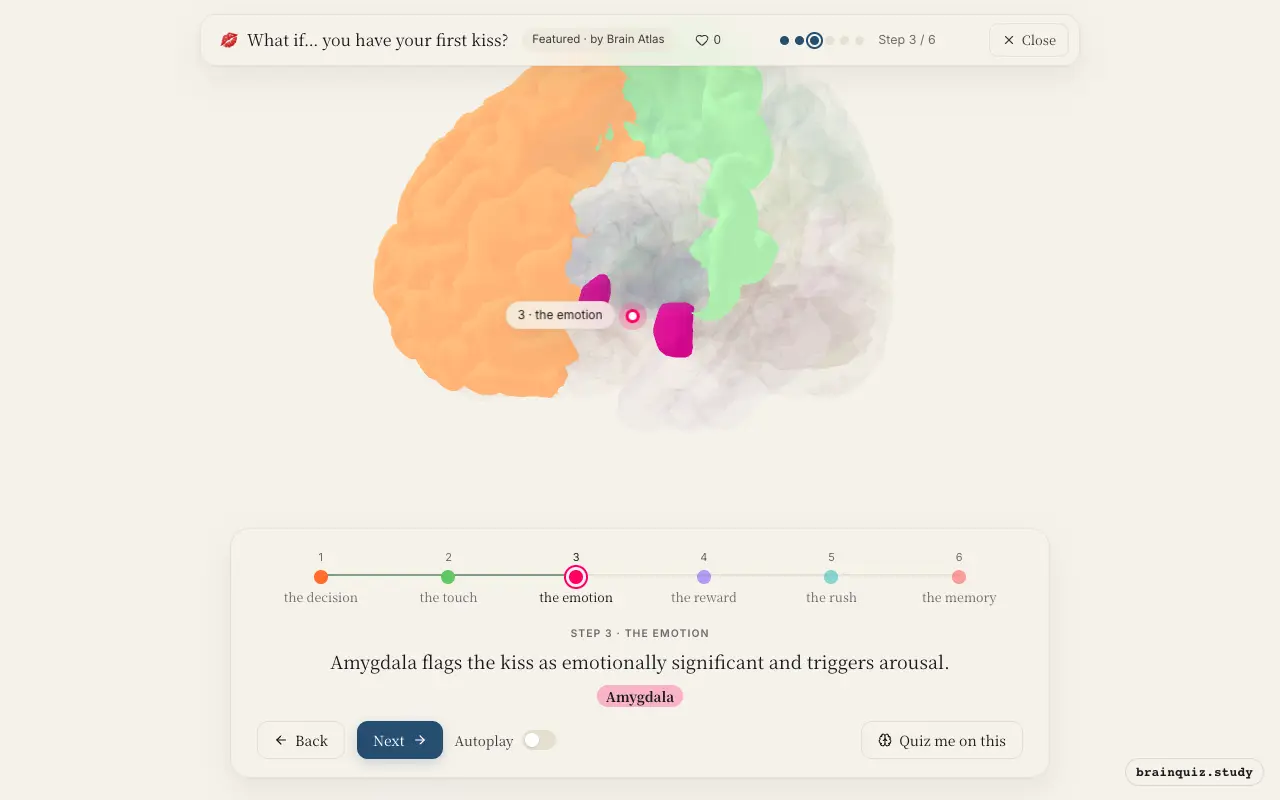
The amygdala rapidly evaluates the emotional salience of the kiss. It orchestrates a quick stress-like response, sharpening attention and making the moment feel urgent. This is why your heart pounds and the sensation seems overwhelming.
4. Nucleus Accumbens: the reward
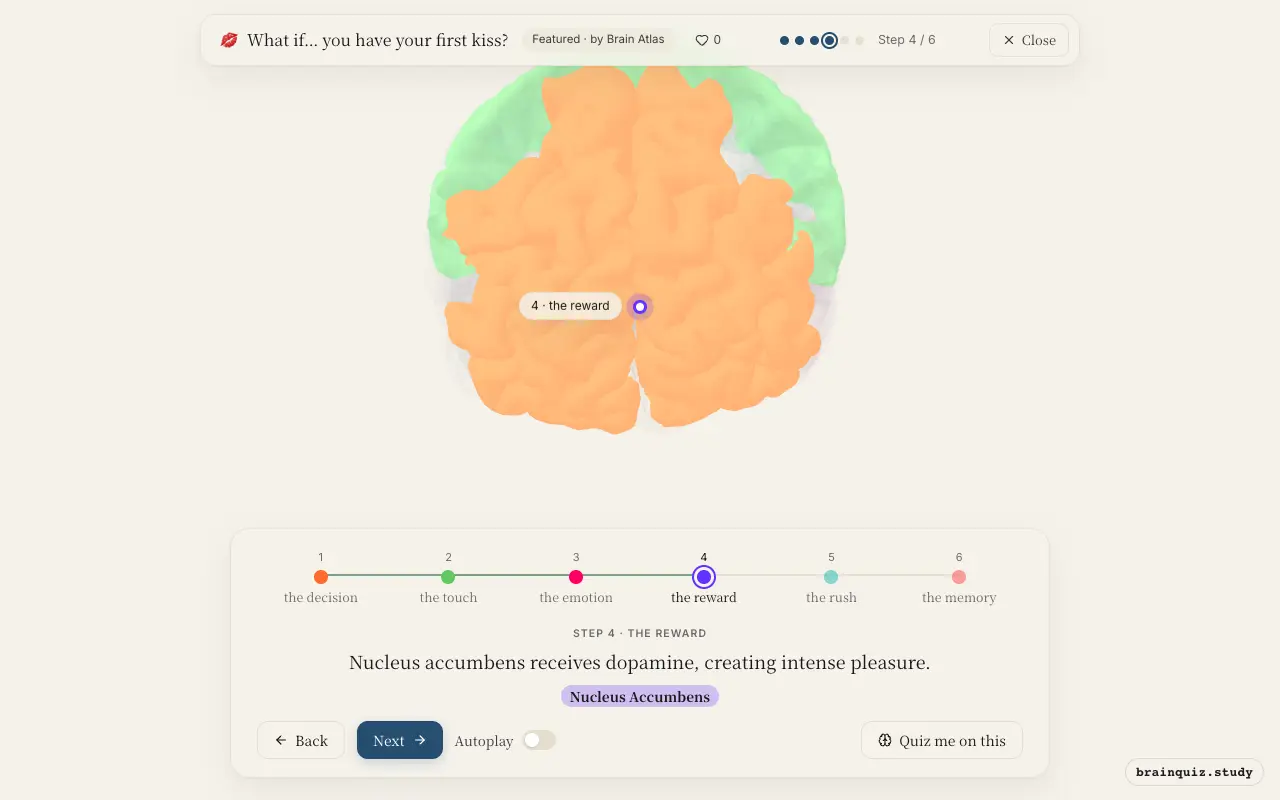
As a central hub of the brain's reward circuit, the nucleus accumbens receives dopamine from the ventral tegmental area. This surge produces the feeling of euphoria and reinforces the desire to kiss again. It marks the experience as something to seek out.
5. Hypothalamus: the rush
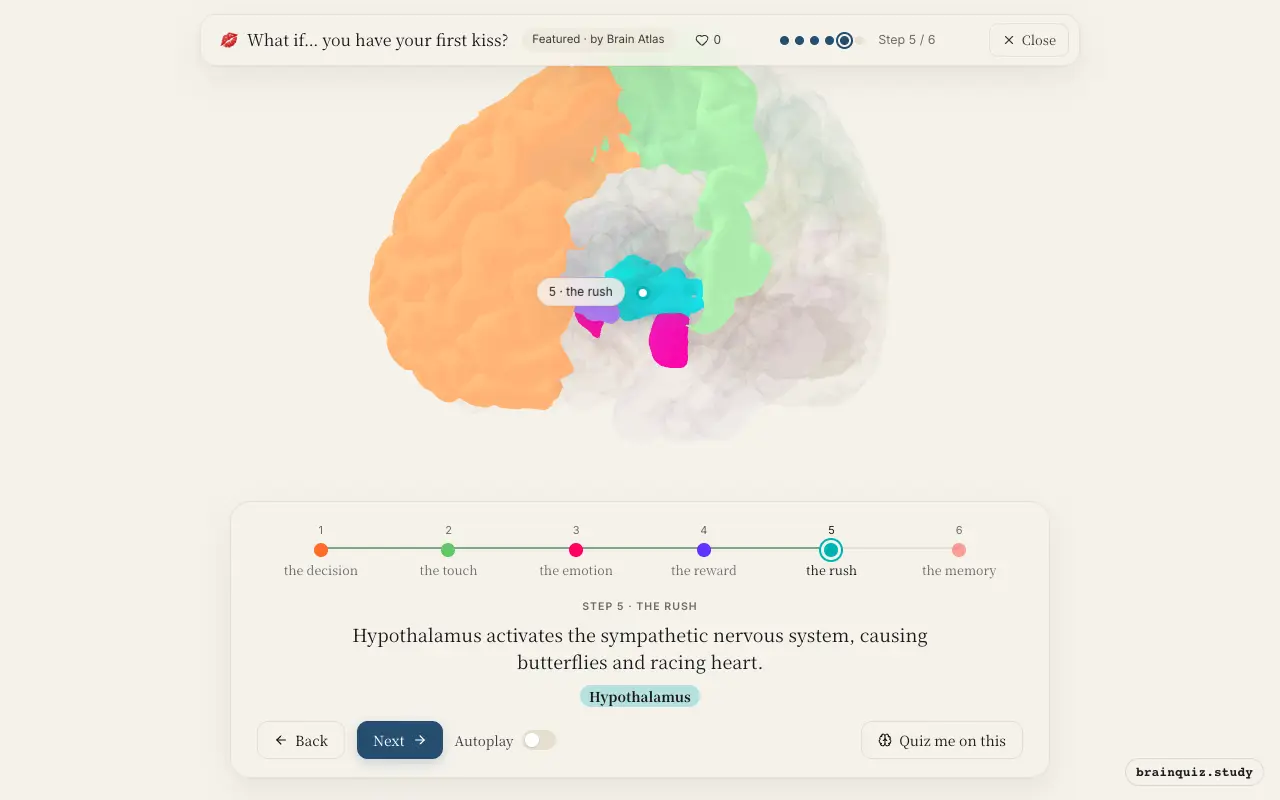
The hypothalamus coordinates the autonomic response to the emotional and physical intensity. It signals the adrenal glands and increases heart rate, breathing, and sweating. These bodily changes contribute to the sense of excitement and nervousness.
6. Hippocampus: the memory
The hippocampus binds together the sights, sounds, smells, touches, and emotions of the kiss into a coherent episodic memory. Because of the strong emotional tagging from the amygdala, the memory is likely to be vivid and long-lasting.
Good to know
- Dopamine release in the nucleus accumbens is thought to underlie the intense pleasure and wanting associated with a first kiss.
- Lips have a disproportionately large representation in the somatosensory cortex, making them highly sensitive.
- The amygdala can trigger a rapid arousal response, making emotionally charged events like a first kiss feel more vivid.
First Kiss vs Hug
A first kiss may recruit the nucleus accumbens and hippocampus more strongly due to novelty and reward, while a hug may rely more on the insula and somatosensory cortex for comfort. The kiss may trigger a larger dopamine response, making it more intensely pleasurable and memorable.
Test yourself
Which brain region processes the physical sensation of lip contact during a first kiss?
Which region is most directly responsible for the feeling of reward and pleasure during a first kiss?
What role does the amygdala play in a first kiss?
0 of 3 answered · 0 correct
Simplified: many regions work together at once, and this shows the main players in the order they act.