What happens in your brain when you hike at high altitude?
Updated
At high altitude, the brainstem increases breathing, the insula registers breathlessness, the cerebellum maintains balance, the motor cortex drives stepping, and the prefrontal cortex manages pace—but hypoxia dulls it.
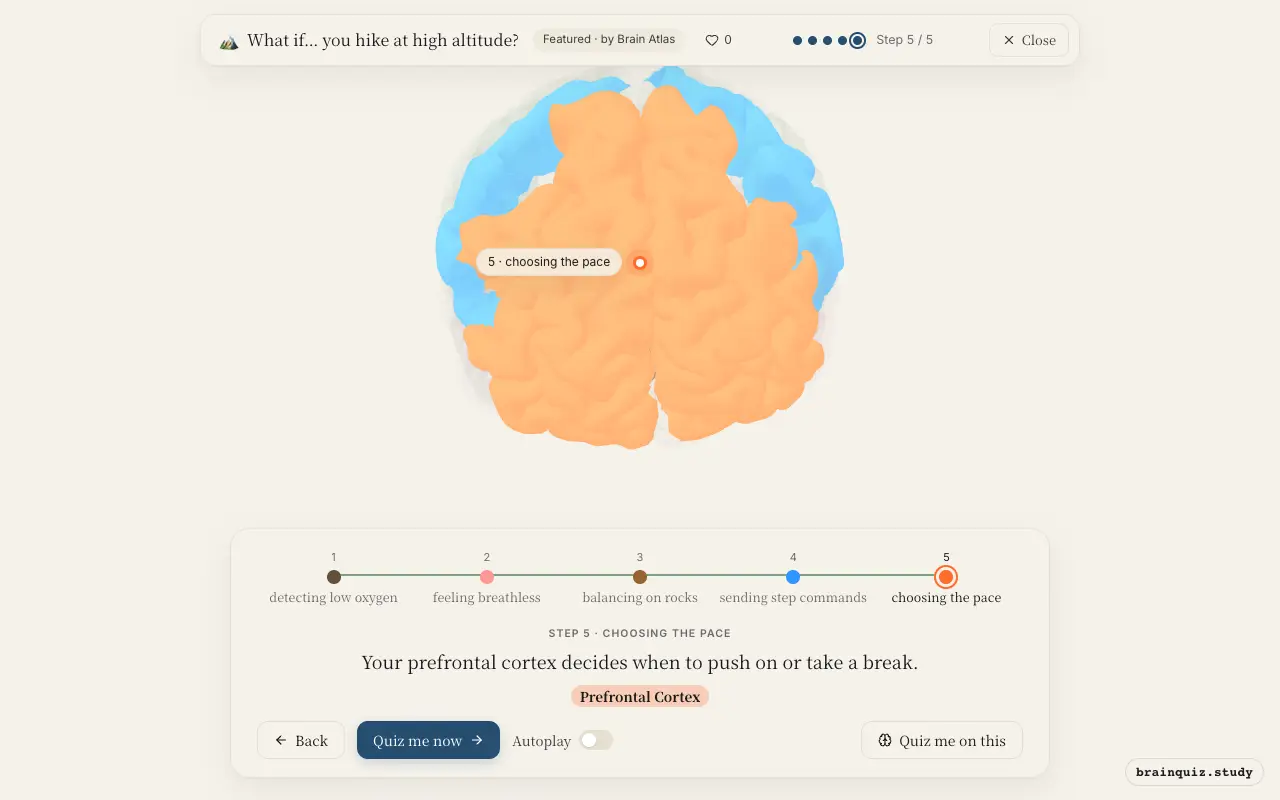
Watch it light up on the 3D brain
Brain regions that light up
| Order | Region | What it does here |
|---|---|---|
| 1 | Brainstem | The medulla senses falling oxygen and raises your breathing rate. |
| 2 | Insula | The insula registers your racing heart and air hunger. |
| 3 | Cerebellum | Your cerebellum fine-tunes each foot placement on uneven ground. |
| 4 | Motor Cortex | The motor cortex orders your leg muscles to contract for each stride. |
| 5 | Prefrontal Cortex | Your prefrontal cortex decides when to push on or take a break. |
1. Brainstem: detecting low oxygen
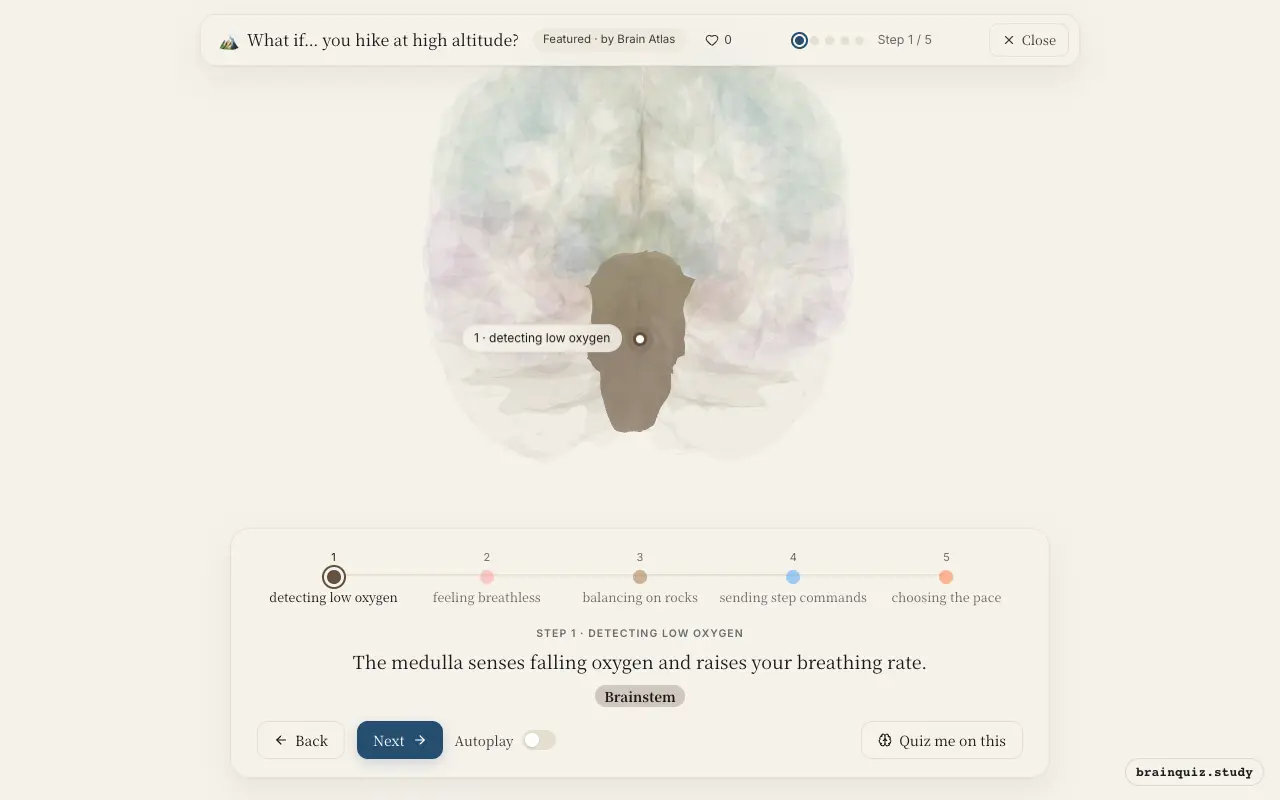
Peripheral chemoreceptors in the carotid bodies signal the brainstem, which increases respiratory drive to compensate for reduced atmospheric oxygen. This is why you pant at altitude.
2. Insula: feeling breathless
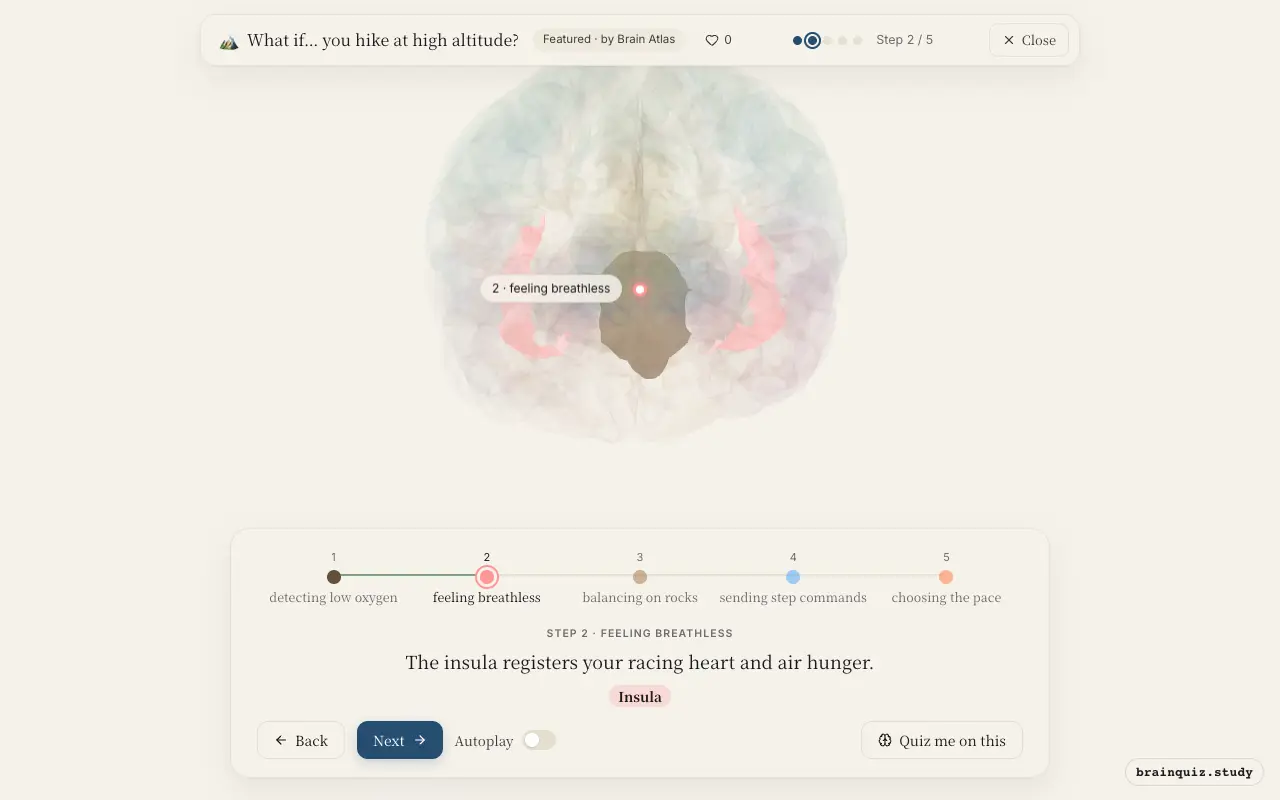
The insula integrates visceral signals, creating the conscious sensation of breathlessness and a pounding chest. It motivates you to slow down or rest when oxygen debt grows.
3. Cerebellum: balancing on rocks
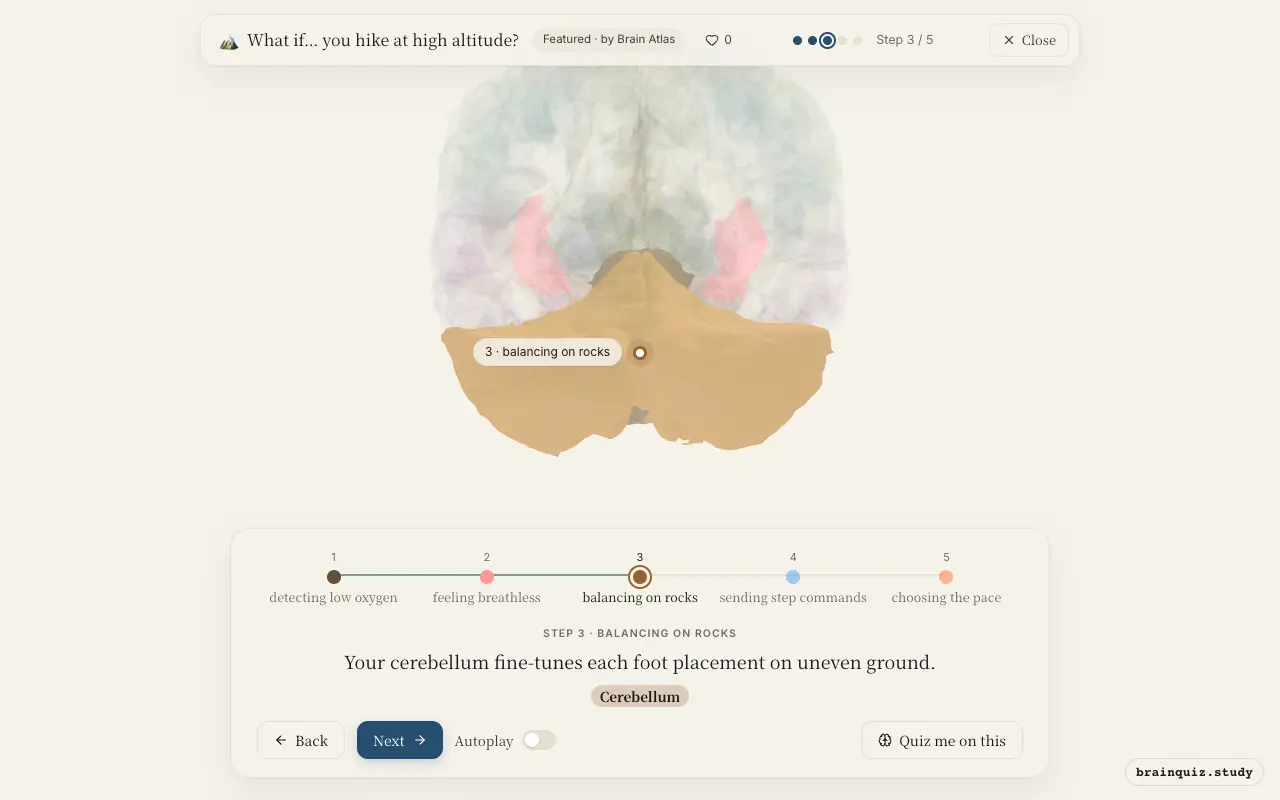
Hypoxia can impair cerebellar function, but it continues to coordinate balance and smooth, precise leg movements. It uses proprioceptive feedback to adjust posture with every step.
4. Motor Cortex: sending step commands
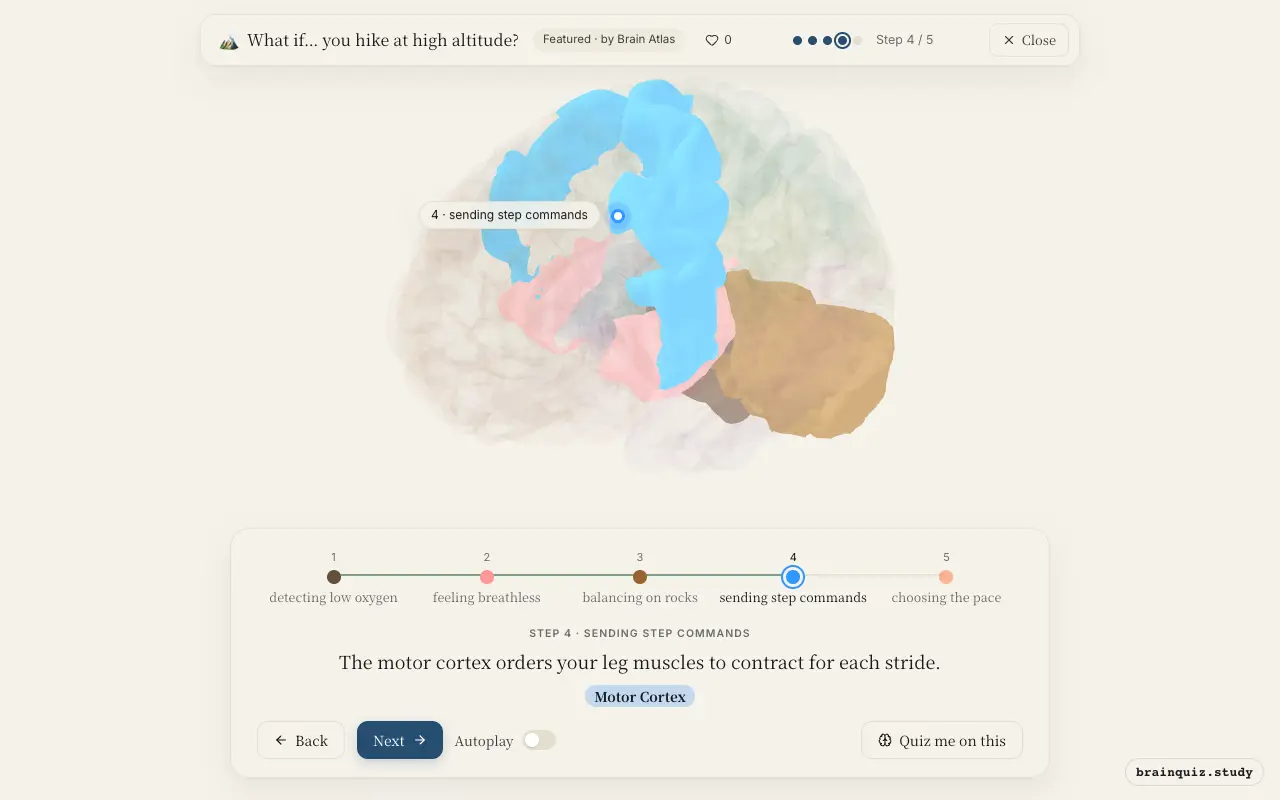
Voluntary hiking movements originate in the primary motor cortex, which sends signals down the corticospinal tract. At altitude, motor commands may require extra effort as muscles fatigue from lower oxygen delivery.
5. Prefrontal Cortex: choosing the pace
Executive functions like planning, risk assessment, and pacing depend on the prefrontal cortex. Hypoxia is known to reduce its efficiency, leading to slower decisions and poorer judgment at high altitude.
Good to know
- Cerebral blood flow increases at high altitude to maintain oxygen delivery, but this can cause headaches.
- Acute mountain sickness often includes cognitive symptoms like difficulty concentrating, reflecting prefrontal cortical impairment.
- The cerebellum is particularly vulnerable to hypoxia, which can cause ataxia (loss of coordination).
High altitude vs sea level hiking
At sea level, the brainstem's respiratory drive is lower, and more cognitive resources go to navigation and enjoyment. At altitude, hypoxia forces the brainstem and insula to dominate, while prefrontal efficiency drops, making even familiar trails feel harder.
Test yourself
Which brain region first detects low oxygen at high altitude?
What is a likely cognitive effect of high-altitude hypoxia?
The insula's role at altitude is primarily:
0 of 3 answered · 0 correct
Simplified: many regions work together at once, and this shows the main players in the order they act.