What happens in your brain when you hit snooze?
Updated
When the alarm sounds, your auditory cortex processes the noise and your brainstem triggers sudden wakefulness. Your motor cortex and basal ganglia execute the habitual hit of the snooze button. Your hypothalamus then reasserts sleep pressure, pulling you back under.
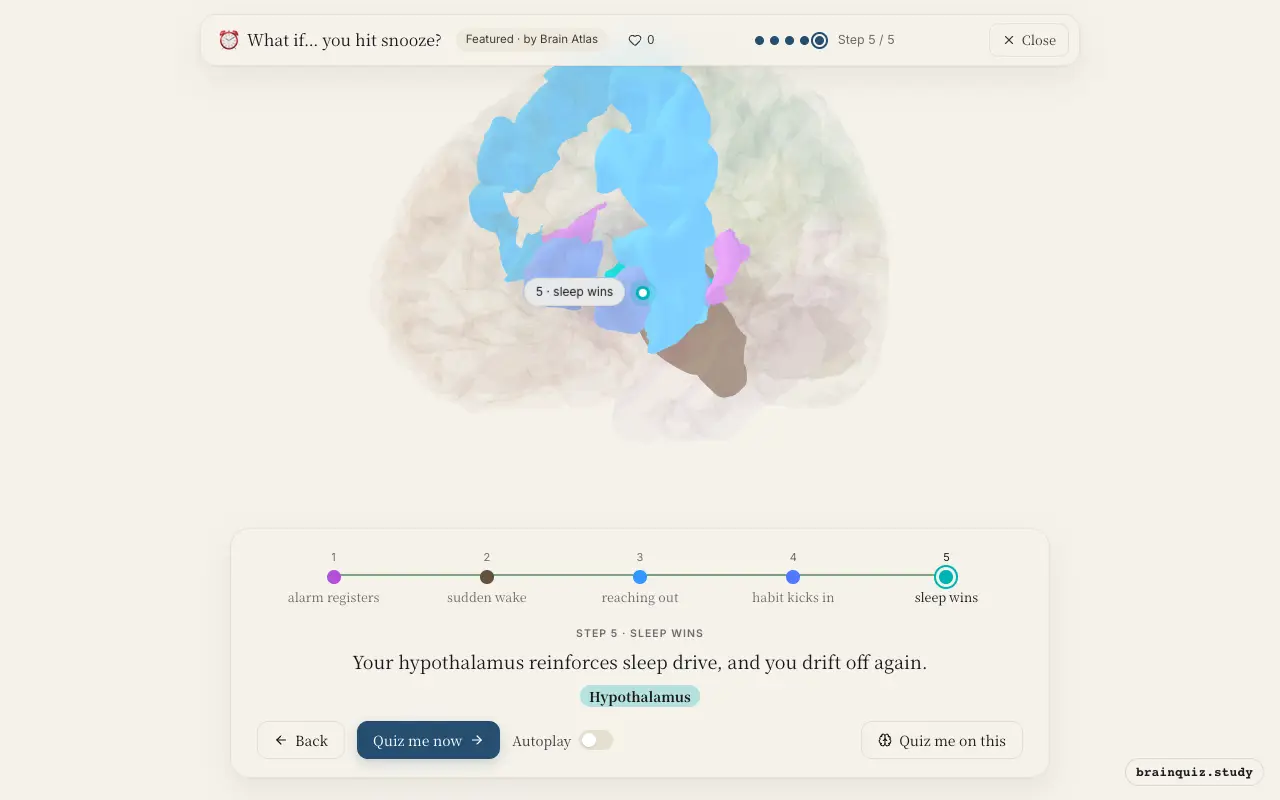
Watch it light up on the 3D brain
Brain regions that light up
| Order | Region | What it does here |
|---|---|---|
| 1 | Auditory Cortex | Your auditory cortex decodes the blaring alarm as a sound you need to respond to. |
| 2 | Brainstem | The brainstem's reticular activating system jolts your brain into a state of alertness. |
| 3 | Motor Cortex | Your motor cortex sends commands to your arm and hand to reach for the phone. |
| 4 | Putamen | Your putamen runs the well-practiced snooze-pressing sequence automatically. |
| 5 | Hypothalamus | Your hypothalamus reinforces sleep drive, and you drift off again. |
1. Auditory Cortex: alarm registers
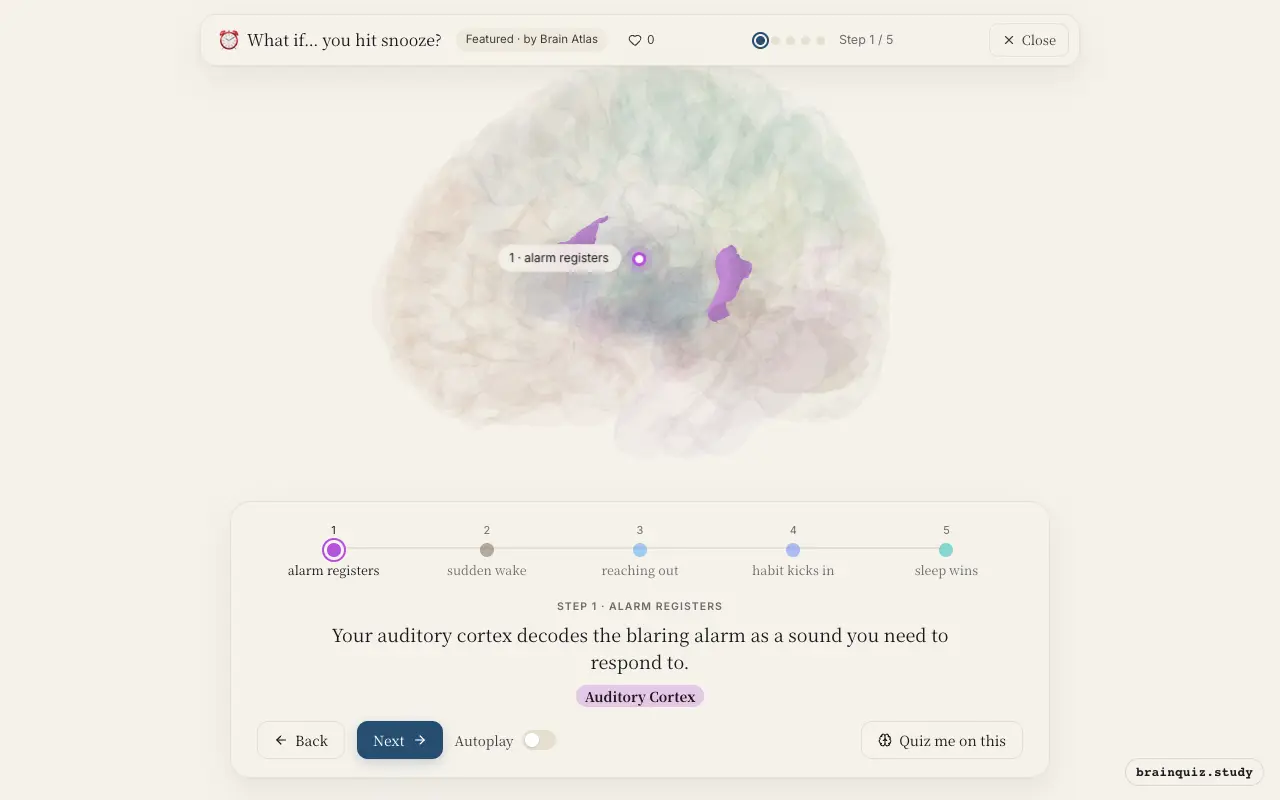
The auditory cortex in the temporal lobe receives input from the ears via the thalamus and identifies the alarm's pitch, volume, and urgency. It triggers an orienting response, pulling your brain toward wakefulness even before you're fully conscious.
2. Brainstem: sudden wake
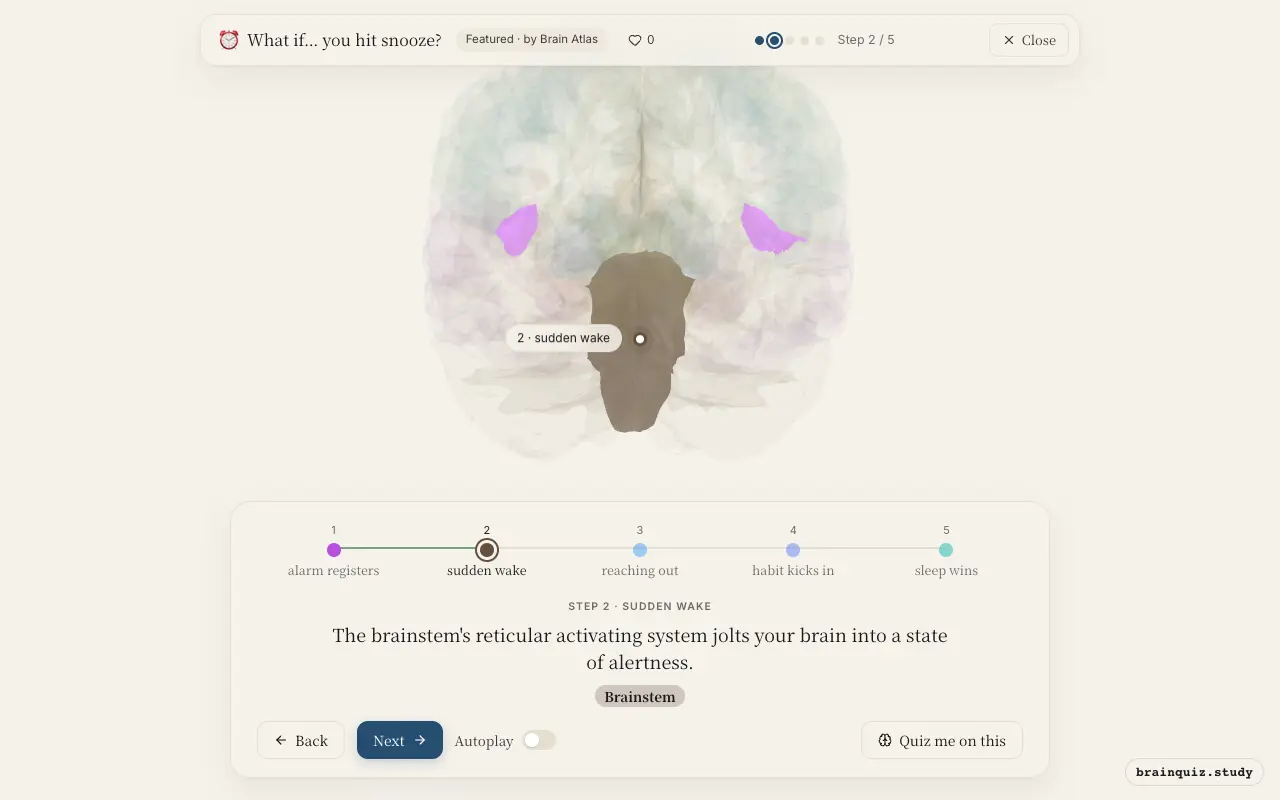
The brainstem's ascending reticular activating system sends signals to the thalamus and cortex, boosting arousal and attention. This is what makes you open your eyes and feel the groggy transition from sleep to a semi-wakeful state.
3. Motor Cortex: reaching out
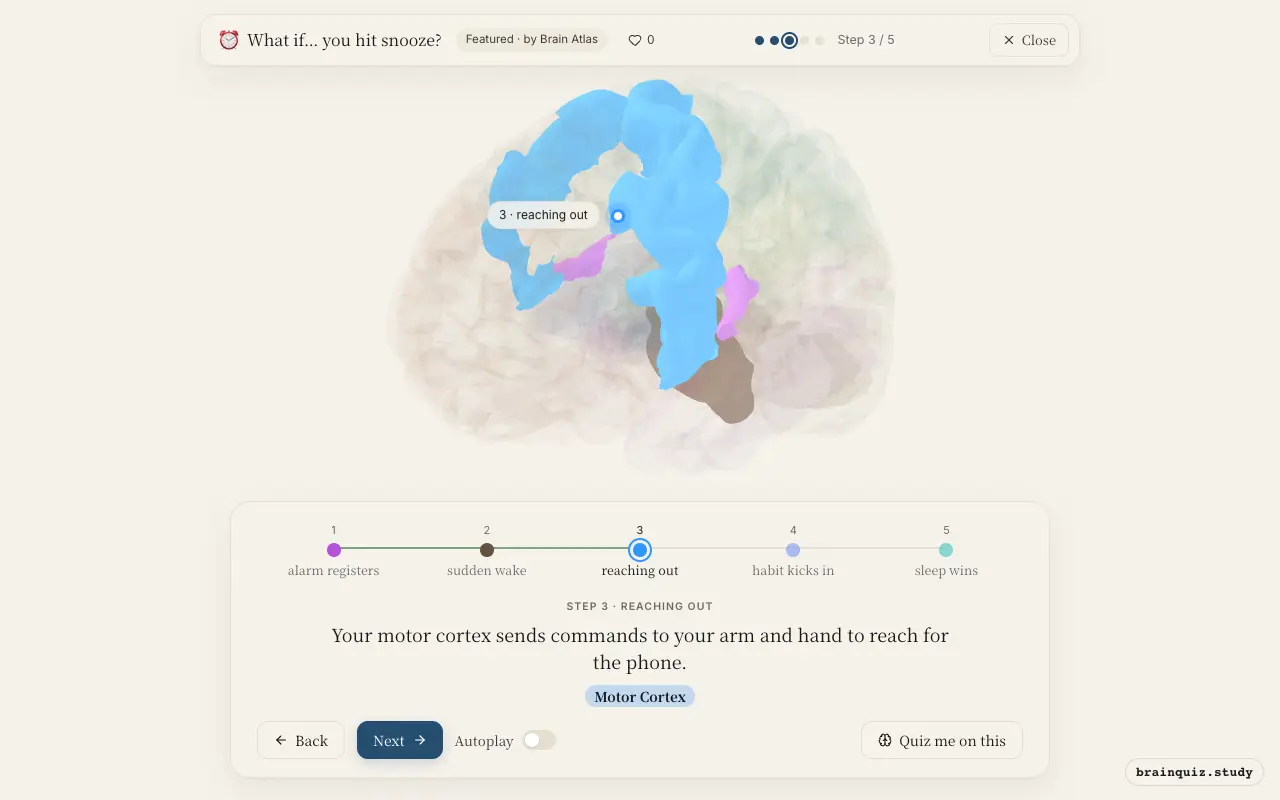
The primary motor cortex, located in the frontal lobe, initiates voluntary movement. Even half-asleep, it coordinates the precise muscle activations needed to locate the snooze button and press it, often without full conscious deliberation.
4. Putamen: habit kicks in
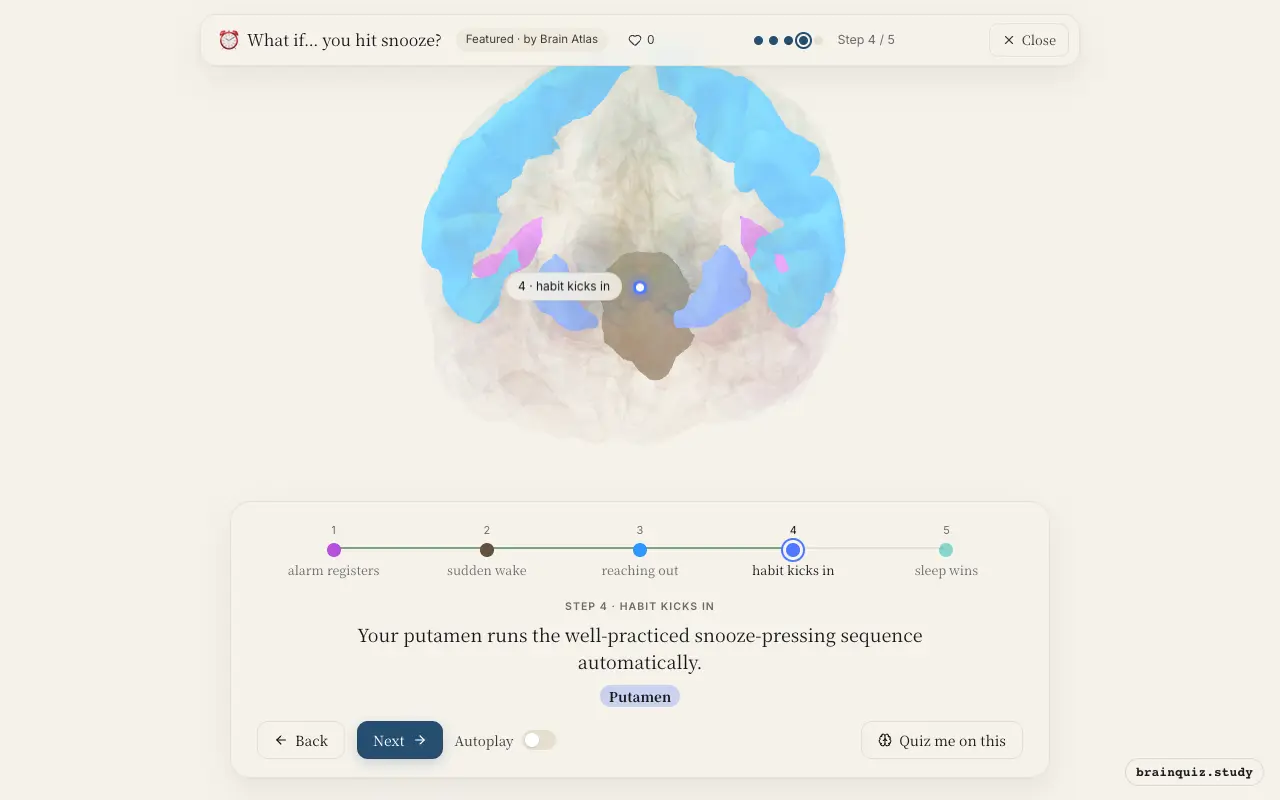
The putamen, part of the basal ganglia, stores motor habits. Because you've hit snooze many times, the putamen can drive the movement smoothly and effortlessly, freeing the cortex from having to think through each step.
5. Hypothalamus: sleep wins
The hypothalamus regulates sleep-wake cycles and responds to sleep pressure. After the alarm is silenced, it promotes the onset of sleep by inhibiting arousal systems, especially if you're sleep-deprived, making it hard to resist another cycle.
Good to know
- Sleep inertia, the grogginess after waking, is partly due to reduced prefrontal cortex activity.
- The snooze button can fragment sleep, leading to less restorative deep sleep.
- The brainstem's reticular activating system is essential for consciousness and wakefulness.
Hitting snooze vs. waking up fully
When you hit snooze, your brain never fully engages the prefrontal cortex, so the decision to stay in bed is more automatic and driven by sleep pressure. In contrast, when you choose to get up, your prefrontal cortex actively overrides the sleep drive from the hypothalamus, and your brainstem arousal system stays elevated to keep you awake.
Test yourself
Which brain region is responsible for the groggy feeling of sleep inertia after waking?
What is the main role of the putamen in hitting snooze?
Which region acts as the final relay station for auditory information before it reaches the auditory cortex?
0 of 3 answered · 0 correct
Simplified: many regions work together at once, and this shows the main players in the order they act.