What happens in your brain when you hold your breath?
Updated
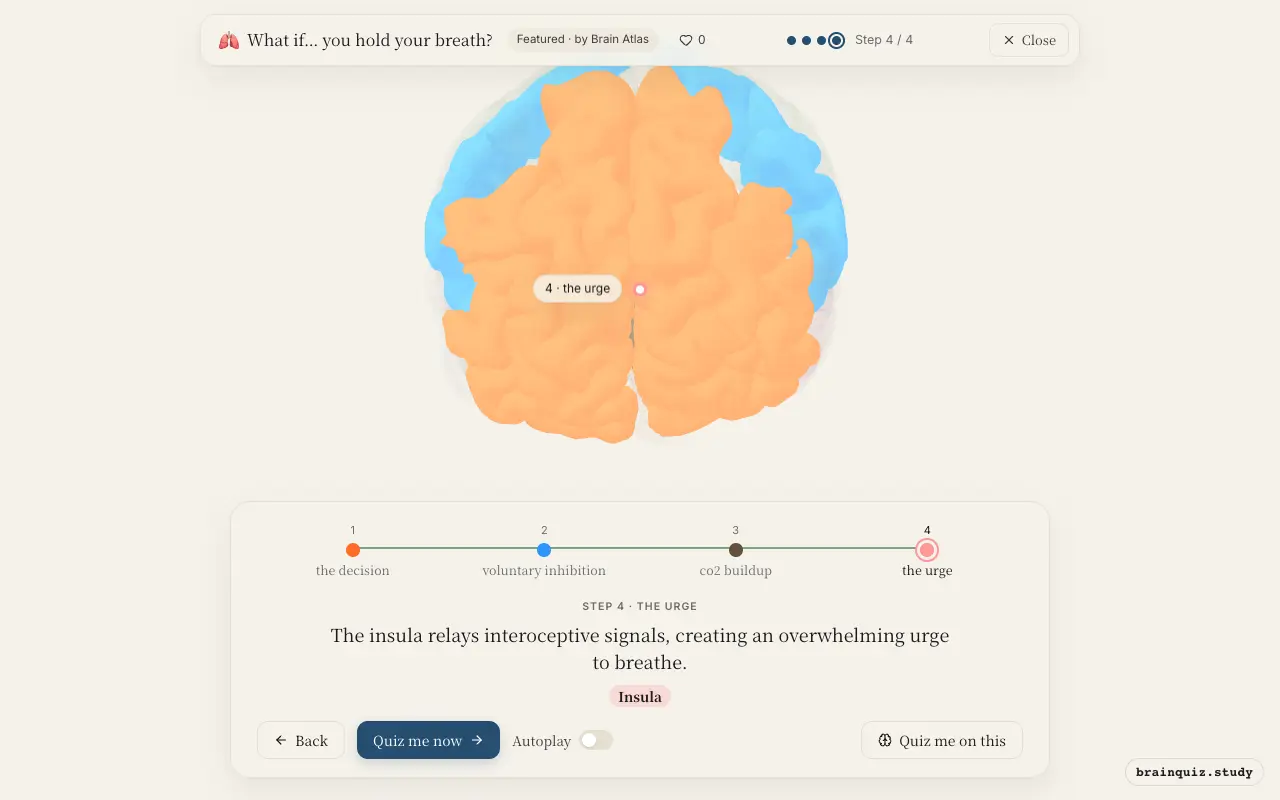
When you hold your breath, the prefrontal cortex initiates the decision, the motor cortex inhibits respiratory muscles, the brainstem senses rising carbon dioxide, and the insula generates the uncomfortable urge to breathe.
Watch it light up on the 3D brain
Brain regions that light up
| Order | Region | What it does here |
|---|---|---|
| 1 | Prefrontal Cortex | You consciously decide to hold your breath. |
| 2 | Motor Cortex | The motor cortex sends signals to inhibit the diaphragm and chest muscles. |
| 3 | Brainstem | Brainstem chemoreceptors detect rising carbon dioxide in the blood. |
| 4 | Insula | The insula relays interoceptive signals, creating an overwhelming urge to breathe. |
1. Prefrontal Cortex: the decision
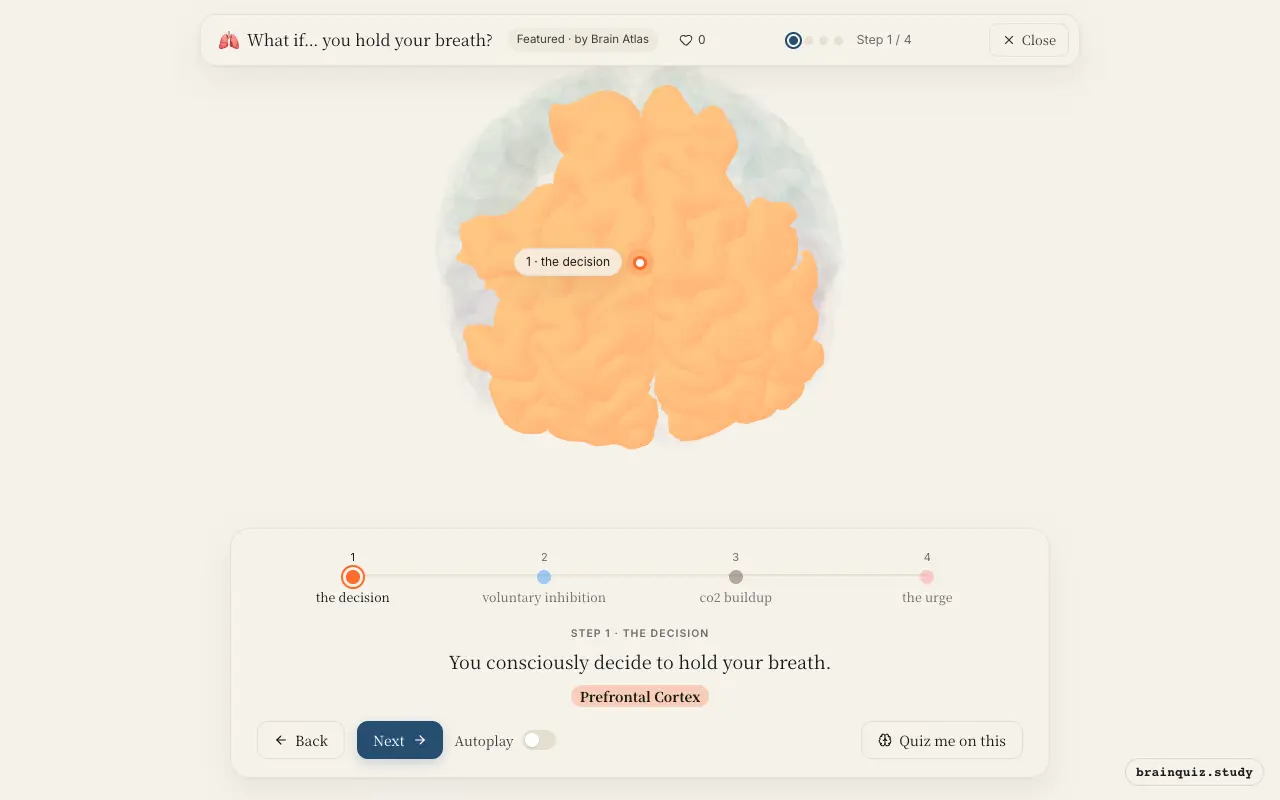
The prefrontal cortex, involved in executive functions, overrides the automatic breathing pattern generated by the brainstem. This top-down control allows you to temporarily suppress the urge to inhale.
2. Motor Cortex: voluntary inhibition
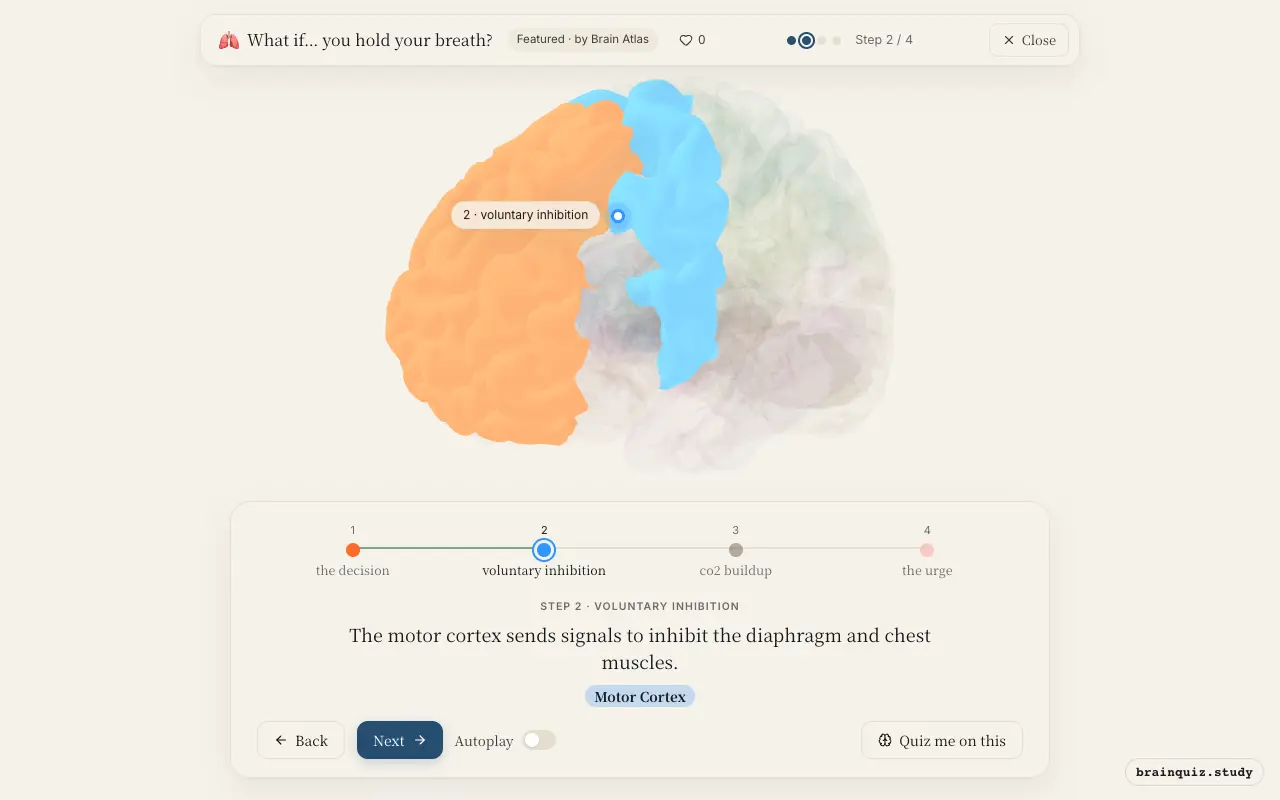
The primary motor cortex sends descending commands through the corticospinal tract to respiratory motor neurons, holding the diaphragm in a contracted or relaxed state to prevent inhalation. This voluntary motor control can override the automatic rhythm.
3. Brainstem: co2 buildup
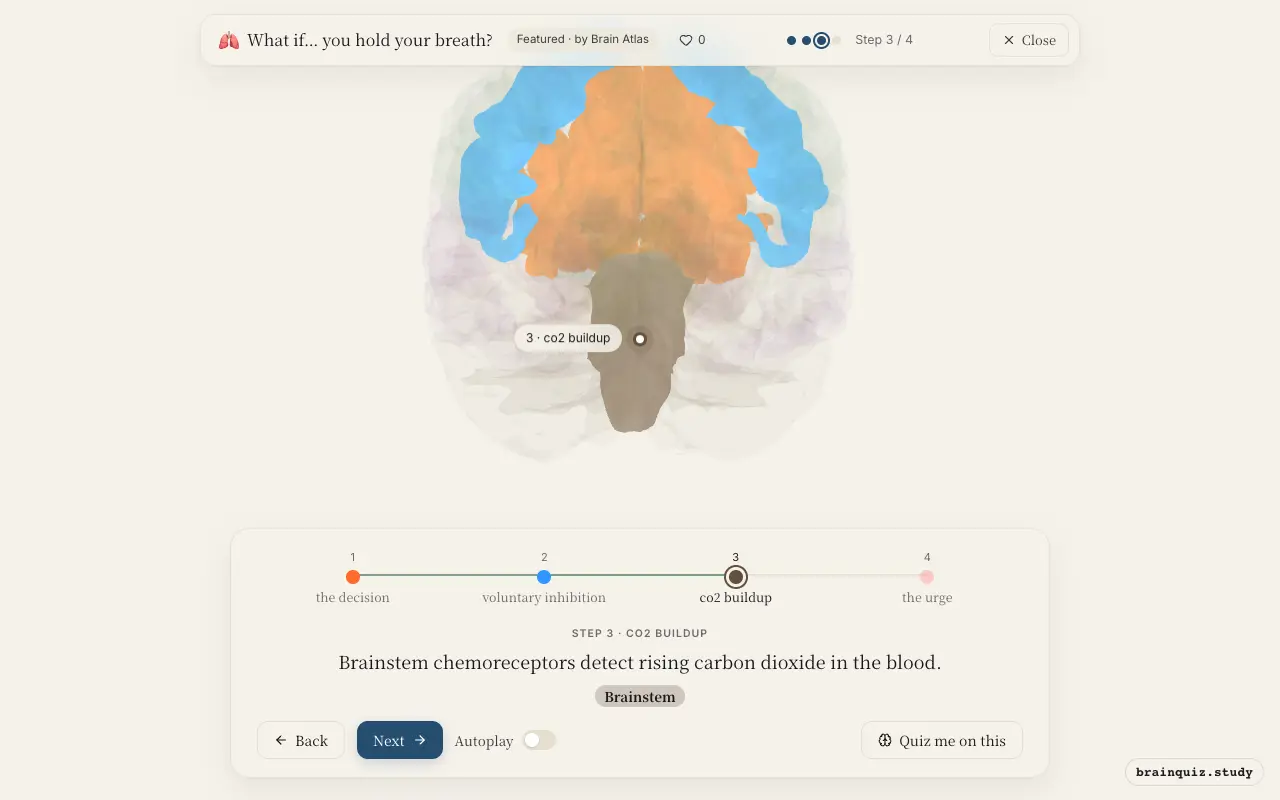
The brainstem respiratory centers monitor blood gases. As you hold your breath, carbon dioxide levels rise, stimulating central chemoreceptors, which send signals to restart breathing. This is the main drive to breathe.
4. Insula: the urge
The insula receives visceral sensory input from the brainstem about the elevated CO2 and air hunger. It generates the conscious feeling of suffocation and distress, which becomes increasingly difficult to ignore.
Good to know
- The urge to breathe is primarily driven by rising carbon dioxide levels, not falling oxygen, due to central chemoreceptors in the brainstem.
- Trained breath-hold divers can suppress the urge to breathe for minutes, but the brainstem's protective reflexes eventually force a breath.
- The diaphragm is the main muscle of inspiration and is controlled by the phrenic nerve from the cervical spinal cord, receiving input from both brainstem and motor cortex.
Holding breath vs. automatic breathing
During automatic breathing, the brainstem's respiratory centers generate a regular rhythm without conscious thought, while the prefrontal and motor cortices are relatively inactive. In contrast, breath holding requires active prefrontal and motor engagement to suppress the brainstem's automatic drive, with the insula signaling the conflict.
Test yourself
Which brain region is primarily responsible for the conscious decision to hold your breath?
What is the main stimulus that triggers the urge to breathe during breath holding?
Which region is responsible for generating the unpleasant sensation of air hunger?
0 of 3 answered · 0 correct
Simplified: many regions work together at once, and this shows the main players in the order they act.