What happens in your brain when you hug someone?
Updated
Somatosensory cortex registers the hug's touch, the insula creates the emotional feeling, the amygdala tags it as socially safe, the orbitofrontal cortex evaluates its reward, and the hypothalamus releases oxytocin to promote bonding.
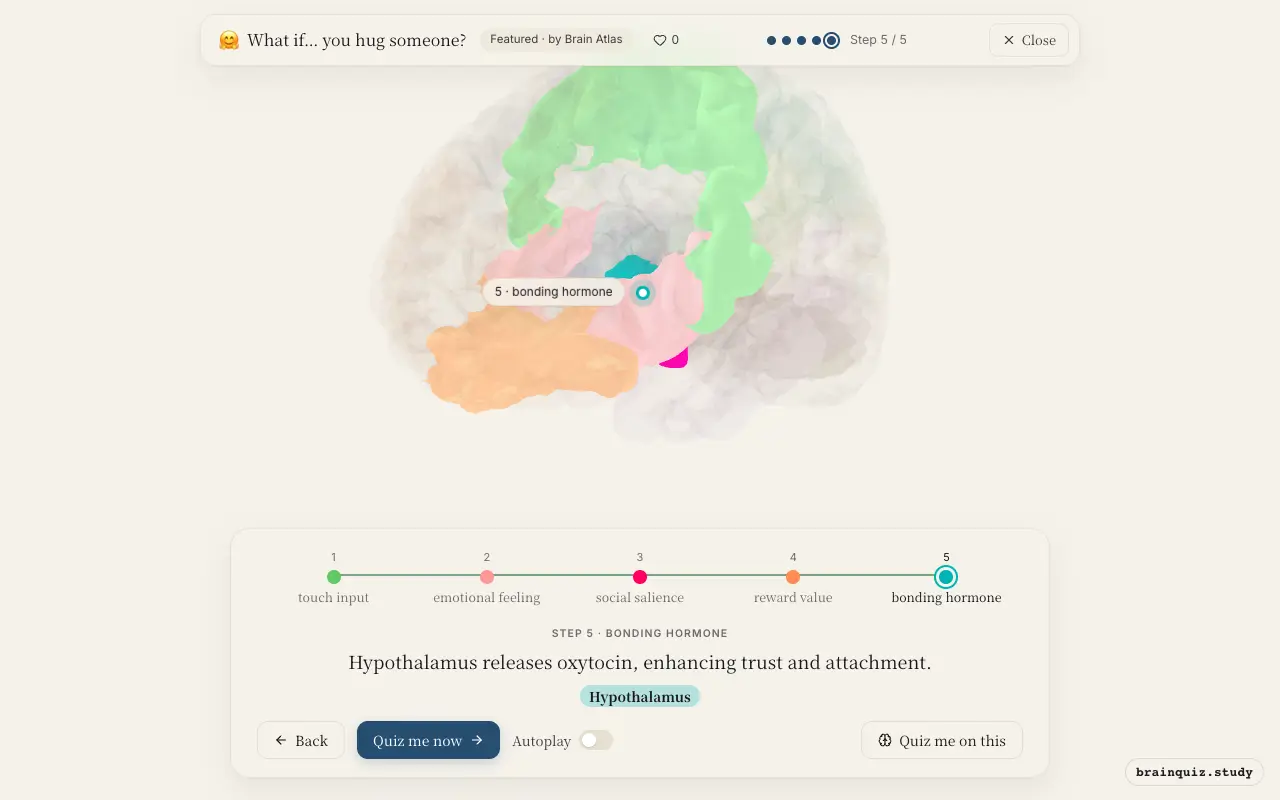
Watch it light up on the 3D brain
Brain regions that light up
| Order | Region | What it does here |
|---|---|---|
| 1 | Somatosensory Cortex | Somatosensory cortex maps the hug's pressure and warmth from the body. |
| 2 | Insula | Insula combines the tactile signal with visceral changes, creating an emotional sense of connection. |
| 3 | Amygdala | Amygdala tags the hug as safe and socially relevant, dampening fear or stress. |
| 4 | Orbitofrontal Cortex | Orbitofrontal cortex evaluates the hug as a rewarding social interaction. |
| 5 | Hypothalamus | Hypothalamus releases oxytocin, enhancing trust and attachment. |
1. Somatosensory Cortex: touch input
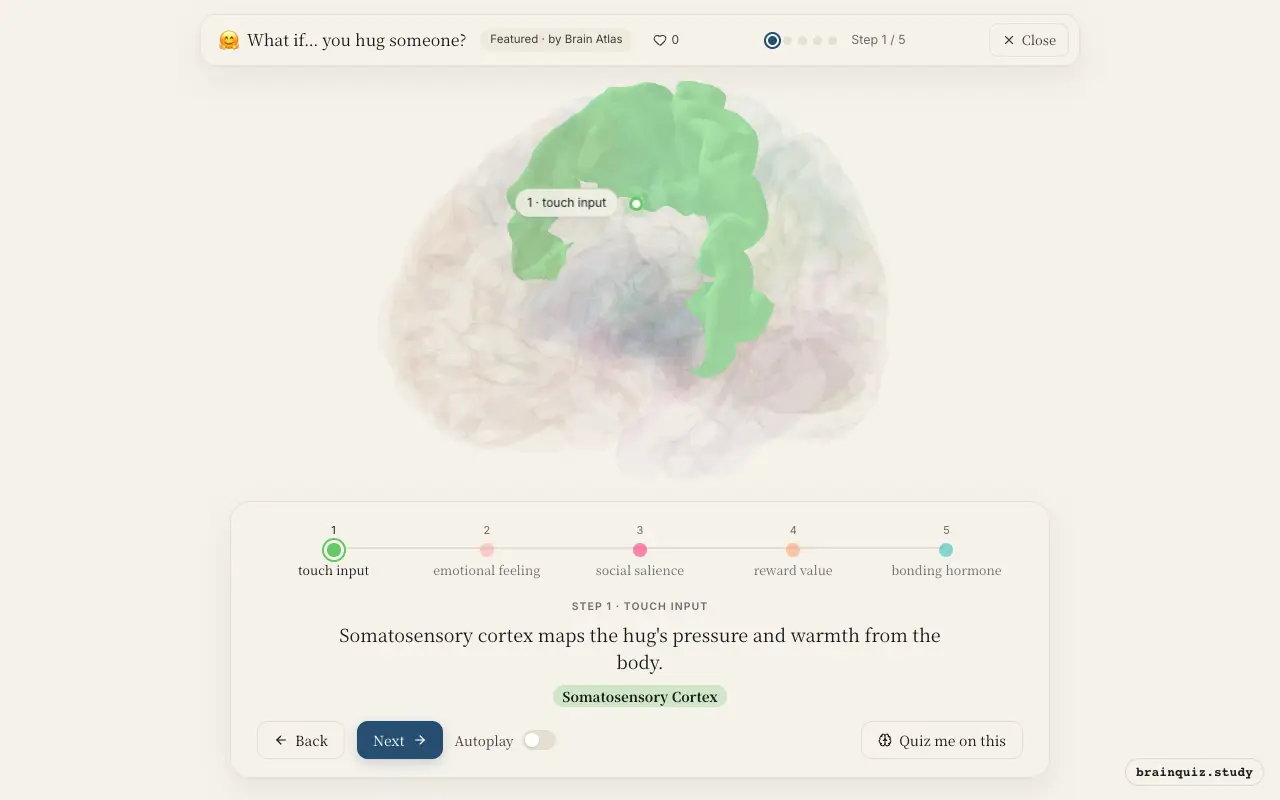
Mechanoreceptors in the skin send signals via the spinal cord to the thalamus, which relays them to the primary somatosensory cortex. This region contains a somatotopic map, processing where and how intensely the hug is felt. The insula also receives this input, but first the basic sensory features are decoded here.
2. Insula: emotional feeling
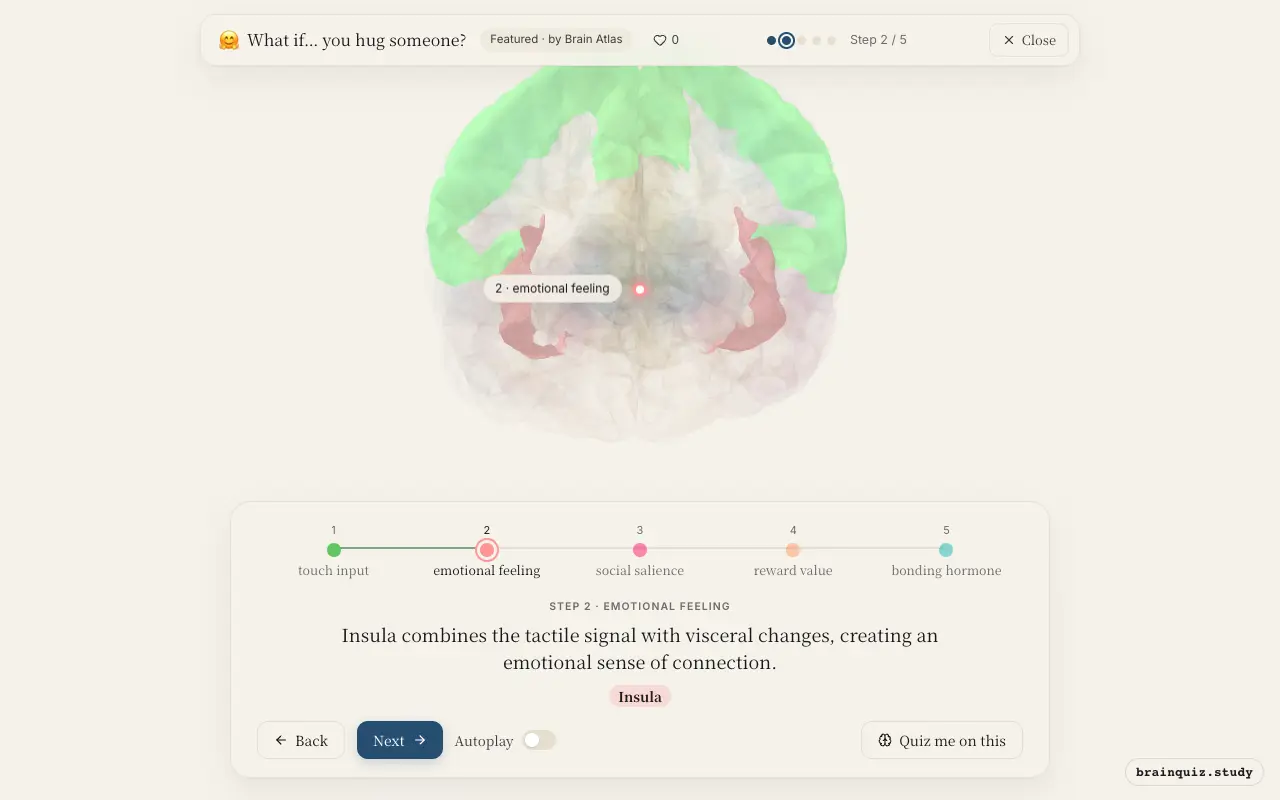
The insula receives interoceptive information from the body, such as heart rate and skin temperature, and integrates it with the hug's touch. This produces a conscious feeling of being soothed or comforted. Its role in empathy means it also helps you sense the other person's emotional state during the hug.
3. Amygdala: social salience
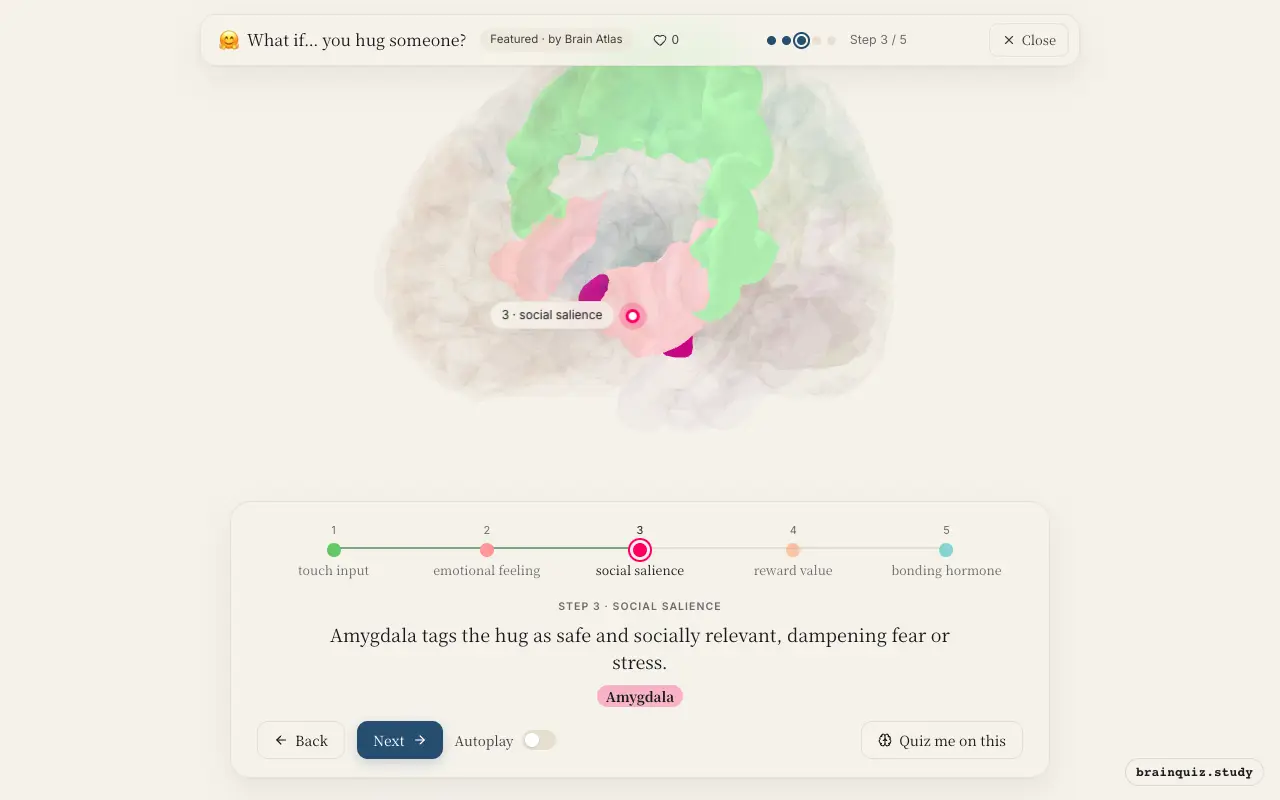
The amygdala rapidly assesses the emotional significance of stimuli, including social touch. For a hug from a loved one, it signals safety and reduces activity in threat-detection circuits, lowering cortisol. In contrast, a hug from a stranger might increase amygdala vigilance. Here, its output modulates the insula and prefrontal areas.
4. Orbitofrontal Cortex: reward value
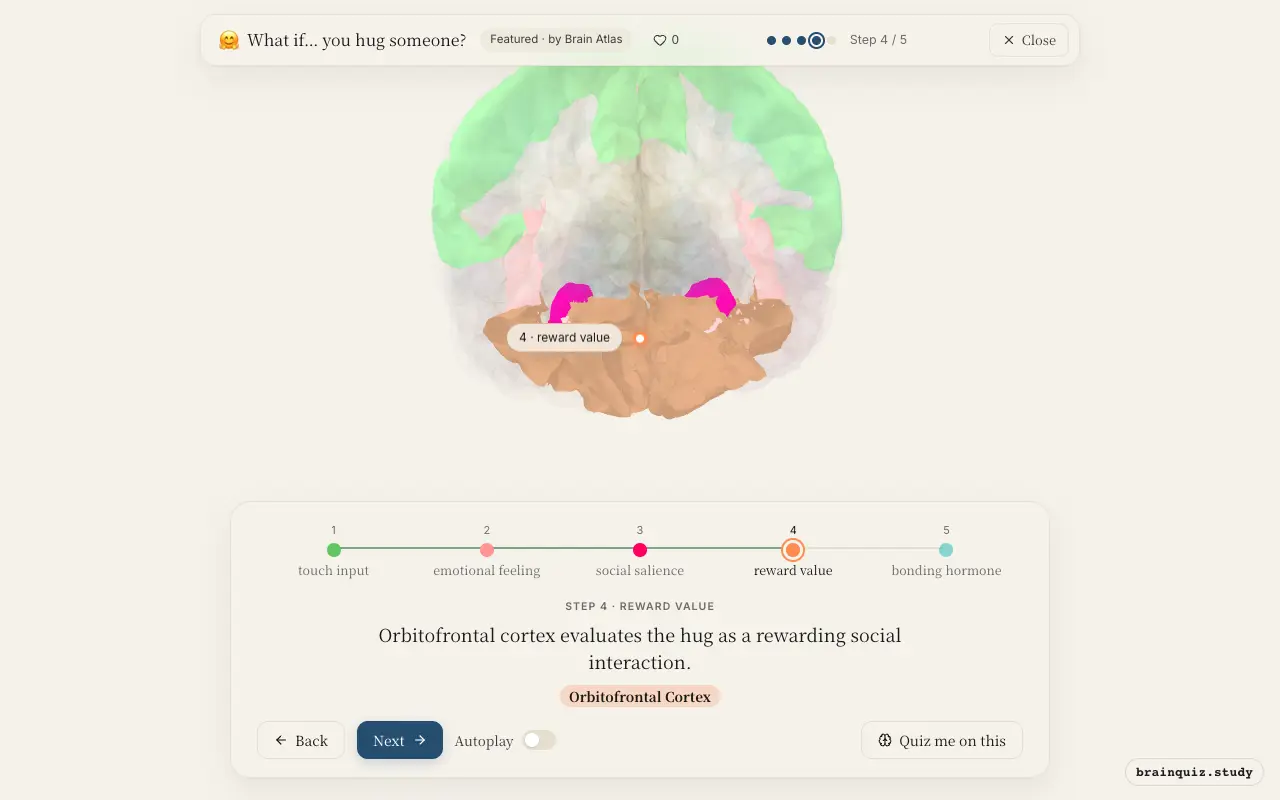
The orbitofrontal cortex receives input from the insula, amygdala, and sensory cortices to assign a value to the hug. It represents the expected and experienced pleasantness of social touch. Its activation reinforces the behavior, making you more likely to seek hugs in the future, and connects to the dopamine system.
5. Hypothalamus: bonding hormone
The hypothalamus, particularly the paraventricular nucleus, synthesizes oxytocin and sends it to the posterior pituitary for release into the bloodstream. Oxytocin acts on the brain and body to increase feelings of trust, reduce anxiety, and strengthen social bonds. This neuroendocrine response is a key mechanism by which hugging promotes well-being.
Good to know
- Oxytocin release during hugging is associated with lower blood pressure and reduced cortisol levels.
- The insula and anterior cingulate cortex are part of a "social touch" network that responds specifically to slow, gentle stroking.
- Hugs longer than 20 seconds are thought to be particularly effective at triggering oxytocin release, though exact timing is debated.
Hug vs Handshake
A handshake activates the somatosensory cortex similarly, but involves less insula and orbitofrontal cortex because it is a formal, less emotional touch. The amygdala may remain more vigilant, and oxytocin release is typically lower than during a warm hug.
Test yourself
Which brain region is primarily responsible for processing the physical sensation of a hug?
What role does the hypothalamus play during a hug?
How does the amygdala respond to a hug from a loved one compared to a stranger?
0 of 3 answered · 0 correct
Simplified: many regions work together at once, and this shows the main players in the order they act.