What happens in your brain when you look at your phone before bed?
Updated
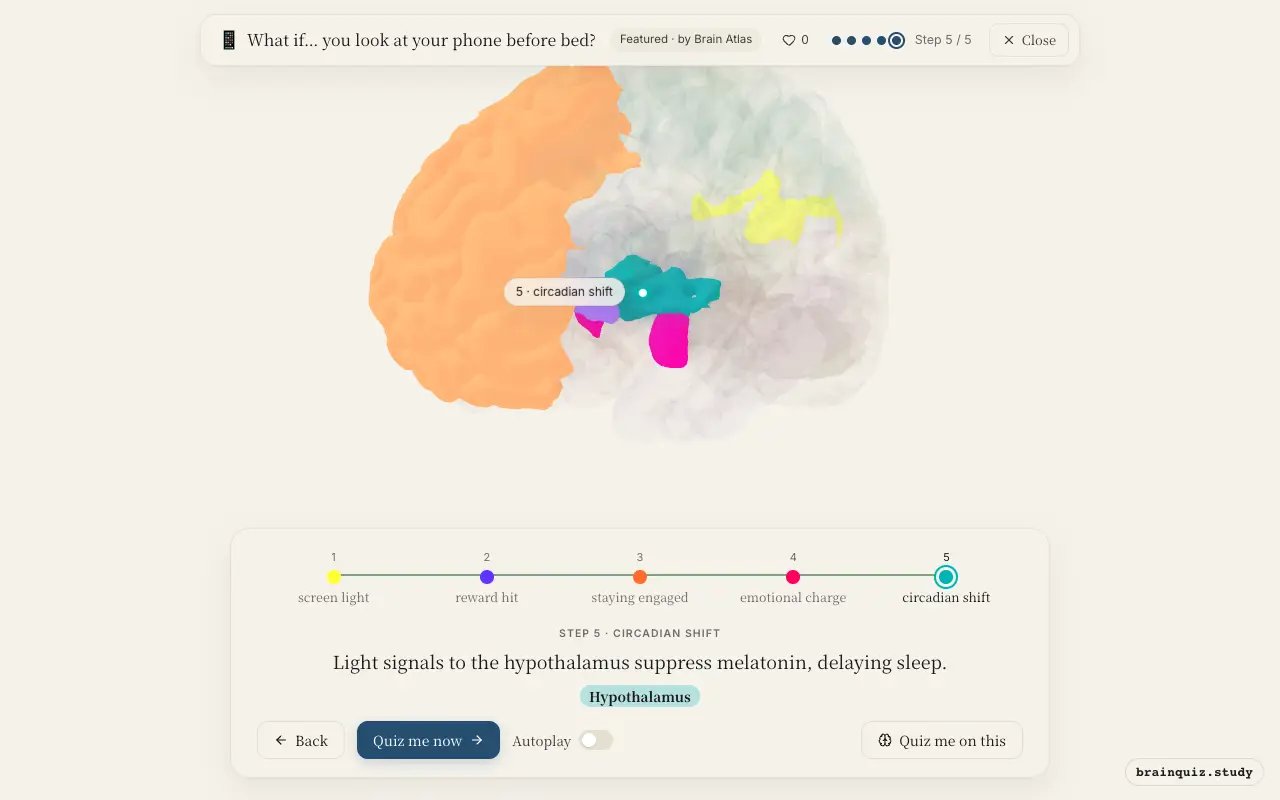
The visual cortex processes bright screen light and content, the nucleus accumbens responds to rewarding notifications, the prefrontal cortex stays engaged with the phone, and the hypothalamus suppresses melatonin, delaying sleep.
Watch it light up on the 3D brain
Brain regions that light up
| Order | Region | What it does here |
|---|---|---|
| 1 | Visual Cortex | The bright phone screen activates your visual cortex to process the content. |
| 2 | Nucleus Accumbens | Notifications and likes trigger dopamine release in the nucleus accumbens. |
| 3 | Prefrontal Cortex | Your prefrontal cortex keeps you focused on the phone, overriding sleepiness. |
| 4 | Amygdala | Emotional content can activate the amygdala, raising arousal. |
| 5 | Hypothalamus | Light signals to the hypothalamus suppress melatonin, delaying sleep. |
1. Visual Cortex: screen light
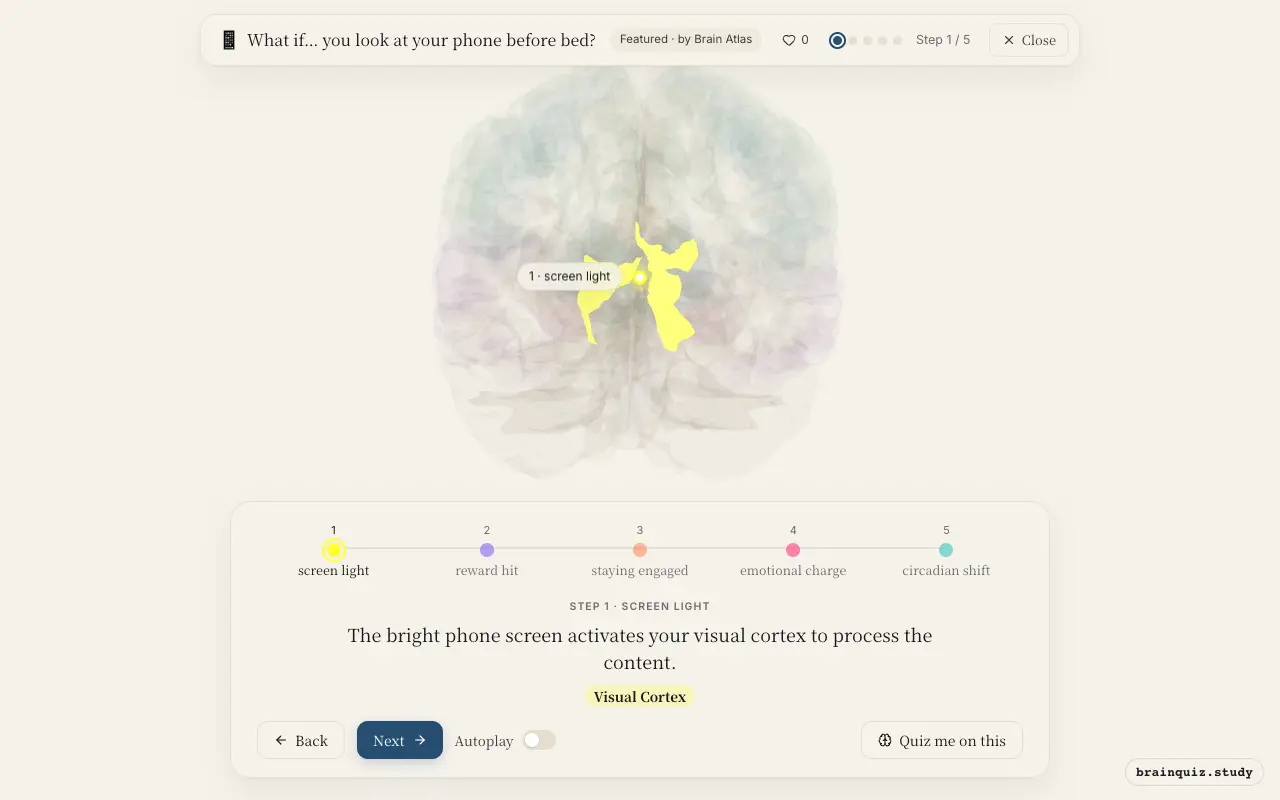
The visual cortex, located in the occipital lobe, receives and interprets the visual information from the phone screen. Bright light, especially blue light, strongly stimulates these neurons, signaling the brain that it is daytime.
2. Nucleus Accumbens: reward hit
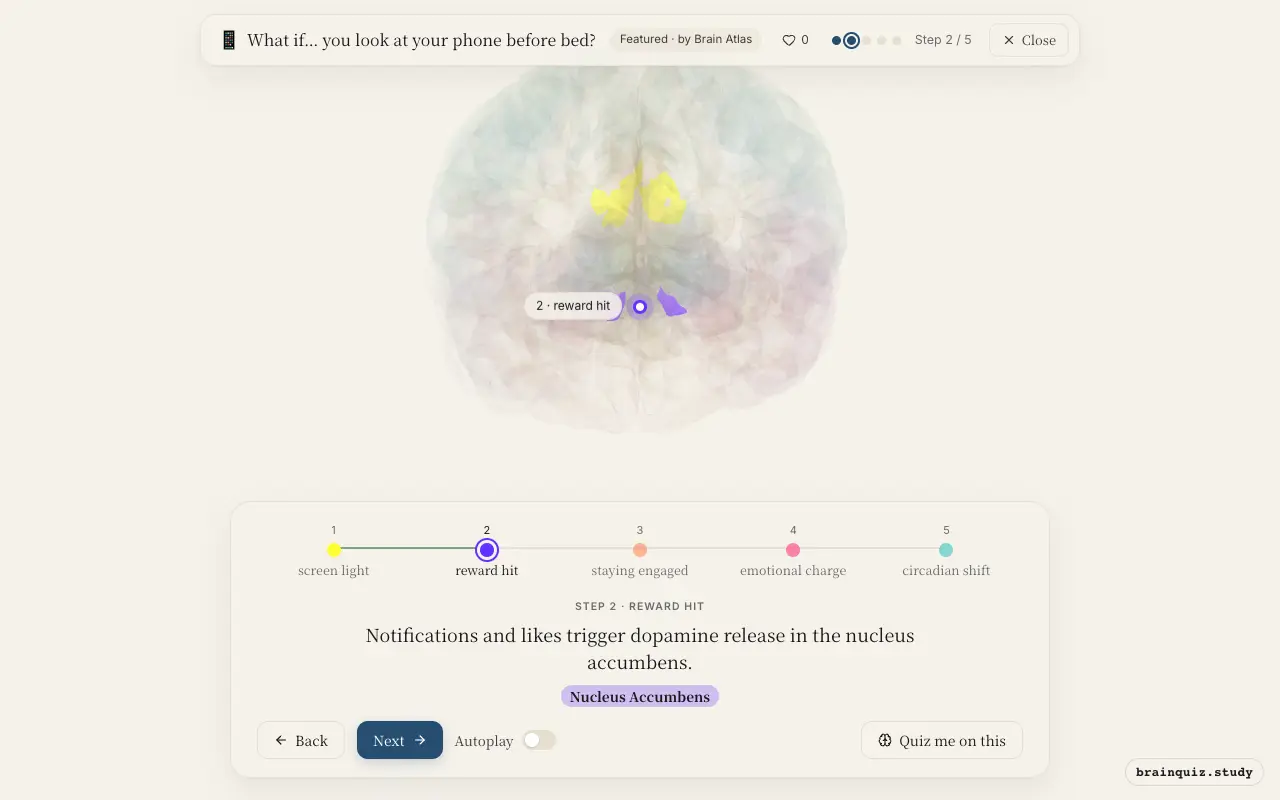
The nucleus accumbens is a key part of the brain's reward circuit. When you see appealing content or receive social feedback, it releases dopamine, making the phone use pleasurable and reinforcing the habit of checking it.
3. Prefrontal Cortex: staying engaged
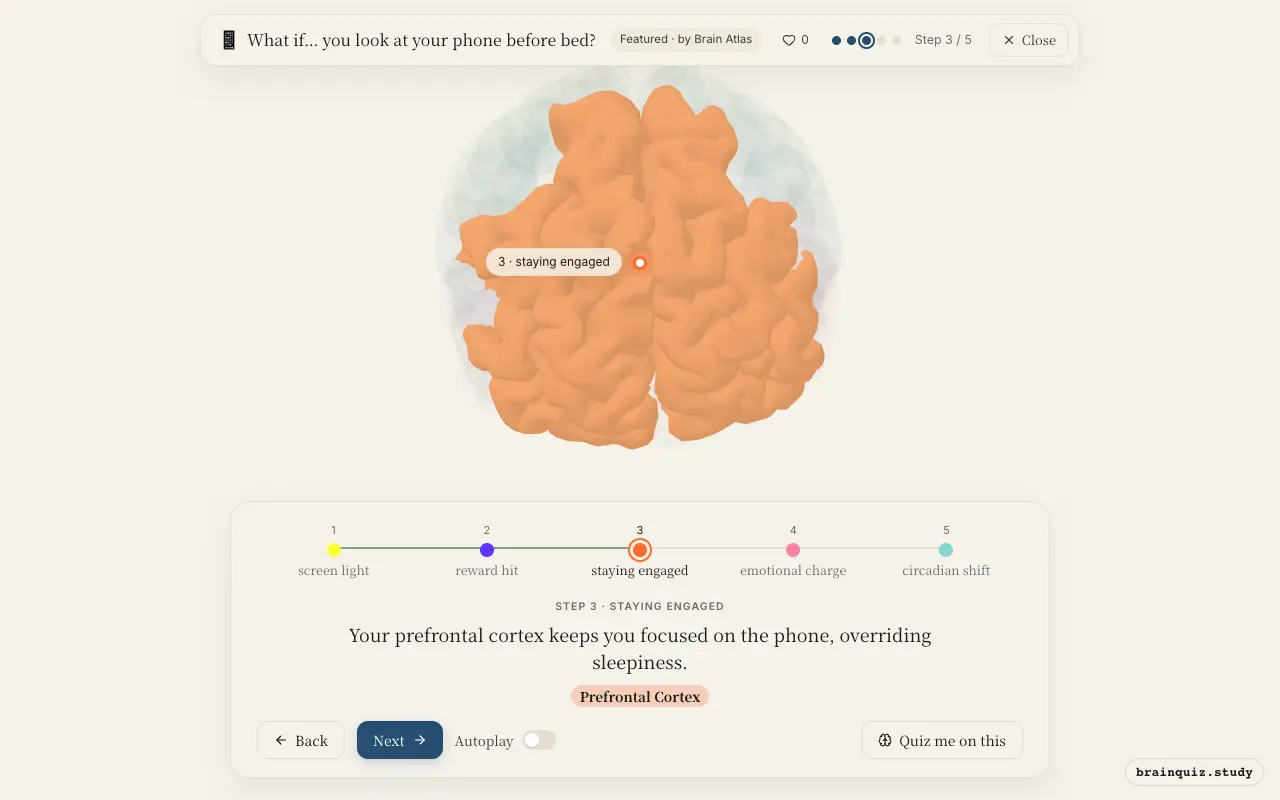
The prefrontal cortex is responsible for decision-making and attention. It evaluates the content, decides whether to keep scrolling, and suppresses the urge to sleep, keeping you mentally active.
4. Amygdala: emotional charge
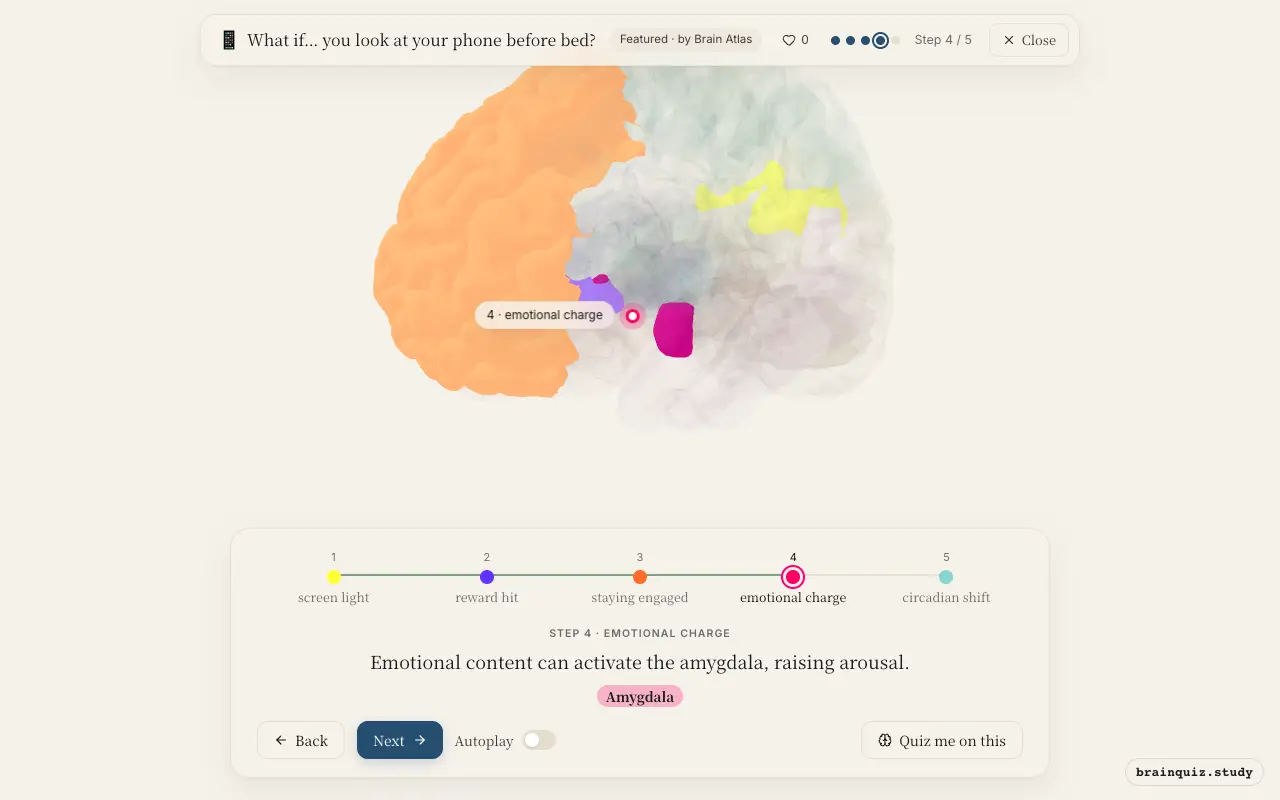
If the content is emotionally charged, such as stressful news or social arguments, the amygdala triggers a stress response, increasing heart rate and alertness, making it even harder to wind down.
5. Hypothalamus: circadian shift
The hypothalamus contains the suprachiasmatic nucleus, the master clock. Light from the phone is detected by retinal cells and relayed here, inhibiting melatonin production from the pineal gland, shifting your circadian rhythm later.
Good to know
- Blue light (short wavelength) more strongly suppresses melatonin than longer-wavelength light.
- Repeated reward from phone use can strengthen the habit loop involving the nucleus accumbens and prefrontal cortex.
- Late-night phone use reduces overall sleep duration and quality, impairing hippocampal-dependent memory consolidation.
Phone vs. book before bed
Reading a printed book before bed engages the visual cortex and language areas, but without the blue light spike or reward notifications, it does not suppress melatonin as strongly and allows the brain's sleep systems to take over.
Test yourself
Which brain region is primarily responsible for the suppression of melatonin due to phone light?
What is the role of the nucleus accumbens in this scenario?
Why does looking at the phone make it harder to fall asleep?
0 of 3 answered · 0 correct
Simplified: many regions work together at once, and this shows the main players in the order they act.